How To Set Up To A Golf Ball: Simple Alignment Tips
Stand square, relax your grip, set your ball position by club, and aim your body at the target.
I’ve taught players and practiced thousands of swings, so I know how to set up to a golf ball matters more than most golfers think. This guide breaks down each part of the setup from stance and grip to ball position and alignment. You’ll get step-by-step instructions, simple drills, and common fixes so you can repeat a solid setup every time you step to the ball. Read on for clear, experience-based advice on how to set up to a golf ball and start hitting more consistent shots today.
Why a proper setup matters
A good setup creates a repeatable swing. It controls contact, direction, and distance. Poor setup causes compensations that lead to slices, hooks, and fat or thin shots.
A consistent setup reduces stress in the body. It makes your swing more efficient and reliable under pressure. Learning how to set up to a golf ball saves shots and builds confidence on the course.
Basic pre-shot checklist: quick steps before every swing
Use this checklist each time you ask how to set up to a golf ball. Run it in the same order to build a routine.
- Grip: Place hands on the club so the V’s point between your chin and right shoulder. Light pressure helps feel the club head.
- Stance width: Feet shoulder-width for mid irons, wider for driver, narrower for wedges.
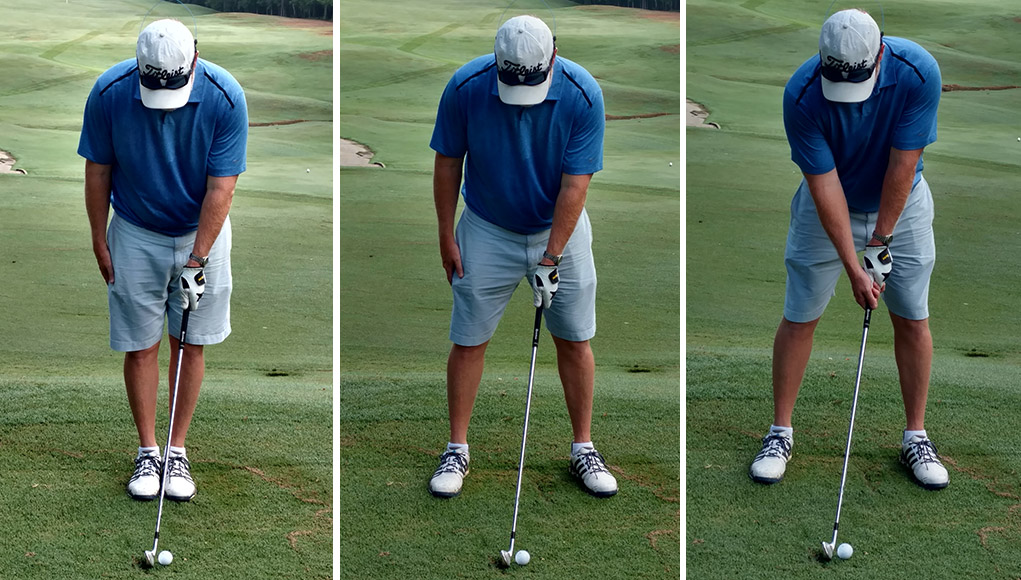
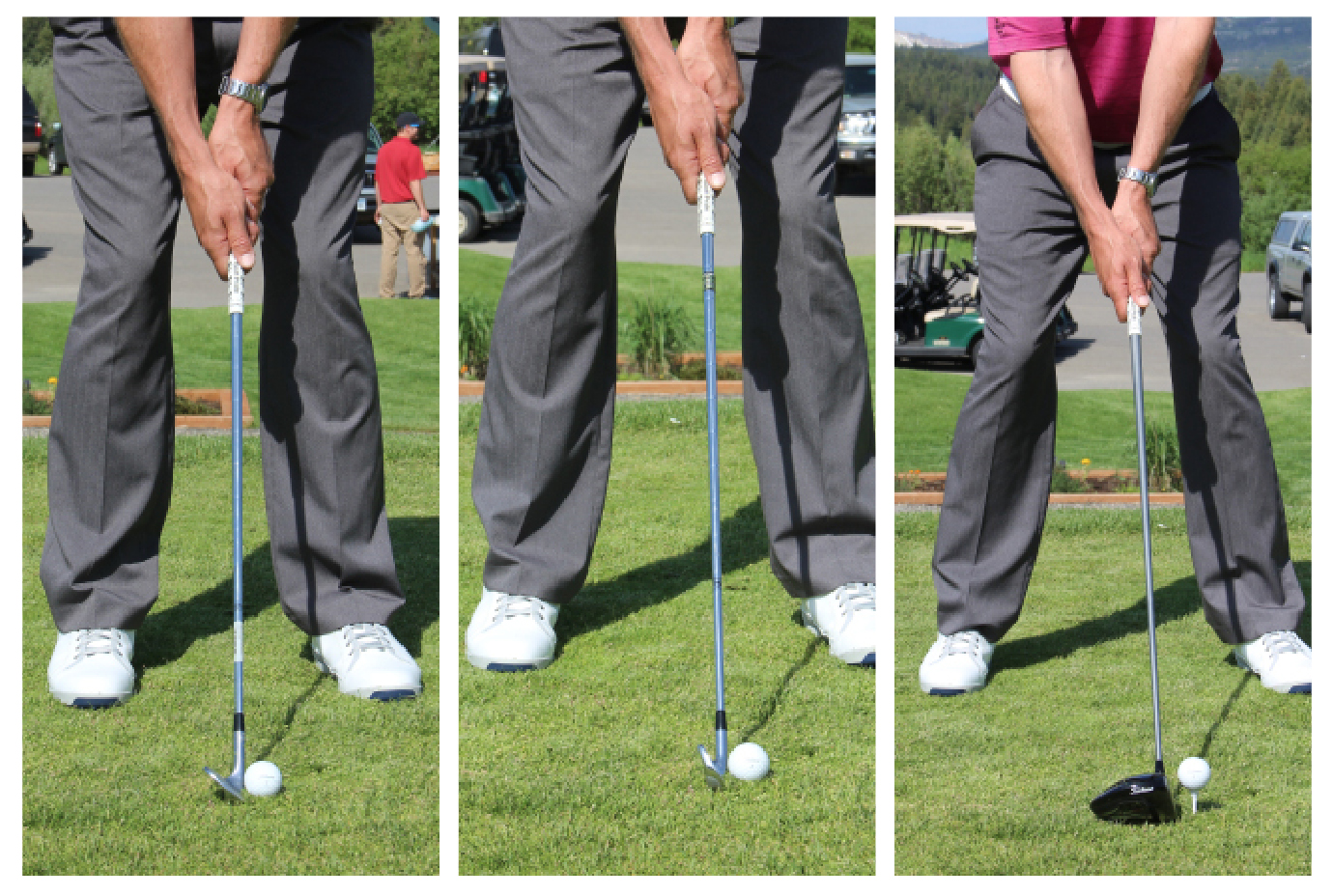
- Ball position: Move the ball forward for longer clubs and center-back for shorter clubs.
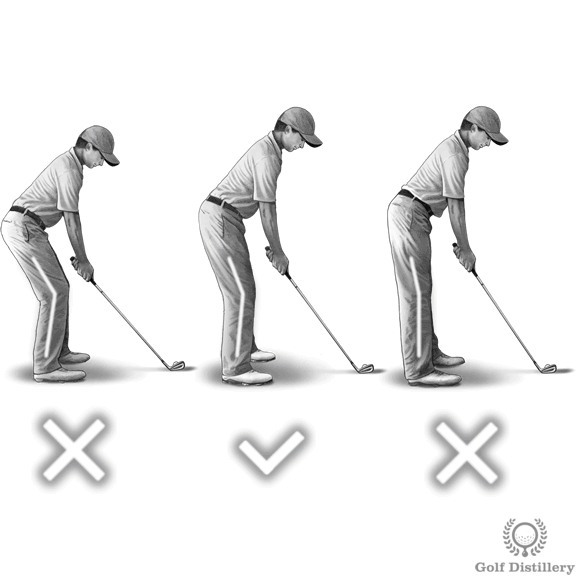
- Posture: Bend from hips, keep a flat back and slight knee flex.
- Weight distribution: Start balanced, slight bias toward front foot for irons and back foot for driver.
- Alignment: Aim clubface at the target, then align feet and hips parallel left of the target (for right-handers).
- Eye line: Let your eyes be over or just inside the ball for consistent strikes.
- Relaxation: Take a deep breath, relax shoulders, and make a controlled practice swing.
Repeat this checklist until the steps become automatic. Mastering how to set up to a golf ball starts with a reliable routine.
Step-by-step: setup for each club
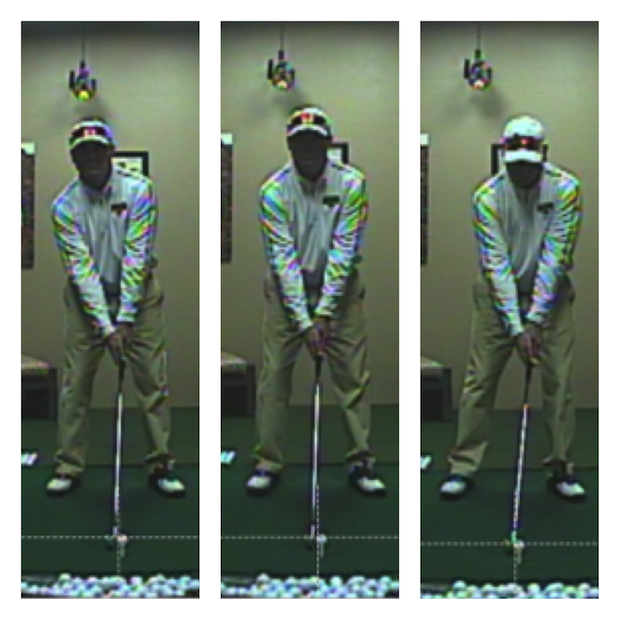
Different clubs need small setup changes. Below are clear positions for common clubs when you set up to a golf ball.
- Driver
- Ball position: Just inside the left heel for right-handers.
- Stance: Wide and balanced to allow a sweeping motion.
- Weight: Slightly toward the back foot at address.
- Spine tilt: Tilt slightly away from the target so the low point is behind the ball.
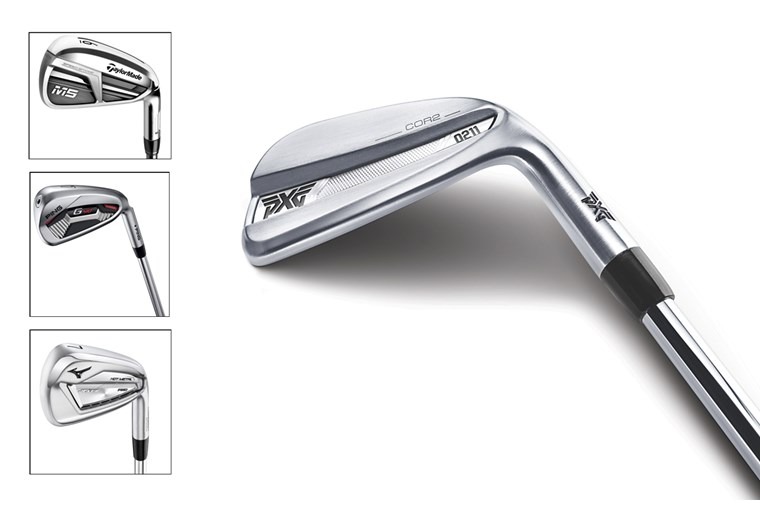
- Long irons (2-4)
- Ball position: Slightly forward of center.
- Stance: Slightly wider than shoulder width.
- Weight: Even to slight forward lean.
- Mid irons (5-7)
- Ball position: Center of stance to just forward.
- Stance: Shoulder-width.
- Weight: Even, balanced.
- Short irons and wedges
- Ball position: Center to slightly back of center.
- Stance: Narrower, feet closer together.
- Weight: Slightly forward; prepare to hit down on the ball.
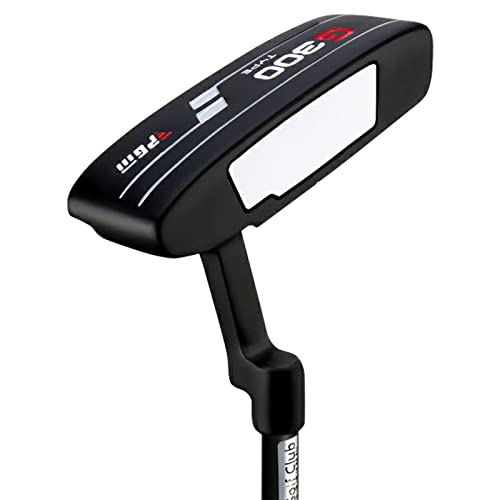
- Putter
- Ball position: Just forward of center for a slight forward stroke.
- Stance: Narrow and comfortable.
- Eyes: Directly over or slightly inside the ball.
Knowing how to set up to a golf ball by club helps you make solid contact and hit the intended shot shape.
Alignment and aim: simple checks that work
Aim issues come from poor setup, not just swing faults. Use simple checks to ensure you aim correctly.
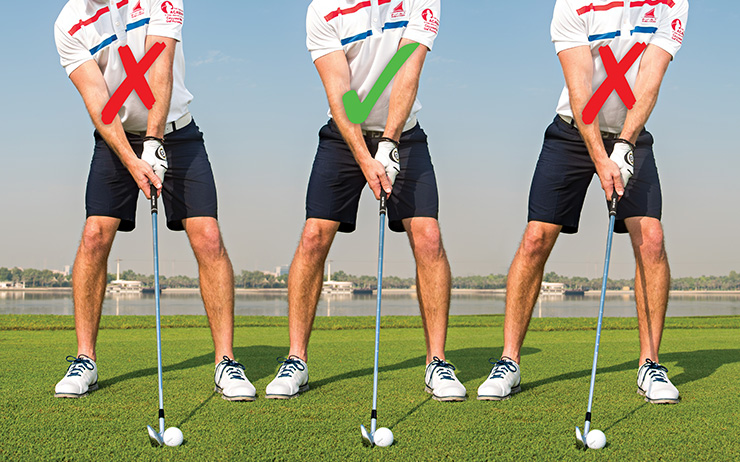
- Pick a small target spot first, then a line in front of your ball to align feet.
- Use the clubface to set your target. Then align your feet and hips parallel to that line.
- Check for open or closed stance that might force a slice or hook.
- Use a shadow or a tee to confirm your alignment during practice.
Aiming well is a big part of how to set up to a golf ball. If you aim wrong at setup, even a perfect swing misses the target.

Common setup mistakes and how to fix them
Many golfers repeat the same setup errors. Fix these and you’ll see immediate gains.
- Hands too tight
- Problem: Tension kills clubhead speed and feel.
- Fix: Loosen your grip until club wiggles slightly in your hands.
- Ball too far back or forward
- Problem: Changes contact pattern, leads to thin or fat shots.
- Fix: Use the club-specific ball positions above and test with half swings.
- Open stance aimed left (for right-handers)
- Problem: Creates slices or weak fades.
- Fix: Square your feet to the target line after setting the clubface.
- Poor spine angle
- Problem: Causes standing up or dipping through the swing.
- Fix: Bend from hips and keep the back flat like a tabletop.
- Weight on heels or toes
- Problem: Unstable base and inconsistent strikes.
- Fix: Aim for even pressure on the balls of your feet.
Recognizing and fixing setup mistakes is fast practice. Small corrections deliver big rewards in ball flight and feel.
Drills to practice your setup
Here are simple drills that reinforce how to set up to a golf ball. Do 5–10 minutes each practice session.
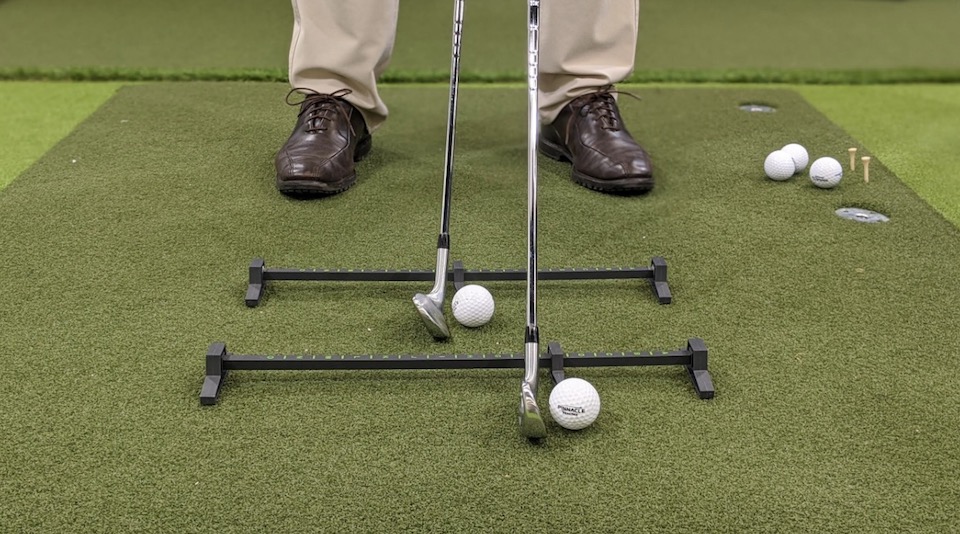
- Alignment stick drill
- Place an alignment stick along your target line and another across your toes to check stance width and alignment.
- Mirror check
- Practice setup in front of a mirror. Confirm posture, spine tilt, and grip.
- Foot-tap routine
- Tap your feet to the stance and take a deep breath before each shot to build a calm, repeatable routine.
- Ball-position ladder
- Lay four balls and hit short swings, moving ball slightly forward each shot to feel differences in contact.
- One-handed setup
- Address the ball with only your lead hand to improve clubface control and encourage proper posture.
Drills make the setup feel natural. Use them to ingrain how to set up to a golf ball.

Adjustments for different lies and weather
The ground and wind change how you set up to a golf ball. Here’s how to adapt.
- Tight fairway lies
- Move weight slightly back and make a shallower attack angle.
- Ball in the rough
- Grip down, widen stance, and hit slightly steeper to separate ball from grass.
- Uphill lies
- Position ball slightly forward and align your shoulders up the slope.
- Downhill lies
- Move ball back and reduce rotation to avoid hitting fat shots.
- Strong wind
- Lower ball flight by moving ball back and de-lofting the club.
Adjusting your setup to conditions helps you stay consistent and score better.
Personal insights and lessons learned
I learned early that setup fixes more problems than swing changes. Years of coaching taught me these practical truths.
- A small repeatable routine beats random adjustments. I found that five steady setup steps calmed my game under pressure.
- Ball position changes produce immediate feedback. Shift a single club’s ball forward a half inch and you feel contact change instantly.
- Don’t overthink alignment. Use a single reference line and trust it.
- Watch amateurs try too many swing fixes instead of refining setup. I helped players save strokes by improving stance and posture first.
From my experience, mastering how to set up to a golf ball is the fastest route to lower scores.
Frequently Asked Questions of how to set up to a golf ball
How should my feet be positioned when I set up to a golf ball?
Stand with feet shoulder-width for most irons, wider for driver, and narrower for wedges. Keep toes pointed slightly outward and distribute weight evenly.
Where should the ball sit in my stance for different clubs?
Place the ball just inside the front heel for driver, slightly forward of center for long irons, center for mid irons, and back of center for wedges. Adjust a little based on your swing and comfort.
How do I fix a slice with my setup?
Square the clubface at address and align feet slightly more closed to the target line. Loosen your grip pressure and ensure weight isn’t on your heels at address.
Should I have weight on my front or back foot at setup?
For irons, start with even weight or slight forward bias. For driver, a slight weight back is fine. The move through impact should shift weight forward.
How important is spine angle when I set up to a golf ball?
Very important. A consistent spine angle keeps your swing on plane and improves contact. Bend from hips, keep your back flat, and avoid standing up during the swing.
How can I practice setup under pressure?
Use a timed routine and limit practice swings to one or two. Simulate tee times with short windows to address and commit to the shot quickly.
Conclusion
A reliable setup is the foundation for better golf. Mastering how to set up to a golf ball improves contact, shot shape, and confidence. Start with the checklist, practice the drills, and make small, consistent adjustments based on club and lie. Take one step today: pick a drill, spend five minutes before your next session, and notice how your ball striking improves. If this guide helped, leave a comment with your setup struggles or subscribe for more practical tips.