How Tall Ceiling For Golf Simulator: Ideal Heights & Tips
Aim for at least 10 feet; 12 feet is ideal for comfortable driver swings and proper clearance.
I’ve built and tested multiple home setups and advised others on room planning. This guide walks through exactly how tall ceiling for golf simulator setups should be, why height matters, simple ways to measure your space, and practical fixes if your ceiling is low. Read on for clear, hands-on advice you can use right away.
Why ceiling height matters for a golf simulator
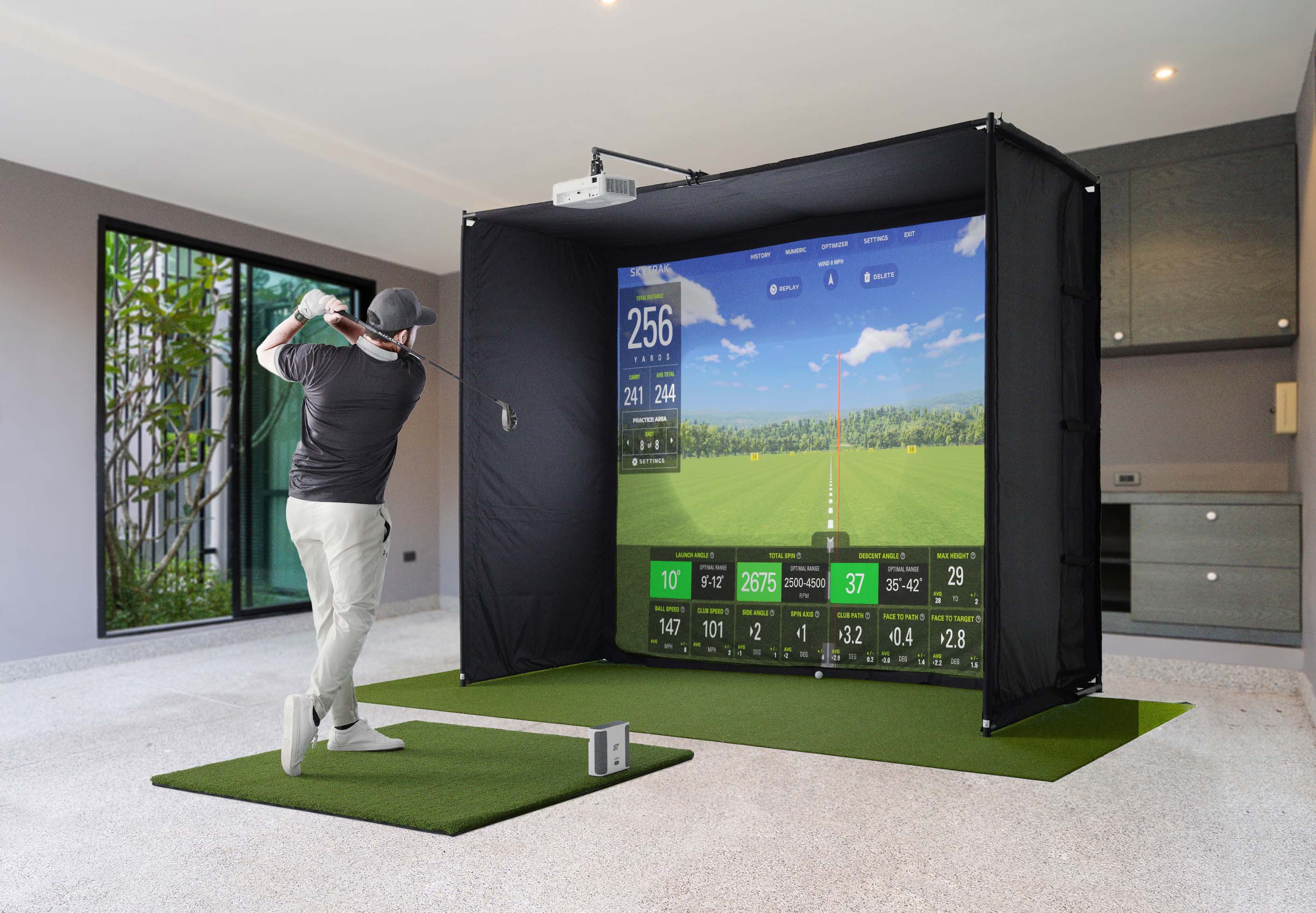
Ceiling height directly affects your swing safety, sensor accuracy, and ball flight realism. A low ceiling can clip a driver or overhead mount and can force you to alter swing mechanics. It also changes where you place the screen, projector, and sensors, which affects shot data and visuals. Understanding ceiling needs helps you avoid damage, get reliable data, and enjoy a natural feel on every shot.
Recommended numbers: how tall ceiling for golf simulator — quick ranges
Here are practical, real-world guidelines based on swing type and simulator style. Use these as starting points when planning.
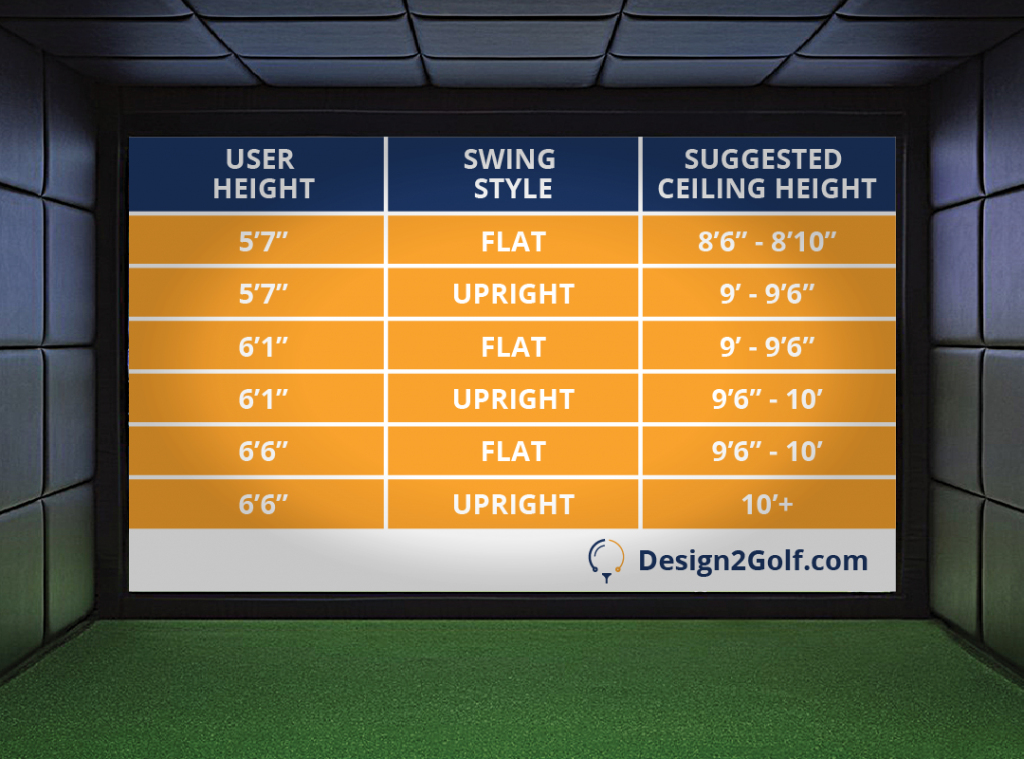
- 9 to 10 feet: Minimum for wedges, irons, and limited driver use. Good for compact setups and shorter hitters.
- 10 to 11 feet: Recommended for most recreational golfers. Allows full swings with drivers for many players.
- 12 to 14 feet: Ideal for tall players, strong swingers, or commercial/full-scale simulators. Provides generous clearance and better ball flight.
- 14+ feet: Overkill for most homes, but common in dedicated golf bays or commercial facilities.
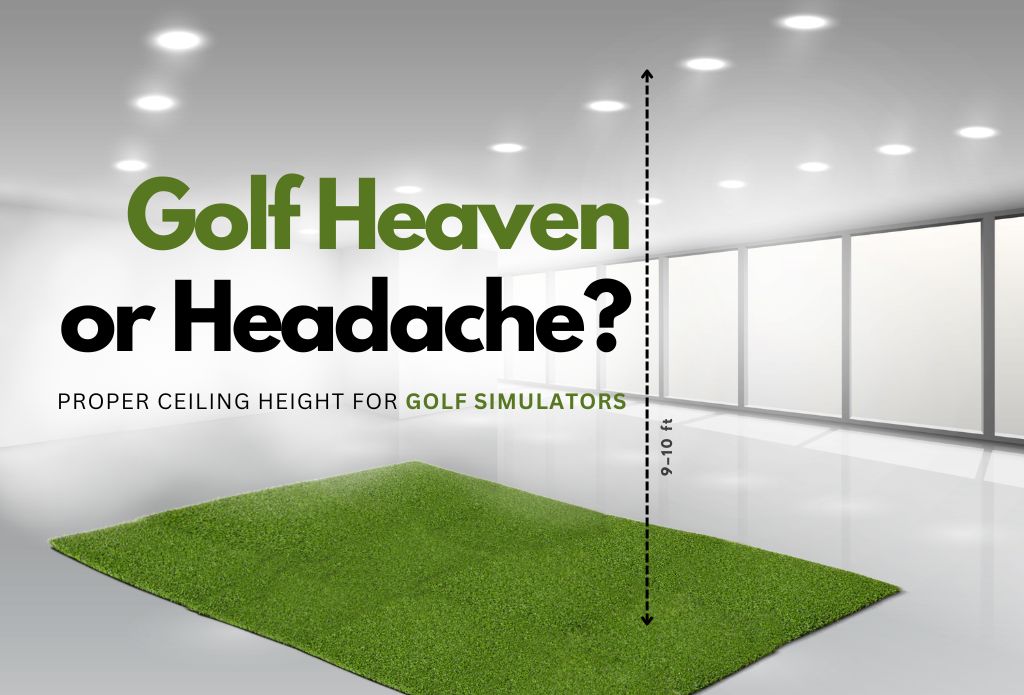
These ranges answer how tall ceiling for golf simulator should be for different needs. If you’re unsure, aim for 10–12 feet as a practical balance between cost and performance.
How to calculate your required ceiling height step-by-step
A simple method helps you estimate the exact space you need.
- Measure player height.
- Add standing reach (your height plus about 1.5 to 2 feet for reach).
- Add club length (typical driver length ~45 inches; add this converted to feet ~3.75 feet) to estimate swing arc apex.
- Add a safety buffer of 6 to 12 inches for equipment and ball flight clearance.
Example:
- Player height: 6'0" (6.0 ft)
- Standing reach: +1.75 ft → 7.75 ft
- Driver length swing arc: +3.75 ft → 11.5 ft
- Safety buffer: +0.5 to 1.0 ft → 12.0 to 12.5 ft needed
This approach helps you answer how tall ceiling for golf simulator must be for your unique body and gear. Measure carefully and err on the side of more clearance.
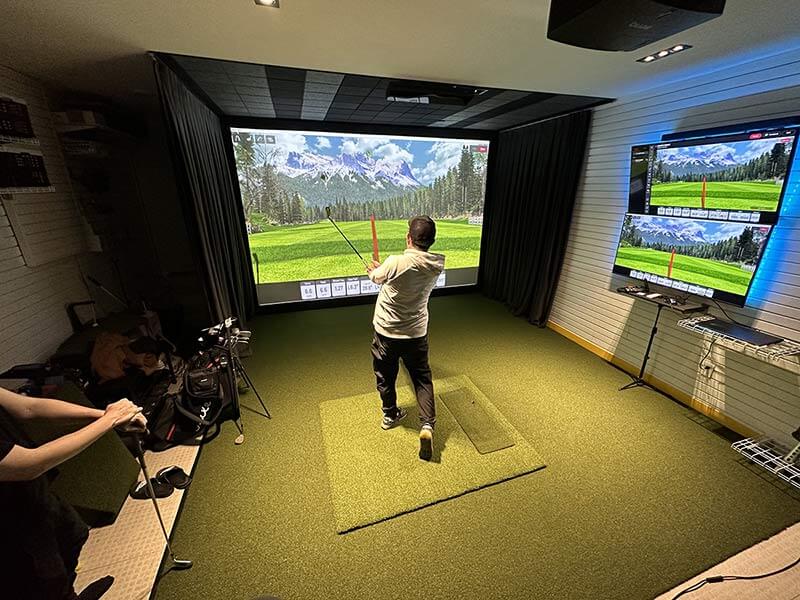
Sensor type and mounting: impact on ceiling requirements
Different sensors and mounts change how much headroom you need.
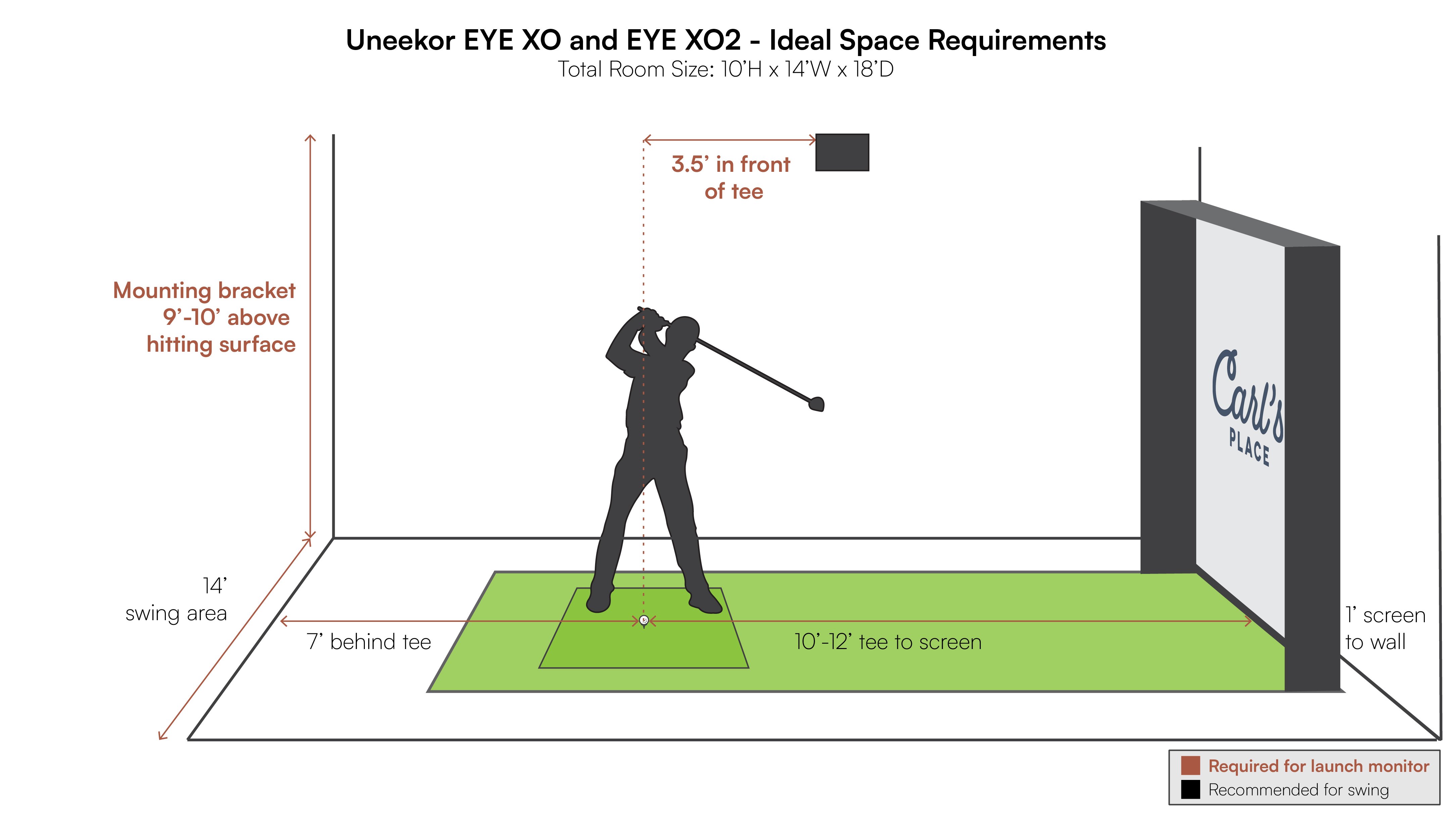
- Overhead radar or camera systems often need mounts above the player. This increases the effective height needed.
- Floor-mounted launch monitors require less vertical clearance but need forward space and clear sightlines.
- Net-and-screen-only setups let you lower mounts but can reduce data accuracy.
If you plan overhead sensors, add at least 6 to 12 inches to the ceiling height you calculated. That ensures cables, mounts, and ventilation don’t interfere with swings.
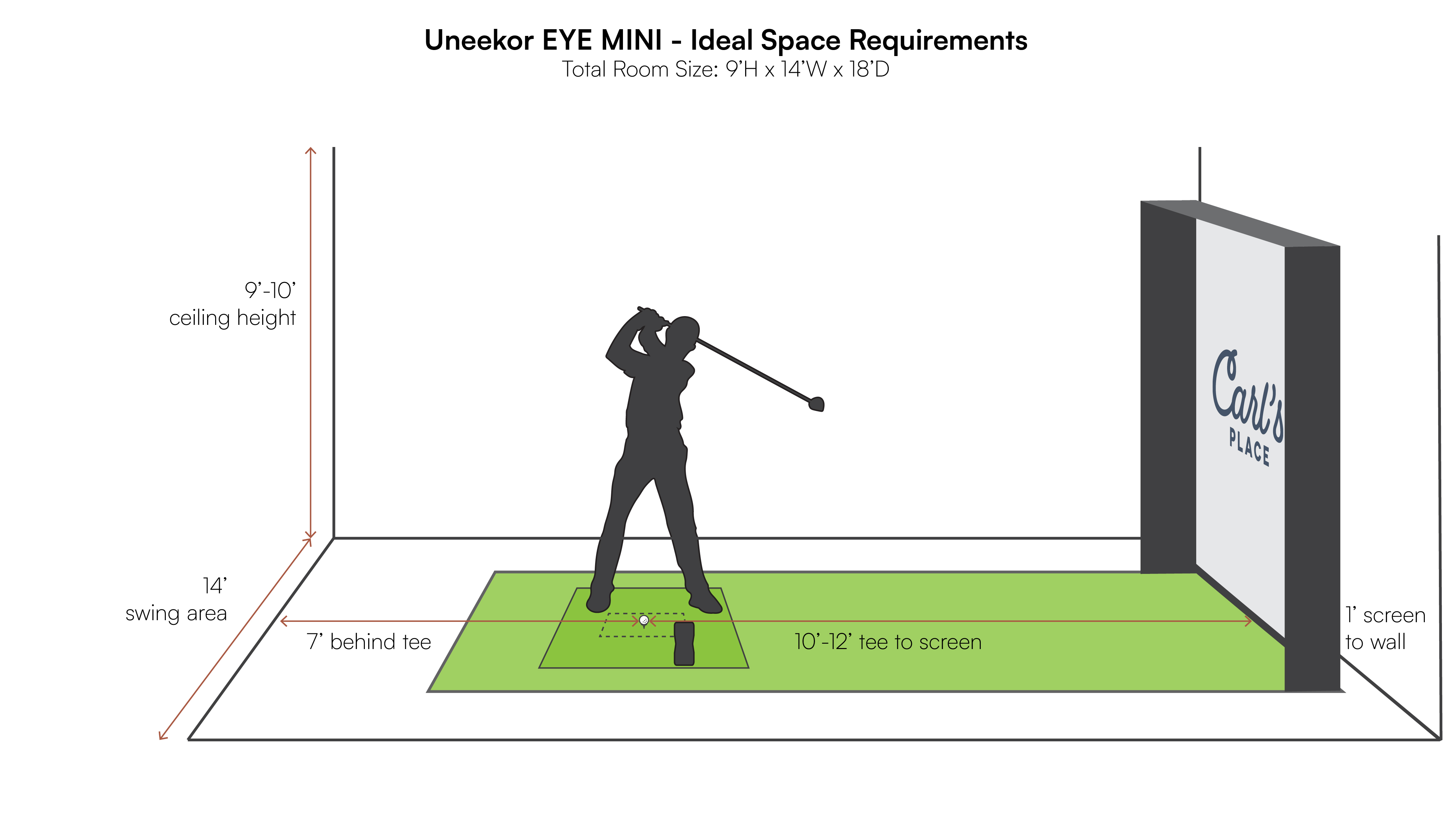
Low-ceiling workarounds and practical fixes
If your room is short on height, you still have options to build a good simulator.
- Use shorter shafts or practice clubs and foam balls to avoid full-power impacts.
- Install a low-profile projector and compact sensor that sit closer to the screen.
- Angle the screen slightly to reduce ball-trajectory clearance needs.
- Use a side net or bay design that allows you to step into the swing without full ceiling clearance.
- Consider a half-swing setup or focus on irons and wedges, which need less vertical space.
From my experience, using a reduced-swing setup with a quality launch monitor gave surprisingly realistic feedback even in an 9.5-foot room.
Room layout, screen, and projector considerations
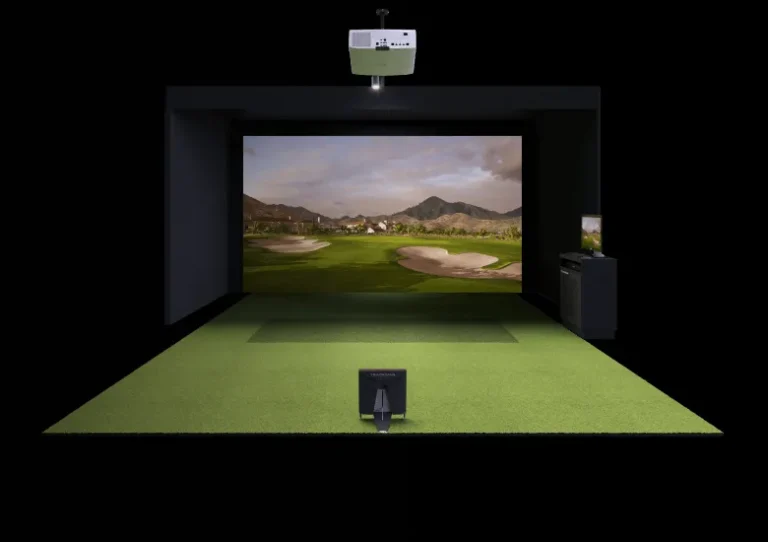
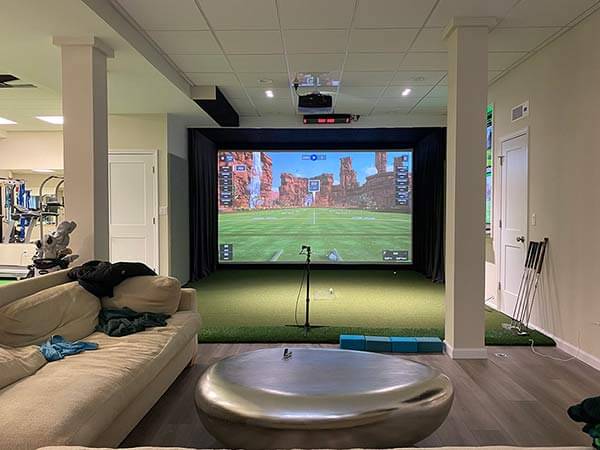
Ceiling height interacts with screen size and projector placement.
- Screen distance and size determine where the ball hits. Larger screens often need more distance and potentially more height.
- Ceiling-mounted projectors must clear the swing zone. Short-throw projectors can reduce required distance but still need safe placement.
- Position the hitting mat and tee to maximize vertical clearance while keeping realistic visuals.
Plan the whole room, not just ceiling height, to ensure the best performance. A balanced setup reduces compromises and improves immersion.
Construction, safety, and materials
When building a simulator room, think beyond inches and feet.
- Reinforce the frame around the screen and where mounts attach. Impacts transmit force.
- Use impact–rated screens and padding on ceilings or beams that are within swing reach.
- Ensure ventilation and lighting are planned so you don’t add suspended fixtures that reduce headroom.
- Check local building codes before major structural changes.
I once installed beefy cross-bracing above a screen to protect a low soffit. That small change prevented damage and let me keep a 12-foot effective swing zone in a tight space.
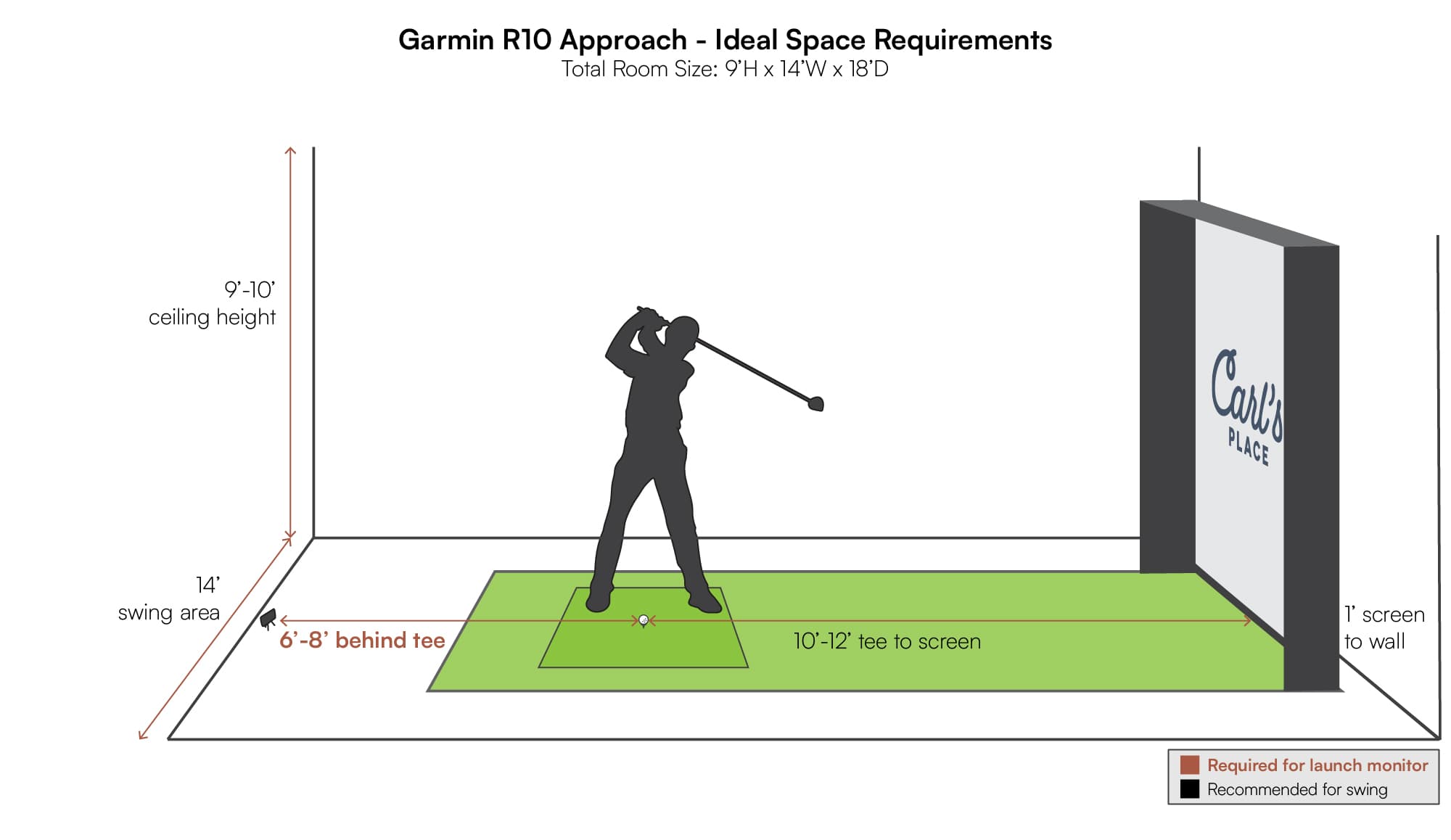
Common mistakes and lessons learned
These are errors I’ve seen and the fixes that worked.
- Mistake: Measuring standing height only. Fix: Always measure full reach plus club length.
- Mistake: Forgetting sensor and projector mounts. Fix: Add these to your clearance calculations.
- Mistake: Assuming a little clearance is enough. Fix: Add 6–12 inches buffer and simulate swings before finishing the room.
- Mistake: Ignoring ventilation. Fix: Install quiet fans to keep the space usable for long sessions.
Learning from real installations saves time and money.
Costs and remodeling to gain headroom
If your ceiling is too low, raising it or modifying the space has options and costs.
- Removing a dropped ceiling can add 6 to 12 inches with minimal cost.
- Exposing joists and trimming ductwork can gain inches without structural work.
- Raising the roof or creating a vaulted ceiling is more expensive but yields ideal height.
- Renting a portable simulator or using a simulator bay at a local facility avoids remodeling costs.
Weigh your budget against how often you’ll use full driver shots. For many owners, small tweaks are enough.
PAA-style questions
What is the minimum ceiling height for a golf simulator?
The absolute minimum is about 9 feet for practicing short irons and partial swings. Full driver swings typically need more height to avoid hitting the ceiling.
Is 8 feet too low for a golf simulator?
Yes, 8 feet is generally too low for full swings and driver use. You can still practice putting, chipping, and short irons with reduced swing motion.
Do launch monitors need extra ceiling height?
Some overhead launch monitors require extra clearance for mounts and cables. Floor-based monitors usually need less headroom but more forward space.
Can I use a low-ceiling room with foam balls?
Yes, foam balls reduce risk and allow fuller swings in lower rooms, but they change feel and data accuracy slightly. They are a safe, practical workaround.
Should I hire a contractor to modify my ceiling?
For structural changes or roof raises, hire a contractor to ensure safety and code compliance. Simple tasks like removing a drop ceiling can often be done DIY if you have basic skills.
Frequently Asked Questions of how tall ceiling for golf simulator
How tall does a ceiling need to be for a golf simulator?
Most setups work well with 10 to 12 feet of ceiling height. Taller ceilings (12+ feet) are best for full driver swings and commercial use.
Can I play full driver swings in a 9-foot room?
Full driver swings are risky in a 9-foot room and may result in contact with overhead fixtures. You can practice with reduced swings or use foam balls to minimize damage.
Does projector placement affect required ceiling height?
Yes, ceiling-mounted projectors and their mounts consume headroom. Short-throw projectors help but you still need safe clearance above the swing zone.
How much buffer should I add to my measurements?
Add at least 6 to 12 inches of buffer for sensors, mounts, and unexpected high points in your swing. More buffer increases safety and comfort.
Are there sensor types better for low ceilings?
Floor-mounted and short-throw camera sensors work better in low-ceiling rooms. Overhead cameras can require additional height and careful positioning.
Conclusion
Choosing how tall ceiling for golf simulator should be comes down to your swing, equipment, and goals. Aim for at least 10 feet for general use and 12 feet for comfortable driver swings, but calculate using your own reach, club length, and the mounts you plan to use. If your room is short, many practical workarounds exist—from foam balls and short-throw projectors to angled screens and floor-mounted sensors—that let you enjoy realistic practice without major remodeling. Take measurements, plan conservatively, and start small if you must. Ready to build your setup? Measure your space, sketch a layout, and take the next step—then share your plans or questions so others can learn from your build.