How Much Does Elevation Affect Golf Ball Distance: Pro Tips
Elevation can change golf ball distance by about 2% per 1,000 feet above sea level.
I’ve studied ball flight and played courses from sea level up to Denver heights, so I know how to read changes in carry and roll. This article breaks down how much does elevation affect golf ball distance with clear numbers, real examples, and simple steps you can use on the course. You’ll learn the physics, practical rules of thumb, how to adjust your clubs, and how to test for yourself.

How elevation affects golf ball flight and distance
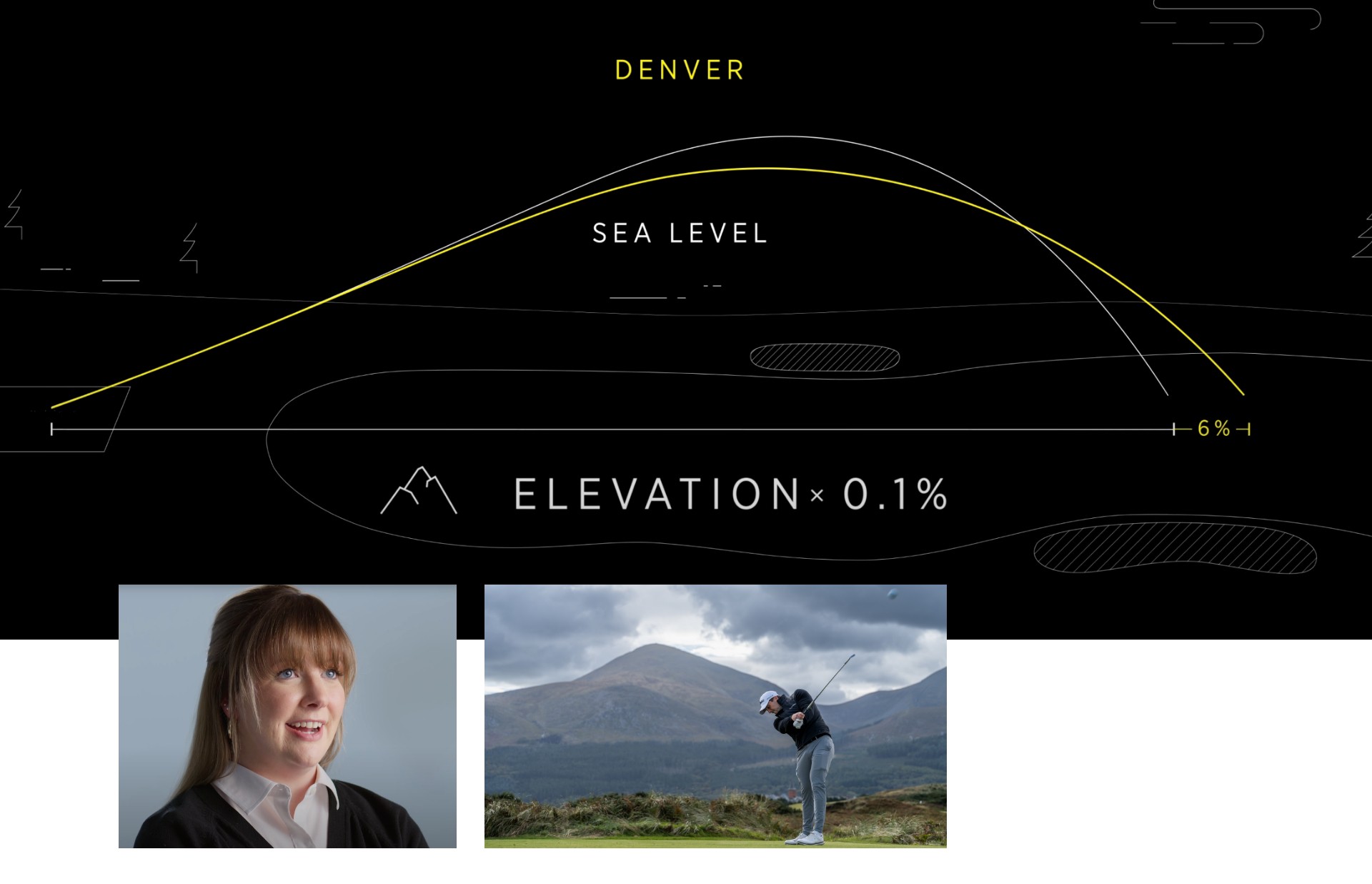
Air thins as you climb higher. Thin air reduces drag. Less drag means the ball keeps speed longer and flies farther.
Lift also changes a little. Reduced air density slightly lowers lift from backspin. That can change trajectory and hold. Overall, the drag reduction usually wins and you gain distance.
Spin rate, launch angle, and clubhead speed still matter. High spin can cancel some altitude gains. So the effect of elevation varies by shot and by player.
how much does elevation affect golf ball distance is mainly about air density and drag. The phrase helps you focus on the main cause: thin air equals longer shots.
Quantifying the change: rules of thumb and simple math
A common rule of thumb is 2% more carry per 1,000 feet of elevation. Use it as a simple guide.
Example math:
- 1,000 feet up: 2% farther. A 200-yard carry becomes 204 yards.
- 5,000 feet up: about 10% farther. A 250-yard drive can carry 275 yards.
- 500 feet up: about 1% farther. A 150-yard iron can carry 151.5 yards.
These are approximations. Differences in ball speed and spin shift results. Still, when golfers ask how much does elevation affect golf ball distance, this percent rule is a reliable starting point.

Source: theleftrough.com
Practical club selection and on-course strategy
Adjust club choice before you swing. At higher elevation, you often need one less club for the same target. That means:
- Use one less iron on approach shots at moderate altitude.
- Consider ball flight more than yardage for long shots.
- Trust launch monitor numbers when possible.
When playing a mountain course, round up yardages from the tee box. Use a rangefinder that compensates for altitude if you have one. If not, apply the 2% per 1,000 feet rule and test on the range.
how much does elevation affect golf ball distance matters most when choosing clubs and when planning pin attacks. Practice with your set at a higher range to build confidence.

Source: koaa.com
Other factors that interact with elevation
Elevation does not act alone. Consider these interacting variables:
- Temperature: Warm air is less dense. Heat adds distance, like elevation does.
- Humidity: Humid air is actually slightly less dense than dry air. The effect is small.
- Wind: Tailwinds magnify altitude gains; headwinds reduce them.
- Ball type and spin: Higher spin reduces the altitude advantage a little.
When you ask how much does elevation affect golf ball distance, remember to include temperature and wind in your estimate. They can change the outcome by several yards.

Source: danbubanygolf.com
Measuring and testing elevation effects for your game
Get real numbers with tools. Use a launch monitor or an app that shows carry, ball speed, and spin. Test one club at sea level and again at altitude.
Steps to test:
- Pick three clubs you use often.
- Hit 10 shots with each at sea level.
- Repeat at the elevated course and compare averages.
Record results in a simple notebook. Your personal numbers are more useful than any generic table when deciding how much does elevation affect golf ball distance for you.
Source: titleist.com
Limitations, variability, and what to watch for
The 2% per 1,000 feet rule is not exact. Factors that add variability include:
- Individual swing differences
- Ball speed and spin rate
- Course contours that affect roll
- Local weather and barometer changes
Be honest about uncertainty. Use rules of thumb to guide decisions, and use testing to confirm. When you understand how much does elevation affect golf ball distance for your swing, you play smarter.

Source: blueteesgolf.com
Practical examples and quick reference numbers
Below are simple examples for quick use. The numbers use a 2% per 1,000 foot rule.
Example for a 200-yard carry at different elevations:
- Sea level: 200 yards
- 1,000 ft: 204 yards
- 2,500 ft: 210 yards
- 5,000 ft: 220 yards
Example for a 250-yard drive:
- Sea level: 250 yards
- 1,500 ft: 257.5 yards
- 4,000 ft: 270 yards
Use these quick checks to gauge how much does elevation affect golf ball distance on a course day. Test and adjust as needed.
Frequently Asked Questions of how much does elevation affect golf ball distance
How much farther will my drives go at high altitude?
Most golfers see about 2% more carry per 1,000 feet. So a typical drive can gain several yards at moderate altitude and many yards at high altitude.
Should I use one less club at altitude?
Often yes. At moderate altitude you may need one less club for the same target. Test on the range to find the right adjustment for your swing.
Does elevation affect short irons and wedges the same as drivers?
Elevation affects all shots, but the percent change is similar across clubs. Shorter shots may show less visible change because they travel fewer yards.
How does temperature change the elevation effect?
Warm air is less dense and adds distance. Hot and high conditions combine to boost carry more than altitude alone.
Can rangefinders account for elevation changes?
Many modern rangefinders or GPS apps allow elevation compensation or show true horizontal distance. Use those features to get better club choices.
Conclusion
Elevation matters. Thin air reduces drag and usually adds distance, and a simple 2% per 1,000 feet rule helps you estimate how much does elevation affect golf ball distance. Test with a launch monitor or on-course practice to find your personal numbers, then adjust club selection and strategy. Try these tips on your next high-elevation round, track your results, and share what you learn. If you found this helpful, leave a comment, subscribe for more practical golf tips, or test the math on your next tee time.