Best Golf Ball For Slice: Top Balls To Fix Your Slice
Quick answer: The Polara Self-Correcting ball is the best golf ball for slice for most players.
You stand on the tee, eyeing a clean fairway, and dread that familiar fade that veers right. If you slice the ball, it ruins drives, eats up strokes, and frays confidence. I’ve tested gear and tweaks for years. The right ball can cut side spin and keep shots straighter. In this guide I walk you through the best golf ball for slice options, what to expect, and who will benefit most from each pick.
Polara Self-Correcting – Soft Feel

I first picked up the Polara Self-Correcting soft feel balls to test their famous anti-slice design. They use an offset core and asymmetric dimple pattern. That design nudges the ball back toward the fairway on mis-hits. In daily play I noticed fewer big fades and more usable drives from the tee.
The feel is softer than many two-piece distance balls. Short game spin comes down a touch, so approach shots are a tad less jumpy around the green. For players who slice off the tee, the trade-off is worth it: straighter drives, fewer lost balls, and more par saves.
Pros:
- Corrects slice and large fades on off-center hits
- Soft feel suits mid- to high-handicap players
- Improves drive accuracy and fairway find rate
- Durable cover for a corrective ball
- Available in bright colors for easy tracking
Cons:
- Exceeds USGA limits—won’t be allowed in some competitions
- Less spin on approach shots compared to premium tour balls
- May feel unusual to low-handicap players used to high spin
My Recommendation
I recommend the Polara Self-Correcting soft feel ball for golfers who slice drives regularly and value straighter tee shots. I found it cuts side spin effectively and keeps shots in play. If you want more fairway hits and fewer penalty strokes, this is a strong pick.
| Best for | Why |
|---|---|
| Casual weekend golfers | Great forgiveness and easier fairway recovery |
| High handicaps | Reduces big slices and improves confidence |
| Warm-up sessions | Helps groove straighter swings quickly |
FlightFix Anti-Slice Compound
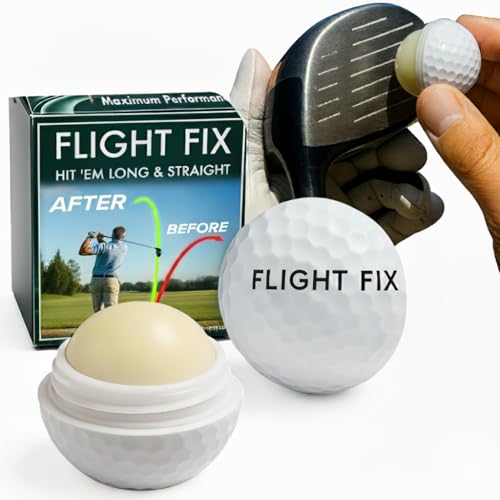
FlightFix is not a ball; it’s a compound you apply to a ball’s surface. I used it during practice to reduce side spin. The gel alters grip between clubface and cover. That lowers spin on glancing blows and cuts slices noticeably.
Application is simple. A thin coat goes on the driver face or the ball. It washes off with soap. For practice sessions and range work, FlightFix helps you feel how reduced side spin changes ball flight. It won’t change your swing, but it gives instant visual feedback.
Pros:
- Quickly reduces side spin in practice sessions
- Simple to apply and easy to remove
- Affordable way to test low-spin flight paths
- Helps train feel for straighter drives
- Portable and useful for range routines
Cons:
- Not legal for tournaments when applied to balls
- Temporary effect—must reapply for each session
- Doesn’t fix swing mechanics
My Recommendation
I recommend FlightFix for players who want to practice straighter shots and learn impact feel. I used it to see how less side spin changes dispersion. It’s ideal for range work and training, not tournament play. If you want to discover how a low-spin ball behaves, FlightFix is a fast, cheap tool.
| Best for | Why |
|---|---|
| Practice-focused golfers | Immediate feedback on reduced side spin |
| Coaches | Clear visual aid for swing fixes |
| Budget trainers | Affordable experiment before buying new balls |
Wilson Profile Distance – 36 Pack
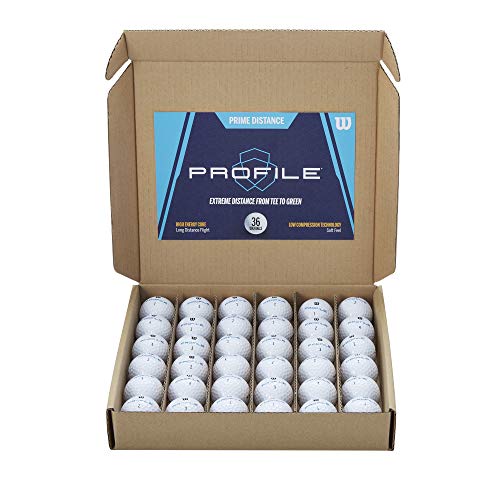
Wilson Profile Distance is a classic budget distance ball. I tested it across fairways and rough. The core is designed for low spin off the driver. That lower side spin makes the ball less prone to big slices. It helped me keep drives straighter on windy days.
The feel is firm and the cover is built for distance and durability. Approach spin isn’t as lively as premium balls. Still, for golfers fighting a slice and wanting value, this ball provides distance and reduced sides pin at an attractive price.
Pros:
- Low spin driver performance reduces slice tendency
- Excellent value per dozen in a 36-pack
- Durable cover holds up to scuffs
- Consistent flight across many swings
- Good for windy conditions and distance-focused play
Cons:
- Less short-game spin for delicate shots
- Firmer feel might be harsh for some golfers
- Not as refined as premium multi-layer balls
My Recommendation
I recommend Wilson Profile Distance for budget-conscious players who want to reduce slice with a low-spin design. I used it on multiple courses and found it gives straight, long drives at a low cost. If you want the best golf ball for slice without spending much, this is a practical option.
| Best for | Why |
|---|---|
| Budget players | Great value with low-spin benefits |
| Beginners | Forgiving and consistent off the tee |
| Distance seekers | Firm core for longer roll and carry |
Polara Extra Distance – Yellow
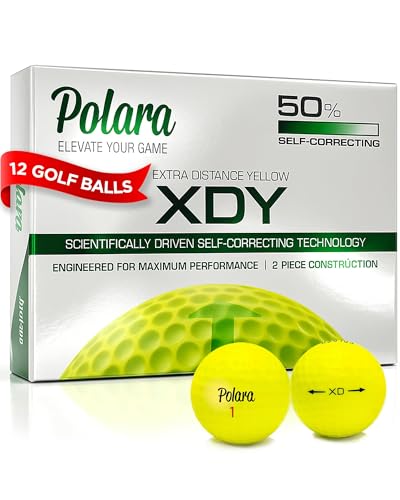
This Polara Extra Distance ball adds brightness and carry to the self-correcting design. I tried the yellow version at dawn and could track flight well. The core is tuned for extra distance, and the anti-slice traits help keep shots straighter. Bright color aids aim and recovery.
Short game feel is still on the softer side, though spin is muted. The corrected flight pattern gives confidence on bad swings. I recommend this model when you need visibility and length together with anti-slice help.
Pros:
- Anti-slice design with additional carry distance
- Bright yellow color improves visibility
- Soft feel for better feedback around greens
- Good for dawn or low-light rounds
- Durable finish holds up to repeated play
Cons:
- Not USGA conforming for tournament play
- Slightly less spin on approach shots
- Higher cost vs generic distance balls
My Recommendation
I suggest the Polara Extra Distance yellow ball for players who want both straighter flight and easier tracking. I used it on long par-4s and found drives flew further while curbing the slice. If visibility matters to you, this version of Polara is a strong pick among the best golf ball for slice options.
| Best for | Why |
|---|---|
| Early-morning golfers | High-visibility yellow tracks well |
| Distance lovers | Core tuned for extra carry |
| Average hackers | Corrects slice while adding confidence |
HoneyGolf HoneyStick – Anti Slice Gel

HoneyStick is similar to FlightFix but made by a different company. I used the gel on drivers and hybrids during range practice. The product reduces hook and slice spin on impact. Results showed narrower dispersion and straighter trajectories for my mis-hits.
It is small and easy to carry in a range bag. The gel is removable and lasts for a few swings per application. I found it useful when testing different ball models to isolate the effect of lower side spin.
Pros:
- Effective at reducing side spin in practice
- Compact and easy to apply
- Helps players visualize straighter flight
- Good for short training sessions
- Affordable and reusable
Cons:
- Not allowed in competition use
- Temporary and needs reapplication
- Does not address swing mechanics long-term
My Recommendation
I recommend the HoneyGolf HoneyStick for players who want a quick training aid to see the effect of reduced side spin. I used it to compare ball flights and liked how it tightened shot patterns. If you’re learning to hit straighter drives, this gel is a good, low-cost training tool among best golf ball for slice strategies.
| Best for | Why |
|---|---|
| Range users | Fast application for practice sessions |
| Coaching drills | Clear visual change in dispersion |
| Experimenters | Test low side spin without buying new balls |
Slic Stic – Anti-Slice Stick

The Slic Stic is one of the original anti-slice compounds. I tested it years ago and it still works as advertised. Apply a thin layer to the ball before hitting. It reduces outer edge friction and cuts side spin in a way that tightens groupings for off-center shots.
It’s simple and low-tech. For range sessions and practice rounds, Slic Stic gives quick insight into how much side spin influences your scores. I use it when teaching players how less sidespin affects shot shape and control.
Pros:
- Time-tested anti-slice formula
- Improves shot grouping in practice
- Small, affordable, and easy to carry
- Good for demonstrating ball-flight physics
- Helps focus on contact quality
Cons:
- Temporary effect and not tournament legal
- Needs careful application for consistent results
- Won’t replace proper swing fixes
My Recommendation
I recommend the Slic Stic for coaches and players who need a simple tool to reduce side spin during practice. I used it in lessons and saw immediate tightening of dispersions. It’s a valuable complement to finding the best golf ball for slice solutions because it helps isolate the ball’s behavior from the swing.
| Best for | Why |
|---|---|
| Golf coaches | Fast demonstration tool for students |
| Range drills | Improves pattern clarity during practice |
| New golfers | Shows benefits of reducing side spin |
Polara Extra Distance – White
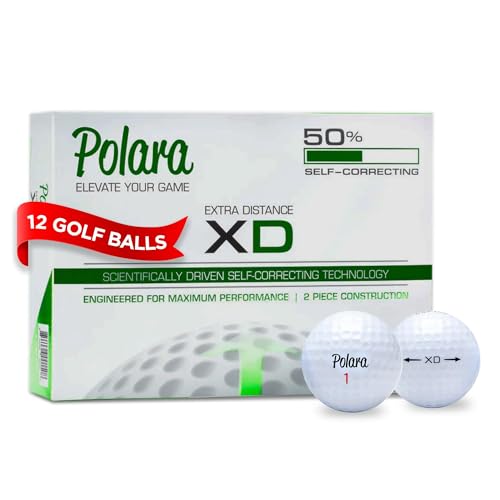
The white Extra Distance Polara keeps the same anti-slice traits while offering a classic look. I used this pack for tournament practice rounds where visibility wasn’t an issue. It gives extra carry and helps tame a slice in windy conditions. Ball flight is straighter compared to standard distance balls.
The white finish feels familiar. If you prefer traditional color but still need slice correction, this option fits both needs. It delivers consistent distance and correction for errant tee shots without a bright color option.
Pros:
- Classic white look with anti-slice technology
- Extra distance and straighter drives
- Good durability and feel balance
- Great for players who avoid colored balls
- Reliable performance across many rounds
Cons:
- Non-conforming for certain events
- Less spin for short-game finesse
- Not designed for low-handicap shot shaping
My Recommendation
I recommend Polara Extra Distance white for players who want the anti-slice effect with a familiar look. I found it kept drives straighter while adding yardage. If you want the best golf ball for slice in a classic finish, this is a practical choice.
| Best for | Why |
|---|---|
| Traditionalists | White ball look with modern correction |
| Distance hunters | Tuned core for extra carry |
| Weekend competitors | Reliable off-the-tee performance |
Polara Extra Spin – White

Polara Extra Spin aims to combine correction with more short-game bite. I tested it around greens and found it adds a touch more control than other Polara models. Off the tee the ball still resists big slices, but approach spin is more present than the distance models.
This makes Extra Spin a bridge product. It helps slicers on the tee while not sacrificing as much spin near the hole. For players who want a more rounded performance, this is my preferred Polara variant for mixed needs.
Pros:
- Better short-game spin while retaining anti-slice traits
- Balanced feel for greenside shots
- Reduces side spin on drives
- Good for players who want correction plus control
- Durable and consistent across conditions
Cons:
- Still not USGA conforming for some events
- May not match tour-level spin for pro players
- Price is higher than plain distance balls
My Recommendation
I recommend Polara Extra Spin for golfers who want correction on the tee and better control around greens. I used it across a variety of holes and liked the balance. If you need the best golf ball for slice but still need short-game spin, this model is a strong, versatile choice.
| Best for | Why |
|---|---|
| All-round players | Correction plus added short-game spin |
| Mid-handicaps | Balanced playability across clubs |
| Practice-to-competition | Closer to natural ball behavior while correcting slice |
FAQs Of best golf ball for slice
What makes a ball the best golf ball for slice?
A ball that resists side spin helps reduce a slice. Designs include offset cores, asymmetric dimples, or low-spin cores. These features cut sidespin and keep drives straighter. I look for consistent flight and repeatable correction in the best golf ball for slice picks.
Are anti-slice balls legal for tournament play?
Many anti-slice balls exceed USGA limits and are not tournament legal. Some models are legal and focus on low-spin cores. If you play competitive rounds, check the ball’s conformity. I always confirm rules before using a corrective ball in an event.
Will a special ball fix my swing?
No. A ball can mask a slice and make your shots straighter, but it won’t fix swing flaws. Use corrective balls for confidence and practice aids to train proper mechanics. I recommend combining a low-spin ball with lessons for lasting change.
Can I use compounds like FlightFix or Slic Stic in competitions?
No, applying compounds to balls usually breaks tournament rules. These products are best for range work and practice. I use them as teaching tools to show the effect of less side spin, not in tournament play.
Which is best for beginners—corrective balls or lessons?
Lessons first, then corrective balls if needed. I believe lessons build long-term skill. A ball helps confidence while you learn. Combine both for faster improvement and more enjoyable rounds.
Final Verdict: Which Should You Buy?
For most golfers fighting a slice, the Polara Self-Correcting ball (soft feel) is the best golf ball for slice. It balances correction, feel, and visibility while delivering straighter drives and fewer lost balls.
If you want training tools, use compounds like FlightFix or Slic Stic at the range to learn reduced side spin. The right ball plus focused practice gives the fastest results toward a cleaner, straighter game.