How Accurate Is A Golf Simulator: Accuracy Explained
Most modern golf simulators are very accurate for swing data and distance when set up correctly.
I have tested and used many launch monitors and simulators. I will walk you through how accurate is a golf simulator, what affects accuracy, and how to get real-world numbers you can trust. Read on for clear guidance, real tests, and practical tips to improve your indoor shots.
How golf simulators work
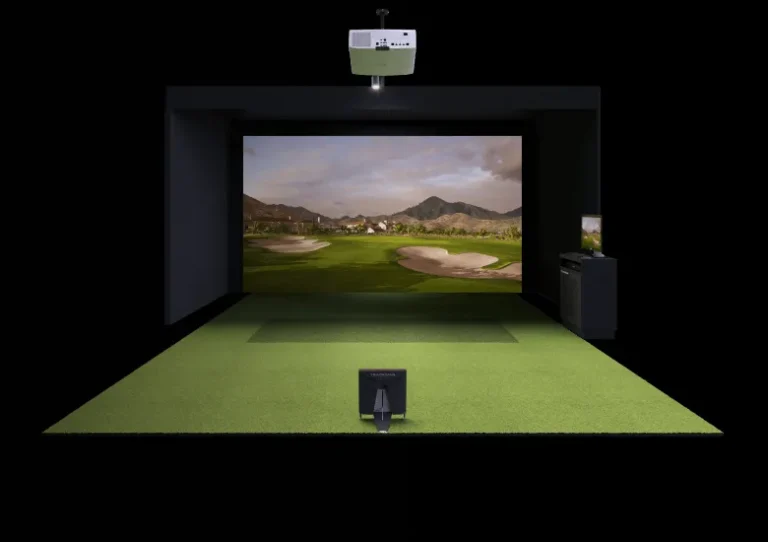
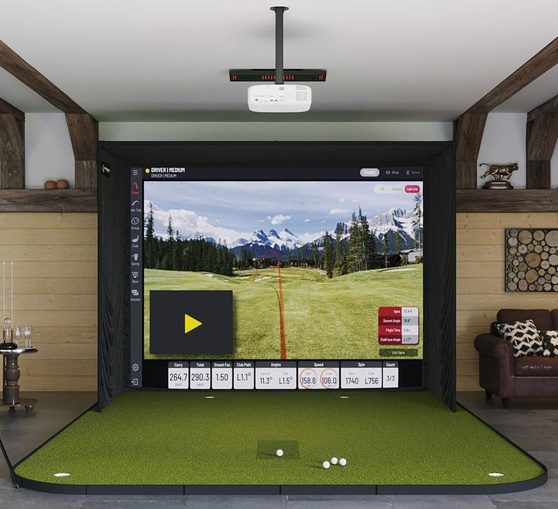
Golf simulators use sensors and software to turn a real shot into digital data. They rely on cameras, radar, or photometric sensors to measure ball speed, launch angle, spin, and club data. Software then uses physics models to compute carry, total distance, and ball flight. Knowing this helps you judge how accurate is a golf simulator for your goals.

Key factors that determine accuracy
Accuracy varies by many simple factors. Here are the main ones:
- Sensor type
- Radar measures ball flight in free air and is strong at tracking spin and speed.
- High-speed cameras (photometric) capture ball marks and clubface data at impact.
- Data captured
- Ball speed and launch angle are easier to measure than spin or side spin.
- Club data is harder indoors without direct club tracking.
- Environment and setup
- Ceiling height, screen distance, lighting, and launch angle affect readings.
- Using a mat and real ball matters for realistic spin and launch.
- Software and modeling
- The simulator converts raw data into predicted carry and total.
- Different software uses different ball flight models and wind tables.
- Calibration and maintenance
- Regular calibration keeps sensors accurate.
- Firmware and software updates can improve tracking and fixes bugs.
These factors explain why answers to how accurate is a golf simulator are never one-size-fits-all.

Typical accuracy ranges you can expect
Expect different accuracy levels by device class. These ranges are general and depend on setup and conditions.
- High-end systems (professional launch monitors)
- Ball speed: within 0.1–0.5 mph
- Club speed: within 0.2–0.5 mph
- Launch angle: within 0.2–0.8 degrees
- Spin: within 50–200 rpm
- Carry distance: within 0.5–2 yards
- Mid-range consumer systems
- Ball speed: within 0.5–1.5 mph
- Launch angle: within 0.5–2 degrees
- Spin: within 200–600 rpm
- Carry distance: within 2–6 yards
- Entry-level or entertainment setups
- Ball speed and launch can be rough
- Spin is often estimated
- Carry distance may vary by 6–15 yards
When asking how accurate is a golf simulator for your game, compare these ranges to what you need for practice or club fitting.

How to test simulator accuracy at home
Run simple tests to see how accurate is a golf simulator in your space. Follow these steps:
- Warm up and hit 10 consistent shots with one club.
- Note the simulator’s ball speed, launch angle, spin, and carry for each shot.
- Use a rangefinder or measure on an outdoor range for a baseline.
- Compare averages and standard deviations. Repeat with another club.
- Change one variable at a time (ball type, mat, or launch monitor height) and retest.
Use short, consistent sessions and multiple shots to reduce random error. This gives a real sense of how accurate is a golf simulator in your setup.
Common misconceptions and limitations
People expect indoor numbers to match outdoor play exactly. That is not always true. Common limits include:
- Spin capture
- Low-end systems often guess spin, which hurts distance accuracy.
- Off-center hits
- Simulators can misread shots hit away from center of the clubface.
- Simulated environment
- Indoor air and lack of wind change ball behavior versus outside.
- Club data gaps
- Some systems do not track clubface angle or path precisely, limiting shot-shape accuracy.
- Software models
- Predicted carry can differ between software even with the same raw data.
Being aware of these limits helps you interpret numbers and improves practice value.

Tips to improve accuracy
Small changes can make readings more reliable. Try these tips:
- Use real, scuffed golf balls rather than brand-new or foam balls.
- Mount the launch monitor at the recommended height and distance.
- Keep lighting steady; avoid bright backlight on camera systems.
- Calibrate the device per the manufacturer’s steps often.
- Use consistent tee height and mat firmness for repeatable ball contact.
- Update software and firmware; updates often fix tracking bugs.
These steps reduce noise and make answers to how accurate is a golf simulator more meaningful.

Choosing a simulator based on accuracy needs
Pick gear based on your goals. Consider these use cases:
- Serious players and club fitters
- Invest in professional launch monitors with direct spin and clubface data.
- Coaches and learners
- Mid-range systems balance cost and accuracy for training and swing work.
- Casual play and entertainment
- Focus on user experience, graphics, and fun. Accuracy can be lower.
- Space and budget
- Measure room height and width before buying. Better accuracy often needs space.
Knowing how accurate is a golf simulator relative to your goals helps you budget wisely and avoid regret.

My experience testing accuracy
I’ve spent time testing several simulators in both home and club settings. I learned three clear lessons:
- Consistency matters more than a single perfect reading. Repeated shots reveal true trends.
- Spin and off-center hits are the biggest sources of error for indoor sims.
- Proper setup cut typical error by half. Small setup mistakes added large swings in carry numbers.
A mistake I made early was trusting single-shot outputs. After switching to averages and better setup, results matched my outdoor practice much more closely.
Frequently Asked Questions of how accurate is a golf simulator
How accurate is shot distance on a golf simulator?
Shot distance can be very accurate on high-end systems, often within 1–2 yards for carry. Mid-range units typically vary more, around 2–6 yards, depending on setup and spin capture.
Can a golf simulator match outdoor ball flight exactly?
Not exactly. Indoor air, ceiling, and lack of natural wind change flight. Good simulators model flight well, but some differences remain.
Does the type of ball affect accuracy?
Yes. Ball compression and cover texture change spin and launch. Use a ball type that matches your outdoor practice for better accuracy.
Do all simulators measure spin accurately?
No. Top-tier photometric and radar systems track spin well. Entry-level units often estimate spin, which reduces accuracy in distance and shape predictions.
How often should I calibrate my simulator?
Calibrate per the device guide and after moving or changing your setup. Regular checks, such as monthly or before a session, keep accuracy consistent.
Conclusion
Understanding how accurate is a golf simulator depends on the device, setup, and your goals. High-end systems provide near-professional accuracy for speed, launch, and carry, while budget setups serve fun and basic practice. Test your system, use consistent routines, and focus on averages over single shots. Try the tips here today, tune your setup, and track your progress. If you learned something useful, leave a comment, subscribe for updates, or test a few of these steps and share your results.