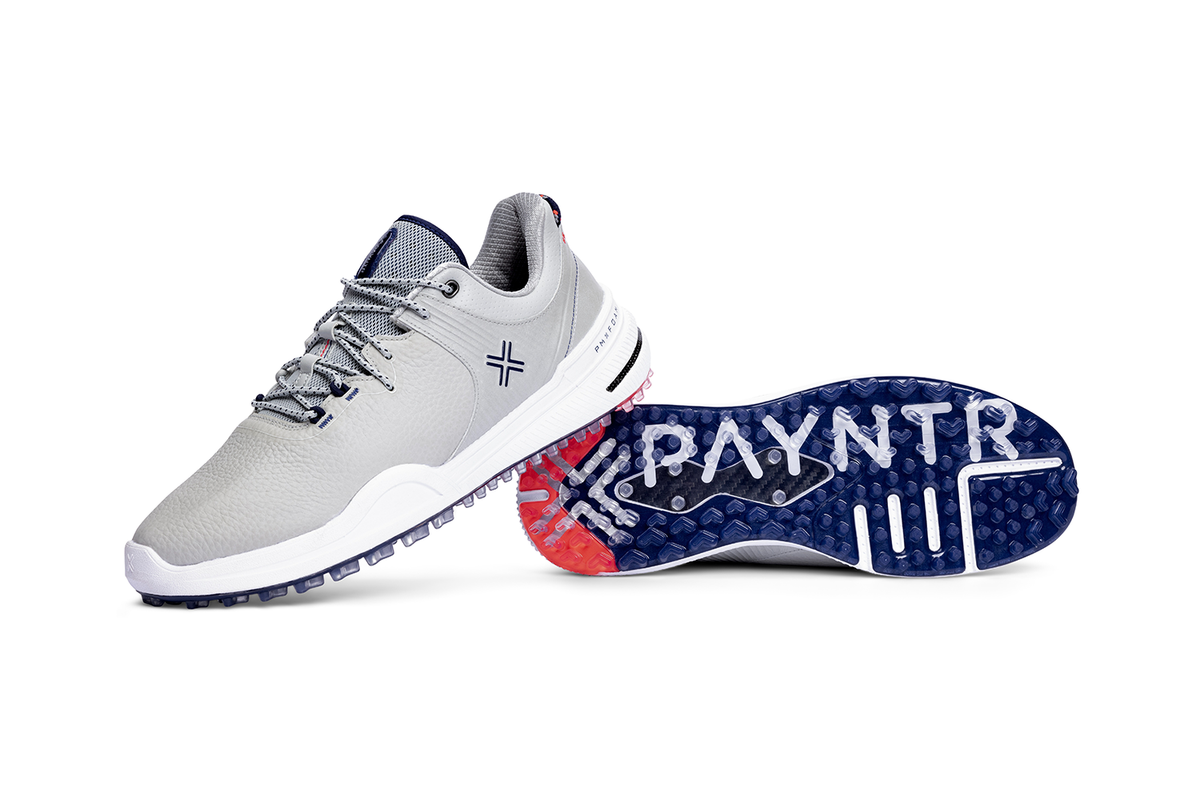
How Do Payntr Golf Shoes Fit: Sizing Guide
Payntr golf shoes often fit close to a normal athletic-shoe size, but the best fit depends on the model, foot shape, socks, and how much room you prefer. Golf shoes should feel snug at the heel and midfoot, with enough space for your toes to spread during the swing. Measure both feet, check the model’s size guide, and test the fit while standing and walking.

Quick answer: How do Payntr golf shoes fit?
Payntr golf shoes are generally designed to feel secure through the heel and midfoot while allowing natural toe movement. Many golfers can begin with their usual athletic-shoe size, but do not assume every model fits the same. Check the current size chart, measure your feet late in the day, and allow room for golf socks and foot swelling during a long walking round.

The main goal is not a tight fit. It is a stable fit. Your heel should not lift, your toes should not touch the front, and your foot should not slide inside the shoe when you make a turn.
Fit can also change with the shoe shape. A golfer with a narrow heel may need a different size than a golfer with a wide forefoot. A junior, senior, or player with a high instep may need more room in one area and less in another.
Why golf shoe fit matters
A well-fitted Payntr golf shoe can help you keep a stable base during the golf swing. It can also reduce movement inside the shoe while you walk from the tee box to the green. A poor fit may lead to hot spots, blisters, toe pressure, or foot fatigue before the back nine.

Your feet support every part of the swing. They help you sense balance during the backswing, transfer pressure in the downswing, and stay steady through impact and the follow-through. If your shoes move too much, your body may make small changes to protect your feet.
Those changes can affect posture, grip pressure, tempo, and rotation. A shoe cannot correct a swing fault, but a stable shoe can remove one source of distraction.
Fit affects walking comfort
Walking golfers need a fit that remains comfortable for several hours. Feet often swell during a round, especially in warm weather. Shoes that feel perfect for five minutes in the morning may feel too tight after 14 or 18 holes.
This point matters most for golfers who walk hilly courses, links courses, or long championship layouts. It also matters for seniors and players returning to golf after a break. Comfort can help you keep a steady pace of play without changing your stride.
Fit affects swing stability
A golf shoe should hold your foot without squeezing it. Your heel should stay in place when you turn, and the sole should sit evenly on the ground. The upper part of the shoe should not press hard on the top of your foot during your stance.
Players with fast swing speeds may notice poor fit more quickly. A powerful downswing creates more pressure against the inside edge of the shoe. beginners may notice it during balance drills, chipping, or uneven lies instead.
| Fit area | What a good fit feels like | Warning sign |
|---|---|---|
| Heel | Secure with little movement | Heel lifts with each step |
| Midfoot | Held firmly but not squeezed | Foot slides side to side |
| Toes | Able to spread and move | Toes touch the front |
| Instep | Even pressure from the upper | Numbness or a hot spot |
A good fit should feel balanced from heel to toe. Do not solve a heel problem by forcing your toes into a smaller size.
How to measure your feet for Payntr golf shoes
The best way to choose a starting size is to measure both feet while standing, wearing the socks you plan to use for golf. Feet can differ in length and width, so use the larger foot when comparing measurements with the current Payntr size guide.
You can measure your feet at home with paper, a pencil, a ruler, and a flat floor. Measure late in the day if possible. This reflects the slight swelling that can occur during walking and exercise.
A simple foot-measuring method
- Place a sheet of paper on a hard floor.
- Stand on the paper with your full weight on the foot.
- Keep your heel lightly against a wall or straight edge.
- Trace around the foot, or mark the back of the heel and the end of the longest toe.
- Measure the distance between those two points.
- Measure both feet.
- Compare the larger measurement with the current Payntr chart.
- Repeat the process for foot width if the chart provides width guidance.
Do not measure while sitting. The foot spreads more under body weight. Also, do not measure with your toes curled. Both errors can lead to a shoe that feels too short.
Use the longest toe, not always the big toe
Some people have a second toe that extends farther than the big toe. This is normal. Use the longest toe when measuring length.
The shoe should leave a small amount of space in front of that toe. The exact amount depends on the model and your foot shape, but your toes should not touch the end when you walk downhill or shift pressure in the swing.
Measure width as well as length
Length alone does not tell the full story. A foot can be short and wide, long and narrow, or broad across the toes with a narrow heel. These shapes can make the same labeled size feel very different.
A wide forefoot may need a roomier shape. A narrow foot may need a closer fit through the midfoot. If a shoe fits your toes but slips at the heel, the problem may be shape rather than length.
| Measurement | Why it matters | Best time to check |
|---|---|---|
| Foot length | Helps set the starting size | While standing |
| Foot width | Shows pressure across the forefoot | With normal socks |
| Heel width | Helps predict heel slip | During walking |
| Instep height | Shows top-of-foot pressure | While laced |
| Left-right difference | Helps you fit the larger foot | Every time you change size |
Use the larger foot as your main reference. You can adjust a small difference with lacing or an insole only if the shoe remains comfortable and stable.
How to check the fit at home
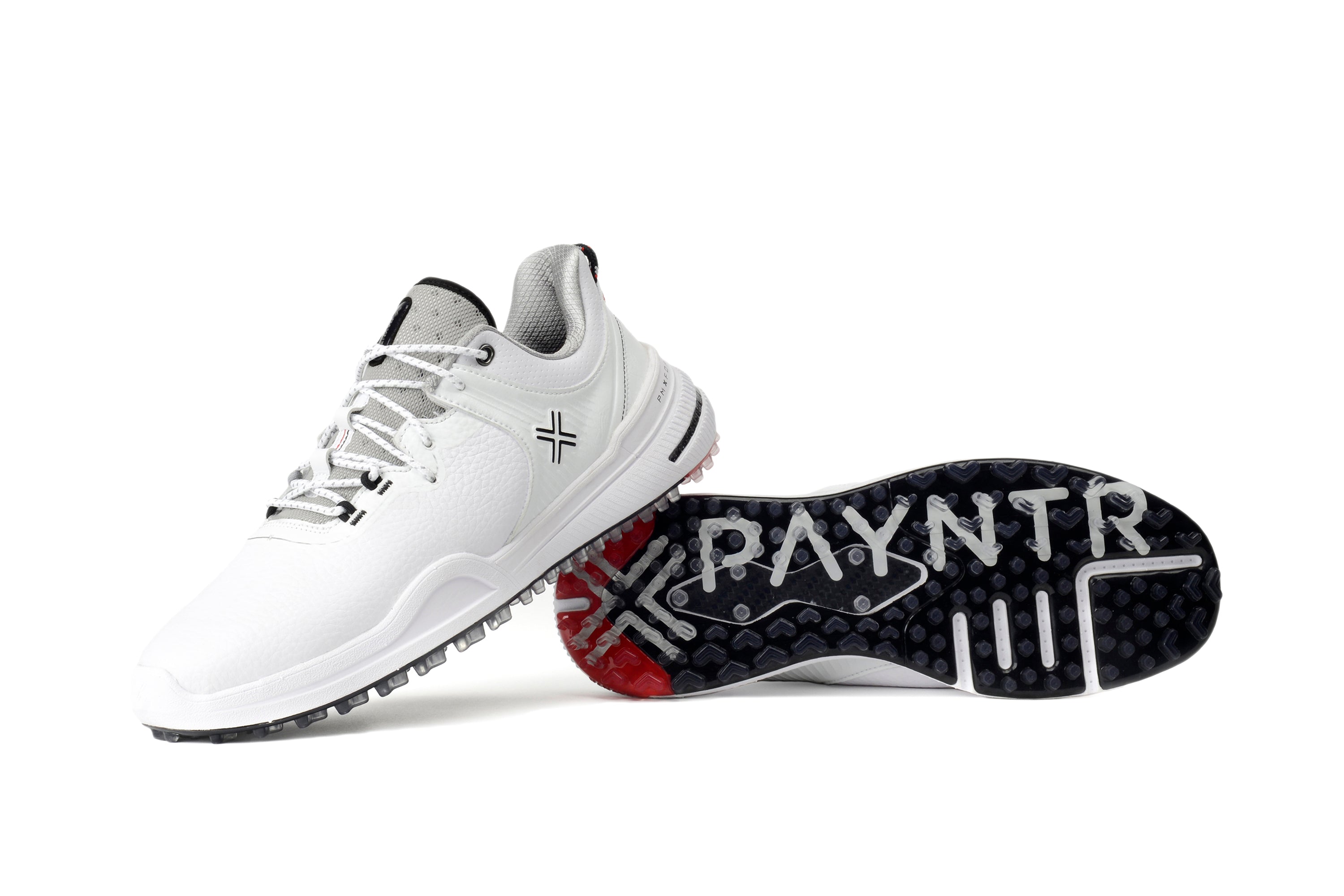
The best way to check Payntr golf shoe fit is to test the shoes in the same conditions you use on the course. Wear golf socks, stand up, walk, bend your knees, and make slow practice swings. A seated check alone is not enough.
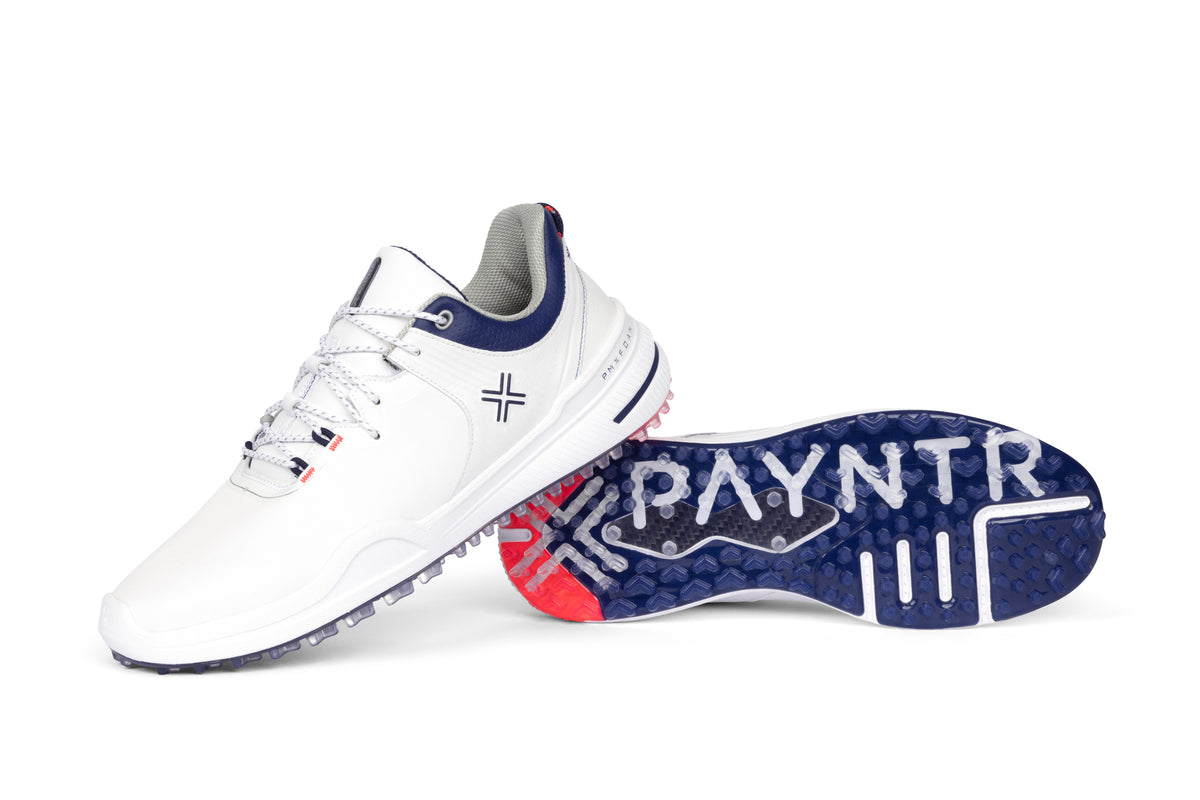
If the shoes are new, protect the soles while checking them indoors. This lets you focus on fit without confusing normal early stiffness with a size problem. Follow the seller’s or manufacturer’s return instructions if the shoes are not suitable.
Check length while standing
Stand with your weight spread evenly across both feet. Your longest toe should not press against the front. Walk forward, stop, and shift your weight toward the toes.
If your toes hit the front during this test, the shoes may be too short. This is especially important for golfers who walk downhill, play hilly courses, or use a push cart.
Check heel movement
Walk at a normal pace. Then walk faster, step sideways, and rise onto the balls of your feet. A small amount of movement can be normal, but your heel should not lift sharply with each step.
Next, make slow practice swings. Your heel should stay controlled as your body turns. If the heel lifts, try the lacing pattern intended for heel security. If the problem remains, the shoe shape may not match your heel.
Check the toe box
The toe box is the front part of the shoe that surrounds your toes. It should give your toes enough room to spread without allowing your foot to slide forward.
Look for signs of pressure. These include curled toes, numbness, rubbing on the small toe, or a red mark across the forefoot. A roomy toe box is useful for many walkers, but too much space can reduce stability.
Check the instep
The instep is the top middle part of your foot. Lace pressure should feel even. You should not feel a hard ridge pressing into the top of the foot.
A high instep can make a correctly sized shoe feel too tight. Loosening the middle eyelets may help, but do not use loose laces to hide a shoe that is too small.
Use a golf stance
A golf shoe can feel fine during a straight walk but uncomfortable in a golf stance. Set your feet about shoulder-width apart, bend slightly from the hips, and make slow swings.
Test a few movements:
- A half backswing with an iron
- A slow driver turn
- A chip shot
- A gentle putting stance
- A step onto an uneven surface
These movements show whether your foot slides, whether the upper folds in the wrong place, and whether the sole feels stable.

Payntr golf shoe sizing by golfer type
Payntr golf shoe fit is not only a men’s or women’s sizing question. It also depends on age, foot shape, walking habits, and physical needs. The right test for a beginner may differ from the right test for a competitive player.

A new golfer may focus on comfort and basic stability. An improving amateur may pay more attention to heel hold during the downswing. A junior’s family should focus on safe room for growth without allowing the foot to slide inside the shoe.
Men’s fit
Men’s feet often vary widely in width and instep height. Do not assume a standard men’s size will fit every foot. Measure length and width, then check how the shoe holds the heel.
Men who walk often should try the shoes with the socks they use on the course. A thick sock can change the fit. A thin sock can create extra movement.
Women’s fit
Women’s feet may have a narrower heel compared with the forefoot, although every foot is different. A shoe that feels fine across the toes may still slip at the back.
Women golfers should check heel security and forefoot pressure separately. Do not size down just to stop heel movement if doing so makes the toes touch the front.
Junior golfers
Children grow quickly, but an oversized golf shoe can create a safety problem. Too much extra room may cause tripping, foot sliding, and poor balance during the swing.
For juniors, choose a secure fit rather than a large allowance for growth. A parent should check toe room, heel hold, and walking comfort. Junior-sized equipment, proper warm-up, and a clear swing area also matter.
👪 Parent or Beginner Note: A junior should be able to walk, squat, and make a slow practice swing without the shoe shifting. If the foot slides inside the shoe, extra length is not useful growth room; it is lost control.
Senior golfers
Senior golfers may have changes in foot width, arch height, balance, or joint comfort. Swelling can also be more noticeable after walking. A stable heel and comfortable toe box may matter more than a close, performance-style fit.
A senior golfer with back, knee, foot, or balance concerns should avoid using shoes to work around pain. Seek medical advice for ongoing pain, and consider a lesson with a PGA professional if balance during the swing is a concern.
Left- and right-handed players
Payntr shoe sizing does not normally change based on whether you play left-handed or right-handed. However, the golf swing can create different wear patterns on each foot.
Right-handed players may feel more pressure on the trail foot during the backswing and on the lead foot during the downswing. Left-handed players reverse those roles. Both players should test lateral movement in both directions.
| Golfer | Fit priority | What to test |
|---|---|---|
| Beginner | Comfort and balance | Walking, stance, and short swings |
| Improving amateur | Heel hold and side support | Full-speed practice swings |
| Senior | Cushioning, stability, and room | Walking time and balance |
| Junior | Secure fit and safe movement | Squats, steps, and slow swings |
| Frequent walker | Long-round comfort | Socks, swelling, and hills |
| Competitive player | Consistent hold | Tempo and pressure shifts |
No single fit suits every golfer in a group. Handicap does not determine shoe size, but playing ability can affect how closely you examine stability and movement.

Do Payntr golf shoes run true to size?
Payntr golf shoes may feel true to size for many golfers, but “true to size” is not a fixed rule. It means the shoe matches a common size expectation, not that every foot will fit the same size in every model.

A model with a more generous toe shape may feel longer than a model with a closer upper. A different sole, collar, or lacing system can also change the fit. This is why the model-specific size chart matters more than a general brand assumption.
Why the same size can feel different
Several details can change fit:
- Last shape, which is the mold used to form the shoe
- Upper material and how it bends
- Toe-box width
- Heel-collar shape
- Insole thickness
- Sock thickness
- Foot swelling
- Lacing pattern
- Whether you walk or ride
A shoe may feel snug at first because the upper is firm. That does not always mean it is too small. However, pressure, numbness, or toe contact are not problems that a break-in period should fix.
Should you size up?
Sizing up can help if your toes touch the end or if the forefoot feels cramped. It may create a new problem if the heel then slips or the midfoot feels loose.
Try to solve the actual issue. If the length is correct but the width is wrong, a larger size may not be the best answer. If the shoe is short, a larger size may be needed, but check heel movement after the change.
Should you size down?
Sizing down to stop heel slip can cause toe pressure and foot fatigue. It may also force your toes to curl. This can affect balance and comfort during a long round.
A heel problem is often a shape or lacing problem, not a length problem. Test the heel first, then inspect the toe room.
| Symptom | Likely issue | First check |
|---|---|---|
| Toes touch the front | Shoe is too short | Measure the larger foot |
| Heel slips | Shape or lacing mismatch | Use a heel-lock lace |
| Toes feel squeezed | Narrow toe box | Check width and toe shape |
| Top of foot hurts | High instep pressure | Loosen middle eyelets |
| Foot slides in rain | Wet socks or loose fit | Check socks and laces |
| Blister on one foot | Uneven foot shape or rubbing | Compare both feet |
These clues are not a medical diagnosis. Persistent blisters, numbness, or pain deserve attention from a qualified health professional.

Lacing and insole adjustments
Lacing can fine-tune a good fit, but it cannot turn the wrong size into the right size. The goal is even pressure and a secure heel without cutting off circulation.

Start with normal lacing. Walk and make slow swings. Then make one change at a time so you know what helped.
Heel-lock lacing
A heel-lock pattern uses the top eyelets to hold the heel more firmly. It can help golfers whose heel lifts while the front of the shoe fits well.
Do not pull so hard that the top of the foot becomes numb. After lacing, flex your ankle and walk several steps. Your heel should feel held, not trapped.
Adjusting pressure points
If the top of your foot feels tight, leave a small section of the middle eyelets less tight. If the forefoot feels loose, use even tension across the lower eyelets.
Avoid tying the shoe only at the top. Uneven tension can create pressure points and allow the foot to slide.
Insoles and foot shape
An insole can change the internal volume of a shoe. A thicker insole may reduce room at the instep. A thinner one may create more space but can change support and feel.
Use only an insole that sits flat and does not make the foot unstable. If you use custom orthotics, check the shoe with them in place. The fit with the factory insole may not match the fit with your orthotic.
💡 Pro Tip: Test lacing in your golf stance, not just while standing tall. The ankle and instep change position when you bend from the hips and rotate through the swing.
Fit for different course conditions
Weather and course type can change how Payntr golf shoes feel. A dry summer round, a wet morning, and a cold links day place different demands on the upper, socks, and sole.

Fit does not replace traction. A shoe that fits well may still need careful use on wet grass, slopes, or soft ground. Follow the shoe’s care guidance and observe local course conditions.
Warm weather
Heat can increase foot swelling and sweat. Wear the socks you plan to use, and check the shoes after a short walk. A fit that is slightly close may become uncomfortable later.
Drink water, use sun protection, and take breaks when needed. Heat can affect focus and pace of play as well as foot comfort.
Wet weather
Wet socks can increase rubbing and blisters. A shoe may also feel less secure if moisture changes the sock or foot surface. Check that your laces remain tied and that your feet do not slide inside the shoe.
Be careful on wet slopes, bridges, wooden surfaces, and cart paths. Lightning is a greater danger than wet feet. Leave the course at the first warning and follow the facility’s emergency plan.
Cold weather
Cold conditions can make materials feel less flexible. Thick winter socks also take up more space. Test the shoe with the exact socks you will wear.
Do not make a cold-weather shoe so tight that circulation suffers. Numb feet can reduce balance and awareness.
Links and firm ground
Links courses can include firm turf, uneven lies, wind, and long walks. A stable fit helps you keep a consistent stance, but it does not remove the need to adjust posture and balance.
On firm ground, use shorter swings when needed and keep your weight controlled. A shoe should not encourage you to swing harder than the lie allows.
| Condition | Fit concern | Helpful adjustment |
|---|---|---|
| Hot and humid | Swelling and sweat | Use normal golf socks and check room |
| Wet grass | Rubbing and foot slide | Secure laces and dry feet |
| Cold weather | Thick socks and stiffness | Test the full winter setup |
| Hilly course | Toe pressure downhill | Check front room while walking |
| Firm links turf | Uneven balance | Use controlled swings |
| Soft ground | Mud and heavy steps | Clean soles and shorten stride |
Course conditions affect comfort, but safe play comes first. Slow down on slopes and maintain awareness around carts and other groups.

Walking, riding, and break-in time
Payntr golf shoes may feel different when you walk compared with when you ride. Walking creates more repetition, more foot swelling, and more friction. Riding reduces steps but does not remove the need for a stable stance.

There is no exact time that every golf shoe needs to break in. A flexible upper may feel comfortable at once. A firmer shoe may need several short sessions before it feels natural.
A safe break-in plan
- Wear the shoes indoors for 10 to 15 minutes.
- Walk on a clean, flat surface.
- Check for rubbing, pressure, and heel slip.
- Make slow practice swings.
- Wear them for a short range session.
- Use them for a few holes before a full walking round.
- Stop if you develop pain or a sharp hot spot.
Do not use a full 18-hole event as your first test. That gives you too little time to notice and fix a problem.
What break-in can and cannot fix
Break-in may reduce mild stiffness in the upper or collar. It should not be expected to fix toes touching the front, numbness, severe rubbing, or a heel that lifts with every step.
If pain persists, stop using the shoes and seek professional advice. A PGA professional can also help if footwear movement is affecting your stance or balance.
Common Payntr golf shoe fit mistakes
Most fit problems come from using one quick test or one size rule. Golfers often judge shoes while seated, wear the wrong socks, or ignore how the shoe feels during rotation.
These mistakes affect all skill levels. Beginners may not know what to look for. Experienced players may focus so much on traction or appearance that they overlook pressure and movement.
Mistake 1: Choosing size from memory
Your old golf shoes may not match the shape of your new shoes. Even the same labeled size can feel different across brands and models.
Measure your feet and check the current model guide. Use your usual size as a starting point, not as proof.
Mistake 2: Testing only on carpet
Carpet can hide movement. Test on a firm, level surface and use a golf stance. If you must check indoors, move slowly and protect the sole.
Mistake 3: Wearing casual socks
Golf socks may be thicker, longer, or made from a different fabric. Use the socks that you will wear during a round.
Mistake 4: Ignoring the larger foot
Many people have one foot that is slightly longer or wider. Fit the larger foot first. The smaller foot can sometimes be managed with lacing, but the larger foot should not be compressed.
Mistake 5: Expecting shoes to fix a swing
Footwear can support balance, but it cannot fix a slice, hook, poor posture, or early release. Swing faults need skill work, feedback, and sometimes a lesson.
Mistake 6: Playing a full round too soon
A short test can reveal most fit problems. Use it. A full round can turn a small hot spot into a painful blister.
| Mistake | Why it causes trouble | Better approach |
|---|---|---|
| Testing while seated | Foot is not under full load | Stand and walk |
| Using casual socks | Volume may change | Wear golf socks |
| Sizing down for heel slip | Creates toe pressure | Test lacing and shape |
| Ignoring width | Length does not show all fit issues | Measure width |
| Playing 18 holes at once | No time to adjust | Break in gradually |
| Blaming shoes for swing faults | Fit cannot teach technique | Practice or take a lesson |
🔧 Quick Fix: If a shoe feels secure at the heel but tight on top, adjust the middle laces before changing size. If your toes touch the front, do not rely on lacing to solve the problem.
A short fit test for beginners and improving golfers
A five-minute fit test can answer most basic questions. It suits beginners who need a simple process and improving golfers who want to compare how a shoe behaves during the golf swing.
Use this order:
- Stand in both shoes.
- Check toe room on the larger foot.
- Walk 20 to 30 steps.
- Stop and shift weight toward the toes.
- Bend into your golf posture.
- Make five slow practice swings.
- Make five gentle side steps.
- Check for pressure, slip, rubbing, or numbness.
- Repeat with your normal golf socks.
- Recheck after 20 minutes.
A beginner should focus on comfort, balance, and secure movement. An improving golfer can add faster swings, uneven-lie practice, and a short range session.
Fit checks by playing level
| Player level | Main focus | Test to add |
|---|---|---|
| New golfer | Comfort and safe walking | Stance and half swings |
| High-handicap player | Heel hold and toe room | Slow full swings |
| Improving amateur | Pressure transfer | Faster practice swings |
| Low-handicap player | Consistent feel | Range session and uneven lies |
| Junior | Secure movement | Squats and short steps |
| Senior | Comfort and balance | Longer walk at easy pace |
A shoe that suits a competitive player may not suit a new golfer. A close, firm feel can help one player feel connected but feel restrictive to another.
How shoe fit relates to golf technique
Golf shoe fit interacts with technique, but it does not replace technique. Your grip, stance, posture, backswing, downswing, impact, and follow-through still need practice.
A stable base can make it easier to repeat a movement. Yet a golfer who grips too tightly or sways may still lose balance in a well-fitted shoe.
Stance and posture
Set your feet so they feel balanced under your hips. Do not spread your stance wider just because a shoe feels unstable. Check the shoe first, then review your posture with a PGA professional if needed.
Tempo and pressure shift
Tempo is the overall speed and rhythm of the swing. A shoe that slips can make you slow down or rush without knowing why. Make practice swings at half speed, then build toward your normal tempo.
Chipping and pitching
Short-game shots still need stable footwork. For chipping, keep the stance narrow and the lower body quiet. For pitching, test whether the shoe holds as you rotate through the shot.
Bunker shots and uneven lies
Bunker shots require a stable stance in sand. Uneven lies require careful balance and club selection. A shoe can help you feel planted, but do not make a large swing on a dangerous slope.
Putting and green reading
Putting uses less force, but comfort still matters. A shoe that pinches your toes can distract you during green reading and setup. Stand evenly, keep your feet comfortable, and avoid shifting while you aim.
🌿 Course Care Note: Good golf footwear does not excuse poor course care. Repair ball marks, replace divots when allowed, rake bunkers, keep pace of play, and take broken tees and litter with you.
When to ask for help
Ask for help when fit issues remain after measuring, changing socks, and adjusting the laces. A store fitting professional or the shoe maker’s current support information can clarify model-specific details.
A PGA professional can help if your foot movement changes your stance, balance, or swing. This is useful for beginners learning basic posture and for improving golfers working on pressure transfer.
See a doctor or qualified health professional for persistent pain, swelling, numbness, recurring blisters, or pain in the foot, ankle, knee, hip, or back. Do not treat pain as a normal part of breaking in shoes.
Signs the problem may be the shoe
- Your heel lifts on every step
- Your toes hit the front
- Your foot slides during a slow swing
- A sharp seam rubs one spot
- Your toes become numb
- Pain continues after removing the shoes
- You change your swing to avoid pressure
Signs the problem may be your swing
- You lose balance in every shoe
- Your trail foot spins or slides often
- You sway far from the ball
- Your posture changes during the downswing
- You feel pain during many activities, not just golf
Both issues can exist at once. Solve the fit problem first, then work on movement with qualified guidance.
Payntr golf shoe fit and golf rules
Golf shoe fit has few direct Rules of Golf implications. The Rules of Golf govern how you play the ball, take relief, count strokes, and complete a round. They do not set one universal shoe size or require one type of golf shoe.
Local committees may set conditions about equipment, clothing, or event requirements. Some competitions may have policies on approved footwear or course access. Check the latest Rules of Golf and your local committee for updates.
Spikes and course policies
A facility may limit certain types of spikes or require shoes that protect the putting green. Follow the course’s policy. Never drag your feet across a green, and keep carts away from restricted areas.
Match play and stroke play
In stroke play, every stroke counts toward your total. In match play, players compete hole by hole. Stable footwear may support comfort in either format, but it does not change the score or a penalty.
The same applies to a scramble or Stableford event. A scramble uses the best shot chosen by the team, while Stableford awards points based on a scoring system. Check the event rules for special conditions.
📜 Check the Rules: Rules, handicap procedures, and local policies can change. Check the latest Rules of Golf, your handicap authority, and the committee in charge of the competition.
FAQs about how Payntr golf shoes fit
Q: Should I order my usual athletic-shoe size in Payntr golf shoes?
A: Your usual athletic-shoe size is a useful starting point, but it is not a guarantee. Compare your foot measurements with the current model-specific Payntr size chart. Test the shoes with golf socks while standing, walking, and making slow practice swings.
Q: Do Payntr golf shoes fit narrow or wide?
A: Fit can vary by model and by foot shape. A shoe may feel narrow across the toes but secure at the heel, or roomy in the forefoot but loose at the back. Measure width and inspect the toe box, midfoot, and heel separately.
Q: Should golf shoes feel tight at first?
A: They should feel secure, not painful. Mild material stiffness may improve with use, but toes touching the front, numbness, sharp pressure, and strong rubbing are signs to reassess the fit.
Q: How much room should be in the toe?
A: Your longest toe should not touch the front when you stand, walk, or shift pressure forward. You need enough space for natural toe movement and some swelling during a long round. The exact amount depends on the shoe shape and your foot.
Q: Why does my heel slip in my Payntr golf shoes?
A: Heel slip may come from loose laces, a narrow heel, a shoe that is too long, or a shape mismatch. Try a heel-lock lacing pattern. If the heel still lifts while the toe box fits, a different model shape may suit you better.
Q: Should I wear thick socks with Payntr golf shoes?
A: Wear the socks you plan to use during golf. Thick socks reduce internal space. Thin socks may allow more movement. Do not choose socks simply to hide a shoe that is too short or too wide.
Q: Are Payntr golf shoes suitable for walking 18 holes?
A: Suitability depends on the model, your foot shape, the course, and your walking habits. Test the shoes during short walks before a full round. Pay attention to swelling, hot spots, heel movement, and comfort after several hours.
Q: Do seniors need a different Payntr golf shoe size?
A: Not always. Seniors may need a different fit because of changes in foot width, swelling, balance, or comfort. Measure both feet and test the shoes while standing and walking. Seek medical advice for pain or balance concerns.
Q: How should Payntr golf shoes fit for women?
A: Women should use the same basic checks as all golfers: toe room, heel security, even pressure, and stable movement. A narrower heel or wider forefoot may affect which size or model feels best.
Q: How should Payntr golf shoes fit for juniors?
A: Junior shoes should hold the heel and midfoot securely while leaving safe toe room. Avoid sizing far up for growth. An oversized shoe can cause slipping and poor balance during walking and the swing.
Q: Can shoe fit affect my golf swing?
A: It can affect comfort and stability. A loose shoe may allow foot movement, while a tight shoe may distract you or change your stance. Shoes do not fix swing faults, so use practice and qualified instruction for technique changes.
Q: Do left-handed golfers need a different shoe fit?
A: No. Shoe size does not normally depend on playing hand. However, left- and right-handed golfers place pressure on opposite feet during the swing, so both should test lateral stability in both directions.
Q: How long does it take to break in Payntr golf shoes?
A: There is no single timeline. Some shoes feel natural quickly, while others need several short sessions. Break-in may reduce stiffness, but it should not be used to excuse severe pressure, toe contact, numbness, or pain.
Q: Can I use an orthotic in Payntr golf shoes?
A: It depends on the shoe’s internal shape and the orthotic. Test the shoe with the orthotic installed, not just with the original insole. The foot should remain stable, and the orthotic should sit flat without creating new pressure.
Q: What is a good golf shoe fit for beginners?
A: A good beginner fit feels comfortable while standing, walking, and making slow swings. The heel stays controlled, the toes have room, and the foot does not slide. Beginners should value safe movement and comfort over an extremely tight feel.
Q: Can weather change how my golf shoes fit?
A: Yes. Heat can increase foot swelling. Thick socks can reduce space in cold weather. Wet conditions can increase rubbing and foot movement. Test the shoes with the socks and conditions you expect to face.
Final thoughts
Payntr golf shoes should feel secure without feeling restrictive. Start with accurate foot measurements, use the current model size guide, and check the fit while standing, walking, and making slow golf swings. Focus on the larger foot, the longest toe, the heel, the toe box, and the instep.
A good fit can support comfort and balance for beginners, improving amateurs, seniors, women, men, juniors, walkers, and riders. It cannot replace sound posture, a steady tempo, good course management, or professional help when pain continues. Test carefully, respect course rules, and give your feet the same attention you give your grip and stance.