How To Use An 8x20mm Golf Range Finder: Quick Pro Tips
Point, steady, press measure, read distance, and adjust your shot accordingly.
I’ve used an 8x20mm golf range finder on dozens of rounds and in testing conditions, so I know what works and what trips golfers up. This guide explains what an 8x20mm golf range finder is, how it works, and exactly how to use one on the course — step by step, with practical tips, common mistakes, and real-life examples to help you lower scores quickly.
What is an 8x20mm golf range finder?
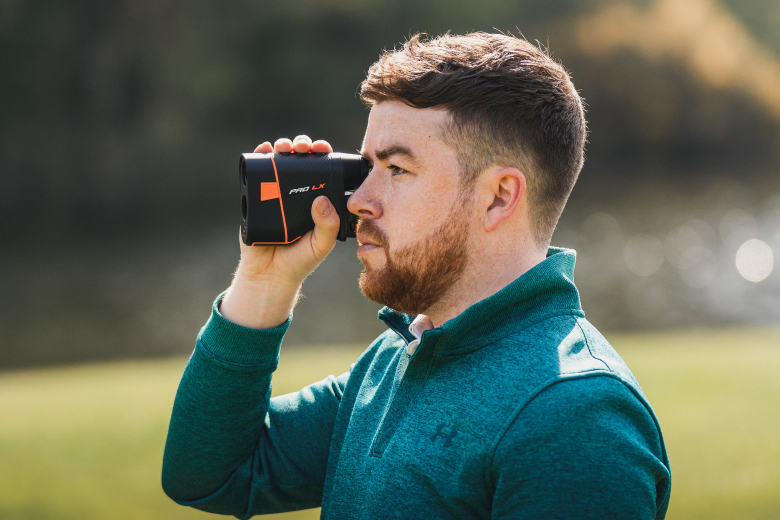
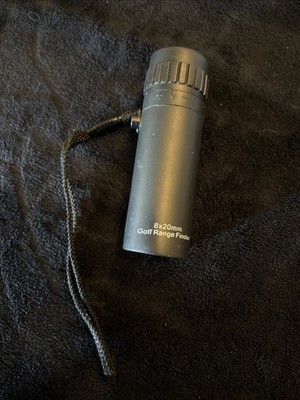
An 8x20mm golf range finder is a compact, handheld optical device with 8x magnification and a 20mm objective lens. It may be a pure optical rangefinder, a laser rangefinder, or a hybrid that combines optics with electronic distance measurement. The 8x magnification helps you see the flag clearly, while the 20mm lens keeps the unit small and light.
Why the numbers matter:
- 8x indicates how much closer the target appears compared to the naked eye.
- 20mm shows the lens diameter, which affects light gathering and low-light performance.
- The combination makes these units portable and easy to use on the course.
An 8x20mm golf range finder is popular with golfers who want a balance between size, clarity, and affordability. It is best for typical on-course distances and most approach shots.

How an 8x20mm golf range finder works
Most 8x20mm golf range finders you’ll see are laser rangefinders with an optical viewfinder. They fire a short laser pulse at the target and measure the time it takes to bounce back. The device converts that to a distance. Some models add angle compensation, which adjusts for uphill or downhill slopes.
Key parts and functions:
- Objective lens — gathers light and defines image brightness.
- Eyepiece with 8x magnification — enlarges the target for precision aiming.
- Laser emitter and sensor — measure distance using time-of-flight.
- Mode buttons — switch units, slope on/off, continuous scan, or pin-seeking.
Safety and legal notes:
- Never point the laser at people’s eyes or aircraft.
- Check tournament rules: slope mode may be banned in some competitions.

Step-by-step: How to use an 8x20mm golf range finder on the course
Follow these steps to get reliable distances fast with your 8x20mm golf range finder.
- Prepare and power on
- Turn the unit on shortly before the shot to save battery.
- Set units to yards or meters depending on your preference.
- Hold steady and use both eyes
- Hold the range finder with a relaxed grip and bring it to your eye.
- Keep both eyes open if your model supports that; it reduces sway and helps target acquisition.
- Aim at the flag or target
- Look through the viewfinder and center the flag or chosen target.
- If the flag is thin or far, aim slightly below the top to capture the pole.
- Use the correct mode
- If allowed and useful, enable slope compensation for elevation-adjusted yardage.
- Use pin-seeking or auto-lock modes if your unit offers them to lock onto the flag.
- Press the measure button
- Tap the measure button; many units beep, flash, or vibrate when locked.
- Hold steady until the reading appears.
- Read and interpret the result
- Read the displayed distance. If slope mode is on, you may see adjusted yards.
- Decide club selection based on actual distance, wind, and lie.
- Double-check if unsure
- If readings vary, take a second measurement from the same spot. Use scan mode to get a continuous read as you move the laser over the green.
Practical example:
- For an 8x20mm golf range finder reading of 155 yards to the pin and a slight uphill, rely on the slope or add 5–7 yards manually depending on steepness.

Practical tips and common mistakes
These tips come from rounds where I improved accuracy and lessons from errors I made early on.
Tips
- Use a light two-handed grip or rest your elbow on your knee to steady the device.
- Aim at the base of the flag if the top is blown by wind; the base gives a more consistent return.
- Learn your device’s delay: some units take a fraction of a second to display.
- Carry spare CR2 or AAA batteries so a dead battery doesn’t ruin a round.
- Practice at the driving range to learn how your 8x20mm golf range finder reads different turf and flag types.
Common mistakes
- Trying to range through glass or a windshield — this gives false readings.
- Relying on one quick read in low light. The small 20mm lens has limits at dusk.
- Forgetting to switch off slope mode before competitions where it’s illegal.
- Aiming at shiny surfaces or water, which can mislead the laser.

Choosing settings and reading results
Set your 8x20mm golf range finder for reliable, actionable numbers.
Units and modes
- Choose yards for most U.S. courses; switch to meters if that’s your habit.
- Slope mode adjusts distances for elevation. Use it in casual play. Turn it off for official events.
Pin-seeking and scan modes
- Pin-seeking locks the laser on the closest target. It helps when the flag sits in front of trees.
- Scan mode shows continuous distances while you pan. Use it to gauge depth and hazards.
Reading tips
- Ignore single outlier readings; the device can misread reflective tees.
- Average two or three close reads for confidence if you’re unsure.
Maintenance and care for an 8x20mm golf range finder
Good care keeps your 8x20mm golf range finder accurate and lasting.
Daily care
- Wipe the lens gently with a cloth. Use a blower for dust and a microfiber for smudges.
- Keep it in a case when not in use to avoid knocks and moisture.
Battery and storage
- Remove batteries for long off-seasons to prevent leakage.
- Replace batteries with quality cells to maintain range and brightness.
Calibration and service
- Most consumer rangefinders don’t need user calibration, but send it to the manufacturer if readings seem consistently off.
- Check warranty terms for repairs and battery policies.
Limitations and when not to rely solely on an 8x20mm golf range finder
Understand what an 8x20mm golf range finder can’t do so you use it wisely.
Limitations
- Low-light performance: the 20mm lens gathers less light than larger units, so readings at dusk may be harder.
- Maximum range: many 8x20mm units top out around 600–1000 yards depending on reflectivity, but practical golf use is usually much less.
- Accuracy margin: expect typical accuracy of ±1 yard on most shots; environmental factors can alter that.
- Slope legality: slope-assisted numbers may be disallowed in tournaments.
When to rely on other cues
- In thick mist or heavy rain, visual cues and local course yardage markers may be more reliable.
- For exact yardage in a tournament, check official markers and course scorecards when slope mode is banned.

Examples: Using an 8x20mm golf range finder on common shots
Real scenarios help you see the tool in action.
Approach to green
- Target the flag. If 150 yards shows on your 8x20mm golf range finder, pick the club you hit 150 yards comfortably, then consider wind and lie.
Tee shot and carry
- Range a bunker or water hazard. If your driver carry is 230 yards and hazard at 210, adjust to avoid risk.
Layup and hazard play
- Aim at a safe layup point. Use scan to confirm the exact spot that leaves your preferred approach distance.
Practice drills
- Measure known yardages on the range and compare. This builds trust in your 8x20mm golf range finder readings.

Frequently Asked Questions of how to use an 8x20mm golf range finder
How accurate is an 8x20mm golf range finder?
Most are accurate to within about ±1 yard under good conditions. Accuracy can decrease with poor light, heavy rain, or reflective targets.
Can I use slope mode in tournaments?
Many tournaments ban slope mode. Check event rules and switch slope off if required to remain legal.
Is 8x magnification enough for golf?
Yes. 8x offers a clear view of the flag without excessive shake. It balances clarity and field of view for most golfers.
How far can an 8x20mm golf range finder measure?
Practical golf distances are typically up to 600–800 yards depending on target reflectivity, though useful readings for golf are often under 400 yards.
How do I steady the device for better readings?
Brace your elbows, use both hands, or rest your forearm on your knee. A steady hold reduces blurring and gives quicker locks.
What batteries do these range finders use and how long do they last?
Many use CR2 or AAA batteries with 500–2,000 measurements per set depending on features and display brightness. Carry a spare battery when you play.
Conclusion
An 8x20mm golf range finder gives you quick, portable distance readings that improve club selection and confidence on the course. Learn your device’s modes, practice steady aiming, and use slope features only when allowed. Start by testing yardages on the range, keep your unit clean and powered, and you’ll see better decision-making on approach shots and hazards. Try these tips on your next round, note the difference in scoring, and share your experience or questions below — I’d love to hear how your 8x20mm golf range finder changed your game.