How To Pitch A Golf Ball: Master Short Game Shots
Use a relaxed wedge setup, soft hands, short backswing, and accelerate through the ball.
I’ve taught and practiced this shot for years, and I’ll walk you through how to pitch a golf ball with clear steps, easy drills, and real-world tips. This guide covers setup, club choice, swing feel, common errors, and practice routines so you can pitch with confidence and lower scores quickly. Read on to master the simple mechanics and on-course decisions that make pitching reliable.

Why pitching matters and when to use it
Pitching is a short shot from off the green that lands softly and rolls a little. Learning how to pitch a golf ball helps you save strokes when you miss greens. A good pitch gives you control over trajectory and spin, which lowers three-putt risk and boosts scoring. Pitch shots bridge the gap between chips and full swings, so they matter for any golfer who wants dependable short game play.
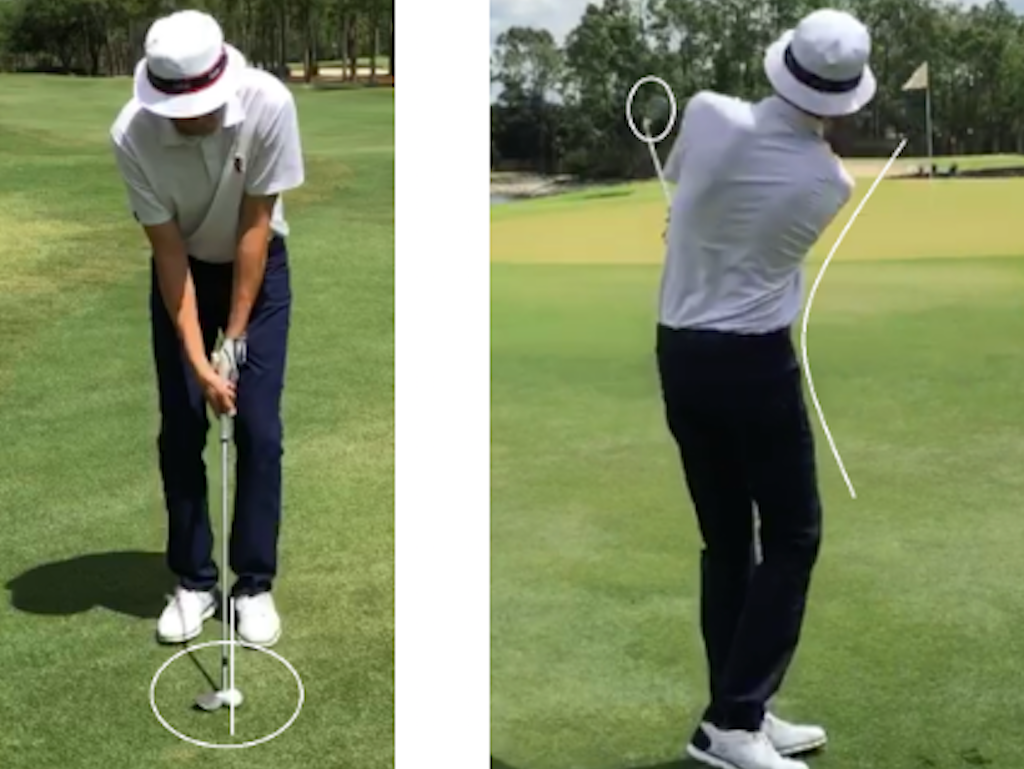
How to pitch a golf ball: step-by-step
Follow these clear steps to pitch consistently. These steps show the feel and the mechanics behind every good pitch.
- Setup and stance
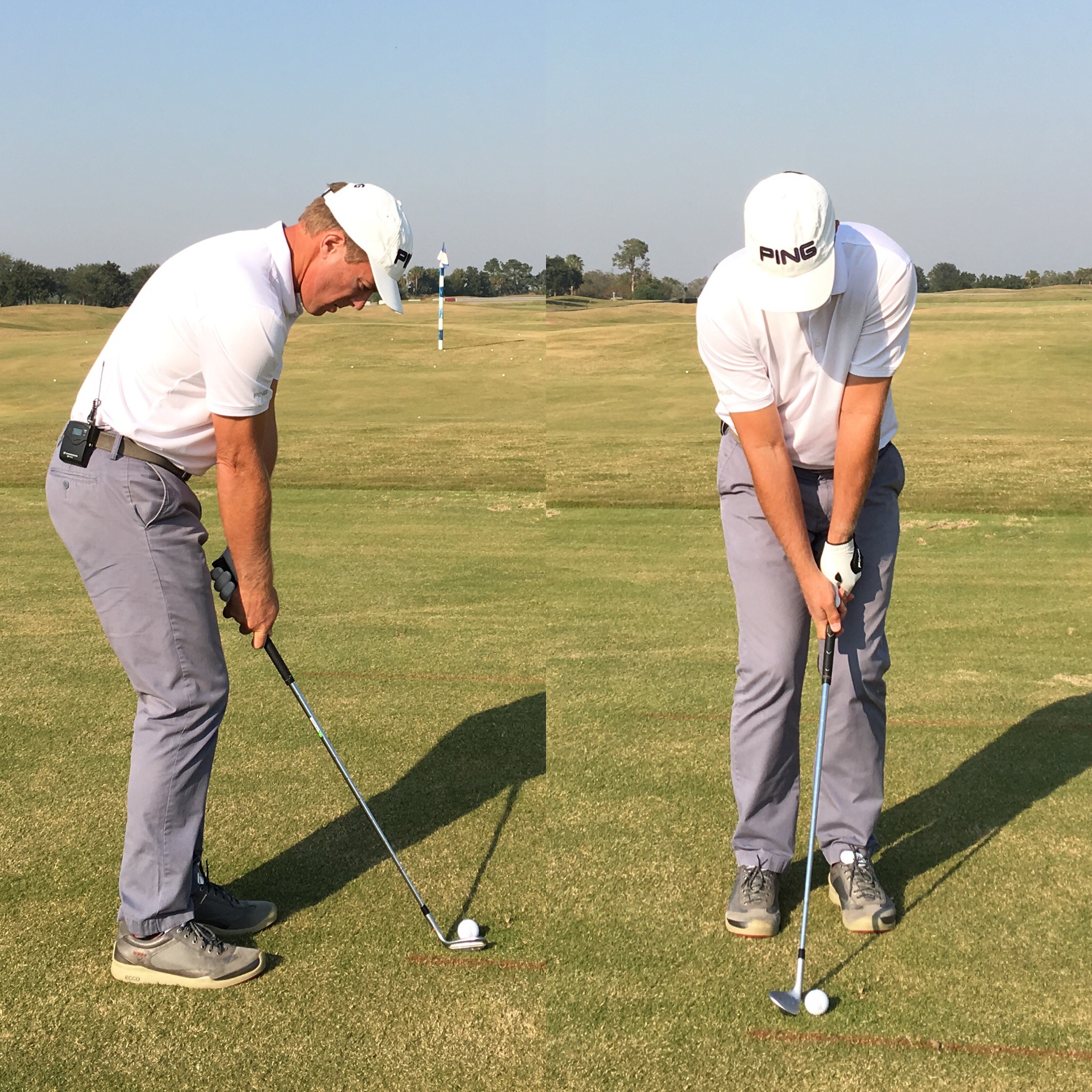
- Stand narrower than your full swing stance. Feet about shoulder-width or slightly less.
- Open your stance slightly if you want more loft or softer landing.
- Place the ball in the center or slightly back of center for cleaner contact.
- Grip and pressure
- Use your normal wedge grip but lighten grip pressure. Think of holding a small bird.
- Keep the hands soft to allow the clubhead to release through impact.
- Club selection
- Choose a wedge with enough loft for the landing angle you want.
- Use more loft for softer landings and less roll. Use less loft for bump-and-run style pitches.
- Backswing and tempo
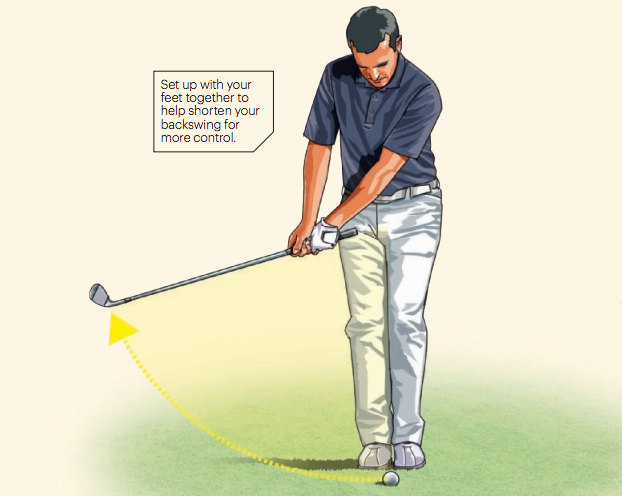
- Take a short, controlled backswing. Hinge the wrists a bit early.
- Keep the tempo smooth. Use a slightly faster downswing than backswing to accelerate through the ball.
- Contact and follow-through
- Strike down on the ball, hitting the turf just after the ball.
- Keep a low hands-lead through impact and finish with a short, controlled follow-through.
- Read the green
- Aim to land the ball on a spot that allows predictable roll.
- Account for slope, grain, and green speed when choosing distance and trajectory.
These steps explain how to pitch a golf ball with repeatable mechanics and course sense. Practice each element slowly and connect them into a smooth motion.
Setup: stance, posture, and alignment
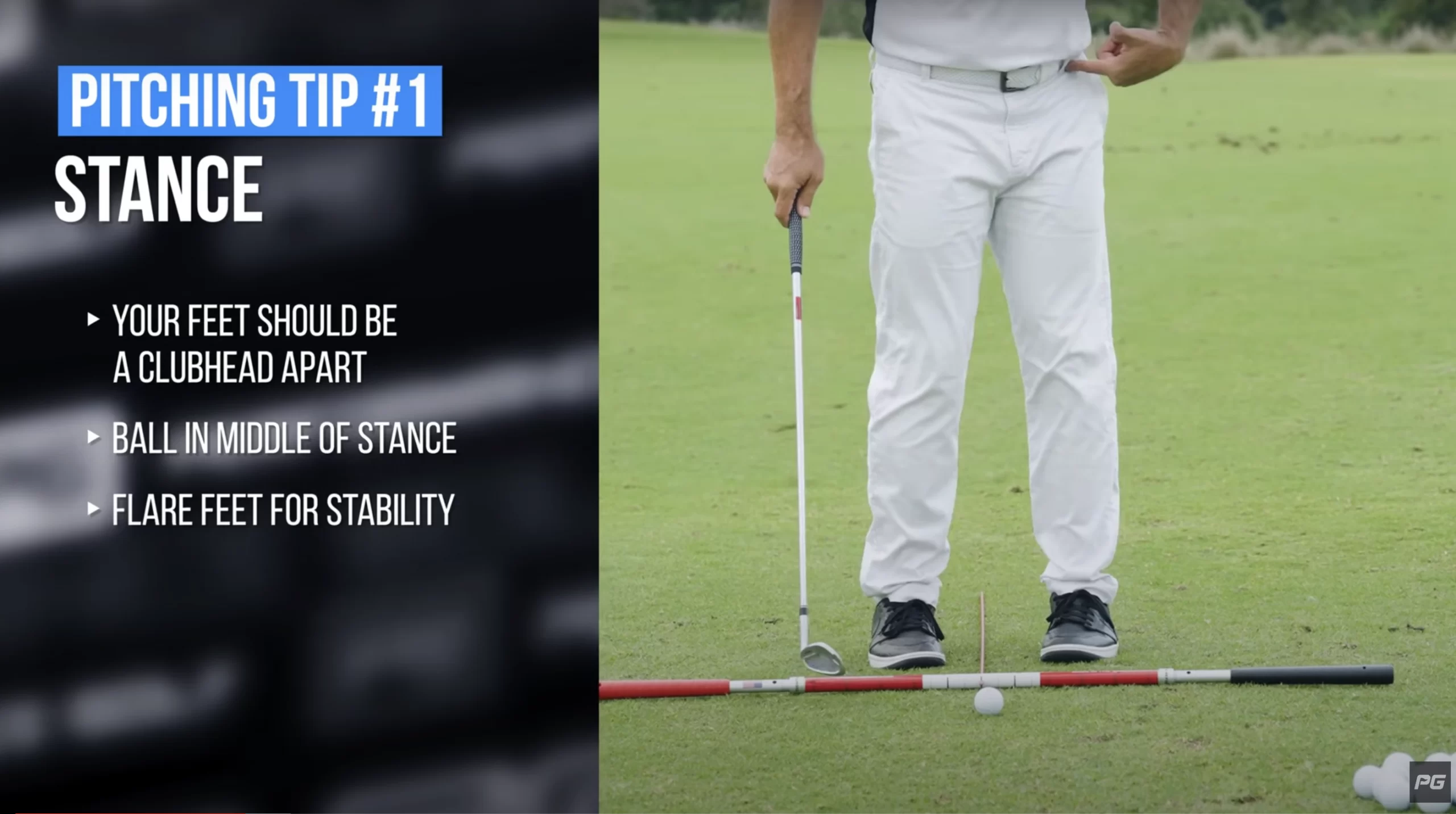
Good setup builds consistency. Small changes here change outcomes quickly.
-
Stance
- Narrow your feet compared to a full swing. This stabilizes the lower body.
- Weight slightly on the front foot at address for solid contact.
-
Posture
- Bend from the hips. Keep your spine neutral and eyes over the ball.
- Let the knees flex lightly. This keeps you athletic.
-
Alignment
- Align your body slightly left of the target if you open the stance. Aim the clubface at the target.
- Check alignment with a practice club on the ground during drills.
A clean setup makes it easier to repeat how to pitch a golf ball on the course.

Grip and club selection for reliable pitches
Grip and club choice affect spin and roll. Make smart, simple choices.
-
Grip basics
- Use your regular wedge grip. Lighten your grip pressure to about a 4 out of 10.
- Keep both hands working together. Avoid flipping the wrists.
-
Club selection
- 60-degree lob wedge for high, soft landings from tight lies or hazards.
- 56-degree sand wedge for standard pitch shots with some roll.
- 50–54 degree gap or pitching wedge for bump-and-run shots with low flight.
Choosing the right club is a key decision in how to pitch a golf ball. Match loft to landing area and green speed.
The swing: technique, tempo, and contact
The pitch swing is simple. Focus on tempo and a clean low-point.
-
Swing feel
- Think shoulders rotate, hands lead, wrists hinge a touch. Keep the clubface square.
- Short backswings produce repeatability.
-
Tempo
- Use a steady rhythm. A common feel is 1-2 (backswing to downswing).
- Accelerate through the ball. Deceleration kills distance and crisp contact.
-
Contact
- Hit the ball first then turf. The low-point of the swing should be in front of the ball.
- Brush the turf lightly for a soft landing and consistent distance.
Personal note: I found the biggest jump in my pitching when I focused on accelerating through the ball while keeping my hands soft. That simple feel fixed poor contact faster than any technical fix I tried.

Trajectory control, spin, and distance management
Control comes from loft, speed, and contact. Learn to tune them.
-
Trajectory control
- More loft and slower swing produce higher flight. Less loft and firmer strike lower flight.
- Open the face to add height and spin on short pitches.
-
Spin and roll
- Clean contact and a sharp clubface give more spin. Grass or wet conditions reduce spin.
- Plan landing spots by knowing how much your pitch will roll on approach.
-
Distance control
- Use a clock method for swing length: 9 o’clock is half swing, 10–11 for mid, 12 for full pitch.
- Practice consistent distances with each wedge. Keep a yardage chart in your head for how many yards each swing length covers.
Try this simple drill: pick a 20-yard target and practice hitting to it with a 9 o’clock swing. Repeat until you feel consistent. This exercise helps you learn how to pitch a golf ball by feel and yardage memory.

Common mistakes and fixes
Knowing common errors speeds progress. Here are quick fixes.
-
Topping the ball
- Cause: weight too far back or early lifting of the head.
- Fix: shift weight slightly forward and keep eyes down until after impact.
-
Chunking (hitting behind the ball)
- Cause: swing too steep or ball too far forward.
- Fix: move the ball slightly back and feel the low point in front of the ball.
-
Flipping with the hands
- Cause: deceleration and wrist breakdown.
- Fix: keep hands light and focus on accelerating the clubhead through impact.
-
Inconsistent distance
- Cause: variable tempo or changes in grip pressure.
- Fix: practice clock-swing drills and maintain steady grip pressure.
These fixes help you recover faster and build trust in how to pitch a golf ball.
Practice drills and routines to improve pitching
Practice with purpose. Use short, focused drills that mimic course shots.
-
Clock drill
- Pick a target and stand where each swing length (9–12 o’clock) is practiced.
- Hit 10 shots at each clock position and count how many hit the landing area.
-
Landing spot game
- Select a landing spot on the green. Try to land 10 balls on that spot with the same wedge.
- Track how many land where you want. Adjust swing length, tempo, or club as needed.
-
One-handed control drill
- Hit pitches with your left hand only (for right-handed golfers). This teaches clubface control and soft hands.
- Repeat with the right hand for balance and feel.
-
Pressure routine
- Play a practice game where you must make the pitch within two putts. Add penalty for misses.
- This simulates on-course pressure and builds confidence.
I used the landing spot game before rounds. It made my pitching much steadier under pressure and gave me clear feedback on club selection.

PAA-style questions (quick answers)
How far should I swing to pitch 30 yards?
Use a 10–11 o’clock swing with a wedge and accelerate smoothly. Test on the range and mark how far each clock position carries with each wedge.
Should I open my stance when pitching?
Opening your stance can add loft and soft landings, yes. Use it for higher pitches where you want less roll.
What’s the best wedge for pitching around the green?
A 56-degree sand wedge is versatile for many pitch distances and landing styles. Carry a 50–54 degree wedge too for bump-and-run options.
Frequently Asked Questions of how to pitch a golf ball
What is the basic setup for a pitch shot?
Stand with a slightly narrower stance and place the ball center or a bit back. Put a bit more weight on the front foot and keep a neutral spine for a clean strike.
How much wrist hinge should I use on a pitch?
Use a small to moderate wrist hinge on the backswing. Too much hinge adds wildness; too little reduces power and control.
How do I stop the ball close to the hole?
Use a higher loft and clean contact to increase backspin and reduce roll. Aim to land the ball on a precise spot and control your swing length.
Is a pitch the same as a chip?
No. A pitch has more air time and less roll than a chip. Chips use lower loft and more roll to reach the hole.
How often should I practice pitching?
Short, focused practice 2–3 times a week beats long, unfocused sessions. Do 15–20 minutes of drills that simulate course conditions.
Conclusion
Mastering how to pitch a golf ball cuts strokes and builds confidence around the green. Focus on a simple setup, soft hands, short backswing, and acceleration through the ball. Practice targeted drills, learn your distances, and keep choices simple on the course. Try the drills and steps in this guide this week and note the difference in feel and results. If this helped, leave a comment, subscribe for more short-game tips, or hit the practice green and start improving today.