How To Deep Clean A Golf Bag: Step-By-Step Cleaning Tips
Deep clean a golf bag by emptying pockets, brushing out debris, hand-washing fabric, and air-drying fully.
I’ve cleaned dozens of bags over the years, from cheap stand bags to premium tour models. This guide explains how to deep clean a golf bag step by step. You’ll get clear tools lists, safe cleaning methods for different materials, stain fixes, drying and storage tips, and simple maintenance routines. Read on to protect your gear, remove odors, and extend the life of your bag with techniques I use on the course and in my garage.
Why deep clean a golf bag matters
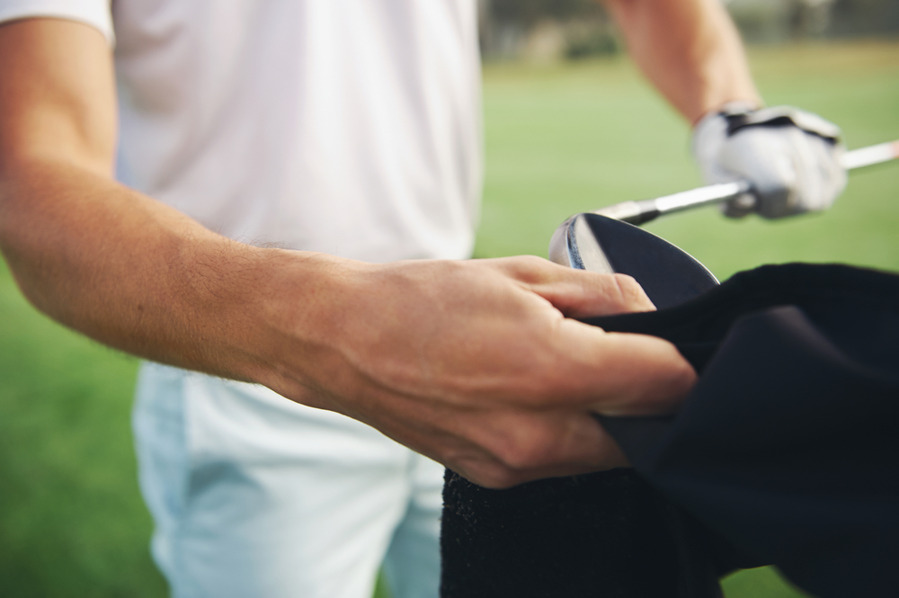
A deep clean does more than make your bag look new. Dirt and moisture break down fabric, rust hardware, and trap bacteria. Regular deep cleaning helps your bag last longer and keeps clubs, balls, and accessories safe from damage.
Deep cleaning also removes mildew and smells. That matters if you store your bag in a damp garage or travel with it. I once saved a leather bag from permanent odor by cleaning it early. That taught me the value of quick action and good technique.

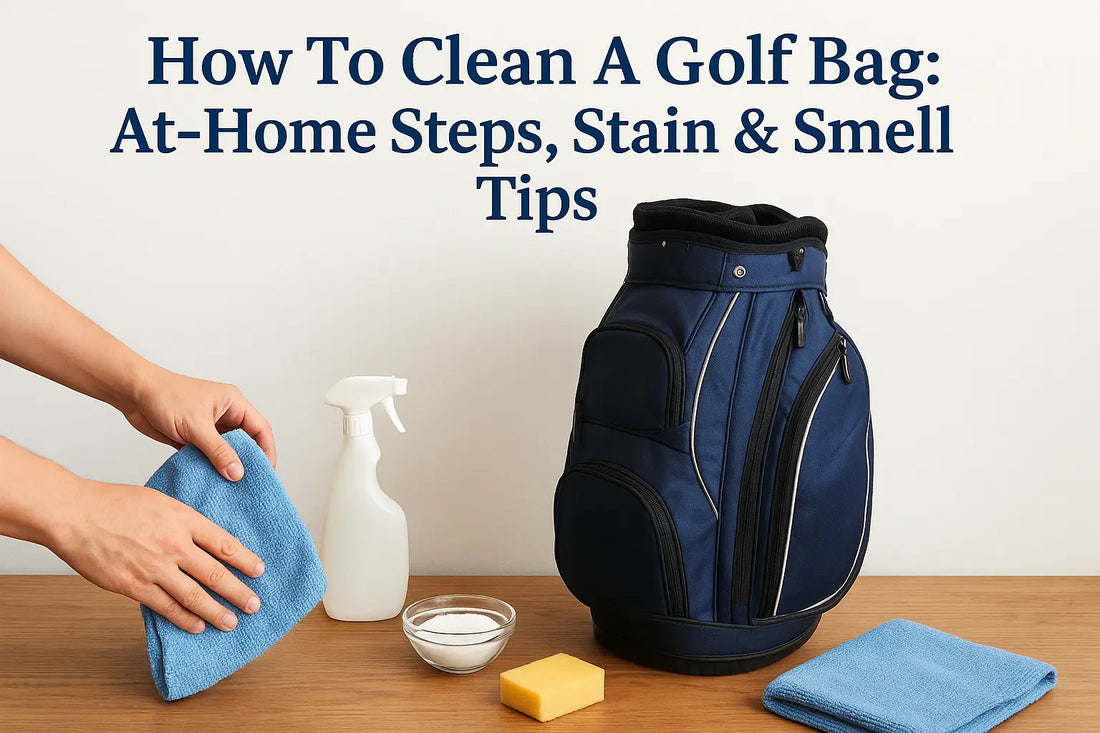
What you’ll need
- Soft brush for loosening dirt and grass. Use a golf brush or a clean toothbrush.
- Vacuum with a crevice tool for removing sand and debris from pockets.
- Mild detergent or dish soap for general cleaning. Avoid harsh detergents.
- Soft cloths and microfiber towels for wiping and drying.
- Sponge for gentle scrubbing on fabric areas.
- Warm water in a bucket for rinsing and washing.
- White vinegar for deodorizing and mild mildew removal.
- Leather cleaner and conditioner for leather parts.
- Zipper lubricant or silicone spray to keep hardware working smoothly.
- Old towels or newspaper for stuffing pockets while drying.
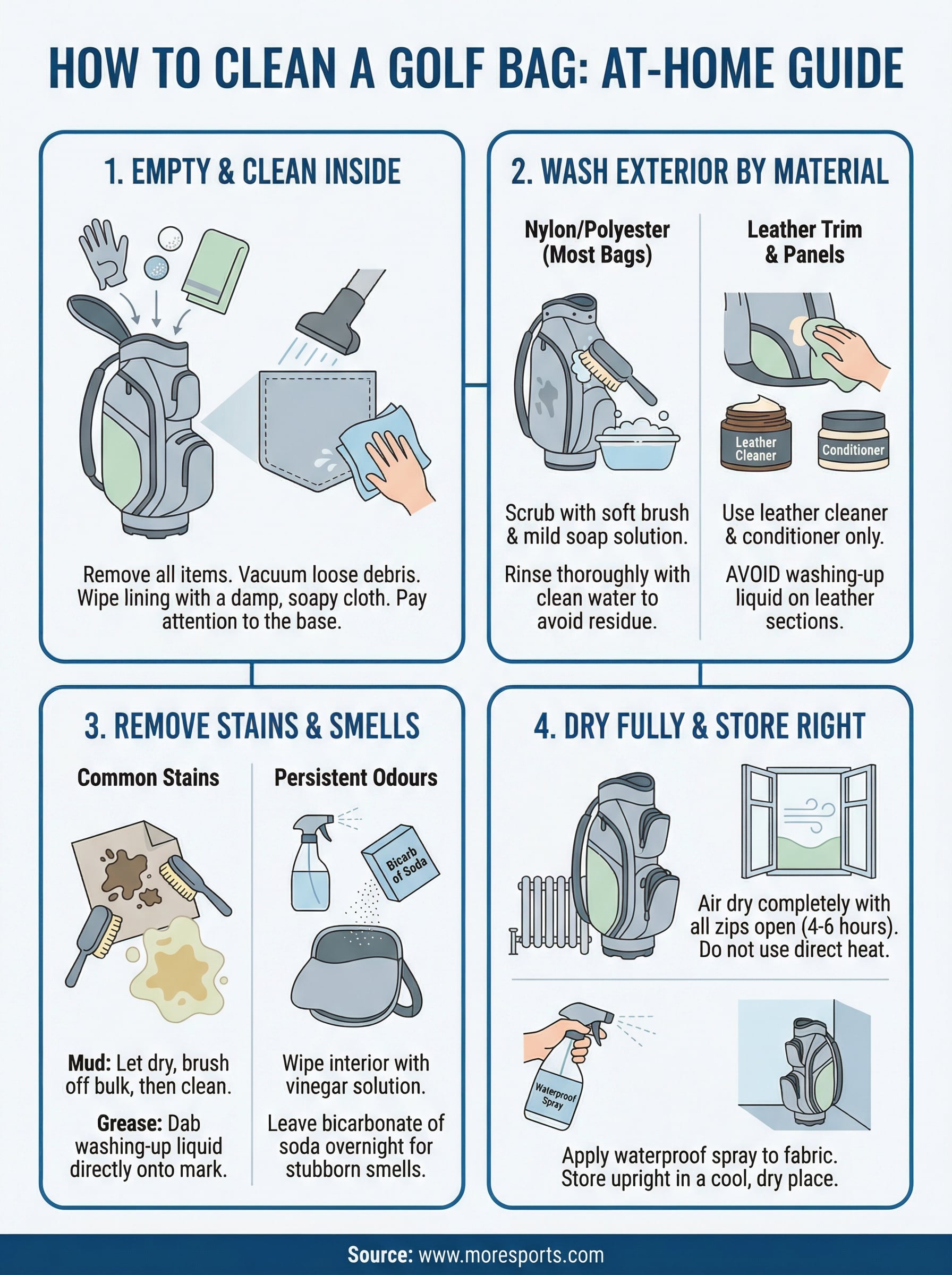
Step-by-step: how to deep clean a golf bag
-
Empty the bag completely.
Remove clubs, balls, tees, rangefinder, towels, and all items from pockets. Check small pockets and liners. -
Shake and brush out loose debris.
Turn the bag upside-down and shake. Use a soft brush to dislodge grass and mud from seams and pocket corners. -
Vacuum all pockets and compartments.
Use a crevice tool to pick up sand, dirt, and small stones. This prevents grit from scratching clubs or trunks. -
Spot-test cleaners on an inconspicuous area.
Try soap and water or leather cleaner on a small patch first. This step avoids unwanted color loss or damage. -
Clean fabric sections.
Mix warm water and mild detergent. Use a sponge to work soap into fabric. Rinse sponge and wipe away soap. Repeat until clean. -
Clean leather and synthetic trim.
Use a leather cleaner for genuine leather. For synthetic trims, a damp cloth with mild soap works well. Dry leather thoroughly and apply conditioner. -
Tackle stubborn stains and mildew.
Mix equal parts white vinegar and water. Lightly dab mildew spots and let sit for 10 minutes, then rinse. Avoid soaking leather. -
Clean zippers and hardware.
Wipe zippers clean and run zipper lubricant along teeth. Tighten loose screws on bases and feet. -
Deodorize pockets.
Sprinkle baking soda into pockets, close them, and let sit 4–8 hours. Shake out or vacuum afterward. For stronger odors, wipe interior with diluted vinegar and air dry. -
Dry the bag thoroughly.
Stand the bag upright in a well-ventilated area out of direct sun. Stuff pockets with towels or newspaper to keep shape and speed drying. Do not use a dryer or high heat. -
Final inspection and reassembly.
Ensure all parts are fully dry. Reapply leather conditioner as needed. Replace club covers and restock pockets with dry items.
I follow this exact process when preparing my bag for the season. It usually takes 1–3 hours depending on how dirty the bag is. Short, regular cleanings cut down deep-clean time.
Material care: leather, nylon, and synthetics
- Leather care. Use leather cleaner and a soft cloth. Condition with a quality leather conditioner. Avoid excess water and direct heat, which dry and crack leather.
- Nylon and polyester. These fabrics tolerate mild soap and water. Rinse thoroughly to remove soap residue and prevent stiffness.
- Mesh and soft pockets. Clean gently with a soft brush and mild detergent. Rinse well to avoid trapped soap that can attract dirt.
- Metal and plastic hardware. Wipe with a damp cloth. Use a small amount of lubricant on zippers and moving parts to avoid corrosion.
From my experience, leather trim needs the most care. Even when the rest of the bag looks fine, dry leather ages fast. Treat leather twice a year if you play often.
.jpg)
Drying, deodorizing, and storage
Proper drying prevents mildew and odor. Always air dry in shade. Stuff compartments to preserve shape. Turn the bag periodically to dry all seams.
Deodorizing tips:
- Baking soda neutralizes many odors. Use in closed pockets and shake out later.
- A light vinegar wipe removes mildew smells. Rinse afterward.
- Activated charcoal packs or silica packs help long-term storage.
Storage tips:
- Store in a cool, dry place. Avoid damp basements. Use a bag cover for extra dust protection.
- Do not store wet or damp gear inside the bag. Always let everything dry first.

Maintenance schedule and quick-clean tips
- After each round: Empty loose trash. Wipe mud spots. Shake out debris. Quick hits keep deep clean needs low.
- Weekly: Spot clean visible dirt. Air out the bag and check pockets.
- Every 3–6 months: Perform a full deep clean following the step-by-step process. Increase frequency in wet climates.
- Before long storage: Deep clean, dry completely, apply leather conditioner, and add a desiccant pack.
Quick tips I learned on the road:
- Keep a small brush and towel in the car for immediate cleanup after wet rounds.
- Use a rain cover to limit soaking and stains.
- Label pocket contents so you can empty pockets faster when cleaning is due.

Troubleshooting common problems
- Mildew smell persists after cleaning. Try a second spot-clean with diluted vinegar and extended air drying. If odor remains, a professional cleaning may help.
- Stains that won’t budge. Test a specialized fabric stain remover on a hidden area. Avoid bleach and harsh solvents that can strip color.
- Zipper won’t move. Clear grit with a brush, then run zipper lubricant. If teeth are bent, a replacement zipper may be needed.
- Leather cracking. Stop using water and apply a conditioning treatment. Deep cracks may be permanent; consult a leather repair specialist.
PAA-style questions you may search for
How long does a full deep clean take?
A full deep clean usually takes 1–3 hours. Time varies with bag size and how dirty it is.
Can I machine wash my golf bag?
Most bags should not be machine washed. Check the manufacturer’s care label; machine washing can damage structure and zippers.
Will vinegar damage my bag?
Diluted vinegar is safe for many fabrics but not recommended for untreated leather. Always test on a hidden spot first.
Frequently Asked Questions of how to deep clean a golf bag
How often should I deep clean my golf bag?
Deep clean your golf bag every 3–6 months, or more often in wet or sandy conditions. Frequent quick-cleaning after rounds reduces the need for deep cleans.
Can I use bleach to remove stains?
Avoid bleach. Bleach can weaken fabric and fade colors. Use mild detergent or a fabric-safe stain remover instead.
What is the best way to remove mildew smell?
Wipe affected areas with a solution of equal parts water and white vinegar, then air dry. Repeat if needed and ensure complete drying to prevent return.
How do I care for leather parts on my bag?
Clean with a leather cleaner and condition after cleaning. Avoid soaking leather and keep it out of direct heat while drying.
Is it safe to store clubs in the bag while cleaning?
Remove all clubs, balls, and accessories before cleaning. Moisture and cleaning agents can damage club grips and heads.
Can I use a pressure washer on the bag?
No. High pressure can damage fabric seams and force water into padding. Use gentle hand cleaning methods.
Will cleaning void my bag’s warranty?
Cleaning per manufacturer guidelines will not usually void warranties. Check the warranty terms and follow the recommended care instructions.
Conclusion
A clean golf bag protects your gear, improves performance, and saves money over time. Follow the step-by-step instructions here to learn how to deep clean a golf bag safely. Start with the right tools, test cleaners first, and dry everything fully. Try these tips after your next wet round and you will see how much longer your bag looks and performs like new. Share your cleaning wins or questions below, and consider subscribing for more gear-care tips.