How Much Room Do You Need For A Golf Simulator: Space Guide
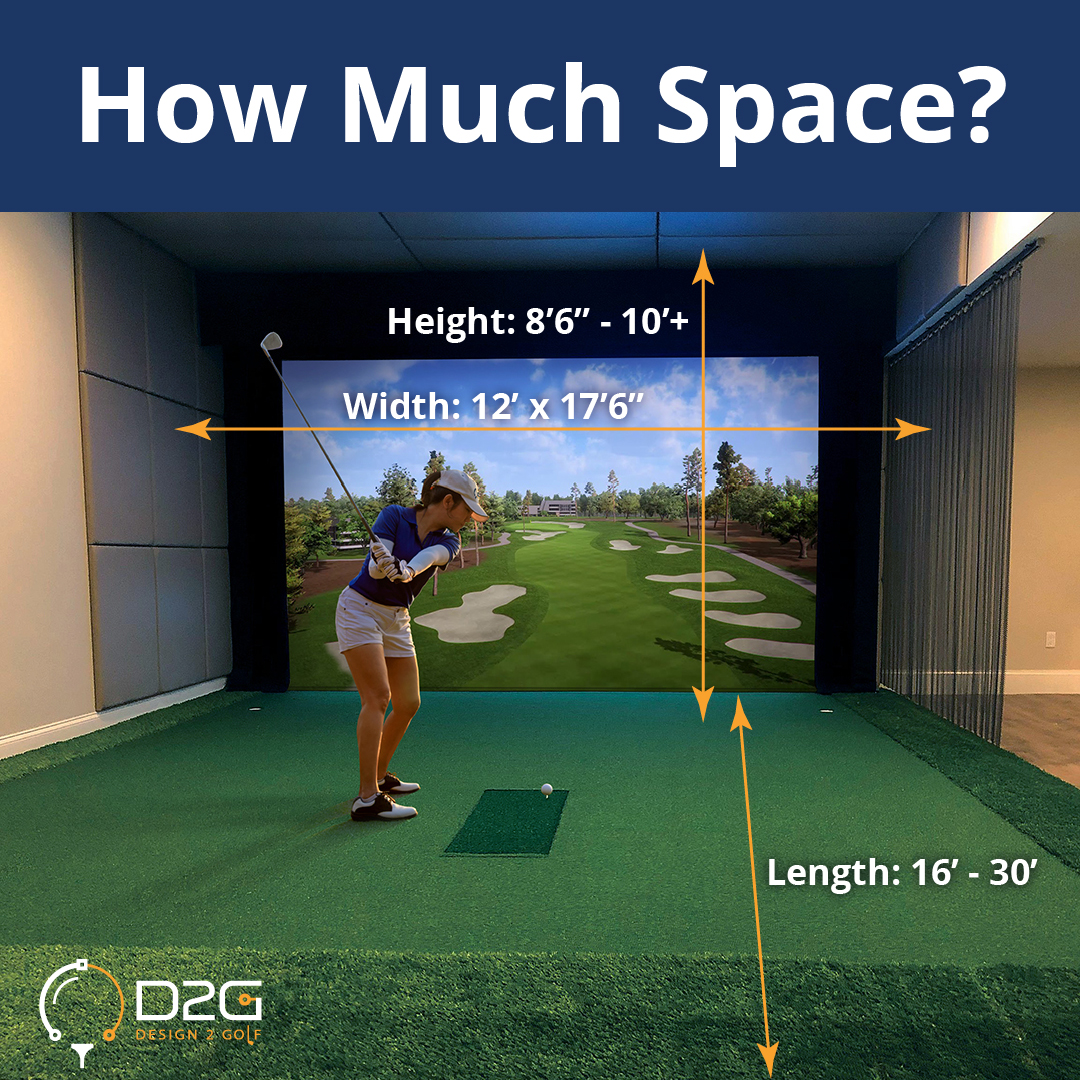
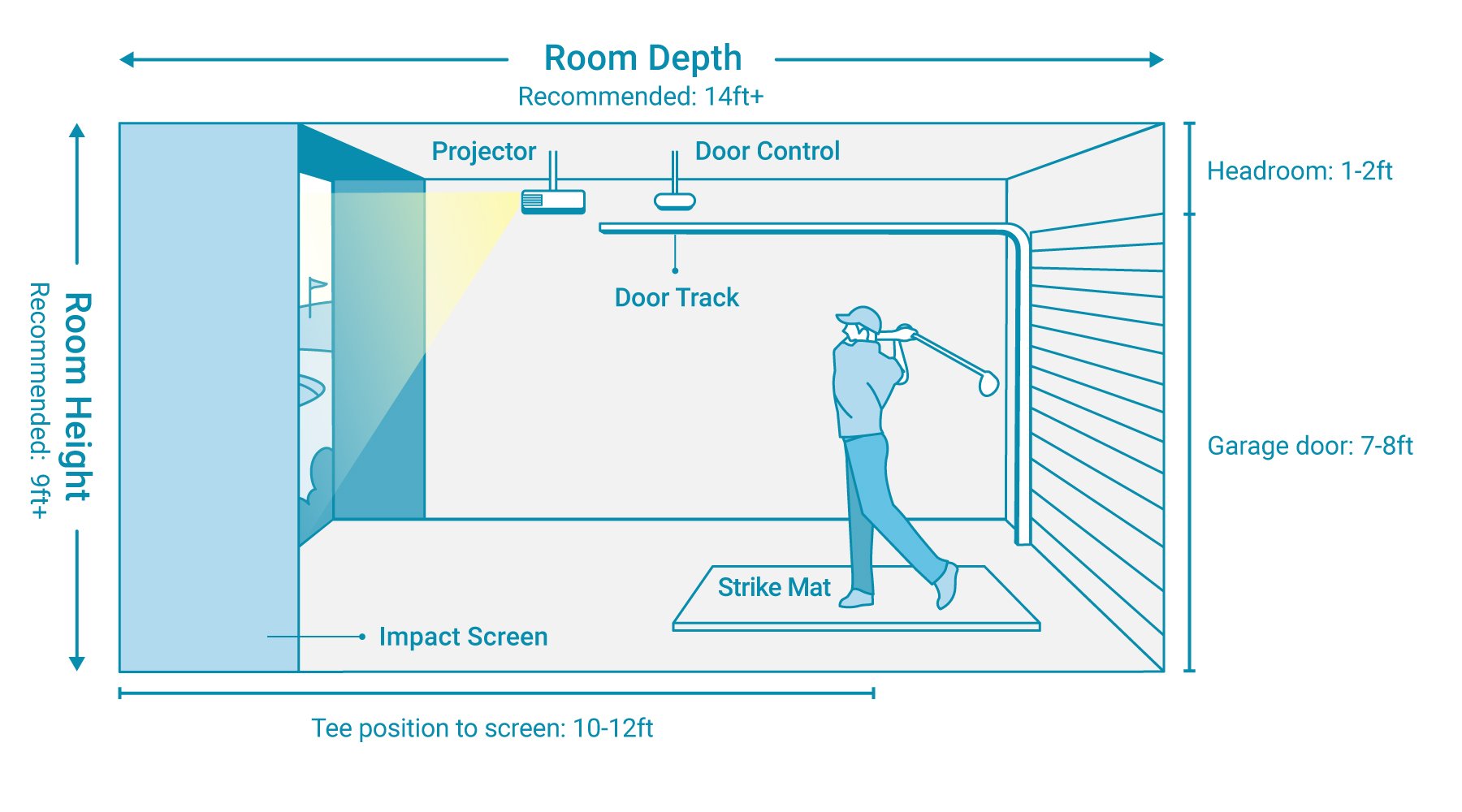
Most home golf simulators need roughly 10–12 ft wide, 15–20 ft deep, and 9–10 ft high.
I’ve built and tested several home simulators and helped friends plan theirs. This guide explains exactly how much room do you need for a golf simulator. I cover ceilings, width, depth, gear fit, safety space, and real layout examples. Read on for clear plans, tips from hands-on experience, and step-by-step choices to fit a simulator into your home or garage.
Minimum space requirements for a golf simulator
A safe baseline matters. For many full-swing setups, aim for at least:
- Width: 10 to 12 ft.
- Depth: 15 to 20 ft.
- Height: 9 to 10 ft.
If you ask how much room do you need for a golf simulator, these numbers are where most builders start. Narrower or shorter rooms can work for limited swings or short-game practice, but full driver swings may feel cramped. I have used a 10 ft wide by 16 ft deep room and it worked well for players up to six feet tall. Measure twice before buying big gear.
Why ceiling height matters
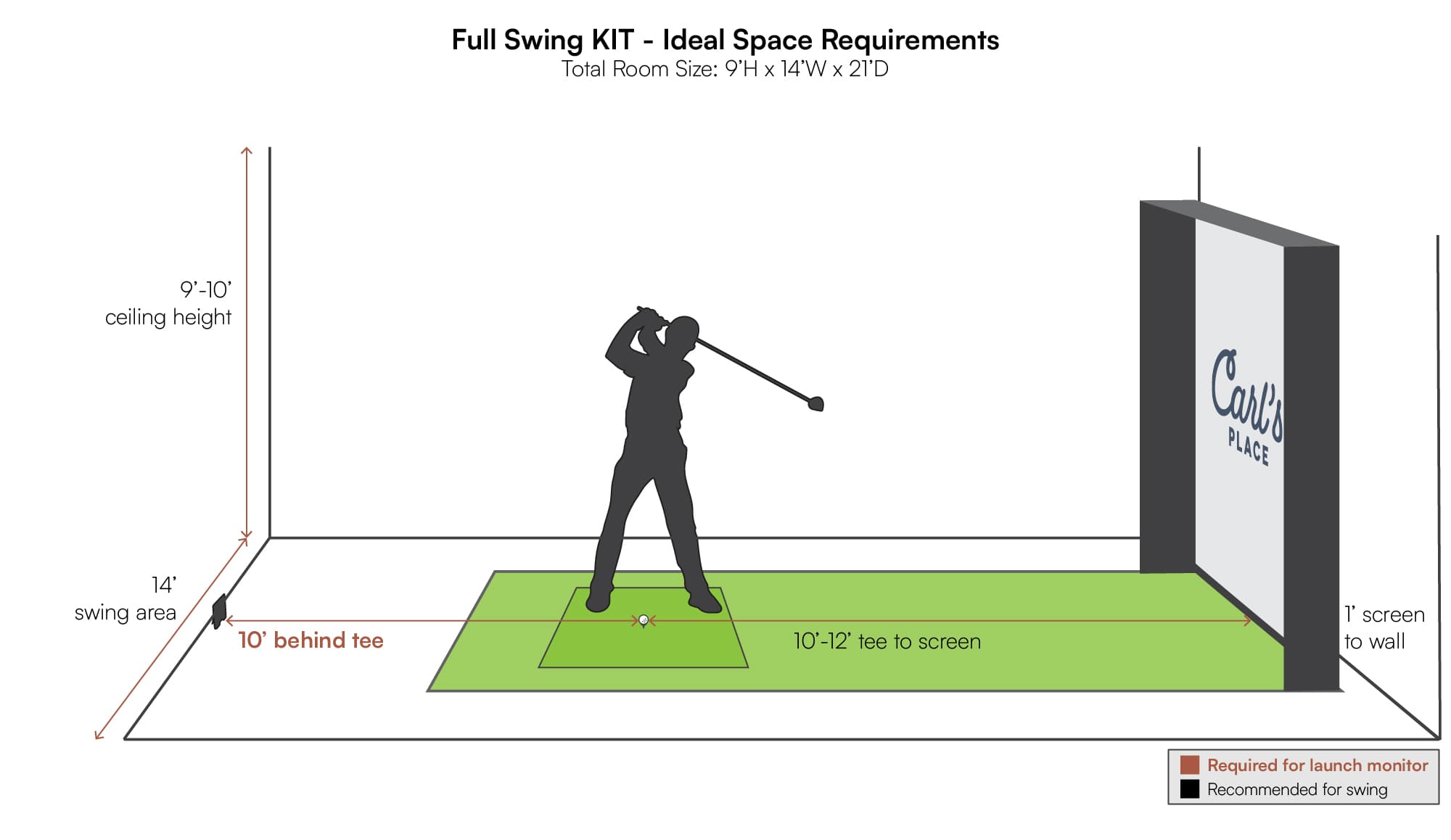
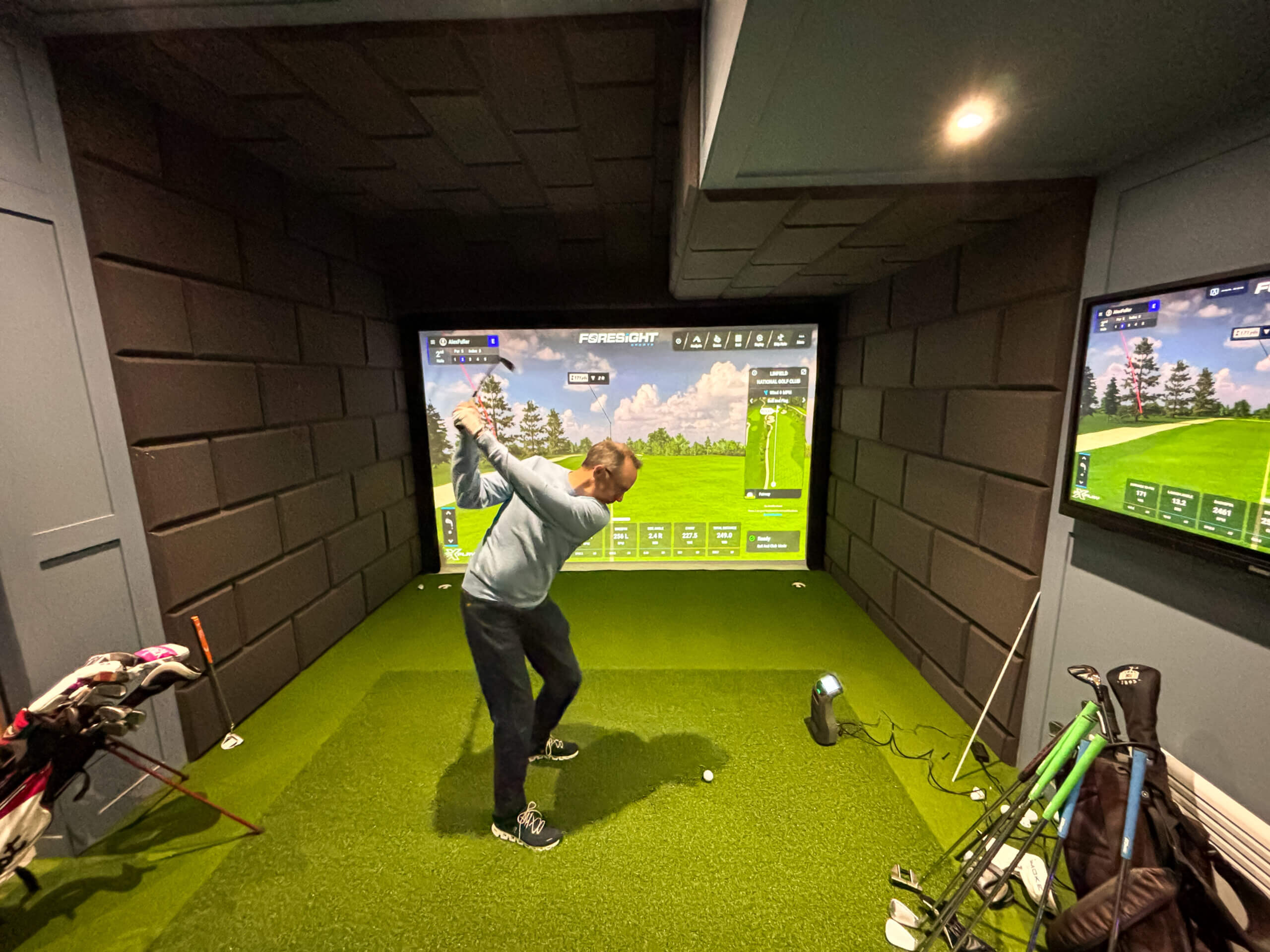
Ceiling height sets limits for driver swings. Low ceilings can alter swing path. For safe full swings, 9 to 10 ft is ideal. If you are taller than 6 ft or use a steep swing, lean toward 10 ft. Some players with 8 ft ceilings use nets and practice half swings. That works for training but won’t feel like real play. When planning, stand in your swing and measure highest reach with a club.
Width and depth explained
Space left to right keeps shots safe and realistic. You need room for:
- Swing arc clearance on both sides.
- Screen or impact net and side padding.
- Space for launch monitor and spectators.
Typical recommendations when thinking how much room do you need for a golf simulator:
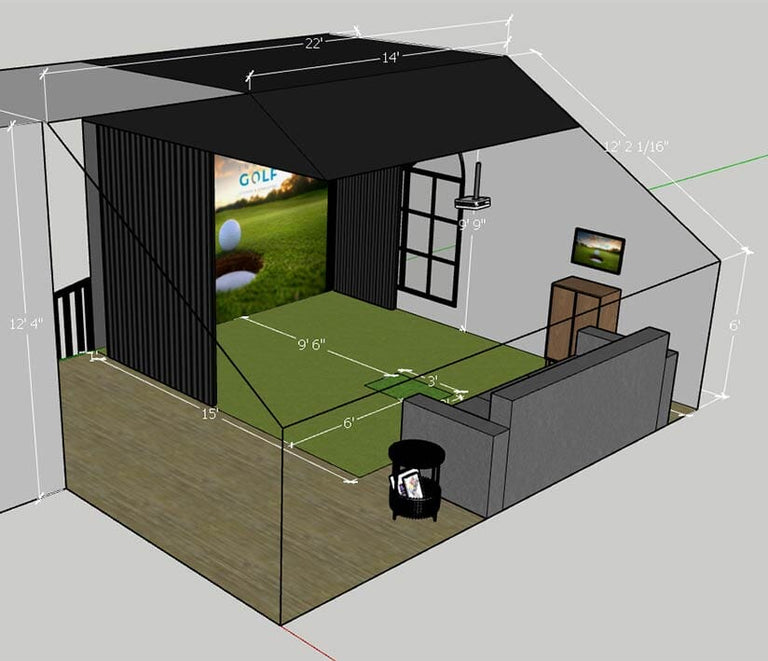
- 10 ft wide for single bay full swing.
- 12 ft wide for added safety or side nets.
- 15 ft deep minimum to place mat, ball flight zone, and screen.
- 20 ft deep if you want more realistic ball flight and camera distance.
My first setup used 15 ft depth and a mid-range launch monitor. It captured shots well and felt natural.
Equipment and layout impact
Gear choice changes space needs. Consider:
- Impact screen and enclosure depth.
- Hitting mat size and tee placement.
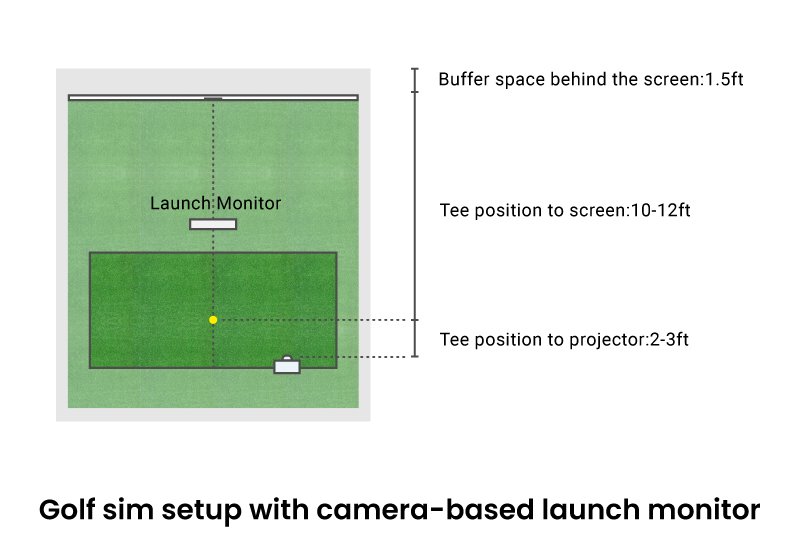
- Launch monitor type and placement.
- Projector distance if using a projector.
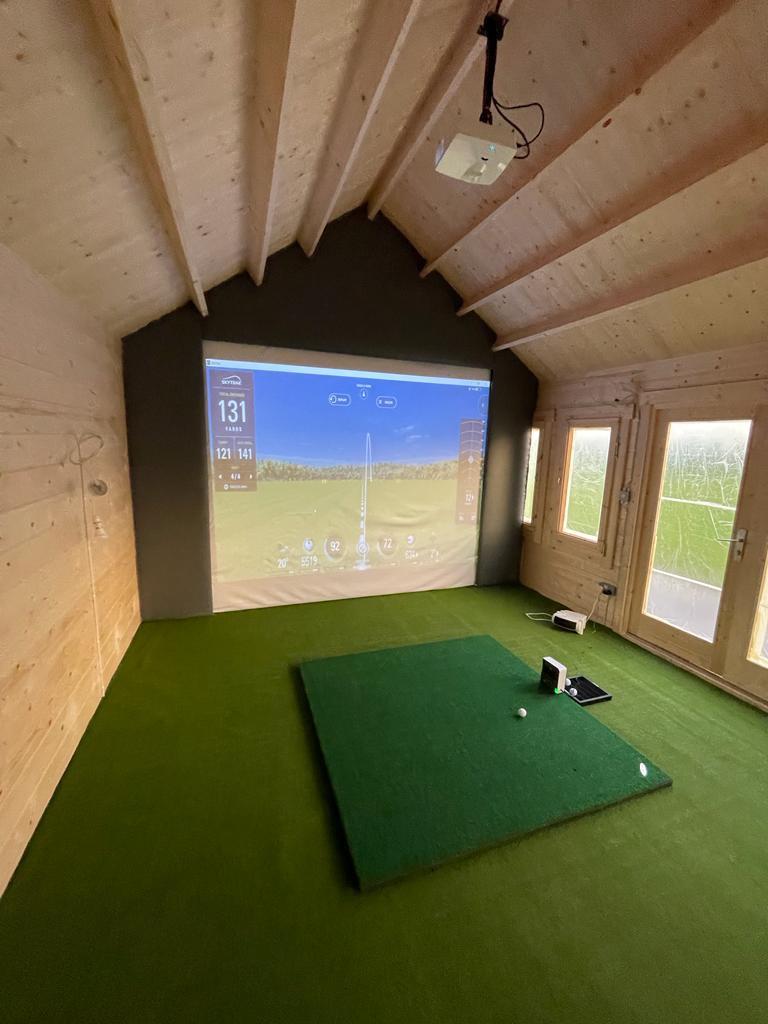
Short-throw projectors reduce room depth needs. Nets and portable enclosures can shrink the required depth. High-end radar systems often need more space behind the player and a clear line of sight. Ask yourself how much room do you need for a golf simulator based on gear you already own or plan to buy.
Common setup questions (PAA-style)
Can I put a golf simulator in a garage?
Yes. A garage often has the needed depth and width. Check the ceiling height and remove obstructions like garage door springs.
Do I need to secure the impact screen?
Yes. Secure mounts reduce bounce and protect walls. A taut screen also improves image and ball response.
Will a launch monitor work in small rooms?
Some models work well in tight spaces. Choose units designed for indoor use and follow manufacturer placement rules.
.jpg?width=2000&height=1125&name=Space_requirements_V3%20(0-01-47-13).jpg)
Real-world room plans and examples
Small space plan (tight, practice focus)
- Width: 9 to 10 ft.
- Depth: 12 to 15 ft.
- Height: 8 to 9 ft.
- Use: Short game, irons, practice drills.
- Trade-off: Limited driver use.
Medium space plan (most homes)
- Width: 10 to 12 ft.
- Depth: 15 to 18 ft.
- Height: 9 to 10 ft.
- Use: Full swing, driver, projector or TV.
- Advantage: Comfortable for most players.
Large space plan (premium home bay)
- Width: 12 to 16 ft.
- Depth: 20+ ft.
- Height: 10+ ft.
- Use: Multi-player, realistic ball flight, big projector screen.
- Advantage: Pro-level feel and safety.
These plans answer how much room do you need for a golf simulator across common home situations. Pick the plan that fits your goals and budget.
Tips, common mistakes, and personal experience
From my experience, the top mistakes are:
- Buying gear before measuring the room.
- Ignoring ceiling obstructions like beams or lights.
- Underestimating space for launch monitor placement.
- Skipping side padding or netting.
Tips that helped me:
- Test swing with a broom to check clearance.
- Sketch the room and mark where the screen and mat will sit.
- If unsure, leave an extra foot in width and depth.
- Choose a short-throw projector to save depth.
These simple steps prevent costly returns and unhappy setups. I once ordered a large screen then found my ceiling lights hit the projector. I moved the lights and avoided a poor image.

Costs, portability, and space trade-offs
More space usually means higher cost. But you can adapt:
- Portable enclosures fit smaller rooms and move if needed.
- Short-throw projectors cut depth needs.
- Less expensive simulators and nets reduce upfront cost.
Ask how much room do you need for a golf simulator and then compare budgets. A small portable net and tablet-based launch monitor cost far less and fit tight rooms. A dedicated bay with a projector and high-end launch monitor needs more money and space. Decide what you value most: realism, portability, or price.
Frequently Asked Questions of how much room do you need for a golf simulator
How tall should the ceiling be for a full-swing simulator?
Aim for 9 to 10 ft. Taller ceilings reduce the risk of hitting lights during a driver swing and feel more natural.
Can a simulator work in a two-car garage?
Yes. A two-car garage usually offers sufficient width and depth. Check ceiling height and clear any overhead obstructions.
Is 15 ft depth enough for a realistic experience?
Yes for most players. Fifteen feet allows full swings with many launch monitors. More depth improves projector distance and realism.
Do I need side nets or padding?
Side nets and padding are recommended. They protect walls and reduce the chance of errant shots causing damage.
Can I use a TV instead of a projector?
Yes. A TV works well in smaller rooms and eliminates projector throw distance. Large TVs may limit the perceived ball flight size.
What is the smallest usable space for practice only?
You can practice in 8 to 12 ft depth rooms for short game and irons. Full drivers will be limited in such small spaces.
Conclusion
Planning your simulator space is the best step before buying gear. Measure ceiling height, width, and depth. Decide if you want full driver play or a compact practice setup. My experience shows small changes up front save time and money later. Start with the dimensions that fit your goals, and take one step at a time toward building a reliable indoor golf bay. If this helped, try sketching your room and sharing dimensions to get tailored advice or leave a comment below.