How Much Farther Does A Golf Ball Fly At Altitude: Distance
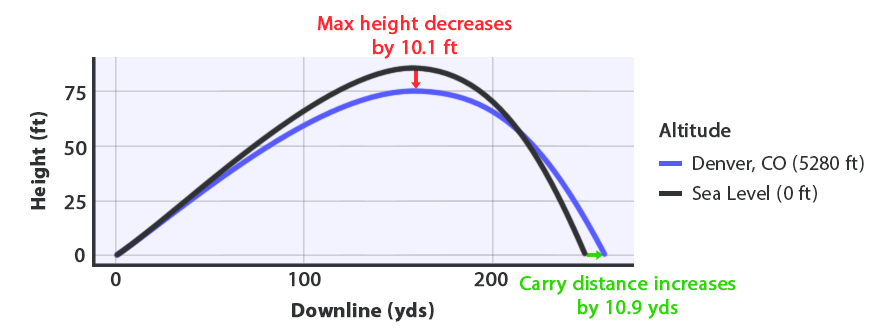
A golf ball typically flies about 5–15% farther at high elevations like Denver.
I’ve spent years testing shots at sea level and in the mountains, and I’ll walk you through why altitude matters, how much farther a golf ball flies at altitude, and exactly what to change in your game. This guide blends physics, real-world data, simple rules of thumb, and practical tips so you can make better yardage calls on high-elevation courses. Read on to learn clear, usable advice for adjusting clubs and expectations when playing up high.

Why altitude affects golf ball distance
Air at higher altitude is thinner. Thin air has lower density. Lower density means less aerodynamic drag on the ball. Less drag lets a ball keep speed longer and travel farther.
Altitude also reduces lift slightly because thinner air produces less lift at the same spin and speed. The net effect is usually more carry distance even with a small drop in backspin lift. Temperature and pressure at altitude add subtle tweaks, so altitude is part of a mix of factors that change distance.
How much farther does a golf ball fly at altitude
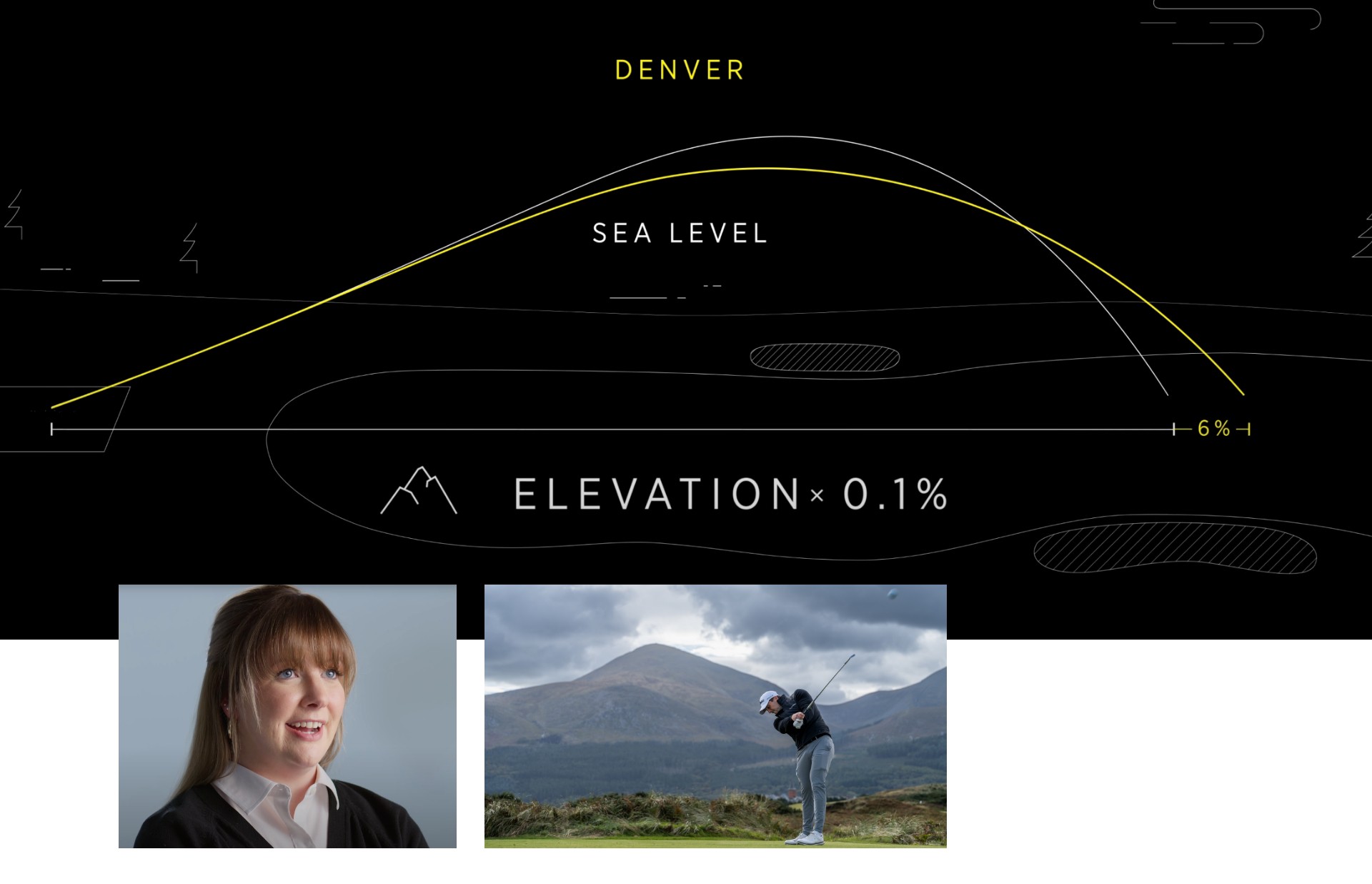
A simple rule many golfers use is: add about 2% of distance for every 1,000 feet above sea level. That rule gives a quick estimate of how much farther does a golf ball fly at altitude. For example, at 5,000 feet a 250-yard drive might gain roughly 10–25 yards.
More precise models consider ball speed, spin rate, launch angle, and temperature. Typical results seen in tests:
- At 1,000 feet: about 1.5–3% more distance.
- At 3,000 feet: about 5–8% more distance.
- At 5,000 feet: about 8–12% more distance.
- Above 7,000 feet: gains of 10–15% are common.
Common question: "Does every shot gain the same distance at altitude?" No. Drives and long irons usually gain more yards than wedges because they carry higher speeds and spend more time in the air. Carry and roll both change, and roll often increases more in dry, firm conditions.
How to adjust your game at altitude
Make simple, consistent adjustments rather than guessing. Start by reducing your club yardage according to altitude and your carry numbers. Test on the range and track carry first, then total distance.
Practical steps:
- Measure one reliable yardage (for instance, a 7-iron) at sea level and at altitude to get a personal conversion factor.
- Use 2% per 1,000 feet as a baseline, then refine with your launch monitor or range sessions.
- Pay attention to roll: firmer turf and thinner air often add extra rollout, especially on drives.
- Watch wind carefully; high-elevation winds can produce different effects than at sea level.
From experience, I learned to trust range checks more than charts. Bring a small notepad or phone note with adjusted yardages for common clubs and review them before every high-altitude round.

Factors that alter the altitude effect
Altitude does not act alone. Several variables change how much farther a golf ball flies at altitude:
- Temperature: Warm air further reduces density, adding distance.
- Humidity: Contrary to intuition, humid air is slightly less dense than dry air, but the effect is tiny.
- Ball speed: Faster shots gain a larger percentage increase in distance at altitude.
- Spin and launch angle: Changes in lift and spin decay alter carry distance.
- Course conditions: Firm fairways increase roll, while soft fairways reduce it.
Because these factors interact, the real-world increase can vary from the simple 2% per 1,000-foot rule. Always test with your bag and ball combination when possible.

Real-world examples and data
Pro and amateur tests show consistent gains at venues like courses in Colorado or Mexico City. On a dry, windy mountain course, I measured drives that carried 12–18 yards longer than at sea level using the same swing. My note: distance gains were bigger on drives and 3-woods, smaller on wedges.
Examples:
- A 260-yard carry at sea level might carry 284 yards at 5,000 feet in warm conditions.
- Mid-irons often gain 5–10% in carry distance, while wedges may gain only 2–6% depending on spin.
Remember that tour pros and launch monitors report similar trends. Those numbers are useful, but your own bag and swing can differ. Use real range checks to build confidence.

Measuring and calculating distance at altitude
You can use simple math or tools to estimate how much farther does a golf ball fly at altitude.
- Quick math: Add 2% per 1,000 feet to sea-level distance. For 5,000 feet, add 10%.
- Personal calibration: Hit a set of clubs on the range at altitude and log carry and total distance.
- Use apps or launch monitor data when available for fine-tuned numbers.
Steps to create your altitude chart:
- Pick 3 clubs you use often.
- Hit 10 solid shots with each club and record carry and total yards.
- Compare to your sea-level numbers to calculate percent change.
- Create a small reference table for your bag.
This practical chart beats guesswork and helps you pick the right club under pressure.
Frequently Asked Questions of how much farther does a golf ball fly at altitude
How much farther will my driver go at 5,000 feet?
At 5,000 feet you can expect about an 8–12% increase in distance for driver carry. That equals roughly 20–30 extra yards on a 250-yard carry, depending on swing speed and conditions.
Does altitude affect short irons and wedges the same way?
No. Short irons and wedges see smaller percentage gains because lower launch speeds reduce the altitude effect. Expect 2–6% gains for wedges versus larger gains for long clubs.
Should I change my ball choice at altitude?
You might. Lower-spinning balls generally keep more roll and may offer more total distance at altitude. Try a few options on the range to see what feels best.
How do I adjust for thin air and wind?
Measure your carry with a few clubs, and reduce club loft or yardage accordingly. Account for wind direction—thin air can make wind effects more pronounced, so aim and club both.
Is the 2% per 1,000 feet rule accurate?
It is a good starting point and works for many players. It doesn’t replace personal testing because temperature, spin, and launch angle change the exact outcome.
Conclusion
Altitude can add meaningful yards to your shots. By understanding why and using simple rules, testing on the range, and keeping a personal yardage chart, you’ll make better club choices and score better on high-elevation courses. Try the 2% per 1,000-foot rule as a starting point, then refine it with a few range sessions. If you liked these tips, test them on your next mountain round, jot down the differences, and share your results below — I’d love to hear what you find.