How Do Dimples On A Golf Ball Work: Simple Science
Dimples speed the ball by shaping airflow to cut drag and add lift through controlled turbulence.
I’ve spent years studying and testing golf gear, and I’ll explain clearly how do dimples on a golf ball work. I’ll break the physics into plain words. You will learn why dimples matter, how designers tune them, and what that means for your shots. This article blends research, simple science, and real-range testing to give you useful tips you can use on the course today.
How dimples affect flight
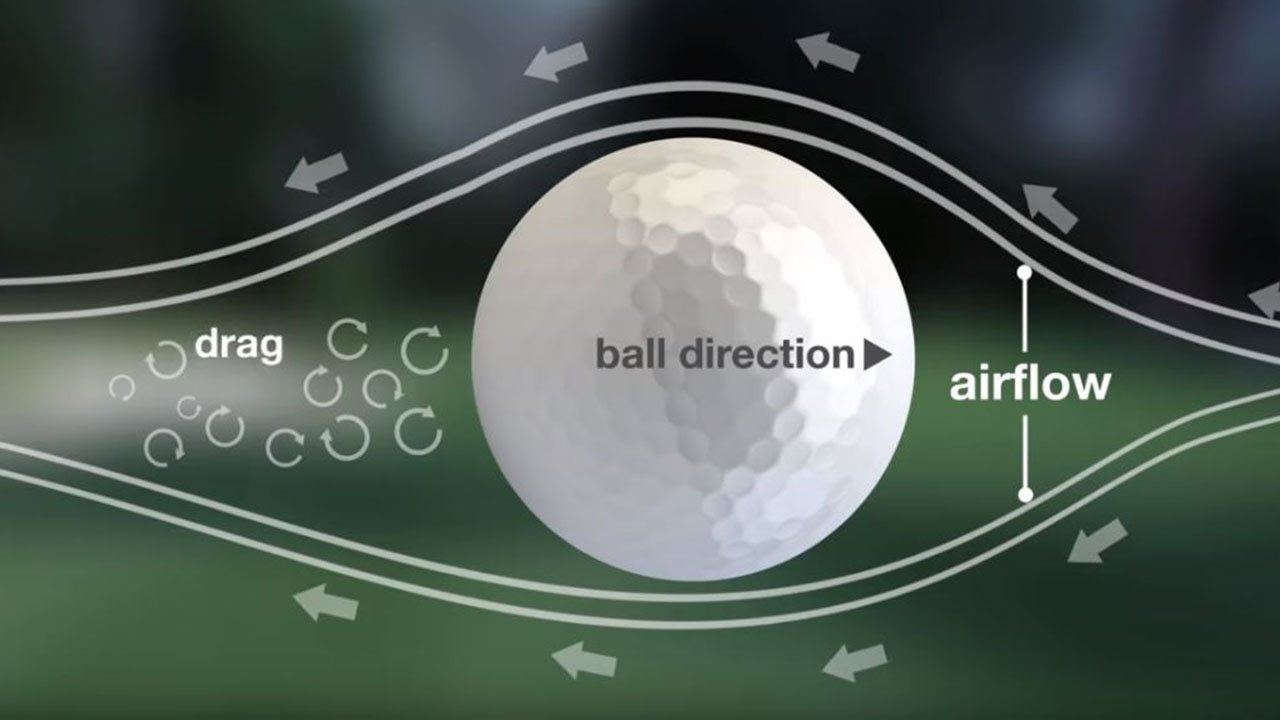
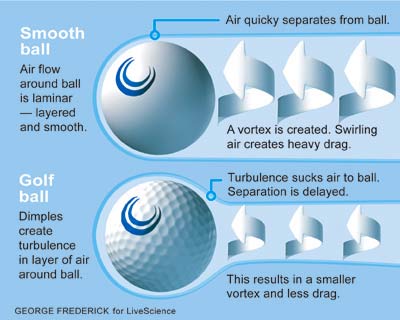
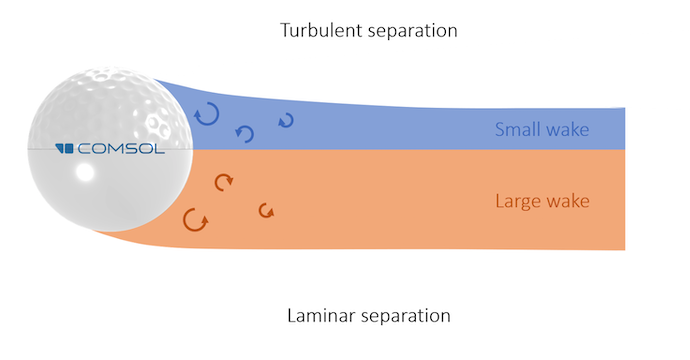
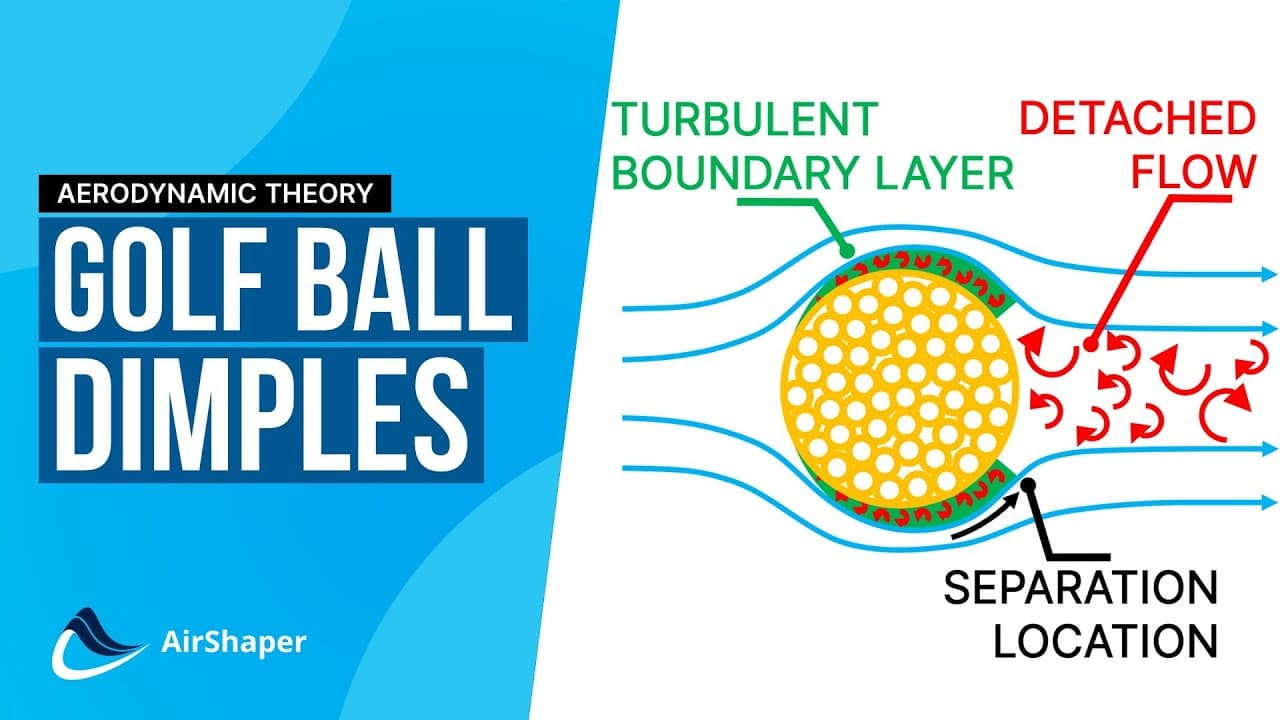
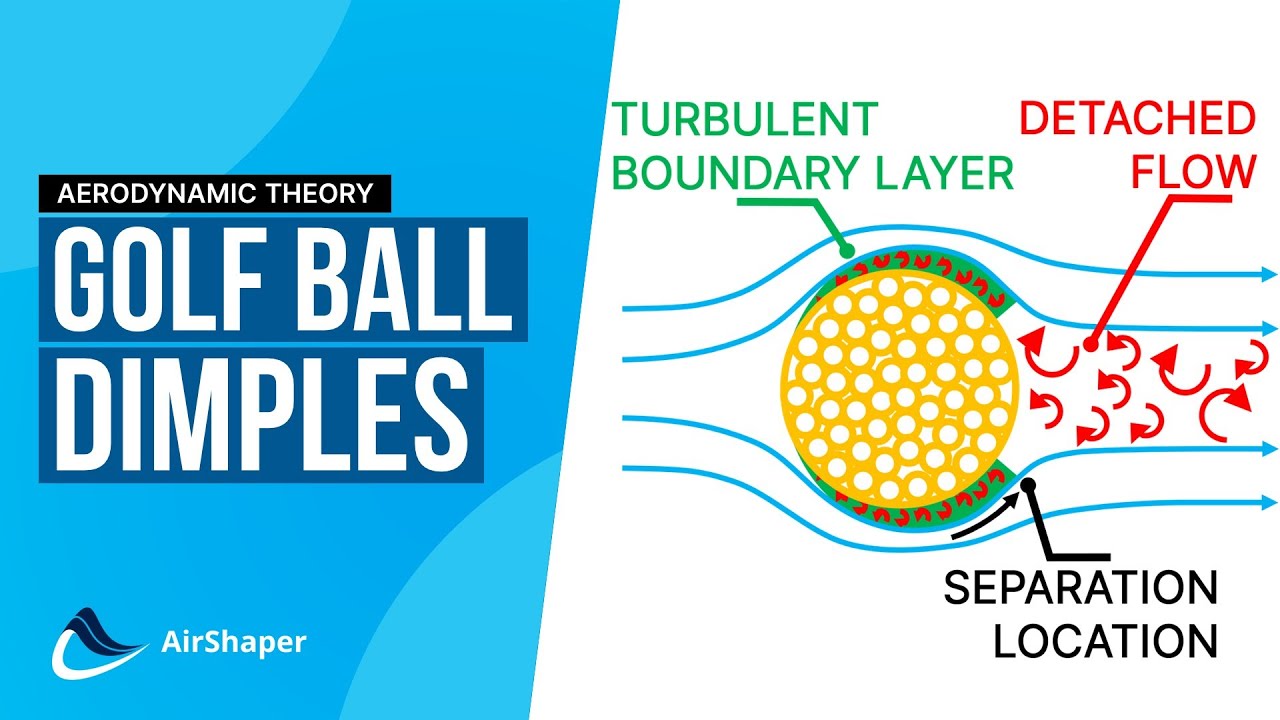
Dimples change the air around a flying ball. If you ask how do dimples on a golf ball work, the short science is this: they trigger a thin turbulent layer that lowers pressure drag and helps the ball fly farther. A smooth ball makes air separate early. Early separation creates a large low-pressure wake behind the ball and slows it quickly.
Dimples delay where the air peels away. That shrinks the wake. A smaller wake means less drag and more distance. Dimples also work with spin to boost lift. Backspin and airflow create higher pressure below the ball and lower pressure above, so the ball gets lift.
Physics behind dimples
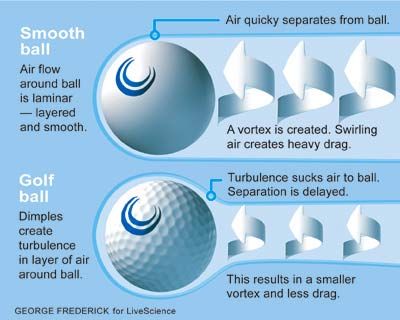
The key idea is boundary layer control. The boundary layer is the thin air next to the ball. On a smooth ball that layer is mostly laminar. Laminar flow separates early. Dimples disturb the laminar layer and make it turbulent. Turbulent boundary layers stick to the ball longer. That reduces pressure drag.
Reynolds number and speed matter. At golf speeds, a smooth ball has high drag. Dimples change the flow behavior at those speeds. The Magnus effect then acts on a spinning, dimpled ball. Spin plus dimples gives lift. That lift helps drives and long shots carry farther.
Typical dimple features that matter:
- Number of dimples: between about 300 and 500 on most balls.
- Depth and diameter: usually shallow and small, tuned for speed or spin.
- Pattern: affects stability, spin, and distance.
If you want to test how do dimples on a golf ball work, watch launch monitor numbers with and without dimples. Wind tunnel and launch data show dimpled balls keep speed longer and land with more consistent carry.
Dimple patterns and design choices
Manufacturers tune dimples to meet goals. If your question is how do dimples on a golf ball work to give more control, the pattern matters. Some balls use large dimples to cut drag. Others mix sizes to balance speed and spin.
Design choices affect player feel:
- Distance balls favor shallow, uniform dimples for low drag.
- Control balls add complex dimples to boost spin and bite around greens.
- Hybrid designs aim for straight flight and usable spin on wedge shots.
Engineers model airflow and test with launch monitors. They may run hundreds of patterns to find the best tradeoffs for spin, stability, and distance. Those tweaks change ball behavior more than most golfers expect.
Practical effects for golfers
Knowing how do dimples on a golf ball work helps you pick the right ball. Here are practical points:
- Clean balls perform better. Dirt clogs dimples and cuts lift and distance.
- Harder clubs and faster swings benefit more from dimple aerodynamics.
- Side winds interact with dimple-driven stability to affect curve and carry.
If you want more distance, choose a ball with a dimple pattern tuned for low drag. If you want more control around the green, pick a ball that trades a bit of distance for higher spin. I recommend trying two types on the range and noting carry, spin, and feel.
My experience and tips from the range
I’ve tested many balls with a launch monitor and on-course play. Early on I underestimated dimples. I thought any golf ball would fly the same. Tests proved otherwise. Switching to balls with better dimple designs added yards and improved dispersion for my tee shots.
Practical tips I learned:
- Replace scuffed balls. Even small nicks change airflow.
- Test driver and wedge with the same ball. Dimple effects show up differently by club.
- Use a launch monitor or range sessions to compare carry and spin.
If you’re curious how do dimples on a golf ball work for your game, measure carry and spin for two balls head-to-head. The differences will surprise you.
Frequently Asked Questions of how do dimples on a golf ball work
How many dimples does a golf ball typically have?
Most golf balls have between about 300 and 500 dimples, depending on the brand and design. The count changes how airflow and stability trade off.
Do dimples increase lift or reduce drag more?
Dimples primarily reduce pressure drag by delaying flow separation, but they also help lift when the ball spins. Both effects work together to extend carry distance.
Will a dirty ball fly differently?
Yes. Dirt or scuffs fill dimples and change airflow. That lowers the aerodynamic benefits and can cut distance and consistency.
Can the dimple pattern change slice or hook tendency?
Dimple patterns influence stability and symmetry of airflow. While they won’t fix bad swing mechanics, certain patterns can make the ball fly straighter or hold a line better.
Are deeper dimples better for distance?
Not always. Deeper dimples can increase turbulence and reduce drag in some ranges, but designers balance depth, size, and pattern. The best choice depends on speed, spin, and desired feel.
Conclusion
Dimples are simple in look but smart in effect. They change airflow to cut drag and help spinning balls find lift. Understanding how do dimples on a golf ball work lets you pick the right ball and keep it clean. Try comparing two balls on the range. Measure carry and spin. Small changes in dimples can add real yards and more consistent shots. If you found this useful, try a head-to-head test, leave a comment about your results, or subscribe for more gear and science tips.