How Do Callaway Golf Shoes Fit: Sizing Guide
Callaway golf shoes can fit true to size for many golfers, but the exact feel depends on the model, last shape, width, upper material, and foot shape. Some pairs feel roomy in the toe box, while others feel snug across the midfoot or heel. The best fit leaves about a thumb’s width in front of the longest toe, holds the heel steady, and keeps the arch supported without pressure. Measure both feet, compare the result with the current Callaway size chart, and test the shoes with golf socks before a full round.

Quick answer: How do Callaway golf shoes fit?
Callaway golf shoes generally fit close to standard athletic-shoe sizing, but fit is not identical across every style. Length, width, heel hold, toe-box shape, and upper flexibility can change the feel. A golfer with a narrow foot may notice heel movement, while a golfer with a wide foot may feel pressure near the forefoot. Use foot measurements, not your usual size alone.

A golf shoe should feel secure when you walk, turn, squat, and swing. It should not pinch, slide, or force your toes into the front. A small amount of space is useful because feet can swell during a long round, especially in heat.
Callaway shoes may suit many beginners, improving players, seniors, women, men, and junior golfers, but the right fit is personal. Handedness does not change shoe sizing. Your swing direction may affect wear patterns, yet both feet still need a proper fit.
Why golf shoe fit matters
The right golf shoe fit can help you keep a stable stance and move with less distraction. Your feet connect your body to the ground during the backswing, downswing, impact, and follow-through. If the shoes move inside the shoe, your balance may change before you notice it.
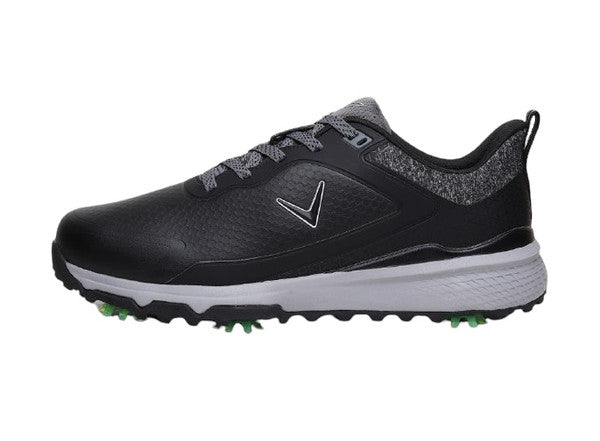
A poor fit can also cause hot spots, blisters, toenail pressure, heel pain, or arch fatigue. These problems may appear after six holes rather than during a short test. That is why walking, turning, and wearing normal golf socks matter when you check fit.
For a beginner, comfort is often more important than technical shoe features. A new golfer may walk on uneven fairways, stand on a driving range mat, and take more practice swings than expected. Stable shoes can help the golfer focus on posture, grip, stance, and tempo instead of foot discomfort.
For an improving golfer, fit affects repeatability. A shoe that allows excess heel lift can make a firm stance feel unstable. A shoe that is too tight can limit natural foot motion and create tension in the legs.
For seniors, fit should account for swelling, balance, joint comfort, and walking distance. Golf fitness, calf mobility, and foot strength also matter. A comfortable fit cannot solve every balance issue, but it can remove one common source of distraction.
Fit features that affect a golf swing
Golf shoes need enough grip for the stance but should still allow natural movement. The sole should contact the ground evenly. The upper should hold the foot without crushing it.
The main fit features are:
- Length: The longest toe should not touch the front.
- Width: The forefoot should not bulge over the sole or feel squeezed.
- Heel hold: The heel should stay mostly in place during a walk.
- Midfoot support: The laces or fastening system should hold the foot without numbness.
- Arch contact: The shoe should feel supportive, not sharply raised.
- Flex point: The shoe should bend near the ball of the foot.
- Toe box: The toes should spread and move slightly.
The foot should not slide forward when walking downhill. This matters on hilly courses, links courses, and courses with firm ground. It also matters when a golfer walks from the tee box to the fairway or rough.
Common Callaway golf shoe fit patterns
Callaway uses more than one shoe shape, so no single statement describes every pair. A lightweight, flexible model may feel more like a walking shoe. A structured model may feel more secure around the heel and midfoot.
The table below explains what different fit sensations can mean.
| Fit sensation | What it may mean | What to check |
|---|---|---|
| Toe pressure | The shoe may be too short or narrow | Check toe length and width |
| Heel lift | The heel pocket may be too loose | Try lacing changes and walking tests |
| Midfoot squeeze | The upper or width may not suit your foot | Check for pressure and numbness |
| Loose overall feel | The shoe may be too large | Check heel, arch, and toe movement |
| Firm but comfortable hold | The shape may match your foot | Test after walking and swinging |
The key takeaway is simple: a snug hold is good, but tightness is not the same as support. A shoe should secure the foot without creating pain.
How to measure your feet for Callaway golf shoes
The best way to choose a Callaway golf shoe size is to measure both feet at the end of the day while wearing the socks you use for golf. Feet often become slightly larger after standing and walking. Measuring only in the morning can lead to a fit that feels too tight later.

You need paper, a pencil, a ruler or tape measure, and the golf socks you normally wear. Ask another person to trace your foot if possible. A straight trace is more useful than guessing from an old pair of shoes.
A simple foot-measurement method
Follow these steps:
- Place a sheet of paper on a hard, flat floor.
- Stand on the paper with your full weight on the foot.
- Keep your heel lightly against a wall.
- Trace around the foot, or mark the back of the heel and the longest toe.
- Measure the distance between those marks.
- Measure the widest part of the forefoot.
- Repeat the process for the other foot.
- Use the larger foot when checking the Callaway size chart.
Do not measure while sitting. The foot spreads under body weight. This spread can be important for golfers with wide feet, flat feet, or tired feet.
Your longest toe may not be the big toe. Some people have a second toe that extends farther. Measure to the longest point, not the toe you assume is longest.
How much toe room is appropriate?
A golf shoe usually needs a small space between the longest toe and the front of the shoe. A common guide is about the width of a thumb, though thumb width varies. The better test is whether you can move your toes slightly without the foot sliding.
Too little room may cause pressure during downhill walks. Too much room may allow the foot to move inside the shoe. Both issues can affect comfort and stability.
| Measurement or test | Good sign | Warning sign |
|---|---|---|
| Toe length | Toes move slightly without touching the front | Longest toe touches during walking |
| Forefoot width | No sharp pressure at the sides | Numbness, pinching, or bulging |
| Heel hold | Heel stays mostly still | Heel rises with each step |
| Standing test | Foot feels balanced and supported | Foot rolls or feels unstable |
| Walking test | No rubbing after several minutes | Hot spots appear quickly |
Check both feet in the larger size or width needed. Many people have one foot that is slightly longer or wider. That is normal.
Should golf shoes fit tighter than running shoes?
Golf shoes should feel secure, but they should not be painfully tight. A running shoe often allows more forward movement and toe space. A golf shoe needs firm lateral support because the golfer turns against the ground during the swing.
That does not mean a golf shoe should squeeze the foot. A tight toe box can limit balance and comfort. A tight midfoot can create numbness. The ideal fit is secure through the heel and midfoot, with room for the toes.
This advice suits most beginners and recreational golfers. A competitive golfer may prefer a more structured feel, but structure should never replace comfort or proper length.
A step-by-step Callaway golf shoe fit test
The best fit test uses more than a seated try-on. Test the shoes in the same conditions you face on the course. Walk, turn, bend, and hold your golf stance.

Use this process for a new pair, a different Callaway model, or a change in width.
1. Start with your normal golf socks
Golf socks vary in thickness. Thin summer socks and thick cold-weather socks can create a different fit. Use the socks you expect to wear most often.
For a senior golfer with foot swelling, test later in the day. For a junior golfer, use the socks worn during practice and matches. Parents should check fit often because young feet can change quickly.
2. Check the heel before tying the laces
Slide the foot back so the heel sits in the heel pocket. Tie the shoes normally. Walk several steps and notice whether the heel rises.
A tiny amount of movement can be normal. Repeated rubbing or a large lift is a warning sign. Do not solve a major sizing problem by tying the laces as tightly as possible.
3. Check the toe box while standing
Stand with your full weight on both feet. Move your toes. The upper should not press hard against the top or sides of the toes.
Bend the knees as if preparing for a golf shot. Your toes should not jam into the front. This test suits all skill levels because a round includes many bends, squats, and uneven lies.
4. Walk on different surfaces
Walk on a hard floor, carpet, and a slightly uneven surface if safe. Notice whether the foot rolls, slides, or feels supported.
Walking shoes can feel fine for two minutes but create pressure after ten minutes. A golf round may include several miles of walking, depending on the course and pace. Riders also walk from the cart to the ball, green, bunker, and tee box.
5. Make a golf stance
Set your feet at about shoulder width for a standard iron shot. Bend from the hips and keep a neutral posture. Make a few slow practice swings.
The shoe should stay stable while your weight shifts from the trail side toward the target side. It should not fold in an odd place or force your toes to grip the ground.
6. Test a partial swing and follow-through
Make half swings first. Then make a few controlled full swings if the space is clear. Check the shoe during the backswing, downswing, impact, and follow-through.
A shoe that feels fine in a straight walk may feel loose during a rotational move. This test is especially useful for players with fast swing speed or strong lower-body action.
7. Check for pressure after the test
Remove the shoes and inspect your feet. Look for red areas, rubbed skin, or deep marks from the upper. A small mark from the laces may be harmless, but pain or numbness is not.
Do not use a painful shoe in a full round to “break it in.” Some materials relax with use, but a poor length or width rarely becomes a good fit.
8. Compare both feet again
Your larger foot controls the fit. If one foot feels perfect and the other feels cramped, the shoe shape may not match your feet.
A foot specialist or qualified shoe fitter can help with major size differences, orthotics, or recurring foot problems. Persistent pain should be discussed with a doctor.
Fit guidance by golfer type
Callaway golf shoe fit can feel different based on the golfer’s age, foot shape, walking habits, and playing level. There is no separate rule that makes one fit correct for all men, women, juniors, or seniors.

The same person may also need different fit features in summer and winter. Course conditions, socks, swelling, and walking distance all change the experience.
Men’s golf shoe fit
Men’s golf shoes often use standard men’s sizing and width labels, but feet vary widely within that group. Some men have broad forefeet and narrow heels. Others have long, slim feet.
Do not assume a larger shoe is wider in the right place. Extra length can create heel slip while still leaving the forefoot tight. Measure length and width separately.
This advice suits male beginners and experienced golfers alike. Handicap does not determine shoe size. A high-handicap golfer needs the same basic fit checks as a low-handicap player.
Women’s golf shoe fit
Women’s golf shoes may use a different size scale and shape from men’s shoes. Many women have a narrower heel, though this is not true for everyone. A shoe that is long enough may still feel loose at the heel.
Women should check heel hold, toe space, and forefoot width. Do not choose a smaller size to fix heel movement if the toes then feel cramped.
Hormonal changes, pregnancy, age, and swelling can affect foot shape. Anyone with changing foot size should measure again rather than rely on an old shoe size.
Junior golf shoe fit
Junior golfers need secure shoes with room to grow, but too much extra length can affect balance. A child should not wear a shoe that slides during a swing or causes the toes to grip the ground.
Parents should check fit every few months during periods of fast growth. Look for toe contact, heel rubbing, uneven wear, and complaints after practice.
Junior golfers also need a clear swing area, a warm-up routine, sun protection, water, and safe cart habits. Shoes are only one part of a safe golf setup.
Senior golf shoe fit
Senior golfers may value easy walking, steady heel hold, and a comfortable toe box. Joint stiffness, reduced balance, bunions, arthritis, and swelling can change fit needs.
A wider fit may help some golfers, but width alone does not solve every foot problem. A podiatrist or doctor can advise on pain, orthotics, and medical conditions.
Seniors who walk should test shoes for longer than a short indoor try-on. Those who ride should still check comfort because standing on uneven lies can stress the feet and ankles.
| Golfer group | Main fit priority | Tip that may not suit everyone |
|---|---|---|
| Beginner | Comfort and stable heel hold | Very stiff shoes may feel restrictive |
| Improving amateur | Secure midfoot during rotation | Tight lacing may create numbness |
| Junior | Safe length and room to move | Extra growing room can reduce stability |
| Senior | Balance, comfort, and swelling room | A wide shoe may not fix heel slip |
| Walker | Cushion and low rubbing | Soft uppers may feel less stable |
| Cart rider | Secure stance and easy walking | Comfort still matters between shots |
The main lesson is to fit the person, not the label. Gender, age, and handicap can guide questions, but measurements and movement tests give better answers.
Wide feet, narrow feet, and unusual foot shapes
Callaway golf shoes may feel different on wide, narrow, flat, high-arched, or uneven feet. A standard width can suit many golfers, but it cannot suit every foot shape.

A wide foot may feel pressure at the little toe or the ball of the foot. A narrow foot may show heel lift even when the length is correct. Flat feet may need a different type of support than high arches.
Signs the shoe is too narrow
Watch for these signs:
- Numb toes
- Pressure along the little-toe side
- Red marks at the widest part of the foot
- The foot bulging over the edge of the sole
- Burning after walking
- Toes touching each other with little movement
Do not confuse a firm upper with a narrow fit. Some materials feel structured but still leave enough room. Pain and numbness are the useful signals.
Signs the shoe is too wide
A shoe may be too wide if:
- The heel lifts with each step
- The foot slides side to side
- The laces must be pulled very tight
- The toes grip the ground to stay stable
- Blisters appear near the heel
- The shoe creases far outside the natural bend of the foot
A loose fit can affect a golfer’s stance and confidence. It may also make a golfer feel that the swing is inconsistent when the real issue is foot movement.
| Foot shape or issue | Likely symptom | Useful fit check |
|---|---|---|
| Wide forefoot | Side pressure | Measure the broadest area |
| Narrow heel | Heel movement | Walk and make slow swings |
| Flat arch | Fatigue or uneven support | Check neutral comfort, not a sharp arch |
| High arch | Pressure under the midfoot | Look for even contact |
| Bunions | Pain near the big-toe joint | Check side room and toe angle |
| Different-size feet | One foot feels cramped | Fit to the larger foot |
If you use custom orthotics, test the shoes with the orthotic in place. The insert changes the space inside the shoe. Remove the original insole only if the shoe and orthotic allow it safely and comfortably.
How upper materials and construction change fit
The upper is the material around the top and sides of the foot. It can be flexible, structured, padded, breathable, or water-resistant. These traits change how the shoe feels during a round.

A flexible upper may feel comfortable right away and move easily during walking. A structured upper may hold the foot more firmly during a swing. Neither is automatically better for every golfer.
Water-resistant or waterproof construction may feel less flexible than a thin, breathable upper. Sealed materials can also feel warmer in hot weather. Breathability matters on summer rounds, while water protection matters in wet grass and early-morning conditions.
Flexibility and break-in time
Some golf shoes feel natural from the first walk. Others need a short period of normal use before the upper bends comfortably. The break-in period should not include severe pain, blisters, or numbness.
Use short walks and controlled practice first. Do not take an untested pair onto a long walking round, a hilly course, or a tournament.
A golfer with sensitive feet may prefer a shoe that feels comfortable with little break-in. A golfer with a strong, aggressive swing may prefer more structure, but only if the shoe still allows natural foot movement.
Insoles and socks
Socks affect fit more than many golfers expect. Thick socks can reduce toe room. Thin socks can increase movement. Moisture can also increase friction and blister risk.
Orthotics may raise the foot inside the shoe and reduce headroom. If the top of the foot feels pressed, the issue may be the insole rather than the shoe length.
Keep socks smooth and dry. Wrinkles can create pressure points during a long round.
Walking, riding, and course conditions
A golf shoe may feel different on a flat executive course than on a hilly championship course. Walking distance, slope, grass moisture, and ground firmness all matter.

Walkers need to think about cushioning, rubbing, heel hold, and breathability. Cart riders still need stable shoes because they stand on slopes, walk across rough, and make swings from uneven lies.
On a wet morning, grass can increase slipping risk. On firm links-style ground, the shoe may feel harder underfoot. On soft turf, the foot may sink slightly. These conditions do not change shoe size, but they change how the fit feels.
Weather and foot swelling
Heat can cause feet to swell. Cold weather can lead to thicker socks. Rain can make socks damp, which increases friction.
Use this simple guide when checking fit for different conditions.
| Condition | Fit concern | Practical adjustment |
|---|---|---|
| Hot weather | Foot swelling and sweat | Leave toe room and use dry socks |
| Cold weather | Thick socks and stiff materials | Test with winter socks |
| Wet grass | Slipping and damp feet | Check traction and moisture control |
| Hilly course | Forward slide and heel rubbing | Test downhill walking |
| Firm links course | Impact and foot fatigue | Check cushioning and comfort |
| Soft turf | Foot sinking and uneven stance | Check lateral stability |
A shoe that fits only in one weather condition may not suit your normal golf season. Consider the socks and course surfaces you actually use.
⚠️ Safety Warning: Stop playing and leave the course at the first lightning warning or when instructed by course staff. Shoes cannot protect you from lightning. In heat, drink water, use sun protection, and take breaks when needed.
Golf shoe fit and the Rules of Golf
Golf shoe fit is not a skill rule, but footwear can relate to equipment and local conditions. The Rules of Golf and a committee may set requirements about shoes, damage to the course, or local restrictions.

Most golfers can focus on comfort and safety during casual play. In a competition, check the event conditions and local rules. Some facilities may restrict certain sole types to protect greens or turf.
A shoe should not be used to deliberately damage the putting green or improve a lie. Golf etiquette also requires care for the course. Repair ball marks, replace or fill divots when allowed, rake bunkers, and avoid unnecessary damage.
The latest Rules of Golf and local committee instructions control in a tournament. Ask the club or tournament committee if a shoe type or sole design is unclear.
Shoes and different formats
Footwear fit is the same in stroke play, match play, scramble, and Stableford. The format changes scoring and strategy, not the basic need for stable shoes.
- Stroke play: Every stroke counts toward the total.
- Match play: Players compete hole by hole.
- Scramble: A team selects among shots.
- Stableford: Points are based on results relative to par.
A good fit can support walking and stance comfort in each format, but it does not change the Rules of Golf or improve a handicap index by itself. Handicap index and slope rating describe playing ability and course difficulty, not shoe fit.
Common Callaway golf shoe fit problems and fixes
Most fit problems come from a mismatch in length, width, shape, socks, or lacing. The first step is to identify the symptom instead of guessing.
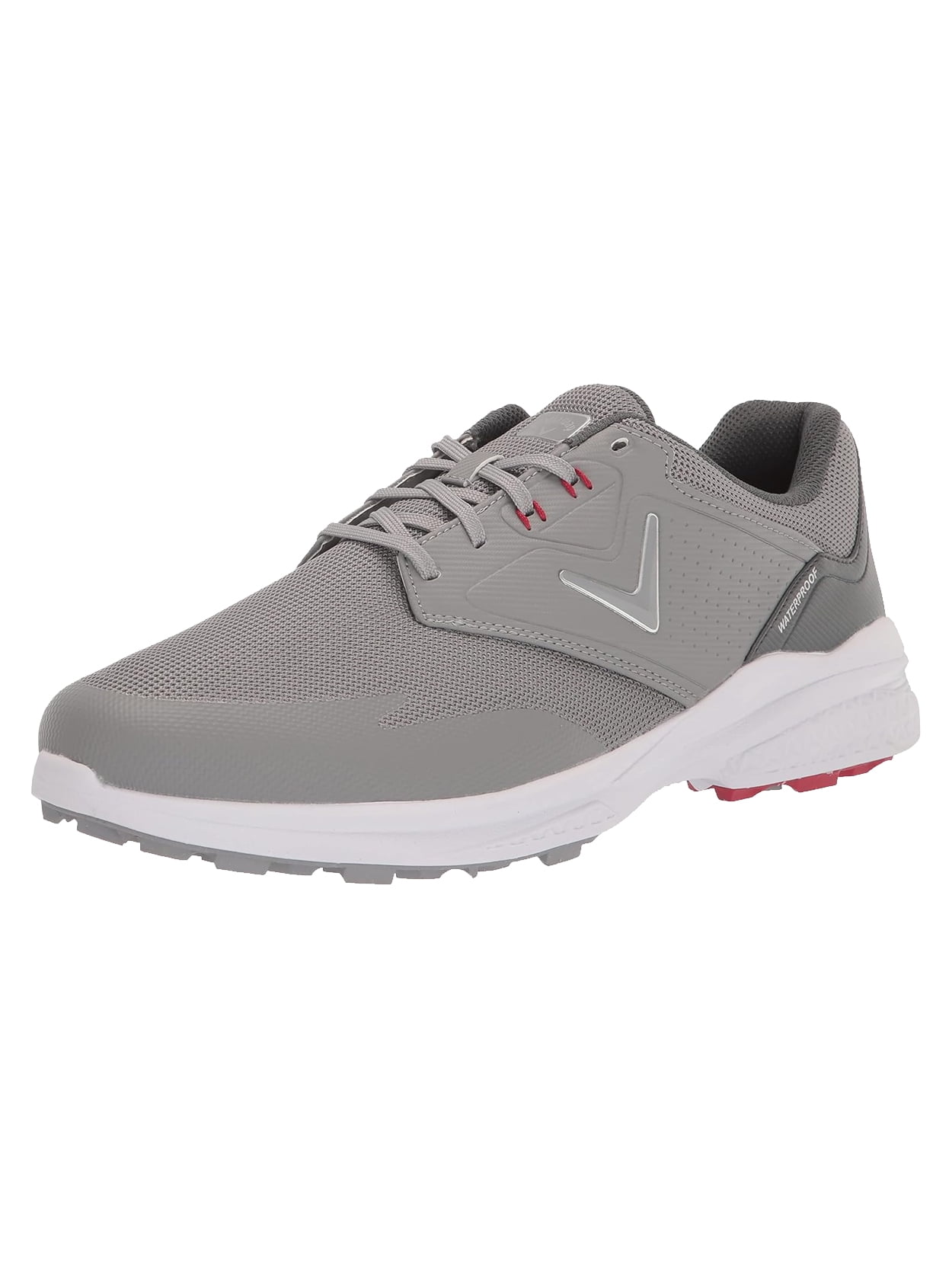
The table below offers a simple starting point. These are general checks, not medical treatment.
| Problem | Possible cause | First check |
|---|---|---|
| Heel slips | Shoe is too large or heel shape is loose | Check length and lacing |
| Toes hit front | Shoe is too short or foot slides forward | Walk downhill and check toe room |
| Side pressure | Shoe is too narrow | Measure forefoot width |
| Arch aches | Shape or insole does not suit foot | Test neutral support |
| Blisters | Friction, moisture, or movement | Check socks and heel hold |
| Numbness | Laces or upper are too tight | Loosen and reassess width |
If loosening the laces solves numbness but causes the heel to slide, the shape may not suit your foot. If a shoe causes pain in one area every time, stop using it for golf and seek professional advice.
Lacing for heel hold
A secure lacing pattern can reduce mild heel movement. Lace the upper eyelets firmly but avoid cutting off circulation. The forefoot should still have room.
Lacing cannot turn a long shoe into a short one or a narrow shoe into a wide one. It is a small adjustment, not a substitute for correct sizing.
When a shoe feels too loose
Check your socks, insole, and foot position first. A thin sock or worn insole can increase movement. Your heel should sit back before you tie the shoe.
If the foot still slides after a normal lacing test, the shoe may be too large or the heel shape may not match. A larger shoe is not the answer when the problem is width.
When a shoe feels too tight
Remove the shoe and check for red marks. Try the fit later in the day with your golf socks. If the longest toe touches the front or the forefoot feels compressed, the shoe may not have enough length or width.
Do not ignore tingling or numbness. Foot pressure can become worse during a long round.
How long does it take to get used to Callaway golf shoes?
Many golfers can judge basic comfort within a few minutes, but full comfort may take several short walks. The time depends on the upper material, foot sensitivity, sock thickness, and shoe construction.
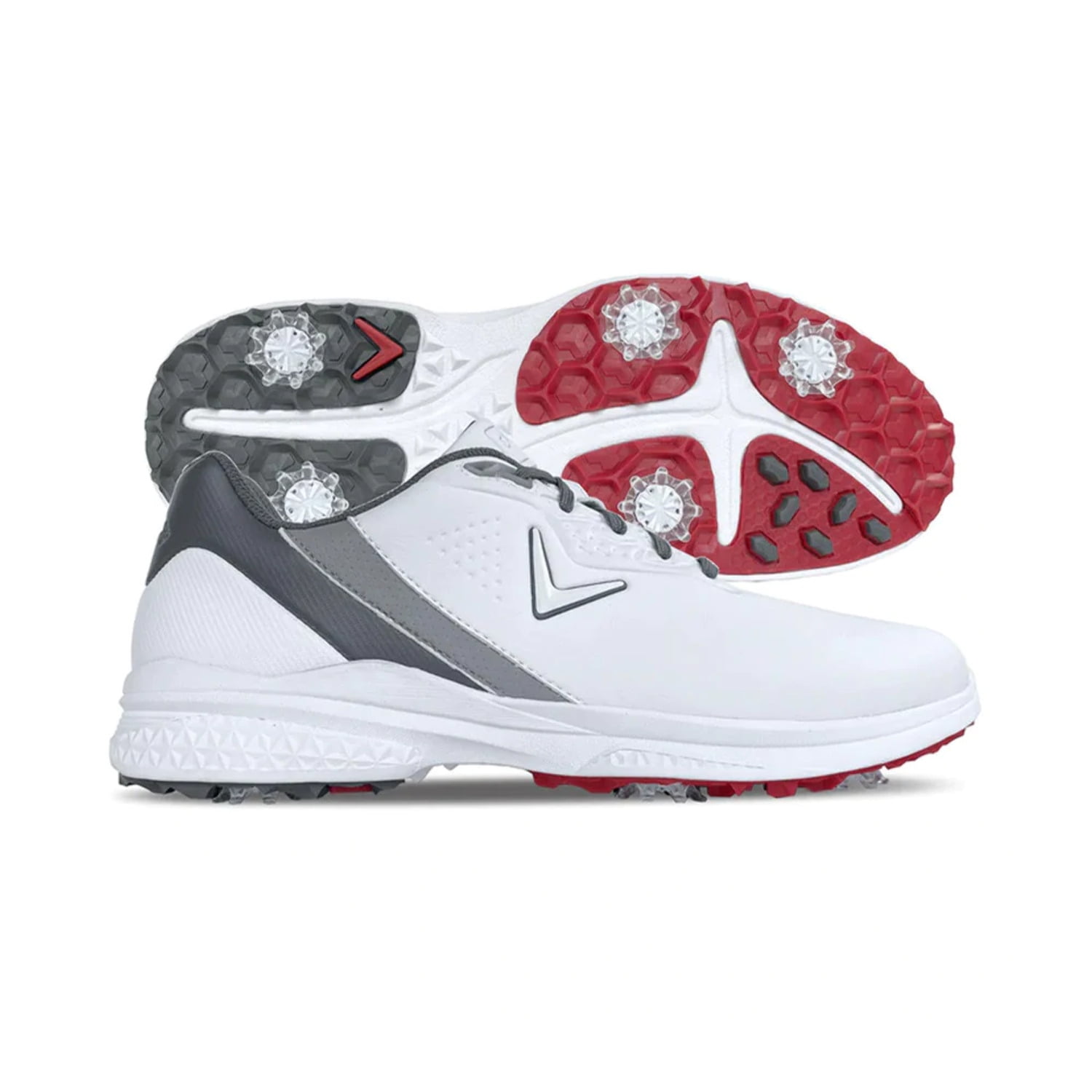
A safe approach is to wear the shoes indoors or for brief practice sessions first. Try putting, chipping, pitching, bunker shots, and a few swings. Then inspect your feet.
Do not assume every stiff feeling is normal break-in. A new shoe may feel firm, but sharp pain, numbness, or repeated rubbing signals a fit issue.
This gradual approach suits beginners, juniors, seniors, and golfers returning after an injury. Players preparing for a tournament should test shoes well before the event rather than on the first tee.
What a good fit feels like during the swing
A well-fitting golf shoe feels quiet on the foot. You notice the ground, but you do not notice the shoe moving or pressing.

During the backswing, the trail foot should stay connected without forced toe gripping. During the downswing, the lead foot should support rotation without rolling sharply outward. At impact, the shoe should feel stable. During the follow-through, your feet should move naturally as your body finishes.
A good fit does not force one swing style. Golfers use different stances, tempos, and foot motions. The shoe should support your natural movement rather than lock the feet in place.
Fit for a beginner’s swing
Beginners often move more than they expect. They may sway, lift the heel, or change stance width during practice. A comfortable and stable shoe can make it easier to learn balance and posture.
New golfers should not chase a highly rigid feel. Learn a repeatable grip, stance, posture, and tempo first. If the feet hurt, practice quality may drop.
Fit for faster swing speeds
A golfer with high clubhead speed may create greater rotational force. A secure heel and midfoot can feel useful during the transition and downswing.
Still, speed does not justify a tight fit. The foot needs room to spread and absorb force. Players who notice recurring foot, ankle, knee, or back pain should consult a PGA professional for swing review and a medical professional for pain.
Fit for putting and short game
Putting does not create the same force as a full swing, but comfort still matters. A golfer may stand on a slope while reading a green or spend time walking around a putt.
For chipping and pitching, the shoe should allow a balanced stance. In a bunker, the foot may move in sand, so the shoe should remain comfortable and secure without forcing excess pressure on the toes.
Pros and cons of different fit sensations
Golfers often use words such as “soft,” “firm,” “roomy,” and “locked in.” These words describe feel, not automatic quality. Each sensation can suit one player and bother another.

| Fit sensation | Potential benefit | Potential drawback |
|---|---|---|
| Roomy toe box | Allows toe movement and swelling room | May feel loose if length is excessive |
| Firm heel hold | Supports stability during rotation | Can rub if the heel pocket is wrong |
| Flexible upper | Comfortable walking and bending | May feel less structured to some players |
| Structured upper | Strong sense of support | May feel stiff or restrictive |
| Soft underfoot feel | Can reduce fatigue for walkers | May feel less direct on firm ground |
| Close-fitting midfoot | Can reduce internal movement | May cause pressure if too tight |
The best choice depends on your foot and your course habits. A walking golfer may value comfort over stiffness. A player with a forceful swing may want security but still needs healthy toe space.
A simple golf shoe fit checklist
Use this checklist before a long round or tournament. It works for beginners and experienced players.

- Measure both feet while standing.
- Use normal golf socks.
- Check the larger foot first.
- Leave small space at the longest toe.
- Confirm the forefoot is not pinched.
- Walk for several minutes.
- Walk downhill if possible and safe.
- Make a golf stance.
- Perform slow practice swings.
- Check for heel lift.
- Look for red marks or hot spots.
- Test orthotics if you use them.
- Check current event or local shoe rules.
- Stop if pain, numbness, or sharp rubbing appears.
A checklist cannot replace medical advice or a professional fitting. It can, however, prevent many avoidable errors.
Foot comfort, golf fitness, and injury prevention
Shoe fit is only one part of foot comfort. Warm-up, strength, mobility, hydration, and recovery also matter.
Before a round, walk for a few minutes and make gentle ankle circles. Add controlled leg swings and easy practice swings. Avoid sudden full-speed swings before the body is ready.
Golf fitness can include calf raises, single-leg balance, hip mobility, and core control. These exercises may help general movement, but they should match your health and training level.
Do not play through persistent foot, ankle, knee, hip, back, elbow, or wrist pain. A doctor or qualified health professional can assess pain. A PGA professional can help review swing mechanics after medical concerns are addressed.
💡 Pro Tip: Check your feet halfway through a practice session, not only at the start. A shoe that feels fine for ten minutes may create a hot spot after repeated swings or walking.
FAQs about Callaway golf shoe fit
Q: Do Callaway golf shoes run true to size?
A: Many Callaway golf shoes feel close to standard athletic-shoe sizing, but the fit varies by model and foot shape. Measure both feet and compare the result with the current Callaway size chart. Do not rely only on the size printed inside an older shoe.
Q: Should I size up in Callaway golf shoes?
A: Not automatically. Size up only when your measurements and toe test show that you need more length or width. A larger shoe can create heel slip and reduce stability.
Q: Are Callaway golf shoes good for wide feet?
A: Some models and width options may suit wider feet, but no brand-wide answer fits every golfer. Measure the forefoot and look for side pressure, toe numbness, and bulging over the sole.
Q: How much room should be in the toe of a golf shoe?
A: The longest toe should have a small amount of free space and should not touch the front while standing or walking. You should be able to move the toes slightly without the foot sliding.
Q: Why do my golf shoes hurt after nine holes?
A: Swelling, heat, thick socks, poor heel hold, excess pressure, or a wrong width can cause pain later in the round. Test the shoes after walking, not just while seated. Stop using them if pain or numbness continues.
Q: Should golf shoes fit tighter than regular shoes?
A: They should feel secure, especially around the heel and midfoot, but they should not squeeze the toes or cause numbness. Golf shoes need stability for rotation and comfort for walking.
Q: Do Callaway golf shoes need to be broken in?
A: Some pairs may feel more flexible after short use, but serious pain is not a normal break-in sign. Use short walks and practice sessions first. Do not take an untested pair on a long or hilly round.
Q: Can I wear thick socks with Callaway golf shoes?
A: Yes, if the shoes still leave enough room and do not create pressure. Test the exact socks you plan to wear. Thick socks can reduce toe space and increase warmth.
Q: How should Callaway golf shoes fit for seniors?
A: Seniors should look for a stable heel, comfortable width, enough toe room, and no rubbing. Check fit later in the day if swelling is common. Foot pain or balance concerns deserve medical advice.
Q: How should Callaway golf shoes fit for women?
A: Women should check length, forefoot space, and heel hold rather than assume a narrow shape is correct. A shoe can be long enough but too loose at the heel or too tight near the toes.
Q: How should Callaway golf shoes fit for junior golfers?
A: Juniors need room to move but not so much extra length that the foot slides. Parents should check fit often as the child grows. Look for heel rubbing, toe pressure, and complaints after practice.
Q: Does being left-handed or right-handed change golf shoe fit?
A: No. Handedness does not change shoe size. It may affect wear patterns because the swing loads each foot differently, but both shoes should fit properly.
Q: Can golf shoes help my balance?
A: A stable, well-fitting shoe can remove foot movement and distraction. It cannot replace balance training, sound posture, proper stance, or a professional lesson.
Q: Can I use Callaway golf shoes on any golf course?
A: Check the course policy and local rules. Some facilities or events may limit certain sole types to protect turf. Also check conditions before walking on wet, steep, or damaged ground.
Q: Do golf shoes affect handicap index or scoring?
A: Shoes do not directly change a handicap index. They may affect comfort and stability, but handicap calculations depend on scores, course rating, slope rating, and the applicable handicap system.
Q: Can a golf shoe fix heel pain?
A: A better fit may reduce rubbing or unwanted movement, but it cannot diagnose or treat heel pain. Persistent pain should be checked by a doctor or qualified health professional.
Final thoughts
Callaway golf shoes do not have one universal fit. The feel changes with the model, foot shape, width, upper, socks, weather, and playing habits. The most reliable method is to measure both feet, fit the larger foot, check toe space, secure the heel, and test the shoes while walking and making golf movements.
Beginners should value comfort and easy balance. Improving golfers should watch heel hold and midfoot stability during the swing. Seniors, women, men, juniors, and walkers should all use the same basic rule: a golf shoe should feel secure without pain, pressure, numbness, or excess movement.
Take time to test the fit before a full round. Protect your feet, respect the course, follow local rules, and seek professional help for recurring pain or fit problems.