Best Golf Shoes For Fallen Arches: Comfort And Support
The best golf shoes for fallen arches combine steady arch support, cushioning, a stable base, and a secure fit.
A long round can expose every weakness in your feet. If your arches collapse as you walk, your heels and knees may feel tired before you reach the back nine. The right golf shoe can help by giving your foot a firm platform, soft cushioning, and better grip. I reviewed four useful options for golfers with low or fallen arches. The list includes golf shoes and a golf-specific insole that can improve the fit of shoes you already own.
See the differences between my top picks at a glance.
adidas Tech Response 3.0 Golf Shoes

The adidas Tech Response 3.0 is a practical choice for golfers who want a light shoe without a high price. Its low-profile feel can make walking from tee to green easy. The shoe also gives the foot a more structured base than a casual sneaker. For golfers with fallen arches, I would pair it with a supportive golf insole if the stock footbed feels too flat.
This model uses traditional golf traction, so it can feel secure during a full swing. That grip matters when the ground is damp or the stance becomes uneven. The flexible design also suits golfers who dislike stiff shoes. Still, the amount of support will depend on your foot shape, so check the fit before playing a full 18 holes.
Pros:
- Lightweight feel for walking the course
- Golf-specific traction for a secure stance
- Flexible upper helps reduce a stiff break-in period
- Useful value for budget-focused golfers
- Works well with many replacement insoles
- Sporty design fits casual golf clothing
Cons:
- The built-in arch support may feel modest for severe fallen arches
- Traditional traction may not suit golfers who prefer spikeless soles
- Fit can vary, so careful size selection matters
What Amazon Buyers Are Saying
Amazon review patterns for this type of adidas golf shoe often center on its light weight, walkable feel, and useful price. Buyers commonly like the sporty look and the traction for normal course play. Some golfers also prefer its flexible feel over heavier golf shoes. As with many footwear listings, comments can differ by foot shape and size.
The main concern buyers may raise involves fit and support. A golfer with a wide foot, high volume foot, or strong arch-support needs may want a different insole or a roomier model. I would treat the listed size as a starting point and check the current customer feedback for fit notes before ordering.
My Recommendation
I recommend the Tech Response 3.0 for golfers with mild to moderate arch fatigue who want a light, affordable starting point. It becomes a stronger option when combined with a low-arch insole such as the CURREX GolfPro. It is less suitable for golfers who need deep built-in support right out of the box. Overall, it offers good value for casual and regular golfers.
| Category | Rating |
|---|---|
| Arch-support potential | 4/5 |
| Walking comfort | 4.2/5 |
| Course traction | 4.2/5 |
| Fit flexibility | 4/5 |
| Value for money | 4.5/5 |
| Overall Rating | 4.2/5 |
FootJoy Pro/SL Golf Shoe
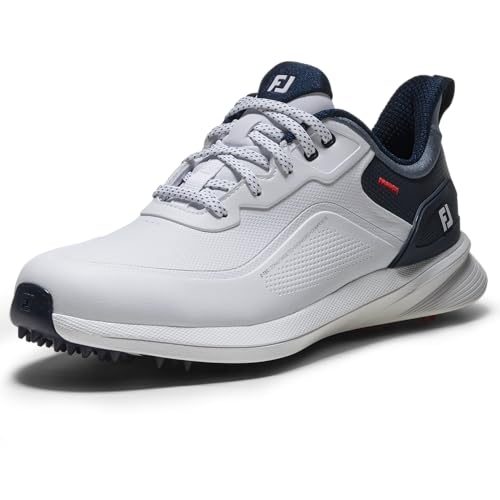
The FootJoy Pro/SL is aimed at golfers who want a stable, refined shoe for long rounds. Its spikeless outsole can make it easier to move from the course to the clubhouse. A stable shoe does not rebuild a fallen arch, but it can give your foot a more dependable platform. That platform may help you feel less side-to-side movement during the swing.
I like this type of shoe for golfers who value balance between comfort and control. It can suit players who walk often and still want dependable grip. The upper and sole need to fit snugly without squeezing the toes. If you have a very flat foot, consider whether the removable footbed and internal shape leave enough room for your preferred orthotic.
Pros:
- Stable platform supports a controlled golf stance
- Spikeless design works on and off the course
- Good choice for golfers who walk several miles
- Premium styling suits formal and casual golf wear
- Room to fine-tune comfort with a suitable insole
- Useful balance of grip, comfort, and swing support
Cons:
- Higher price than many entry-level golf shoes
- The firm platform may not suit golfers who want a very soft feel
- Some feet may need a break-in period
What Amazon Buyers Are Saying
FootJoy buyers often focus on comfort, grip, and the shoe’s stable feel. Many golfers look for a shoe that can handle a full round without feeling loose during the swing. Spikeless traction also tends to appeal to people who want one shoe for the course and nearby stops. Fit comments can vary, especially when buyers compare this model with other FootJoy shapes.
The most useful review detail is often the size and width discussion. Some golfers may find the shoe secure and supportive, while others may need a different width or an adjusted insole. I recommend reading current reviews for your usual FootJoy size and measuring both feet if one foot is longer.
My Recommendation
The Pro/SL is my strongest shoe pick for golfers who want stability first. It does not replace medical care or a prescribed orthotic, but its stable base can support a more confident stance. I think it is worth the extra cost for frequent players who walk and want a polished spikeless shoe. It earns the best overall shoe rating in this guide.
| Category | Rating |
|---|---|
| Arch-support potential | 4.3/5 |
| Walking comfort | 4.5/5 |
| Course traction | 4.5/5 |
| Stability | 4.7/5 |
| Value for money | 4.1/5 |
| Overall Rating | 4.5/5 |
CURREX GolfPro Insoles for Low Arches

The CURREX GolfPro is different from the other products here because it is an insole, not a golf shoe. That makes it useful for golfers who already own a comfortable pair but need more support under the arch. The listing includes a low-arch option, which makes this product especially relevant to people with fallen or flexible arches. The correct size and shape still matter, since an insole that does not match your foot can create new pressure.
An insole can also help you test a support change without buying a new shoe. Remove the original footbed only if the shoe allows it and still leaves enough space. Introduce the insert for short walks before using it for a full round. If it causes sharp pain, numbness, or lasting discomfort, stop using it and ask a qualified foot professional for advice.
Pros:
- Low-arch option targets a common support need
- Can upgrade shoes you already find comfortable
- Useful for testing added arch support at a lower cost
- Golf-specific design suits walking and stance demands
- May improve the feel of balance inside a roomy shoe
- Available for men and women according to the listing
Cons:
- It cannot fix a poor-fitting or unstable golf shoe
- May reduce toe room in shoes with a narrow or shallow interior
- Some golfers need time to adjust to added arch contact
- Support results depend on correct size and arch profile
What Amazon Buyers Are Saying
Customer feedback on golf insoles often highlights comfort, walking support, and the chance to improve an existing shoe. Buyers may appreciate not having to replace a favorite pair of golf shoes. Low-arch users can also value a product that offers more choice than a flat factory footbed. As with all inserts, personal results differ because feet and shoe interiors vary.
Common concerns usually involve fit, thickness, and the level of arch contact. Some users may find the insert comfortable at once, while others may need a short adjustment period. I would pay close attention to comments about sizing and trimming, then test the insole around the house before taking it to the course.
My Recommendation
I recommend the CURREX GolfPro to golfers who like their current shoes but need more support for low arches. It is also a smart add-on for the adidas shoe in this guide. It should not be treated as a cure for foot pain, and it cannot correct every gait issue. For flexible support and upgrade value, it is one of the most useful choices here.
| Category | Rating |
|---|---|
| Low-arch suitability | 4.6/5 |
| Comfort potential | 4.3/5 |
| Fit flexibility | 4.2/5 |
| Golf usefulness | 4.4/5 |
| Value for money | 4.4/5 |
| Overall Rating | 4.4/5 |
Skechers Drive 6 Arch Fit Golf Shoe

The Skechers Drive 6 Arch Fit is built around a comfort-first idea. The Arch Fit name makes it a natural product to consider when low arches make walking tiring. Its relaxed-fit design may appeal to golfers who dislike a tight toe box or firm racing-shoe feel. The leather upper also gives it a more traditional look than many lightweight mesh golf shoes.
This shoe suits golfers who spend a lot of time walking and want easy comfort from the first use. Its spikeless design can make transitions between surfaces simple. A relaxed fit can help some feet, but it may feel too loose if you need a very locked-in swing shoe. I suggest wearing the shoe with your normal golf socks and checking heel movement before playing.
Pros:
- Arch Fit design directly targets underfoot support
- Relaxed shape may suit wider or higher-volume feet
- Leather style looks polished on and off the course
- Spikeless sole supports easy daily use
- Comfort-focused design helps with long walking sessions
- Good choice for golfers who dislike narrow shoes
Cons:
- Relaxed fit may feel less secure on a narrow foot
- Leather may feel warmer than a highly breathable mesh upper
- Some golfers may want stronger swing lockdown
- Arch comfort still depends on individual foot shape
What Amazon Buyers Are Saying
Buyer comments on Skechers golf footwear often focus on comfort, the easy walking feel, and the roomier fit. Golfers who spend many hours on their feet may like the casual feel and simple spikeless design. The Arch Fit label also attracts buyers who want more structure than a basic sneaker. Reviews can differ when a golfer expects a narrow, competition-style fit.
Fit is the main point I would investigate before ordering. Some buyers may find the relaxed shape ideal, while others may need to tighten the laces or choose a different width. Check current comments about sizing, toe room, and heel hold. A good golf shoe should feel comfortable without allowing your foot to slide during a swing.
My Recommendation
I recommend the Drive 6 Arch Fit for golfers who place walking comfort above a close, narrow fit. It is a strong choice for casual rounds, older players, and anyone who prefers a relaxed leather golf shoe. It may not be the first pick for a golfer who wants a very firm competition feel. Overall, it earns a high comfort rating and offers useful arch-focused design.
| Category | Rating |
|---|---|
| Arch-support potential | 4.5/5 |
| Walking comfort | 4.6/5 |
| Fit for wider feet | 4.5/5 |
| Swing stability | 4.1/5 |
| Value for money | 4.2/5 |
| Overall Rating | 4.4/5 |
How to Choose the Best Golf Shoes for Fallen Arches
Choosing the best golf shoes for fallen arches takes more than looking for the word “comfort.” A useful shoe must support your foot while you walk, hold your foot during the swing, and leave enough room for your toes. Fallen arches can mean different things. Some arches flatten only when you stand. Others stay low all the time. Pain, swelling, numbness, or one-sided wear may need a professional assessment.
I look at the full shoe system: the insole, midsole, outsole, upper, and fit. No golf shoe can promise to cure fallen arches. However, the right design can reduce pressure from a flat, unstable, or poorly fitted shoe. The points below will help you compare options with a clear plan.
1. Match the Arch Support to Your Foot
Start by learning whether you have a low, medium, or high arch. A simple wet-foot test can give a rough clue, but it does not replace an exam. A foot specialist can assess how your arch behaves when you stand and walk. This matters because a rigid arch and a flexible arch may need different support.
Look for a footbed that supports the arch without pushing hard into one small spot. Too little support may leave your foot tired. Too much support may create pressure or make the shoe feel painful. The CURREX GolfPro low-arch option can help golfers who want to adjust their current footwear. The Skechers Arch Fit model offers a built-in approach.
Also check whether the footbed comes out. A removable insole gives you more room to test an orthotic or golf-specific insert. Do not stack two thick insoles unless the shoe has enough space. Reduced toe room can cause rubbing, pressure, and poor control.
2. Prioritize a Stable Base and Reliable Traction
Golf shoes must do more than feel soft. Your feet transfer force during the backswing and downswing. A narrow or wobbly sole may make the stance feel less secure. Look for a sole that feels stable from heel to forefoot. A broad base can help, but the shoe should still allow a natural walking motion.
Choose traction based on your course and habits. Spiked shoes, such as the adidas Tech Response 3.0, can offer a firm grip on wet or soft ground. Spikeless shoes, such as the FootJoy Pro/SL and Skechers Drive 6, make walking on paths and indoor floors easier. Neither style is automatically best for fallen arches. The better choice is the one that gives you secure footing without making your stride feel stiff.
Test traction in a safe place before your first round. Walk, stop, and make a slow practice swing. Your heel should stay planted. Your foot should not slide inside the shoe. A snug heel and a flexible forefoot often provide a better blend of control and comfort.
3. Get the Fit Right Before Judging Comfort
Fit is one of the most important parts of finding the best golf shoes for fallen arches. Measure your feet late in the day, when they may be slightly larger. Wear the socks you use for golf. Measure both feet and choose the size that fits the larger foot. Leave a small amount of space in front of the longest toe.
Check three areas. First, the heel should not lift with each step. Second, the midfoot should feel held without pressure on the arch. Third, the toes should spread and move freely. A relaxed shoe can help a wide foot, but too much space can reduce swing control. A narrow shoe can feel secure at first, then cause pain after several miles.
Try the shoes indoors on a clean floor. Walk for several minutes. Stand in your golf stance. Make slow practice swings. If the shoe creates a hot spot, pinching, numbness, or sharp arch pain, do not expect the problem to vanish during a full round. Buy from a listing with a return policy that you understand, and check the current product details before ordering.
Final Verdict: Which Should You Buy?
The FootJoy Pro/SL is my top shoe pick for stability, walking comfort, and dependable course use. The CURREX GolfPro is best for adding low-arch support to a shoe you already like.
For budget value, choose adidas. For relaxed walking comfort, choose Skechers. The best golf shoes for fallen arches should fit your foot, support your stance, and stay comfortable through 18 holes.
FAQs Of best golf shoes for fallen arches
What are the best golf shoes for fallen arches?
The FootJoy Pro/SL is my top overall shoe pick because it offers a stable platform and spikeless traction. The Skechers Drive 6 is better for a relaxed fit, while adidas offers strong value.
Are spikeless golf shoes good for fallen arches?
Yes. Spikeless golf shoes can work well for fallen arches when they provide a stable sole, secure heel, and suitable arch support. Traction style matters less than fit and foot control.
Can golf insoles help with fallen arches?
A golf insole may add support and cushioning, especially when the original footbed feels flat. Choose the correct arch profile and size. Stop using it if it causes sharp pain, numbness, or lasting discomfort.
Should I choose wide golf shoes for low arches?
Choose a wide golf shoe only if your foot needs the extra space. A wide shoe can reduce toe pressure, but too much room may let your foot slide during the swing. Focus on secure heel hold and free toe movement.
Can golf shoes fix fallen arches?
Golf shoes cannot fix a structural foot problem. They can provide a steadier base, better cushioning, and improved comfort. See a podiatrist or other qualified clinician for ongoing pain or major walking changes.