How To Stay Down And Compress The Golf Ball: Pro Tips
Keep your head behind the ball, maintain spine tilt, and hit down to compress the golf ball.
I’ve taught and practiced the feel of how to stay down and compress the golf ball for years, and this article walks you through clear steps, drills, and mindset work to lock that feeling in. You will learn simple setup cues, swing moves, and practice routines that help you strike the ball first, compress it, and produce better distance and consistent spin. Read on to get practical tips you can try on the range today.
Why staying down and compressing the golf ball matters
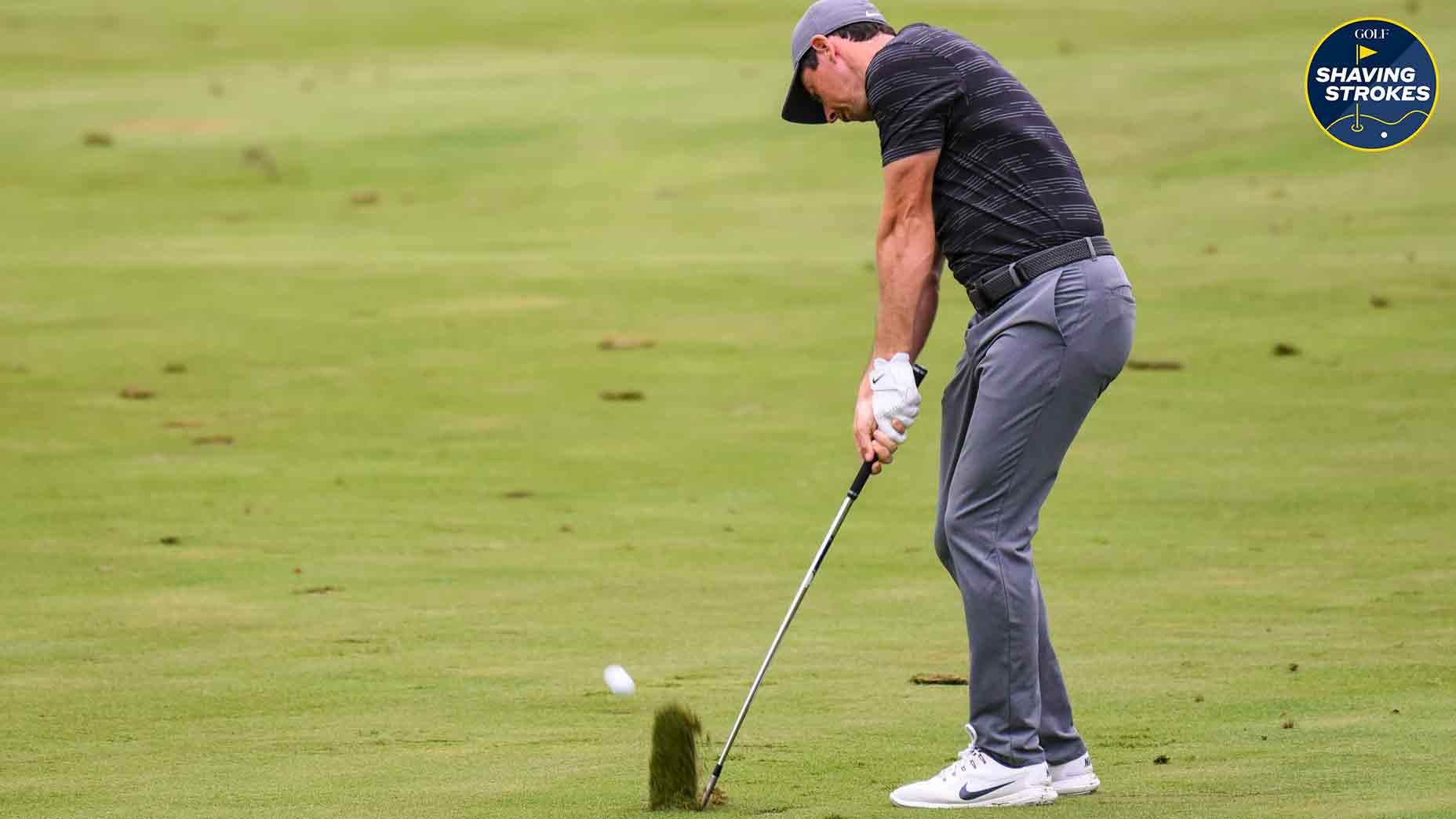
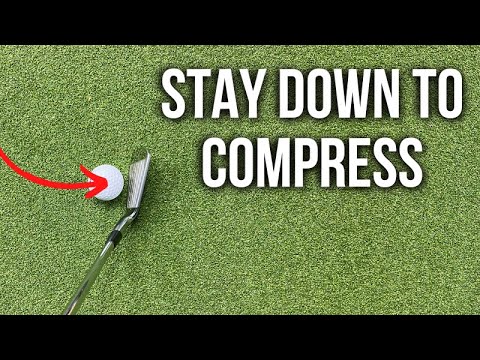
Staying down and compressing the golf ball is the core of solid iron shots. When you compress the golf ball you create better spin, tighter dispersion, and more consistent distance. Hitting down, keeping your body behind the ball, and getting forward shaft lean at impact all produce a pure strike.
Compression matters for shot control. A clean compress gives lower spin in unwanted cases, or controlled spin when you need it. Learning how to stay down and compress the golf ball leads to more confidence on approach shots and better scoring.

The mechanics: what "stay down" and "compress" really mean
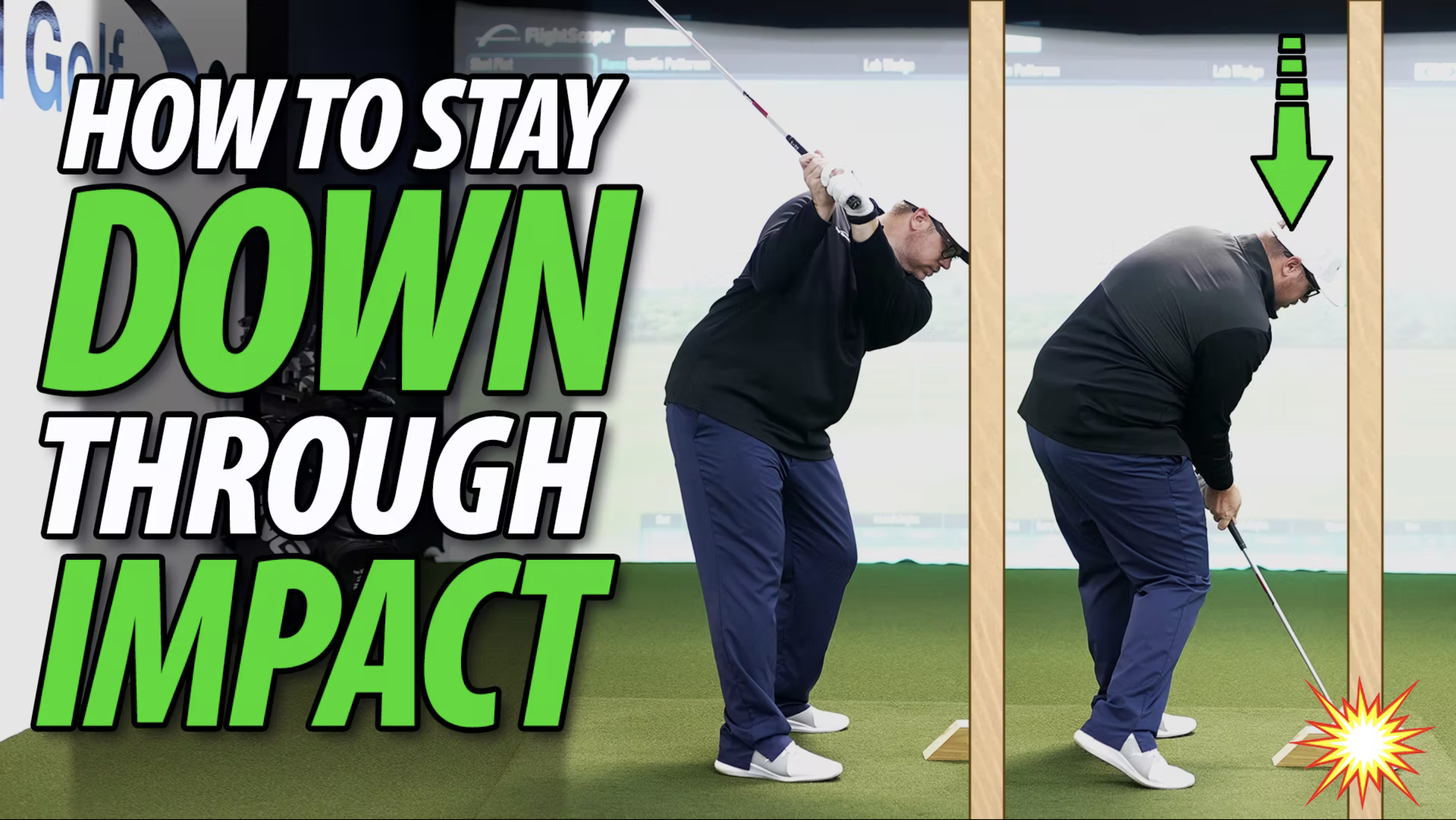
Staying down means keeping your head and chest over the ball area through impact long enough to let the club bottom pass in the right place. Compressing the golf ball means the clubface contacts the ball first then the turf, creating ball-first impact with forward shaft lean.
Key physics in simple words:
- Impact sequence. Ball then turf makes a strong, descending strike.
- Forward shaft lean. Hands ahead of the ball at impact increases compression.
- Low point control. Where the club reaches its lowest point determines crisp contact.
These mechanics are the foundation for learning how to stay down and compress the golf ball. Master them with slow reps before adding speed.
Setup and swing tips to stay down and compress the golf ball
Use these clear cues to set up and swing in a way that promotes compression.
Setup
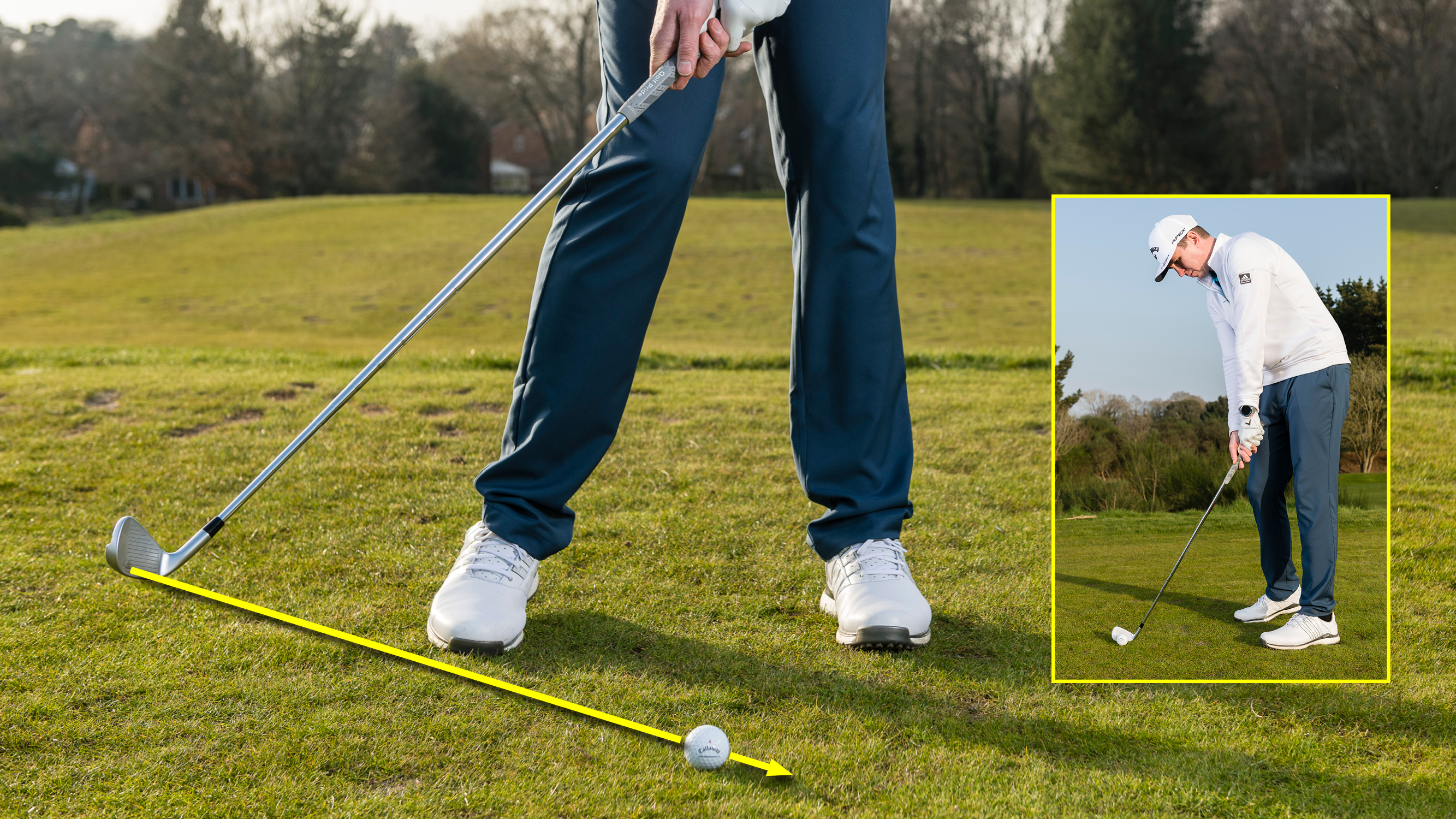
- Ball position. Place the ball slightly back of center for short irons and center for mid irons.
- Posture. Bend from the hips with a slight knee flex and a stable spine tilt toward the target.
- Weight. Favor the front foot by about 55/45 at address to help strike down.
Impact focus
- Hands ahead. At impact, your hands should be slightly ahead of the ball.
- Eyes on a spot. Pick a spot just behind the ball to focus your eyes.
- Shorter follow-through. A controlled finish keeps you from flipping at the ball.
Swing motion
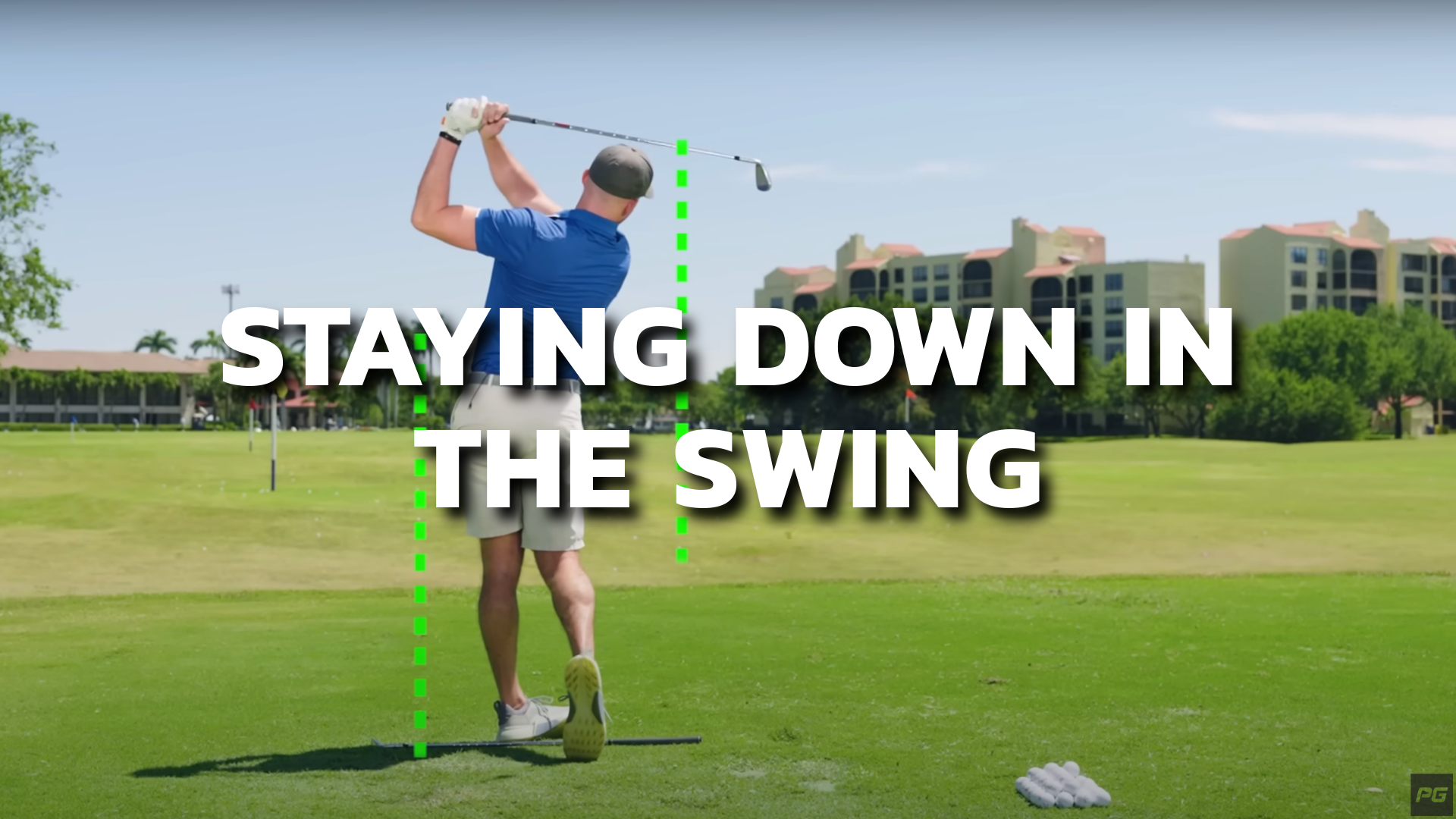
- Maintain spine angle. Avoid rising up through impact; keep the same tilt.
- Rotate, don’t sway. Turn your hips and shoulders. Let rotation drive the low point.
- Feel a downward strike. Imagine brushing a line in the turf after the ball.
Practice these cues slowly. Increasing speed too soon breaks the sequence. Repeating simple reps will ingrain how to stay down and compress the golf ball.

Drills and practice routines to build compression
Drills help convert ideas into muscle memory. Here are drills I use and recommend.
Towel under the arm drill
- Place a towel under your lead armpit and make short full swings.
- The towel keeps your elbow connected and encourages rotation and forward shaft lean.
Impact bag or pillow drill
- Hit an impact bag or soft pillow focusing on hands-ahead contact.
- This builds the sensation of compressing the golf ball without a ball.
Line-and-teed ball drill
- Draw a chalk line or lay an alignment stick just behind the ball.
- Try to hit the ball without touching the line. This trains ball-first contact.
Slow-motion impact holds
- Make slow swings and stop at impact to check posture and hand position.
- Hold the position until you feel stable and balanced.
Practice routine (30 minutes)
- 5 minutes warm-up with short wedges and half swings.
- 10 minutes drills (towel or impact bag).
- 10 minutes ball-striking with line drill at 50–70% speed.
- 5 minutes review and cool down, noting one change to focus on next time.
These drills teach how to stay down and compress the golf ball by isolating impact and low-point control.
Equipment and ball flight considerations
Your clubs and ball choice can influence your ability to compress the golf ball.
Club factors
- Shaft flex and length. A shaft that matches your speed helps you time impact better.
- Loft and bounce. Higher lofts make it easier to hit down, but proper technique is still needed.
- Clubhead design. Blades and better players’ irons reward good compression more than game-improvement heads.
Ball choice
- Soft balls compress easier at lower swing speeds; firmer balls suit high-speed players.
- Match ball compression to clubhead speed to get predictable launch and spin.
Fitting helps. A quick club fit can reveal mismatches that make it harder to learn how to stay down and compress the golf ball.

Common mistakes and how to fix them
Fix these common flaws that stop good compression.
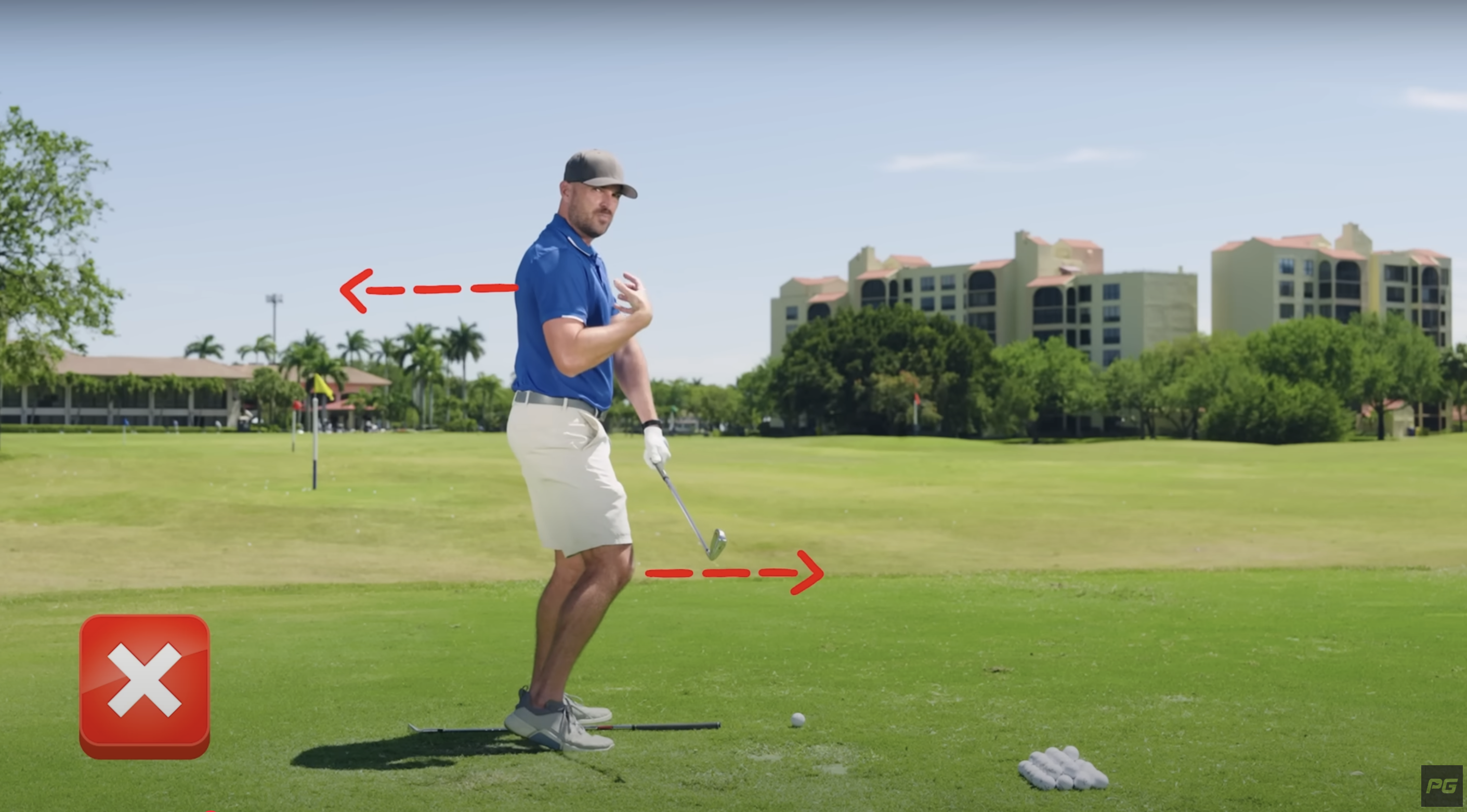
Rising up through impact
- Problem. Standing up causes thin or topped shots and weak compression.
- Fix. Keep your spine angle and feel your belt buckle point to the ground at impact.
Lifting the head
- Problem. Looking up early changes the low point and leads to fat shots.
- Fix. Pick a mark behind the ball and keep your eyes and chest steady through impact.
Flipping the wrists
- Problem. Scooping or flipping kills forward shaft lean and reduces compression.
- Fix. Practice impact holds and the towel drill to keep hands stable and ahead.
Over-swinging
- Problem. Too much speed loses sequence and proper low point.
- Fix. Control tempo and focus on a solid finish. Speed comes after consistent contact.
Work on one fix at a time. Each small change helps you learn how to stay down and compress the golf ball.
My experience and lessons learned
I learned the hard way by trying to add power before mastering impact. Early on, I would stand up and flip my wrists. This gave me more distance sometimes, but inconsistent contact and poor spin control.
What worked for me
- Slowing down practice sessions and focusing on impact posture.
- Using simple drills like the towel drill and line drill daily for weeks.
- Getting fitted for irons to ensure the gear matched my swing.
Mistakes to avoid
- Chasing speed too soon.
- Changing too many things at once.
- Neglecting short game work; compression matters on pitch shots too.
These lessons helped me lock in how to stay down and compress the golf ball and they will help you too.
Related concepts and advanced tweaks
Understanding related ideas helps deepen your skill set.
Low point control
- Train the club to bottom out just after the ball. This is the heart of compression.
Dynamic loft and launch
- Lower dynamic loft at impact often gives better compression and roll on long irons.
Hands and shaft lean
- More hands-ahead at impact often equals more compression. Don’t overdo it; too much can thin shots.
Speed vs. technique
- Speed helps distance, but technique creates repeatable compression. Build technique first, then add speed.
Use these ideas once basic compression feels reliable. They refine how to stay down and compress the golf ball at higher speeds.
Frequently Asked Questions of how to stay down and compress the golf ball
How do I keep my head down without losing balance?
Keep a soft knee flex and hinge at the hips. Focus on rotating your chest rather than moving your head; this keeps balance and lets you stay down.
Is ball-first contact more important than swing speed?
Yes. Ball-first contact creates solid compression and consistent spin. Swing speed helps distance, but poor contact erases the benefit.
How long will it take to learn how to stay down and compress the golf ball?
Most golfers notice improvement in a few weeks with regular practice and 10–15 minute daily drills. Full muscle memory can take months, depending on practice quality.
Should I change my clubs to help compress the ball?
Only if you have a clear mismatch in shaft flex or loft. A proper fit helps, but technique changes should come first.
Are there drills I can do at home to improve compression?
Yes. Towel under the arm and slow-motion impact holds work well at home. They train feel without needing a full range session.
Can beginners compress the golf ball effectively?
Yes. Beginners can learn ball-first contact with simple setup and drills. Start slow and focus on impact position to build confidence.
Will compressing the ball reduce my spin too much?
Not if done correctly. Proper compression produces controlled and predictable spin. Use a ball that matches your speed to keep spin in range.
Conclusion
Learning how to stay down and compress the golf ball gives you better contact, more reliable distance, and improved control. Start with the simple setup cues, use the drills, and practice a focused routine rather than chasing speed. Be patient and make one small change at a time.
Take action this week: try the line-and-teed ball drill for 10 minutes, note one feel that worked, and repeat it on your next range visit. If this article helped, leave a comment or subscribe for more practical golf tips.