How To Know What Golf Ball To Use: Choose The Right Ball
Choose a golf ball that matches your swing speed, feel preference, and desired spin and control.
I’ve spent years testing balls on range and course play, and this guide will teach you how to know what golf ball to use. You’ll learn clear steps to match ball construction, compression, and cover to your swing and goals. Read on for practical checks, real-world testing tips, and simple rules you can use on your next round.
Understanding golf ball basics
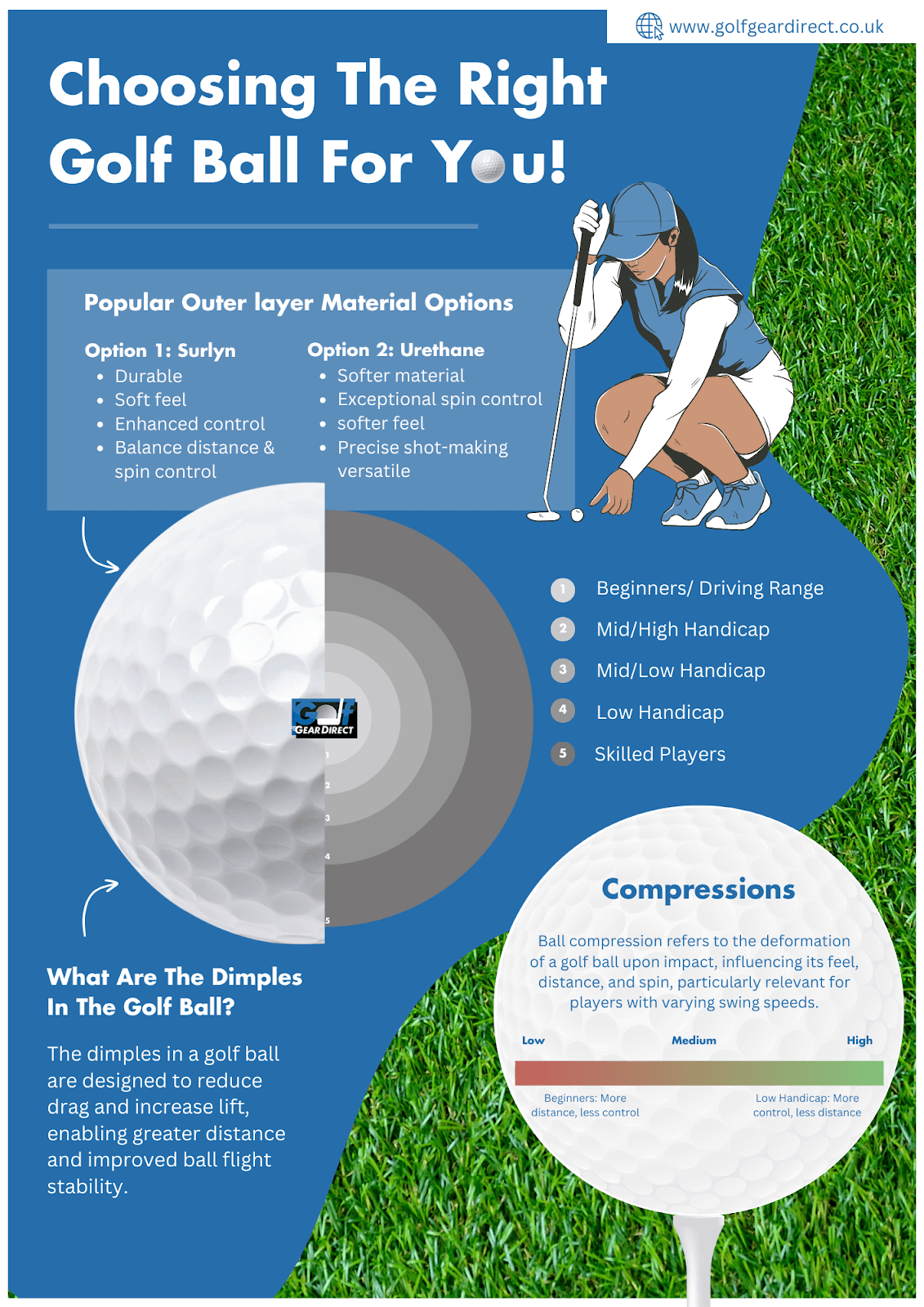
Golf balls vary by construction, compression, cover material, and dimple design. Knowing these basics is the first step in how to know what golf ball to use. Here are the core terms explained simply.
- Construction: Two-piece balls have a solid core and a cover. Multi-layer balls add mantle layers for more control.
- Compression: A number that shows how much the ball deforms on impact. Lower numbers feel softer and suit slower swings.
- Cover material: Surlyn covers are durable and lower spin. Urethane covers feel softer and give more spin around the green.
- Dimples: Dimple patterns affect lift and drag. Different patterns can change how the ball flies in wind.
Why these matter for how to know what golf ball to use
- Swing speed affects compression choice.
- Short-game skill affects cover preference.
- Course conditions affect dimple and spin needs.
My experience: early in my game I used only distance balls. After learning to control my wedges, I switched to urethane balls and saw better spin and stopping power on the greens. This change taught me why construction and cover matter.

Match the ball to your swing and goals
To understand how to know what golf ball to use, start with three quick checks on your game.
- Measure your driver swing speed
- If under 85 mph, favor lower-compression balls.
- If 85–100 mph, mid-compression gives balance.
- If over 100 mph, higher-compression or tour balls can help control spin.
- Decide your priority
- Distance: pick firm-core, two-piece balls.
- Feel and spin: choose multi-layer urethane-cover balls.
- Budget and durability: choose Surlyn covers for longer life.
- Evaluate your short game
- If you want more spin on chips and pitches, choose urethane covers.
- If you struggle with consistency, pick lower-spin balls for forgiveness.
Practical checklist for how to know what golf ball to use
- Check your average driver speed.
- Note how much spin you get on approach shots.
- Decide if feel or distance matters more to you.
- Pick a ball type to test for two weeks.
I once tested three balls over a month, tracking greens hit and putts per round. The ball that fit my swing speed and gave better wedge spin lowered my scoring average by two strokes.

Types of golf balls and when to pick them
Learning the types helps you decide how to know what golf ball to use. Below are common categories and when they make sense.
- Two-piece distance balls
- Best for beginners and high-handicap players.
- Offer straight flight and long distance at a lower price.
- Multi-layer performance balls
- Good for mid- to low-handicap players who want control.
- Offer a mix of distance and shot-shaping spin.
- Tour or urethane-cover balls
- Best for advanced players focused on spin and feel.
- More expensive, but give better greenside control.
- Low-spin balls
- Help reduce hooks and slices for some players.
- Useful if you need straighter ball flight.
- Soft feel balls
- Help players who want better feel on putts and chips.
- Often lower compression and comfortable around the greens.
Real-life tip: If you mix balls in your bag for practice and play, keep one model for tournament play so feel stays consistent.
How to test golf balls on the range and course
Testing is the best way to learn how to know what golf ball to use. Here is a clear test routine you can follow.
- Range testing
- Hit at least 10 full drives and 10 wedges with each ball.
- Track carry, spin feel, and dispersion.
- On-course testing
- Play three rounds with the same ball model.
- Note greens in regulation, short-game control, and putts.
- Use simple stats
- Count fairways, greens, and up-and-downs.
- Record putts and distance loss on misses.
- Try a fitting session if possible
- A fitting session gives launch monitor data like spin and launch.
- Use that data to match compression and cover to your swing.
I once used a launch monitor and found a mid-compression ball cut my spin by 200 rpm. That change made my tee shots land more consistently on the fairway.

Common mistakes and practical tips
Avoid these errors when deciding how to know what golf ball to use.
- Buying the ball with the flashiest marketing
- Marketing can mislead. Rely on fit and testing.
- Changing balls mid-round
- Stick to one ball during play to keep feel and distance predictable.
- Overvaluing brand over fit
- Many brands make good options; fit matters more than label.
- Ignoring weather and course conditions
- Wet or windy days may require balls that cut spin or fly lower.
Practical tips I use
- Carry 12–18 practice balls of a trial model before committing.
- Keep one ball model in tournament play and practice with it.
- If you break balls often, choose durable Surlyn covers for practice rounds.
Frequently Asked Questions about how to know what golf ball to use
What compression number should I choose for my swing speed?
If your driver speed is under 85 mph, choose lower compression (around 70–80). For 85–100 mph, pick mid compression (80–95). Over 100 mph, higher compression (95+) often works better.
Does cover material really affect short-game spin?
Yes. Urethane covers provide more bite on wedge shots and better spin control. Surlyn covers are harder and give less spin but more durability.
How long should I test a new ball before deciding?
Test a ball for at least three rounds or a couple of weeks in practice to see consistent results. Track key stats like greens hit and putts to compare.
Can a ball improve my distance off the tee?
Yes. Two-piece, low-spin, firm-core balls often add measurable distance for many players. But swing mechanics still matter most for distance gains.
Should beginners use premium tour balls?
Beginners usually benefit more from two-piece distance balls. Premium tour balls can be more expensive and may not add performance until swing consistency improves.
Is ball fitting worth the cost?
A fitting can be very useful if you play often and want small gains. It gives data like launch angle and spin that help match a ball to your swing.
Conclusion
Choosing the right ball comes down to testing, knowing your swing speed, and defining your priorities between distance, feel, and control. Use the simple checklist here to test two or three models, track stats, and stick with what gives consistency. Start with a short testing routine next week and keep notes on feel and results. If you found this guide helpful, try one trial ball for two weeks and share your results or questions in the comments — I’d love to hear what works for you.