What Are Acceptable Golf Shoes: Best Styles For Golf
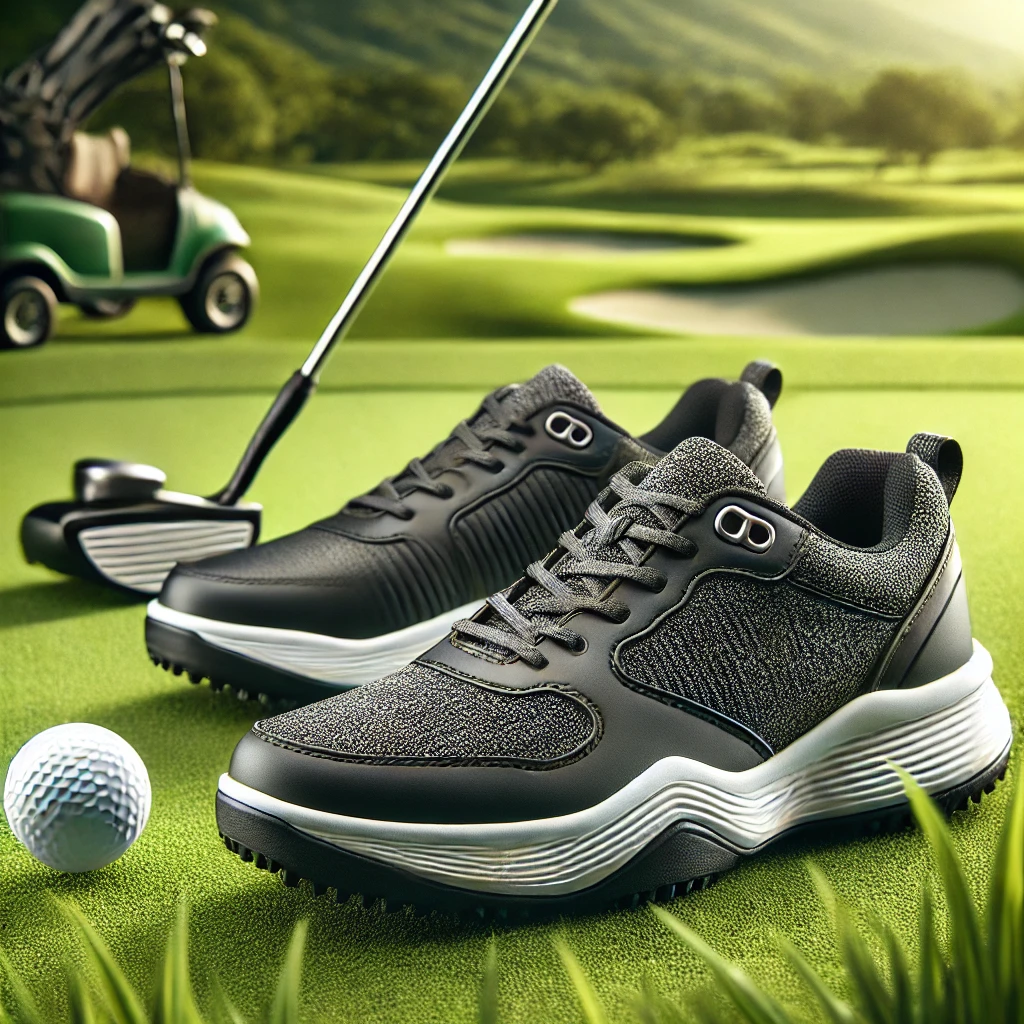
Golf shoes are acceptable when they help you keep a stable stance, protect the course, and meet the club or tournament’s shoe policy. In most cases, this means golf shoes with molded rubber, soft spikes, or a flat spikeless sole. Clean athletic shoes may also be accepted at casual facilities, but running shoes, hiking boots, sandals, and shoes with deep soil-gripping lugs may not be suitable.
The right golf shoe is not about fashion. It is part of your connection to the ground. Your stance, posture, grip, backswing, downswing, impact, and follow-through all depend on balance. A shoe that slips can make a calm swing feel like a swing on wet sand.
This guide explains what are acceptable golf shoes for beginners, improving amateurs, juniors, women, men, seniors, walkers, and riders. It also covers golf shoe rules, course etiquette, weather, traction, comfort, and common mistakes.

Quick Answer: What Are Acceptable Golf Shoes?
Acceptable golf shoes usually have a stable sole, enough grip for grass, and no features that damage the course or break a local dress code. Spikeless golf shoes, soft-spike shoes, and some traditional golf shoes with replaceable spikes are commonly accepted. Always check the course policy and current tournament rules, because a club may restrict certain soles even when the Rules of Golf do not.
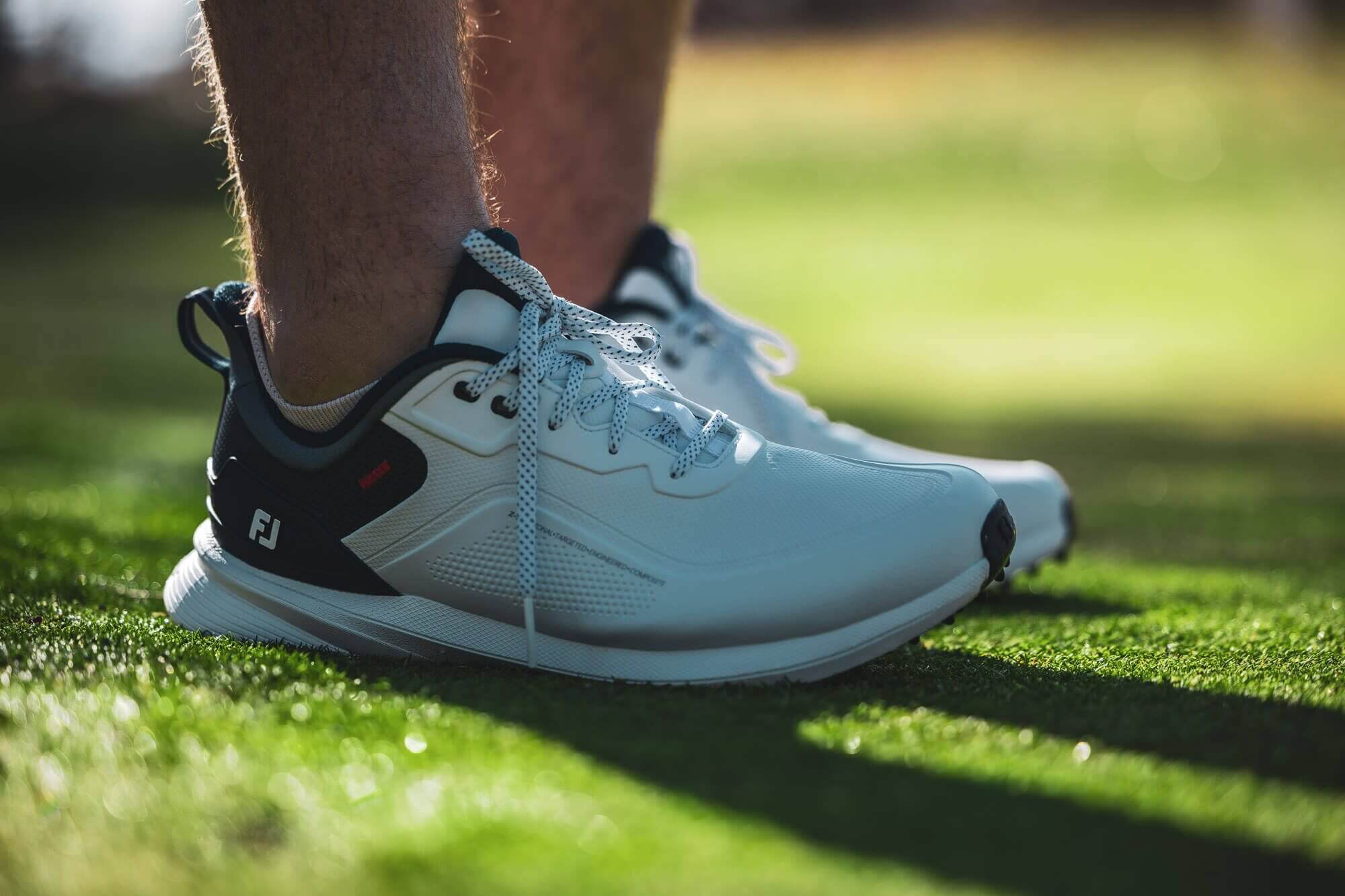
A golf shoe should support a level stance without digging into the turf. It should also let you walk safely on fairways, rough, slopes, paths, and around bunkers. For most new golfers, a clean pair of shoes with a low heel and a flat, stable sole is a better starting point than a soft running shoe.
The main difference between acceptable golf shoes and ordinary athletic shoes is how they handle side-to-side force. A golf swing creates pressure into the ground and then shifts that pressure through the feet. Golf shoes are made to give more support during that movement.
What Makes a Golf Shoe Acceptable?
The best way to judge a golf shoe is to look at its sole, grip, stability, comfort, and course impact. A shoe can feel fine on a driving range mat but become unsafe on wet grass or a sloped links course.
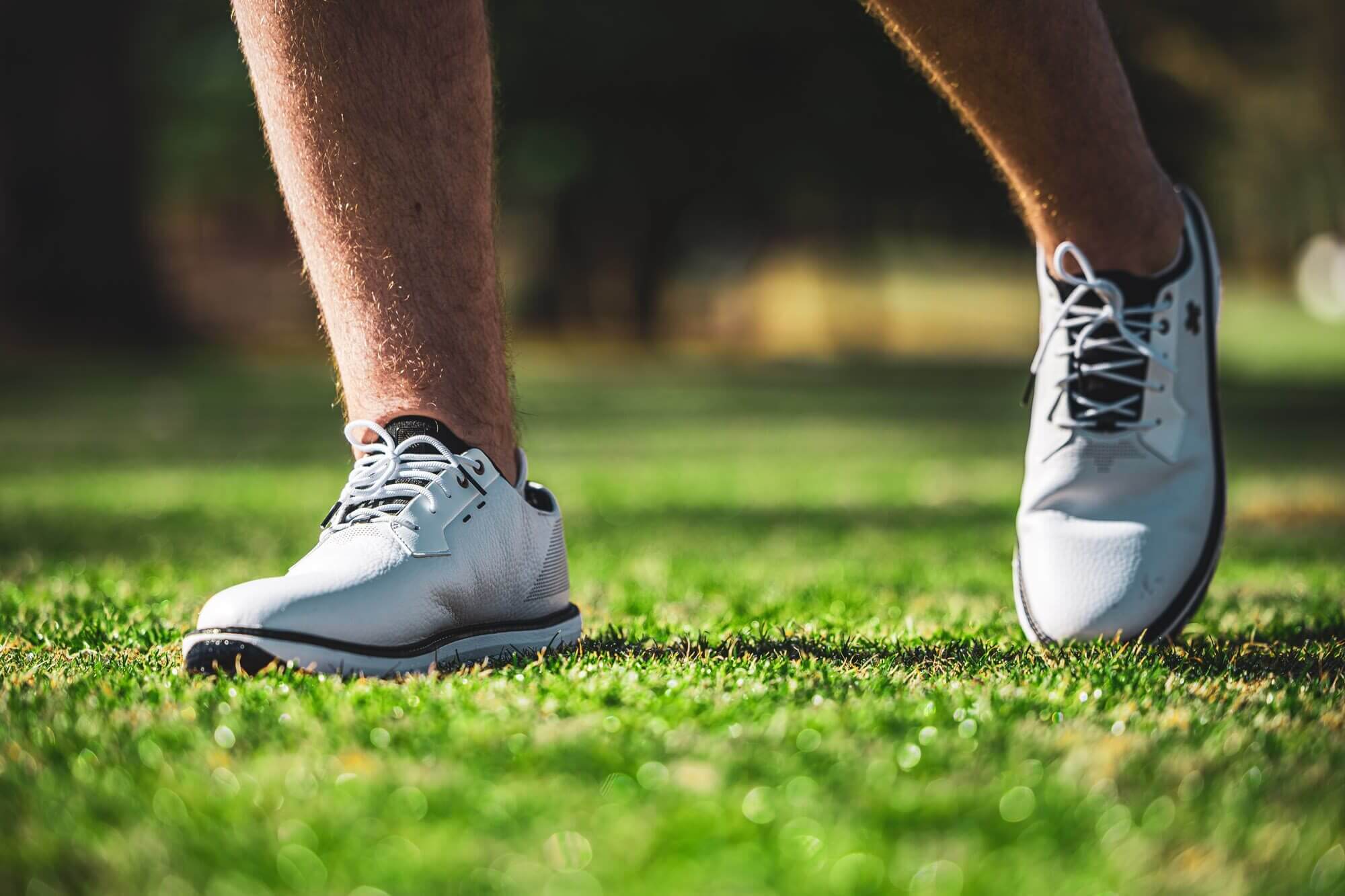
A stable sole
A stable sole stays fairly level when you stand and swing. It should not fold sharply under the middle of your foot. A very soft sole may feel comfortable at first, but it can allow the foot to roll during the downswing.
This matters most for improving golfers who are working on balance, ball striking, or swing tempo. Beginners can also benefit because a stable base makes it easier to learn a repeatable stance.
Suitable traction
Traction means the sole’s ability to resist slipping. Golf shoes may use small rubber nubs, shallow tread, or soft spikes. The pattern should give grip without tearing the turf.
A deep hiking tread is not always better. Large lugs can damage delicate grass, collect mud, and leave marks near greens. They may also feel awkward during putting and chipping.
A low and controlled heel
A low heel helps you keep your weight centered. A tall or narrow heel can change your posture and make balance harder. This is especially important for juniors, seniors, and golfers with limited ankle movement.
A secure fit
Your heel should not lift much when you walk. Your toes should have room to spread, but your foot should not slide inside the shoe. A loose shoe can create blisters and reduce control. A tight shoe can cause numbness and foot pain during a long round.
| Golf shoe feature | Why it matters | Best suited to |
|---|---|---|
| Stable midsole | Supports balance during the swing | Beginners and improving players |
| Low heel | Helps maintain posture | Seniors, juniors, and walkers |
| Secure heel fit | Reduces sliding and blisters | Any golfer playing 18 holes |
| Flexible forefoot | Helps walking and putting | Walkers and casual players |
| Moderate tread | Gives grip without harming turf | Most course conditions |
The key takeaway is simple: acceptable golf shoes need controlled grip, not extreme grip. They should help you stand and move without becoming a hazard to you or the course.
Are Spikeless Golf Shoes Acceptable?
Spikeless golf shoes are usually acceptable at golf courses because their rubber soles provide traction without separate spikes. They are common on public courses, private clubs, executive courses, and practice facilities. Their acceptance still depends on the local dress code.
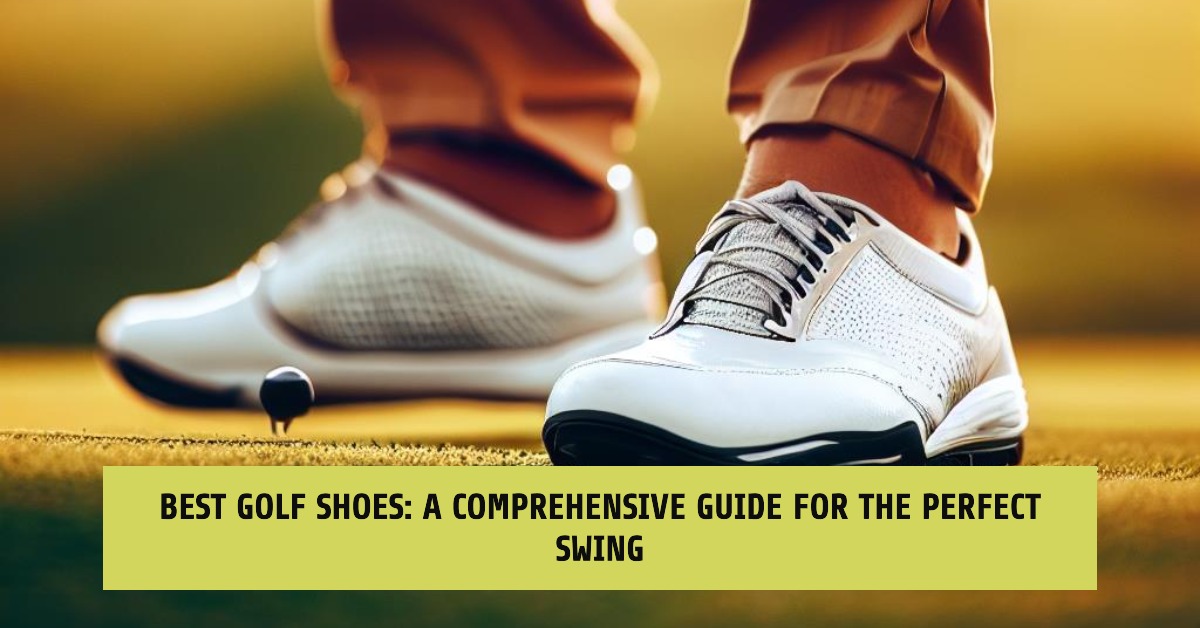
Spikeless shoes often work well for beginners and golfers who walk. They are easy to use on grass, paths, and clubhouse floors. They may also feel natural during putting because the sole is usually flat and flexible.
Their limits appear in wet conditions, steep terrain, or soft ground. A golfer who plays early in the morning may need more traction than a golfer who plays on dry, firm turf at midday.
Spikeless does not mean traction-free. The sole still needs a pattern that resists sliding. A completely smooth sole may be acceptable in a casual setting but is not a good choice for a full swing on damp grass.
Are Soft-Spike Golf Shoes Acceptable?
Soft-spike golf shoes are generally acceptable and use replaceable plastic or rubber cleats. These cleats spread pressure over the grass and can provide strong grip during a full swing. Many courses allow them, but local policies still control.
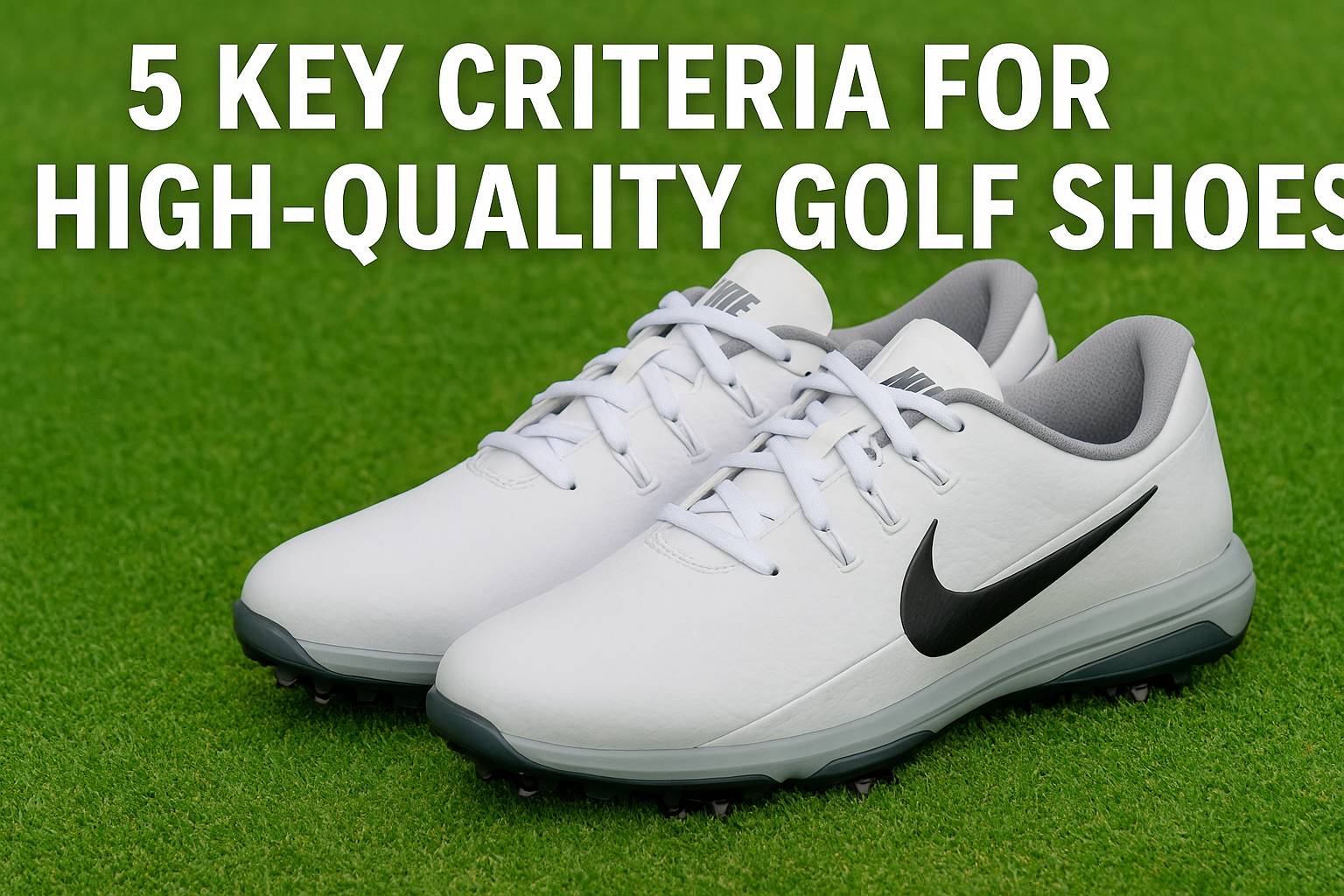
Soft spikes can suit improving amateurs who play in wet regions or on hilly courses. They can also help golfers with a fast swing speed who place more force into the ground. However, traction does not fix poor footwork or a weak stance.
A soft spike should not feel like a sharp metal point. The purpose is to grip the turf while limiting damage. If the cleats are worn, loose, or damaged, they can become less stable and may mark a green or floor.
| Sole type | Typical use | Main limit |
|---|---|---|
| Flat athletic sole | Casual practice or relaxed golf | May slip on wet grass |
| Molded rubber tread | Everyday golf and walking | Grip varies by tread pattern |
| Soft plastic spikes | Wet or sloped courses | May need local approval |
| Traditional metal spikes | Limited settings | Often restricted by course policy |
| Deep hiking lugs | Outdoor walking | May harm turf and feel unstable |
Check the course rule before a round. A club may have a policy for metal spikes, sole shape, or clubhouse use that is stricter than the basic Rules of Golf.
Are Metal-Spike Golf Shoes Allowed?
Metal-spike golf shoes are not automatically illegal under every golf situation, but many courses and events restrict or prohibit them. The reason is course protection, clubhouse flooring, and the marks metal spikes can leave on greens and other sensitive surfaces.
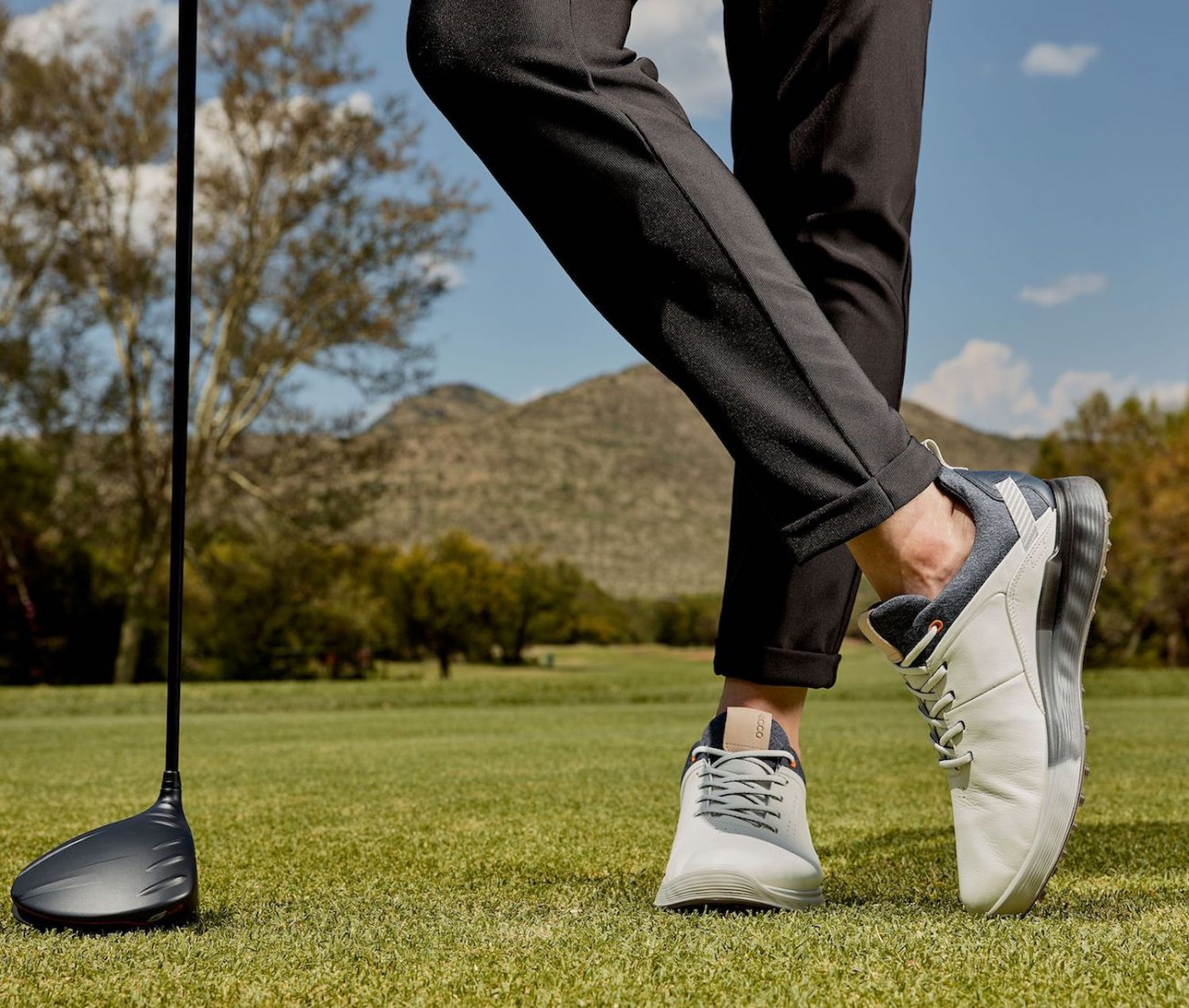
The Rules of Golf and a course’s local policy are not the same thing. The Rules of Golf explain how the game is played. A club’s dress code or conditions of play may set extra limits on footwear.
A tournament committee may also issue conditions about shoes. Players should check the latest Rules of Golf, the committee’s notice, and local course instructions. Do not assume that shoes accepted at one club are accepted at another.
What the rules focus on
Golf rules focus on equipment that can give an unusual advantage or help a player make a stance in a way that is not normal. Footwear designed to improve balance in an unusual way may raise a rules question.
This does not mean that ordinary golf shoe traction is illegal. Normal grip is part of playing golf. The concern is a feature designed to create an unusual stance aid, not a normal tread pattern.
📜 Check the Rules: Before a competition, ask the committee about footwear. Check the latest Rules of Golf and local conditions for updates. The committee’s decision controls that event.
Can You Wear Regular Athletic Shoes for Golf?
Regular athletic shoes may be acceptable for casual golf if the course allows them and the soles provide enough grip. They are more likely to work on a dry driving range, a short executive course, or a relaxed nine-hole round than on a wet, hilly course.
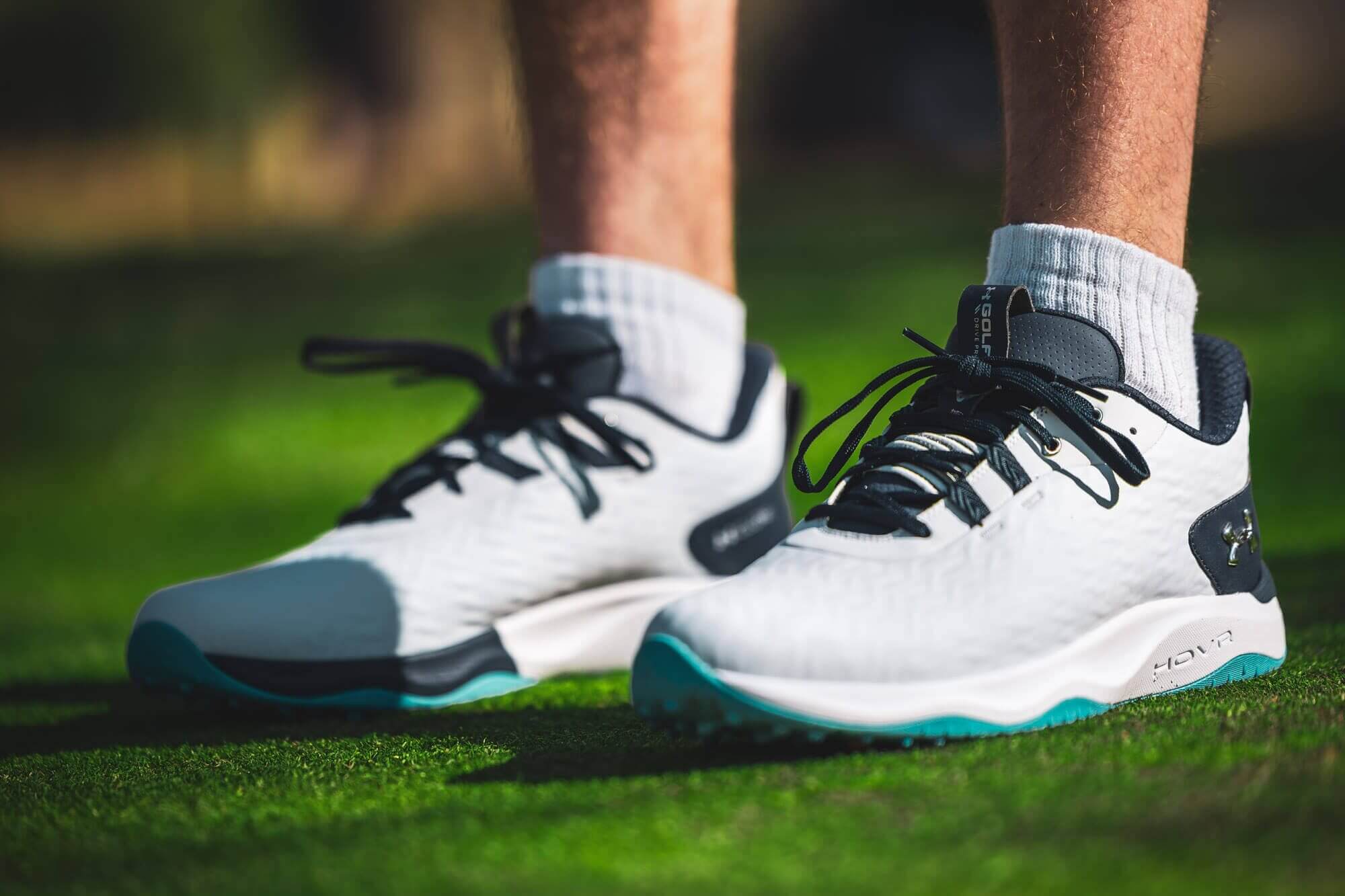
Running shoes are built for forward motion. A golf swing also creates side-to-side and rotational force. That difference can make a running shoe feel unstable during the downswing.
A flat court shoe may provide a better base than a soft running shoe. Even so, the shoe should be clean and free from deep dirt. Some clubs allow athletic shoes only if they have a golf-like appearance.
| Situation | Regular athletic shoes | Golf-specific footwear |
|---|---|---|
| Dry practice range | Often acceptable if permitted | Stable and reliable |
| Wet fairway | May slip | Usually better traction |
| Long walking round | May feel comfortable | Usually offers more golf support |
| Formal private club | May not meet dress code | More likely to meet policy |
| Junior introduction to golf | Can suit early practice | Helpful as play becomes regular |
A new golfer does not need special footwear for the first lesson if the instructor and facility allow clean athletic shoes. As rounds become longer or conditions become harder, stability and traction matter more.
Which Golf Shoes Suit Different Golfers?
The best choice depends on skill level, handicap, age, fitness, weather, and the way you play. A golfer who rides in a cart on a flat course has different needs from a senior who walks a hilly course in heavy dew.
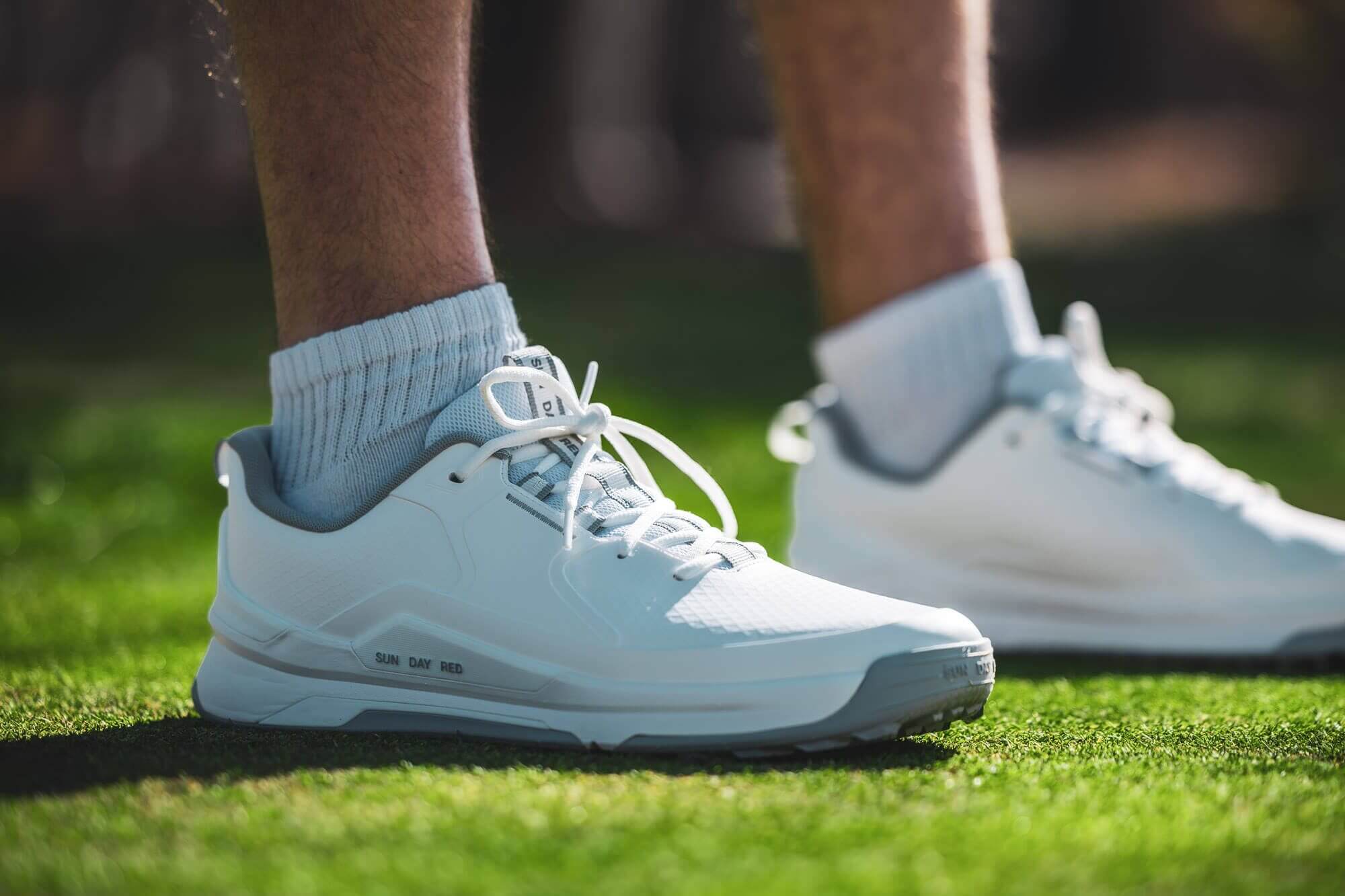
Beginners and high-handicap golfers
Beginners need a secure base more than advanced traction technology. A stable, comfortable sole can help them learn stance width, posture, ball position, and weight movement.
A new golfer may not notice that a shoe is slipping. They may blame a slice, pull, or topped shot on the swing. If the feet move at address or impact, the swing becomes harder to repeat.
Improving amateurs
Improving players should match traction to their course and swing. A player who is learning to use the ground during the downswing may need a shoe that resists rotation without locking the feet in place.
A shoe cannot create a better swing. It can only provide a more reliable base. Players with a handicap index in the mid or high range should focus first on comfort, balance, and a consistent stance.
Senior golfers
Seniors may value walking comfort, stable footing, and reduced foot fatigue. Limited ankle movement, knee pain, back stiffness, or balance concerns can affect the stance.
A wider base and a low heel may help, but pain is not a normal part of golf. A golfer with persistent foot, ankle, knee, back, elbow, or wrist pain should stop and seek medical advice.
Junior golfers
Junior golfers need secure shoes that fit well without restricting movement. Oversized shoes can cause slipping and poor balance. Small or narrow shoes can create pressure and affect natural movement.
Parents should also check that a junior can walk, bend, and rotate without the shoe coming loose. A junior may not explain foot pain clearly, so watch for limping, frequent shoe removal, or a sudden loss of focus.
Women’s and men’s golf shoes
The basic needs are the same for women and men: grip, balance, comfort, and course approval. Foot shape, width, heel structure, and fit vary more from person to person than from gender label to gender label.
Left-handed and right-handed golfers also need the same type of traction. The direction of the swing changes, but both players create pressure and rotation through the feet.
| Golfer | Main footwear need | Limitation to watch |
|---|---|---|
| Beginner | Stable base and comfort | Do not confuse grip with swing skill |
| Low-handicap player | Reliable traction and feel | Avoid unusual stance aids |
| Senior walker | Cushioning and balance | Check pain and foot fatigue |
| Junior | Correct fit and secure heel | Avoid oversized footwear |
| Cart rider | Stability for slopes and shots | Cart paths can be slippery |
| Wet-weather player | Strong turf grip | Check the course’s spike policy |
The main lesson is that shoe needs are personal. Handicap, swing speed, walking distance, and course conditions matter more than a simple men’s, women’s, or junior label.
Golf Shoes for Walking Versus Riding
Walking golfers need comfort, breathability, and support over several miles. Riding golfers still need stable shoes because they walk from the cart to the ball, stand on slopes, and make swings from uneven lies.
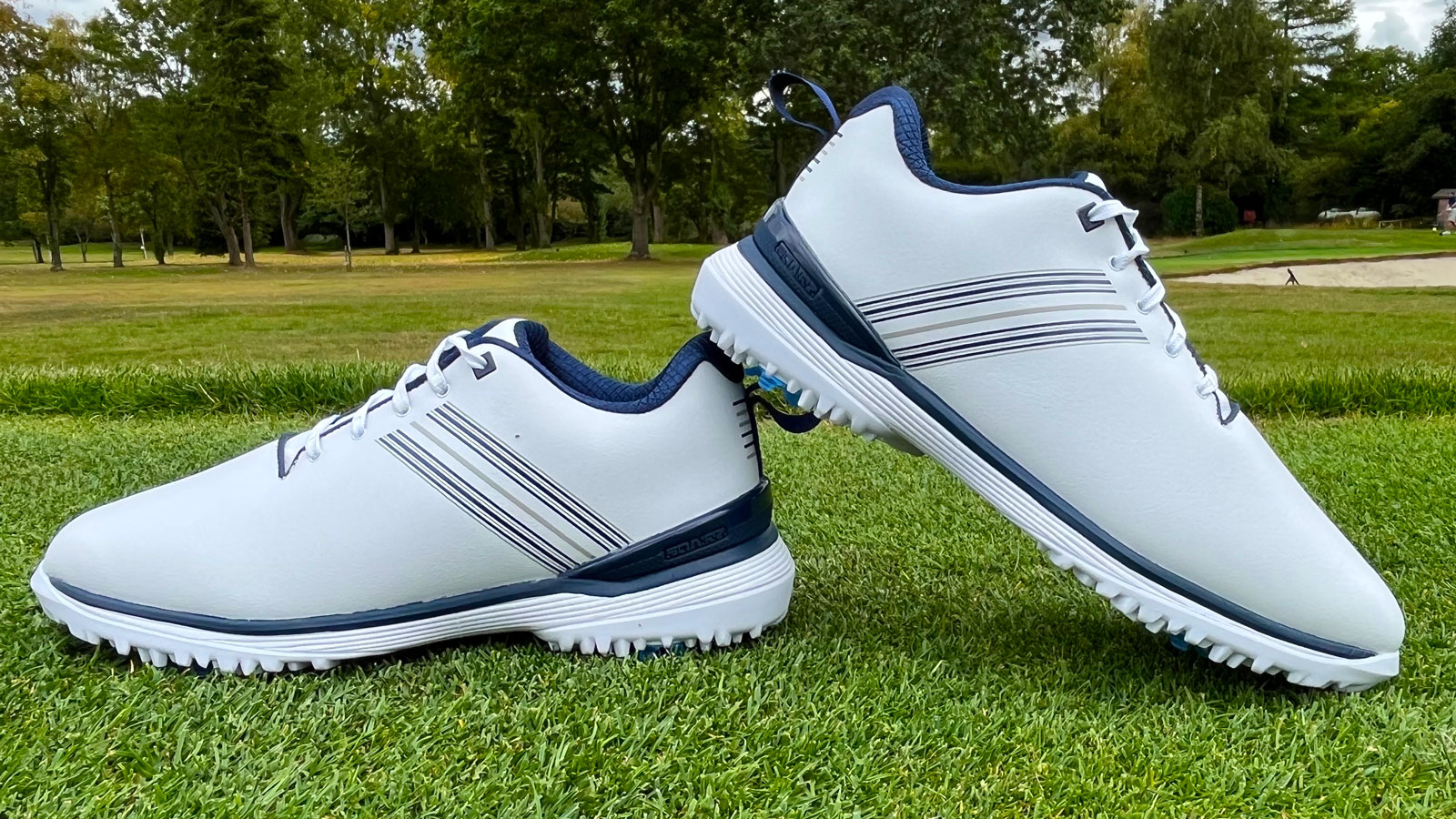
A walker may take thousands of steps during a round. A shoe that feels fine for ten minutes can cause hot spots after several hours. Walkers should pay close attention to heel movement, arch comfort, toe space, and wet-weather protection.
A rider may face a different issue. Cart steps, wet grass, loose gravel, and steep slopes can create slip risks. Riders should not assume that the cart removes the need for proper footwear.
Walking on a links course
A links course often has firm ground, wind, slopes, and natural areas. The player may walk over hard paths and uneven turf. A stable sole with moderate grip can help.
Walking an executive course
An executive course usually has shorter holes, but it may still include hills and wet grass. The shorter distance does not remove the need for safe footing.
Walking a parkland course
Parkland courses may have soft fairways, tree roots, rough, and changing ground. A shoe must handle both grass and paths without becoming too aggressive.
How Weather and Course Conditions Change Acceptable Footwear
Weather changes how much traction you need. Dry summer turf, wet morning grass, frozen ground, sand, and mud each affect how the sole meets the ground.

Dew can make a flat sole slide. Rain can soften the ground and cause the foot to twist. Frost can make turf hard and slippery. Heat can increase swelling and discomfort in the feet.
| Condition | Footwear concern | Practical response |
|---|---|---|
| Heavy dew | Slipping on grass | Use a course-approved grippy sole |
| Steady rain | Wet feet and unstable lies | Keep feet dry and check traction |
| Firm links turf | Hard impact underfoot | Use stable, comfortable footwear |
| Muddy rough | Soil buildup on the sole | Clean the sole before walking on paths |
| Hot weather | Swelling and foot fatigue | Hydrate and allow foot comfort |
| Frost | Hard, slick surfaces | Follow course closure or delay rules |
A shoe that suits dry turf may not suit a wet morning. Beginners should not test unfamiliar footwear for the first time during a tournament or long round.
⚠️ Safety Warning: Lightning is a serious danger. Leave the course at the first warning from the facility or tournament staff. Good shoes do not make play safe during lightning.
Golf Shoe Etiquette and Course Care
Acceptable golf shoes also respect the course and other players. Shoes should not carry mud into the clubhouse, damage greens, or slow play.
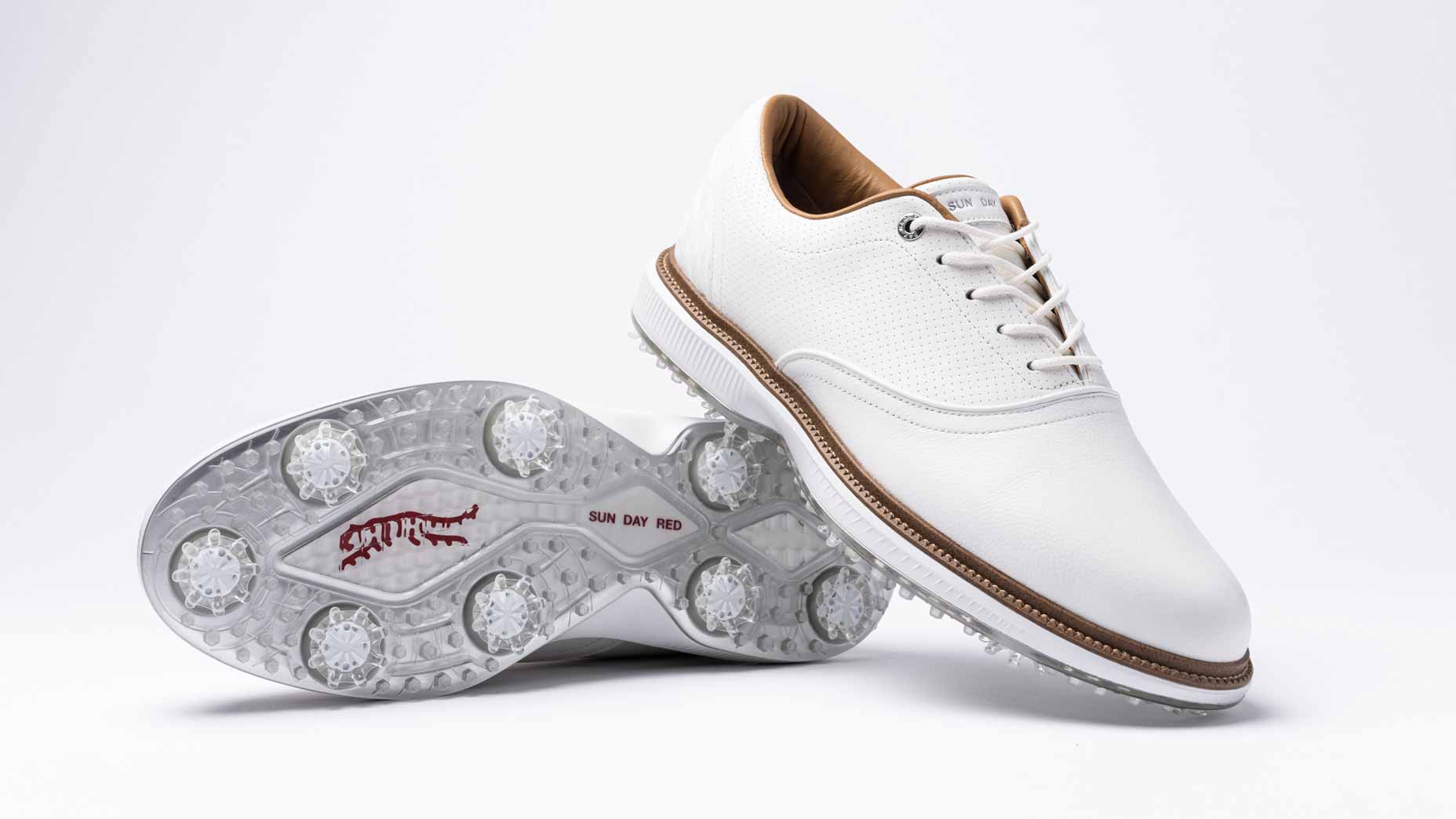
Before entering a clubhouse, clean loose grass and mud from the soles. Follow signs about changing shoes. Some clubs require players to change footwear before entering dining areas or other indoor spaces.
On the course, repair ball marks, replace divots, rake bunkers, and avoid dragging your feet across putting surfaces. Do not walk close to another player’s putting line. A spike mark or deep scrape can affect another golfer’s putt.
Keep pace of play. If your footwear becomes uncomfortable, handle the problem during a safe pause rather than stopping in the middle of another group’s shot.
Golf shoe etiquette by area
| Area | Good practice | Avoid |
|---|---|---|
| Tee box | Stand near the correct tee markers | Dragging feet through tee turf |
| Fairway | Replace divots when suitable | Taking unnecessary practice swings |
| Bunker | Enter at the low side when possible | Leaving footprints or failing to rake |
| Green | Walk carefully around the hole | Dragging spikes or stepping on lines |
| Clubhouse | Clean footwear first | Carrying mud onto indoor floors |
| Cart path | Walk with care | Running or standing on a moving cart |
Course care is part of golf etiquette. The goal is to leave the turf ready for the next group.
🌿 Course Care Note: Shoe marks are most harmful when the ground is soft. Small habits, such as lifting your feet near the green and raking a bunker, protect the course for everyone.
Common Mistakes When Choosing Golf Footwear
Most golf shoe problems come from poor fit, wrong traction, or a mismatch with the course. The issue is often easy to fix once you know what to look for.

Mistake 1: Choosing a soft running shoe
A very soft running shoe may feel comfortable while walking but move during the swing. This can affect balance and impact.
Mistake 2: Using deep hiking soles
Deep lugs can hold mud and damage turf. They may also catch when you rotate through the shot.
Mistake 3: Ignoring wet conditions
A shoe that works on dry grass may slide at dawn. Check the forecast and course conditions before playing.
Mistake 4: Wearing the wrong size
A loose heel causes movement. Tight toes create pressure. Both problems can become worse during a long round.
Mistake 5: Assuming spikes solve balance
Spikes can provide traction, but they do not correct poor posture, stance width, sway, or an unstable lower body. A lesson with a PGA professional may help if balance problems continue.
Mistake 6: Forgetting local rules
A shoe may be acceptable at one course and restricted at another. Always check the current policy.
| Problem | Likely cause | Better response |
|---|---|---|
| Foot slips during the downswing | Sole lacks grass traction | Use course-approved golf traction |
| Heel lifts while walking | Poor fit or weak heel hold | Check fit and movement |
| Feet hurt after nine holes | Pressure, poor support, or swelling | Stop if pain continues and seek advice |
| Mud collects underfoot | Tread is too deep for conditions | Clean soles and follow course guidance |
| Shoe marks appear on greens | Dragging feet or unsuitable cleats | Lift feet and check local policy |
| Swing feels unstable | Shoe is too soft or flexible | Use a more stable base |
The quickest improvement is often a simple check: stand in your normal stance and make a slow practice swing. If your feet slide, roll, or lift, the footwear may not suit the surface.
How Golf Shoes Affect the Swing
Golf shoes do not swing the club. They influence the ground contact that supports the swing. That contact affects stance, posture, balance, and pressure shift.
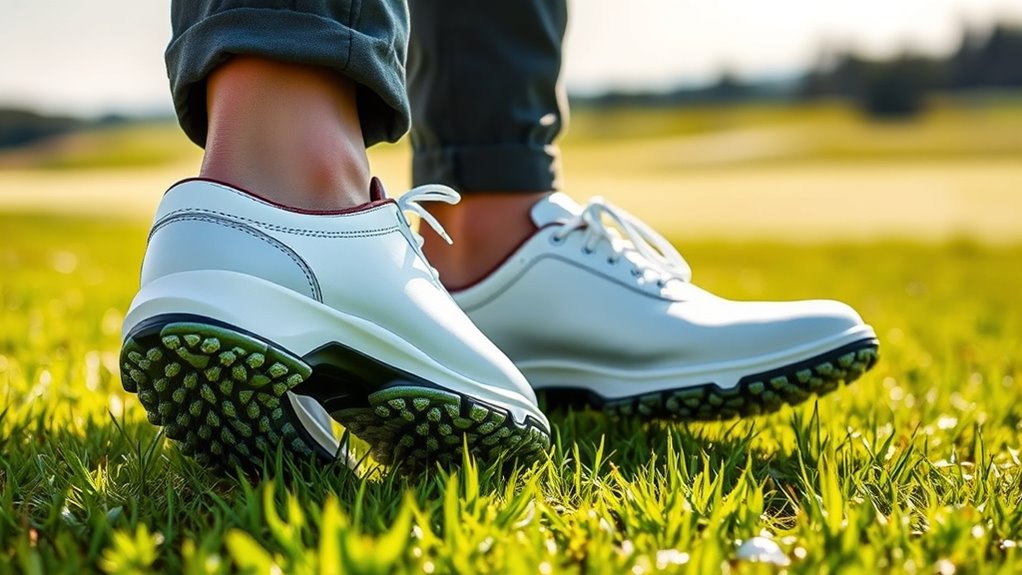
At address, your feet should feel planted but not locked. During the backswing, pressure usually moves toward the trail side for many golfers. During the downswing, pressure shifts toward the lead side. The exact pattern varies by swing style, mobility, and instruction.
If the sole slips, the golfer may lose posture or change the swing path. A right-handed player may pull away from the ball or lose balance toward the toes. A left-handed player can experience the same issue in the opposite direction.
Golf shoes and short-game shots
Chipping and pitching need a stable base, but they do not need an exaggerated stance. The feet are often closer together, and weight may favor the lead side. A shoe that grips without feeling bulky can help a player control small movements.
Bunker shots require a different interaction with the sand. Players should follow their instructor’s method and local course care rules. Avoid twisting hard in a bunker or creating needless damage.
Golf shoes and putting
Putting uses less force than a full swing, but balance still matters. A stable sole can help you keep your eyes, shoulders, and body quiet during the stroke. Do not let aggressive tread distract you on the green.
A Simple Pre-Round Golf Shoe Check
A short check before play can prevent many problems. It suits beginners, junior families, and experienced golfers who are changing courses or playing in new weather.

- Check the course policy. Look for rules on spikes, athletic shoes, and clubhouse footwear.
- Inspect the sole. Make sure the tread or cleats are clean and secure.
- Test the heel. Walk and make a slow practice swing.
- Check toe space. Your toes should not press hard against the front.
- Test a slope. If safe, stand on a small grass slope and check for sliding.
- Pack a backup plan. Bring clean socks if the round may be wet.
- Warm up. Move the ankles, calves, hips, and shoulders before swinging.
Do not warm up by hitting full shots at once. Begin with easy chips, short pitches, and half swings. This helps you assess balance while reducing sudden strain.
💡 Pro Tip: Make a few slow practice swings with your feet shoulder-width apart. Feel pressure under the inside of each foot, not only the heels or toes. This simple check can show whether your sole is stable before the first tee shot.
Acceptable Golf Shoes for Different Formats
Footwear standards apply across common formats, but the day’s pace and course setting may change what feels practical. Stroke play counts the total score over the round. Match play compares holes won. A scramble lets a team choose the best shot after each stroke.
Stableford awards points based on scores relative to par. In all these formats, a player still needs to follow the committee’s conditions and local policies.
A casual scramble may allow clean athletic shoes if the course permits them. A formal stroke-play event may apply a stricter dress code. The format does not give players permission to ignore footwear rules.
| Format or setting | Footwear point | Player reminder |
|---|---|---|
| Stroke play | Rules and dress codes still apply | Check the event conditions |
| Match play | Local policy remains in force | Do not assume relaxed clothing rules |
| Scramble | Casual setting may be more flexible | Ask the organizer first |
| Stableford | Normal equipment rules apply | Check current committee notices |
| Junior event | Safety and fit are key | Parents should confirm policy |
| Practice round | Facility policy controls | Clean shoes still show respect |
Par, birdie, and bogey scores do not change what shoes are legal. A good shoe policy protects players, turf, and the pace of play.
What Golfers Should Know About Foot Pain and Fitness
Footwear can affect comfort, but it cannot diagnose an injury. A golfer may have pain from a poor fit, sudden increases in walking, weak calves, limited ankle movement, or a swing fault.
A basic golf fitness plan can include calf raises, ankle circles, hip mobility, balance work, and gentle strength training. These exercises should match your age, fitness level, and medical needs.
Do not play through sharp pain, numbness, swelling, or pain that changes your walk. See a doctor or qualified health professional for ongoing symptoms. A PGA professional can help with swing changes once medical concerns are addressed.
Safe warm-up for a golf round
- Walk gently for five minutes.
- Move the ankles and calves.
- Rotate the hips and upper back.
- Make slow practice swings.
- Start with short shots.
- Increase speed in small steps.
Seniors and golfers returning from injury may need more time. Juniors should use age-appropriate movement and equipment. No golfer needs to copy an advanced player’s warm-up or swing.
Frequently Asked Questions
Q: Can I wear sneakers to play golf?
A: You can wear clean sneakers if the course allows them and the sole provides safe traction. They may suit a first lesson, practice range, or casual executive course. They may not suit wet grass, steep slopes, formal clubs, or tournament play.
Q: Are golf shoes required to play golf?
A: Not always. Many facilities allow clean athletic shoes, while others require golf shoes or golf-style footwear. The course’s dress code controls. Ask before arriving.
Q: Are spikeless golf shoes better for beginners?
A: Spikeless shoes can be a simple option for beginners because they are comfortable for walking and often work indoors and outdoors. The main concern is whether the sole has enough grip for the course and weather.
Q: Can I wear golf shoes in the clubhouse?
A: That depends on the club. Some clubs allow clean golf shoes, while others require a change before entering certain areas. Follow signs and staff instructions.
Q: Are metal spikes banned in golf?
A: Metal spikes are restricted by many courses and events, but the exact policy varies. Check the course, tournament committee, and current Rules of Golf. Never assume that a policy at one club applies everywhere.
Q: Do golf shoes help stop a slice?
A: Golf shoes do not fix a slice. A slice is usually linked to the clubface, swing path, grip, or impact pattern. Stable footing can help you practice, but a PGA professional should assess a persistent fault.
Q: What are acceptable golf shoes for seniors?
A: Seniors often need stable, comfortable shoes with a low heel, secure fit, and enough grip for the walking surface. The right choice depends on foot health, balance, course hills, and walking distance.
Q: What are acceptable golf shoes for juniors?
A: Junior shoes should fit securely, support natural movement, and suit the course policy. Avoid oversized shoes because they can slide and affect balance. Parents should check comfort during walking and swinging.
Q: Can women wear men’s golf shoes, or can men wear women’s golf shoes?
A: Yes, if the footwear fits well, provides proper support, and meets the course policy. Fit and function matter more than the label.
Q: Can I play golf barefoot or in sandals?
A: Most courses do not accept barefoot play, and sandals may not provide enough protection or grip. They can also create safety concerns around carts, rough, bunkers, and wet ground.
Q: How should golf shoes fit?
A: The heel should stay fairly secure, the midfoot should not slide, and the toes should have room to move. Try walking, bending, and making a slow practice swing. Stop if the shoe causes pain or numbness.
Q: Are hiking boots acceptable for golf?
A: Hiking boots may be refused because their deep lugs can damage turf or create an unstable stance. They can also feel heavy during a full swing. Check the course policy before using them.
Q: Do I need different shoes for putting and driving?
A: No. One course-approved pair can support driving, chipping, pitching, bunker shots, and putting. You need stable footing for each shot, but not a separate shoe for each part of the game.
Q: Can worn golf shoes affect my swing?
A: Yes. Worn tread, loose cleats, or a slipping heel can change your balance. Inspect the sole and replace damaged parts according to the shoe’s care guidance. If the swing fault remains, seek instruction.
Q: How long does it take to get used to golf shoes?
A: Many golfers adjust within a round or two, but comfort varies. Walkers may need more time than cart riders. Start with a short practice session rather than a full competitive round.
Q: What should I wear for golf in the rain?
A: Use course-approved footwear with secure traction and protection from wet grass. Keep socks dry, slow your walk on slopes, and follow the facility’s weather policy. Leave the course during lightning.
Q: Can golf shoes improve my handicap index?
A: Shoes do not directly lower a handicap index. A stable base can support practice and safe movement, but scoring depends on skill, course management, putting, decision-making, and consistent play.
Final Thoughts
Acceptable golf shoes are clean, stable, course-approved, and suited to the ground under your feet. Spikeless and soft-spike styles are common, while traditional metal spikes and deep hiking soles may be restricted. Regular athletic shoes can work for casual golf when the course allows them, but they may not provide enough side-to-side support.
Choose footwear based on your walking distance, swing stability, age, fitness, weather, and course type. Check local rules before a round, protect the turf, and stop if pain or unsafe footing appears. Good golf shoes are not a shortcut to better scores, but they can give every golfer a steadier and safer foundation for learning the game.