Women’s Golf Shoes Vs Men’s: Key Differences
A golf shoe is more than a shoe with spikes. It is part of your stance, grip, balance, and comfort for several hours on the course. The main question is simple: how are women’s golf shoes different from men’s golf shoes? The answer involves foot shape, size ranges, weight, fit, cushioning, style, and design details. Yet the line is not absolute. A golfer’s foot shape and playing needs matter more than the label.
Women’s golf shoes are often built with a narrower heel, a different shape through the midfoot, and sizes made for shorter or slimmer feet. Men’s golf shoes often have a wider heel, more room across the forefoot, and a broader size range. Both types can use similar traction systems, waterproof materials, and walking designs. A woman with a wide foot may prefer a men’s shape, while a man with a narrow foot may find a women’s shape more secure.
This guide explains the real differences, what matters for beginners and skilled players, how shoes affect the swing, and how weather, walking, age, and course type change the best fit. It also covers junior golfers, left- and right-handed players, rules, common mistakes, and simple ways to check comfort before a round.

Quick answer: women’s and men’s golf shoes use different shapes more than different golf technology
The main difference between women’s and men’s golf shoes is the fit shape. Women’s models often have a narrower heel, a slimmer midfoot, and sizes based on a shorter foot. Men’s models often offer a wider heel, a broader forefoot, and a larger range of wide sizes. The traction, waterproofing, cushioning, and stability features may be very similar. Fit, comfort, and secure movement matter more than the gender label.
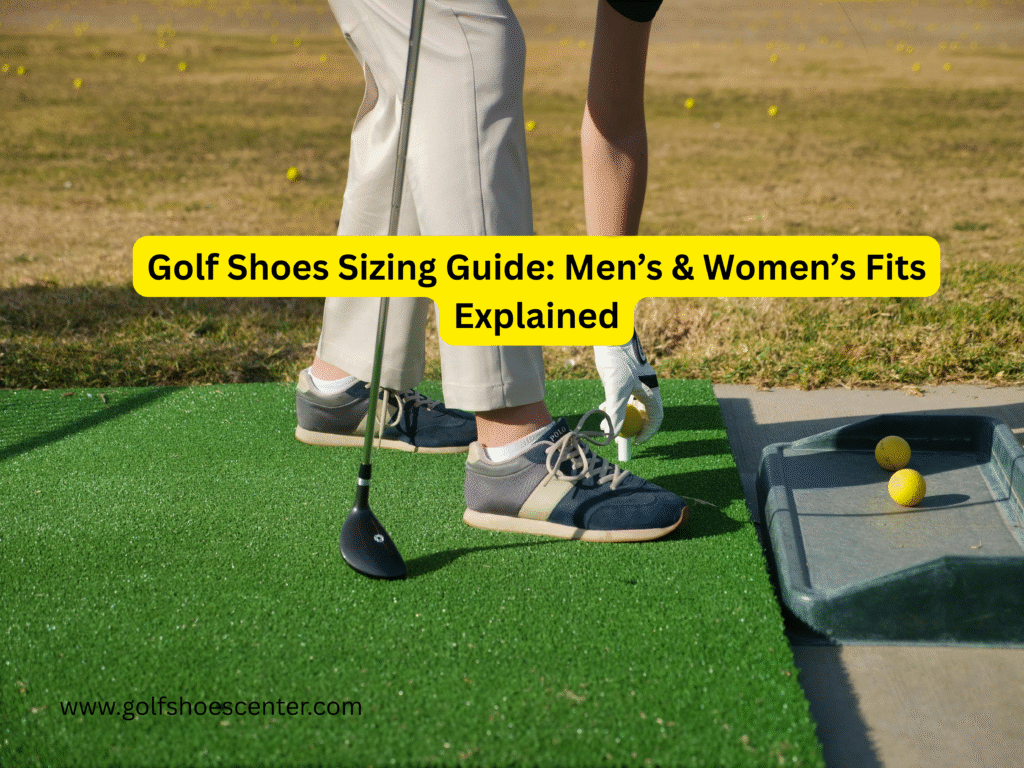
A golf shoe must support the foot during the full swing. At address, the feet help create a stable base. During the backswing, the trail foot accepts pressure. During the downswing, pressure moves toward the lead foot. At impact, the shoe must help you keep balance without sliding.
A poor fit can create small problems that grow over 18 holes. Your toes may hit the front of the shoe while walking downhill. Your heel may lift during the swing. Your foot may move inside the shoe when you shift pressure. These issues can affect posture, tempo, and confidence.
For a beginner, the best choice is the shoe that feels secure and comfortable during walking and standing. For an improving amateur, the key test is whether the foot stays stable during the downswing. For a senior golfer, cushioning, easy walking, and reduced pressure on the back, knees, and feet may matter most.
Overview of the main differences
Women’s and men’s golf shoes are not separate categories of golf skill. They are usually different approaches to foot shape and fit. Some designs also vary in weight, color, upper shape, and cushioning, but these points are less important than proper support.
Foot shape and internal volume
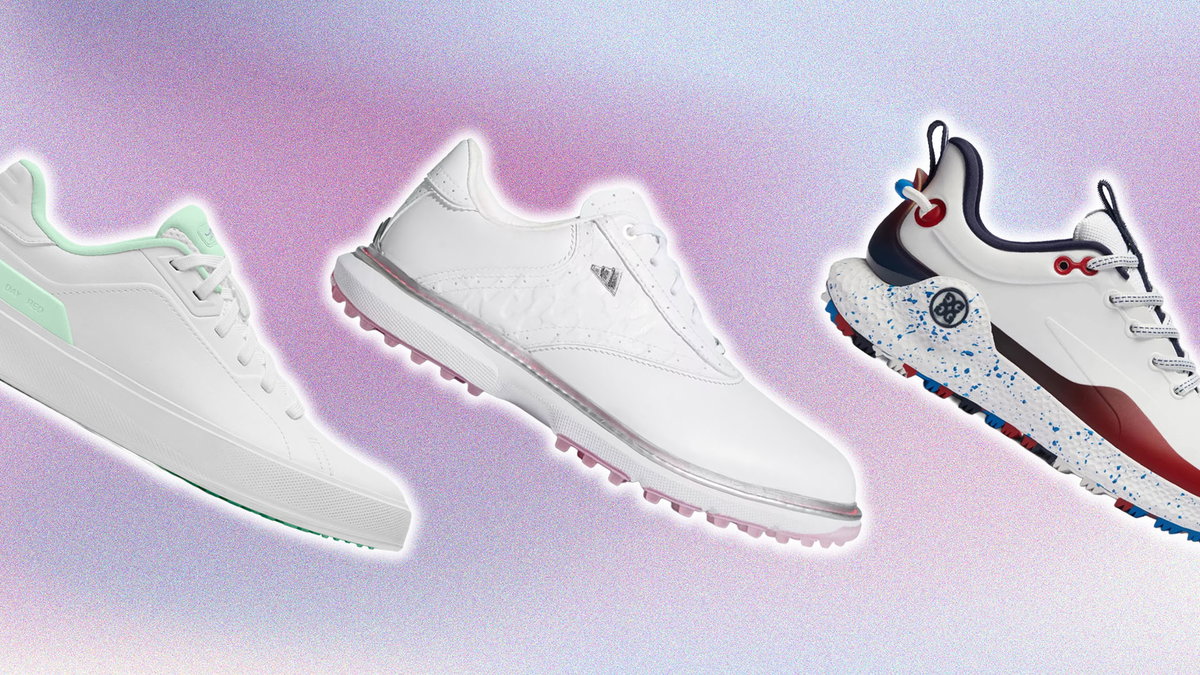
Women’s shoes often use a narrower heel and a lower volume through the midfoot. “Volume” means the amount of space inside the shoe. Men’s shoes often allow more room around the heel, arch, and forefoot.
These are common patterns, not strict rules. Feet vary widely. Some women have broad feet, and some men have narrow feet. A golfer’s actual foot shape should guide the choice.
Length and width
The length scale differs between men’s and women’s footwear. A size number in one category does not equal the same number in the other category. Width labels also vary by brand and country, so the printed size alone cannot confirm a good fit.
Width is just as important as length. A shoe that is too narrow can press on the toes and create numbness. A shoe that is too wide can let the foot slide, which may reduce stability.
Heel and ankle hold
A secure heel helps the foot stay connected to the shoe during the swing. Women’s golf shoes often taper more at the heel. Men’s golf shoes may use a roomier heel shape.
Heel lift is a common sign of poor fit. A small amount of movement can lead to rubbing. Too much movement can make the golfer tighten the toes or change the stance.
Weight and flexibility
Some women’s golf shoes are designed with a lighter feel. Some men’s shoes use a more substantial sole or upper. But weight varies more by design than by gender.
A light shoe can feel pleasant for walking. A more structured shoe can feel stable during a powerful swing. A golfer with a slow tempo may value comfort and flexibility. A golfer with high swing speed may prefer a firm base, but the shoe must still allow natural foot movement.
Cushioning and support
Cushioning protects the feet from repeated impact while walking. Support helps control unwanted foot motion. These are related but different ideas.
Soft cushioning is not always better. A sole that compresses too much may feel unstable during impact. A very firm sole may cause discomfort during a long round. The right balance depends on foot shape, body weight, walking habits, and joint health.
The table below summarizes the most common differences. Treat it as a starting point, not a rule for every golfer.
| Feature | Women’s golf shoes | Men’s golf shoes |
|---|---|---|
| Typical shape | Narrower heel and slimmer midfoot | Broader heel and more room through the foot |
| Common size pattern | Shorter length range with women’s width options | Longer length range with men’s width options |
| Fit priority | Secure heel with enough toe room | Enough forefoot space with controlled heel movement |
| Design trend | Often lighter and more tapered | Often broader and more structured |
| Best test | Heel stays down and toes can move | Foot does not slide side to side |
Women’s shoes are not automatically lighter, and men’s shoes are not always wider. Try to judge the shape of the shoe against the shape of the foot.
Why fit matters during the golf swing
A well-fitted golf shoe can help you keep a stable base while allowing natural pressure shifts. It does not fix a slice, improve swing speed by itself, or replace sound technique. It simply removes one source of distraction and movement.

At address
Address is the position you take before the swing. Your feet should feel planted, but not locked. A shoe that squeezes the toes can change your stance width and posture. A shoe that is too loose can make you spread the feet or grip the ground with your toes.
For beginners, stand in a golf posture and check whether both feet feel even. The knees should remain soft. The feet should not roll inward or outward because of pressure from the shoe.
During the backswing
As the club moves back, pressure often shifts toward the trail foot. The trail foot does not need to stay flat in every swing. However, it should remain controlled.
If the shoe slides inside the shoe, you may sway instead of turn. A sway is excessive sideways movement of the body. This can make solid contact harder to repeat.
During the downswing and impact
The downswing is the forward part of the swing. Pressure usually moves toward the lead side before impact. The lead foot must accept force while the body turns.
Traction can help prevent unwanted slipping. It cannot stop a poor swing from losing balance. A golfer who spins the lead foot too early may need a lesson, not a different shoe.
During the follow-through
The follow-through shows how the body completed the motion. Your lead heel may rise after impact, and your trail foot may roll toward the toe. The shoe should allow this movement without catching on the turf.
A stiff sole may feel secure to one golfer and restrictive to another. This is why comfort during a slow practice swing matters.
💡 Pro Tip: Test golf shoes with the socks you normally wear for a round. Then make slow swings, a full backswing, and a gentle follow-through. Walking alone does not show how the shoe behaves under swing pressure.
A detailed comparison of women’s and men’s golf shoes
The label can offer a useful clue, but it does not tell the whole story. Compare the design in several areas before deciding which shape suits you.
1. Heel shape
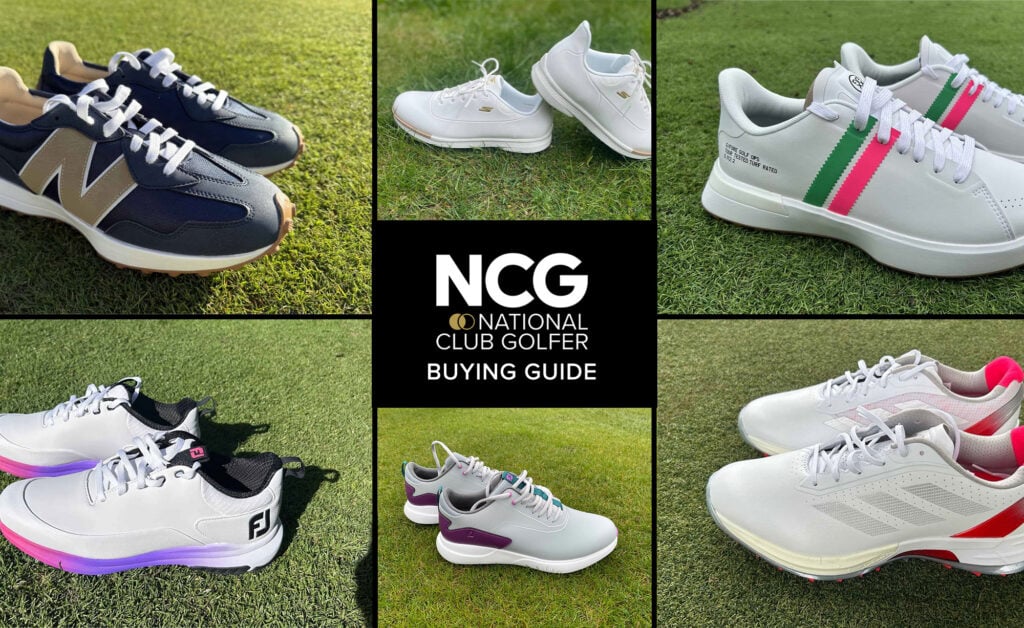
Women’s feet often have a narrower heel compared with the forefoot. Many women’s golf shoes reflect this shape. Men’s shoes may leave more room around the heel.
The heel should stay in place without painful pressure. One easy check is to walk up a gentle slope. If the heel lifts sharply, the shoe may be too loose or too deep.
2. Toe box
The toe box is the front part of the shoe. It should let the toes spread and move slightly. The toes should not touch the front when you stand or walk downhill.
A narrow toe box can cause blisters, hot spots, and pressure on the small toes. A toe box that is too wide can let the foot slide during the swing.
Women who need more toe room may prefer a wide women’s shape or a men’s shape. Men with slim feet may prefer a narrow men’s shape or a women’s shape if the length and support are appropriate.
3. Arch and midfoot
The midfoot is the area between the heel and the ball of the foot. Golf shoes often feel different here because the sole must balance walking comfort with stability.
A golfer with a high arch may feel pressure from a tight upper. A golfer with a flatter foot may feel that the foot rolls inward. The shoe should not force the arch into a painful position.
Arch shape is not a simple men’s versus women’s issue. A qualified professional can help assess persistent foot pain or unusual wear patterns.
4. Outsole width
The outsole is the bottom part of the shoe. A wider outsole can create a broad base. A narrower outsole may feel more agile but less planted for some players.
A golfer who walks a hilly course may appreciate a stable, comfortable base. A golfer who plays a flat executive course may place more value on low weight. Course type changes the demand on the shoe.
5. Upper construction
The upper covers the top and sides of the foot. It may use leather-like, mesh, or synthetic materials. The goal is to hold the foot while allowing comfort and breathability.
A snug upper should not create pressure points. On hot days, breathability can reduce dampness. In wet conditions, water resistance and a secure sole become more important.
6. Closure and adjustment
Laces, bands, and other closure systems can all work when adjusted well. The goal is even pressure across the foot. Tightening the top too much can numb the toes. Leaving the heel too loose can cause rubbing.
Golfers with arthritis or limited hand strength may need a closure that is easy to adjust. Parents should also check that junior golfers can manage their own shoes before a competition.
| Fit question | What to check | Why it matters |
|---|---|---|
| Does the heel stay in place? | Walk, climb a slight slope, and make a slow swing | Limits rubbing and unwanted movement |
| Do the toes have space? | Stand and walk downhill | Reduces pressure and impact on the toes |
| Is the midfoot secure? | Turn the body without lifting the foot | Helps control pressure during the swing |
The best fit feels secure without feeling tight. A shoe should support the foot, not make the foot fight the shoe.
Spiked and spikeless golf shoes
Both spiked and spikeless golf shoes can support a sound golf stance. The key difference is how the outsole meets the turf. Spiked designs use replaceable or built-in traction elements. Spikeless designs use molded patterns or rubber sections.
Spiked designs
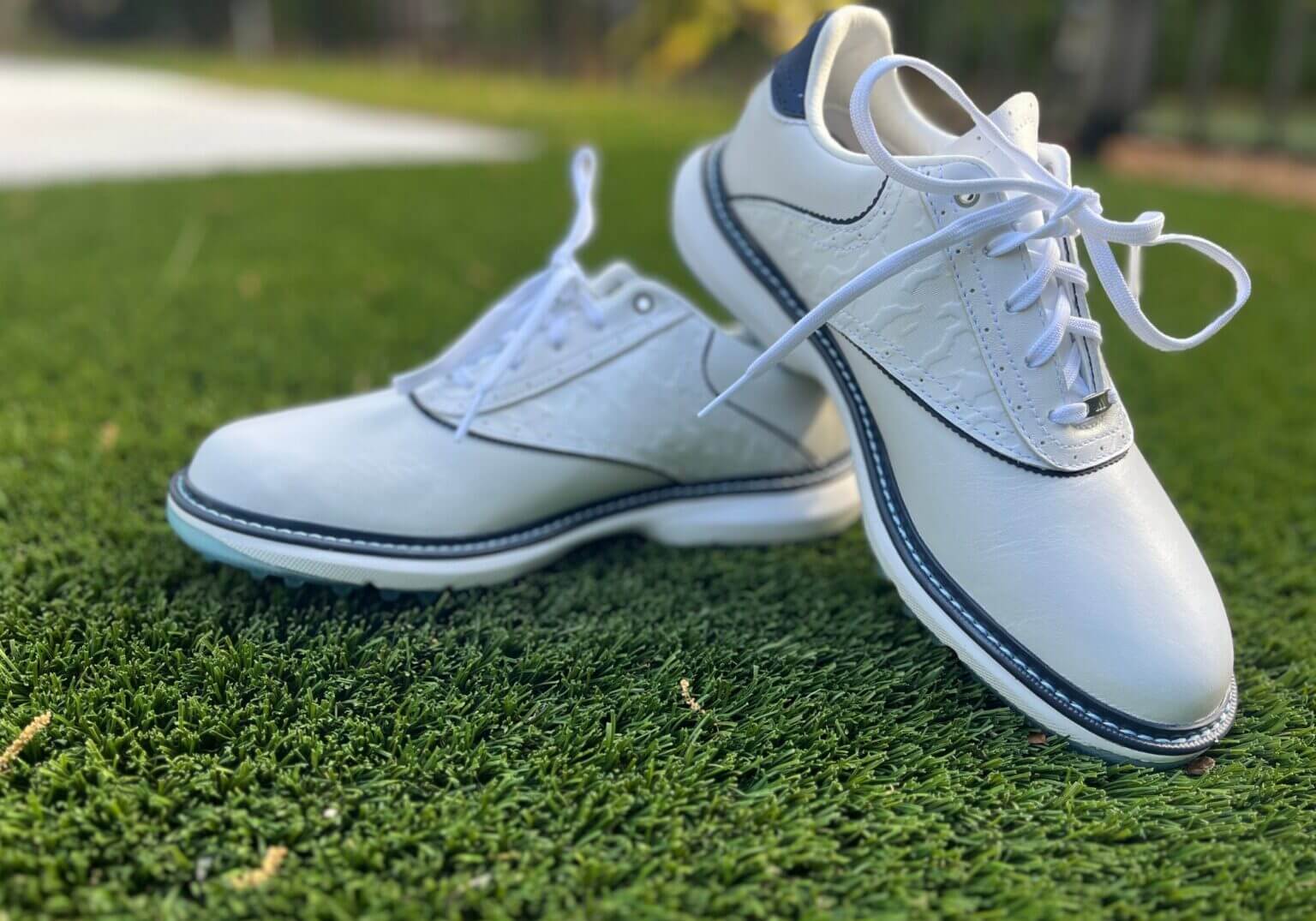
Spiked shoes can provide strong traction on wet grass, steep slopes, and soft turf. They may suit golfers who create high ground force or play in damp conditions.
They can feel less natural on hard paths or inside a clubhouse. Some courses may have rules about acceptable footwear, so check local requirements.
Spikeless designs
Spikeless shoes often feel easier for walking from the parking area to the first tee and around the clubhouse. They may suit beginners, casual golfers, and players who value a flexible walking feel.
Their grip depends on the outsole pattern and turf conditions. On wet slopes or slick grass, traction may differ from that of a spiked design.
What works for different golfers?
A beginner on a dry, flat course may find either design suitable. An improving player who walks in rain may focus more on traction and water control. A senior golfer may value comfort and stable walking over aggressive grip.
A junior golfer needs a secure fit and room to move, not an oversized adult shoe. An oversized shoe can create heel movement and trip risk.
| Playing condition | Shoe feature to value | Golfer it may suit |
|---|---|---|
| Wet fairways and slopes | Strong traction and stable heel hold | Walkers and players in rainy climates |
| Dry, firm turf | Balanced grip and comfortable flexibility | Beginners and casual players |
| Long walking rounds | Cushioning, low pressure, and secure fit | Seniors, juniors, and frequent walkers |
Traction is only one part of safety. On a wet course, shorten your stride, avoid sharp turns, and follow cart restrictions.
Fit differences for women, men, seniors, and juniors
Footwear needs change with age, strength, flexibility, and walking habits. Gender can guide the first search for shape, but it should not be the final test.

Women golfers
Women golfers may benefit from a shoe with a secure heel and enough width across the toes. Foot shape can change after pregnancy, injury, or years of standing. Do not assume that an old size remains correct.
Women who have a broad forefoot should not tolerate pinching to stay within a women’s category. A wider shape may provide better comfort and balance.
Men golfers
Men golfers may need more room in the forefoot or midfoot. A broad shoe can feel stable, but too much space may allow side-to-side movement.
Men with narrow feet should check heel hold carefully. If the foot slides, the golfer may change stance or tighten the laces too much.
Senior golfers
Senior golfers may walk more slowly but spend more time on the course. Foot comfort becomes important over a four-hour round. Reduced ankle mobility, knee pain, back pain, or balance concerns can change the best fit.
A senior golfer should look for a stable, comfortable platform and avoid shoes that cause pain during a normal walk. Persistent pain needs medical advice, not just a change in footwear.
Junior golfers
Children’s feet grow fast. Parents should check length and width often. A junior golf shoe should fit securely without being oversized to “last longer.”
Juniors also need a clear warm-up routine, a safe swing area, and adult supervision near carts and practice areas. Their equipment should match their height and strength.
👪 Parent or Beginner Note: Have a junior or new golfer walk, squat slightly, and make a slow practice swing. Watch for heel lift, toe gripping, or repeated shoe adjustment. These signs often show a fit problem.
Weather, course type, and walking needs
The same golf shoe may feel different in summer heat, winter cold, wet rough, or firm links turf. Conditions change how the foot meets the ground and how long the shoe must remain comfortable.

Wet grass and rain
Wet grass reduces traction. Water can also soften the ground and make the foot sink slightly. A secure outsole and a stable heel help, but no shoe removes all slipping risk.
Leave the course at the first lightning warning. Do not shelter under a tree. Follow the course emergency plan and local staff instructions.
Heat and humidity
In hot weather, feet may swell. A shoe that feels fine at dawn may feel tight later. Allow enough toe room and wear moisture-managing socks.
Drink water, use sun protection, and take shade breaks. Heat illness can affect judgment and balance.
Cold weather
Cold feet may feel stiff. A thick sock can change the fit. Do not create pressure by adding layers inside a shoe with little room.
Warm up the body before swinging. Start with easy movements and short swings before full shots.
Links courses
A links course often has firm, rolling ground and strong wind. The turf may feel harder than a soft parkland course. Walking comfort and controlled traction can matter more than deep grip.
Hilly courses
Hills increase pressure on the toes and heel. A secure fit is especially important when walking downhill. Use shorter steps and take care on wet slopes.
| Course factor | Footwear concern | Useful adjustment |
|---|---|---|
| Wet turf | Sliding and poor footing | Slow your pace and check traction |
| Firm links ground | Foot fatigue and hard impact | Use comfortable cushioning and steady steps |
| Steep hills | Toe pressure and heel movement | Secure the heel and shorten downhill steps |
| Hot weather | Swelling and dampness | Leave toe room, hydrate, and take breaks |
A shoe suited to riding in a cart may not feel as good during a long walking round. Be honest about how you play, not how you wish you played.
Rules and golf etiquette
Golf shoes must meet the course’s footwear policy. The Rules of Golf focus on playing the ball and the course, but clubs and committees may set dress or footwear policies.
Are women’s and men’s golf shoes treated differently?
The Rules of Golf do not assign different playing rules to women’s and men’s golf shoes. The important issues are local course policy, safety, and the condition of the course.
Some competitions or clubs may restrict certain types of footwear. Check the latest Rules of Golf and your local committee for updates.
Protecting the course
Good golf shoes should not excuse poor etiquette. Repair ball marks on the green, replace divots when allowed, and rake bunkers. Keep carts away from restricted areas and obey cart paths.
Do not drag your feet across a putting green. Avoid unnecessary walking near a golfer’s ball. Dispose of broken tees, wrappers, and old balls properly.
🌿 Course Care Note: Traction can leave marks on soft turf when a player twists sharply. Walk with care, avoid needless practice swings on delicate areas, and follow signs from the superintendent or course staff.
Common problems and practical fixes
Most shoe problems show up as pain, movement, or repeated changes to your stance. Notice the pattern early. A small hot spot after three holes may become a blister by the back nine.

| Problem | Likely cause | First step |
|---|---|---|
| Heel rubbing | Loose heel or poor closure | Adjust the fit and test a shorter walk |
| Toe pressure | Short length or narrow toe box | Check toe room while standing |
| Foot sliding sideways | Excess internal space | Try a better-shaped width |
| Arch pain | Insole or midfoot mismatch | Stop if pain grows and seek advice |
| Wet socks | Moisture or poor ventilation | Use suitable socks and take breaks |
These steps can help identify a fit issue, but they do not diagnose injury. Stop playing if pain is sharp, swelling develops, or normal walking becomes difficult.
Blisters
Blisters often come from friction. Friction increases when the heel lifts or the foot becomes damp. A golfer with a new shoe should use it for short walks before a full round.
Do not ignore a blister because you have a tournament. Pain can change your posture and swing.
Numb toes
Numbness may come from a tight toe box or laces that are too tight. Loosen pressure and check whether the toes can move. If numbness continues, stop and ask a health professional for advice.
Sore arches
Arch soreness can come from a long walking day, unfamiliar terrain, or poor support. It can also point to a foot problem. A PGA professional can help with golf posture, but a medical professional should assess ongoing pain.
Unstable swings
If you feel the foot move inside the shoe, test your stance and balance. Make slow half-swings. If the shoe remains loose, the shape may not suit your foot.
A shoe cannot correct a sway, slide, or reverse pivot. A lesson with a PGA professional is useful when balance problems continue.
How to check golf shoe fit at home and on the range
A simple fit check can reveal more than a size number. Test both feet because one foot is often slightly larger than the other.

- Measure late in the day. Feet may swell after walking.
- Wear golf socks. Thick or thin socks change the fit.
- Check toe room. Stand with weight on both feet. Toes should not touch the front.
- Check the heel. Walk and make slow swings. The heel should stay controlled.
- Check width. The upper should not press on the widest part of the foot.
- Check the stance. Take a normal golf posture. Your feet should feel level and relaxed.
- Check movement. Make a slow backswing and follow-through without forcing the body.
- Stop at pain. Comfort matters more than completing the test.
For left-handed and right-handed golfers, the fit test is the same. The lead and trail feet change roles, but both shoes need equal support. A left-handed golfer should pay close attention to the opposite foot from a right-handed player because pressure patterns reverse.
Footwear needs by handicap and skill level
Handicap index measures a golfer’s demonstrated playing potential under the World Handicap System. It does not determine which golf shoe category you need.
Beginners and high-handicap golfers
New golfers often walk, practice, and stand for long periods. Comfort and secure fit are the main goals. A beginner does not need a specialized shoe to learn grip, stance, posture, or putting.
Focus on stable feet during basic shots. If the feet hurt, learning becomes harder because attention moves away from the ball and target.
Improving amateurs
Improving players may create faster clubhead speed and stronger ground pressure. They may also play in more weather and on tougher courses. Traction and heel control become more important.
This golfer should test the shoe during full swings, bunker shots, chipping, pitching, and uneven lies. A stable shoe can help the player repeat a balanced finish, but it does not replace practice.
Low-handicap golfers
Low-handicap players often notice small changes in pressure and balance. They may want a consistent feel across practice and competition. The fit must remain secure during aggressive swings without restricting natural movement.
Match play, stroke play, Stableford, and scramble formats do not change the basic need for comfort and control. The course, weather, and walking plan matter more.
| Golfer | Main footwear focus | What may not suit |
|---|---|---|
| New golfer | Comfort, easy walking, secure fit | Very stiff or painful shoes |
| Improving amateur | Heel control and traction during full swings | Loose shoes that shift at impact |
| Low-handicap player | Consistent feel and stable pressure transfer | Any fit that changes stance or balance |
| Senior golfer | Cushioning, comfort, and safe walking | Hard, tight, or unstable designs |
| Junior golfer | Correct size and secure movement | Oversized adult footwear |
A high swing speed does not automatically mean a man needs a men’s shoe or a woman needs a women’s shoe. Foot shape remains the deciding factor.
Mistakes golfers make when comparing women’s and men’s shoes
Gender labels can help organize choices, but they can also create confusion. Avoid these common errors.

Mistake 1: Treating the size number as universal
A women’s size and men’s size use different scales. Width labels also vary. Compare actual fit, not just the number printed inside the shoe.
Mistake 2: Choosing a narrow shoe for appearance
A slim shape may look neat but cause toe pressure. Golfers spend hours walking and standing. Function matters more than a narrow outline.
Mistake 3: Choosing a wide shoe for comfort without checking movement
Extra room may feel pleasant at first. But if the foot slides, the golfer may lose balance during the downswing.
Mistake 4: Testing only while sitting
Your feet spread when you stand. Always test while carrying normal body weight. Walk, bend the knees, and make a slow golf motion.
Mistake 5: Ignoring the second foot
One foot may be longer or wider. Check both. A fit that works on the smaller foot may hurt the larger one.
Mistake 6: Wearing new shoes for a major event
A full round can expose problems that a short walk does not. Use a gradual break-in period when needed.
Mistake 7: Blaming shoes for a swing fault
A slice, hook, thin shot, or fat shot usually has a swing, setup, or strike cause. Shoes may affect balance, but they are rarely the main cause.
🔧 Quick Fix: If your feet slide, first slow the swing and reduce unnecessary pressure. Then test the fit in a balanced stance. If the problem remains, ask a PGA professional to check your setup and movement.
Do women need women’s golf shoes?
No. Women do not need to wear women’s golf shoes. A woman should use the shape that fits her foot and supports her movement.
A wide-footed woman may feel better in a men’s width. A woman with a narrow heel may prefer a women’s shape. The same principle applies to men.
The label can guide the first fitting, but comfort and control decide the result. This is especially true for golfers with bunions, high arches, flat feet, prior injuries, or different-sized feet.
Can men wear women’s golf shoes?
Yes, if the shape and length fit well. A man with a narrow foot may find a women’s shape more secure. The shoe still needs enough room for the toes and midfoot.
Do not force a foot into a smaller or shorter length. Gender category does not change the need for proper toe room, heel hold, and stable movement.
Do golf shoes improve your swing?
Golf shoes can help create a stable base and reduce unwanted slipping. They do not teach the grip, fix posture, control tempo, or improve impact on their own.
A golfer who struggles with a slice should examine clubface position, swing path, grip, and alignment. A golfer who loses balance should examine setup, pressure shift, and finish. Footwear is one part of the movement system.
Do women’s golf shoes have less traction?
Not necessarily. Traction depends on the outsole design, turf contact, condition, and maintenance. Gender category does not determine grip by itself.
A women’s shoe can have strong traction, and a men’s shoe can have poor traction in wet conditions. Check how the shoe behaves on the course, within local rules.
Are spikeless shoes good for beginners?
They can be. Many beginners value walking comfort and an easy transition from the course to paths or club areas. A beginner on wet, steep, or soft ground should pay closer attention to traction.
The best shoe for a beginner is one that feels secure, comfortable, and suitable for the course. Skill level does not force a particular shoe type.
How long does it take to get used to new golf shoes?
Some golfers adjust after a short walk. Others need several practice sessions. The time depends on the sole, fit, foot condition, and how different the new shoe feels.
Do not wait for severe pain to stop. Gradual use can show whether the shoe suits you before a full round.
What is a good golf shoe fit?
A good fit holds the heel, supports the midfoot, and leaves room for the toes. Your foot should not slide side to side. Your toes should not touch the front when standing or walking downhill.
The shoe should feel secure without numbness, pinching, or sharp pressure. Both feet should remain comfortable during a slow golf swing.
Do senior golfers need different golf shoes?
Senior golfers do not need a special gender category. They may benefit from comfort, cushioning, stable walking, and easy adjustment. Reduced balance or joint mobility can make fit more important.
A senior golfer with back, knee, ankle, or foot pain should seek medical advice. A PGA professional can also help adjust stance, posture, and swing demands.
What should parents check for junior golfers?
Parents should check length, width, heel movement, and walking comfort. Children grow quickly, but oversized footwear can cause trips and unstable swings.
Also check the warm-up routine, swing-area clearance, cart safety, hydration, sun protection, and pace of play. Junior golfers should learn course care early by repairing ball marks, replacing divots, and leaving bunkers ready for the next player.
Can golf shoes affect putting?
They can affect balance and comfort during putting. Putting requires a steady stance, quiet lower body, and clear green reading. A shoe that causes heel pressure or foot movement can become a distraction.
It does not matter whether the shoe is labeled men’s or women’s. The putter, grip, posture, and green speed still control the stroke.
When should you ask for professional help?
Ask a PGA professional for help when footwear changes your stance, balance, or swing pattern. A professional can observe movement during the setup, backswing, downswing, and follow-through.
See a doctor or qualified health professional for persistent pain, swelling, numbness, or loss of function. Stop playing during sharp pain. No golf shoe should be used to ignore an injury.
Final thoughts
Women’s and men’s golf shoes are usually different in shape, not in the basic job they perform. Women’s designs often taper more at the heel and midfoot. Men’s designs often provide more room through the heel and forefoot. These are common patterns, not fixed rules.
The best choice is the shoe that fits your actual foot, keeps the heel secure, leaves room for the toes, and supports comfortable walking. Test it while standing, walking, and making slow golf swings. Consider your handicap, swing speed, age, course type, climate, and walking habits.
Good footwear can help you feel balanced from the tee box to the green. It cannot replace a sound grip, stable stance, useful practice, course management, or a smart mental game. Treat the shoe as part of your foundation, care for the course, follow local rules, and stop when pain tells you something is wrong.