Women’s Golf Shoes For Plantar Fasciitis: Best Comfort
Plantar fasciitis can make a pleasant round feel like a test of patience. The pain often starts near the heel and may feel sharp when you take your first steps in the morning or after sitting. Golf adds more stress because a round can mean four to five hours on your feet, repeated swings, uneven lies, and long walks between the tee box and green.
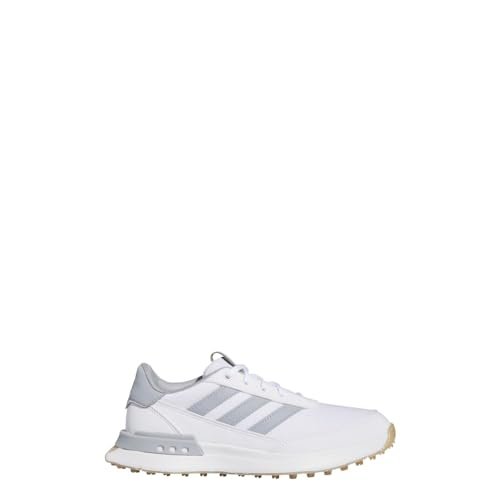
The best women’s golf shoes for plantar fasciitis are not defined by color, brand, or a “comfort” label. They are shoes with a stable heel, firm but comfortable arch support, good cushioning, a secure fit, enough toe room, and traction that suits the course. The right design can help reduce strain, but it cannot treat the medical cause of heel pain.
A beginner may need a forgiving shoe for short practice sessions. A walking golfer may need more shock control and support than someone who rides in a cart. Seniors, juniors, golfers with wide feet, and players who walk hilly or firm courses may each need a different balance of comfort and stability.
Quick answer: What are the best women’s golf shoes for plantar fasciitis?
The best women’s golf shoes for plantar fasciitis have a firm heel counter, steady arch support, cushioned midsoles, a supportive footbed, a roomy toe box, and reliable traction. Choose a fit that holds the heel without squeezing the toes. Spiked and spikeless styles can both work. A medical professional or podiatrist should assess ongoing or severe pain.
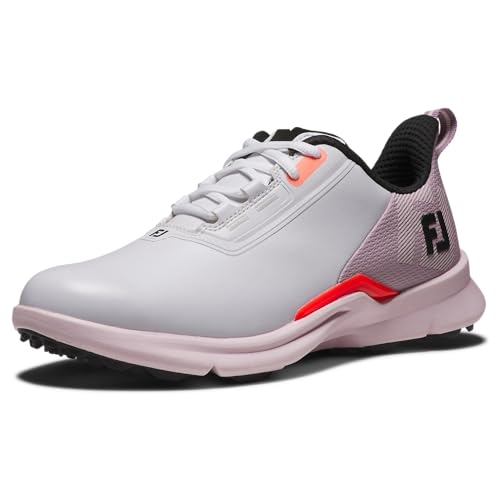
A golf shoe should support your foot without making it feel trapped. It should also let you stand in a balanced golf stance, rotate during the backswing, and push through impact without your foot sliding inside the shoe.
| Feature | What to look for | Why it matters |
|---|---|---|
| Heel support | Firm heel counter and stable rear section | Helps limit excess heel motion |
| Cushioning | Shock-absorbing midsole with a steady feel | Softens repeated steps on hard ground |
| Arch support | Noticeable but not painful support | Helps spread pressure across the foot |
| Toe room | Toes can move without touching the front | Reduces pressure during long walks |
The key point is simple: comfort alone is not enough. A very soft shoe may feel good for ten minutes but lack the structure needed for a full round.
Why plantar fasciitis changes your golf shoe needs
Plantar fasciitis is irritation or strain in the plantar fascia, a strong band of tissue that runs along the bottom of the foot from the heel toward the toes. It often hurts most near the inner heel. Walking, standing, and pushing off can make symptoms worse.
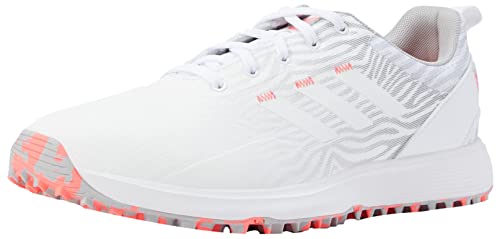
Golfers place special demands on their feet. They walk on slopes, stand on hard tee boxes, shift weight during the swing, and brace against the ground during the downswing. The foot must support balance while also allowing a controlled turn.
Walking distance and course conditions
A full round may involve several miles of walking, depending on the course layout, playing speed, and the distance between holes. A links course, hilly parkland course, or long resort course may place more stress on the feet than a compact executive course.
Firm ground also changes the feel of each step. Dry fairways, paved cart paths, packed paths near greens, and hard tee areas send more force into the heel than soft turf.
| Golf setting | Main foot demand | Helpful shoe quality |
|---|---|---|
| Hilly walking course | Repeated uphill and downhill steps | Stable heel and secure upper |
| Firm, dry course | More impact at each step | Cushioning with a firm base |
| Wet course | Slipping risk and damp feet | Water resistance and strong traction |
| Cart-based round | Less walking but more standing | Support and stable stance |
Walking golfers may need more cushioning and fit security than riders. However, riding does not remove the need for support. You still stand for shots, walk to the ball, and face uneven ground.
The golf swing and foot pressure
During the swing, pressure moves from the trail foot toward the lead foot. The stance must remain stable, but the foot also needs enough freedom to rotate. A shoe that is too soft can make the golfer feel unstable. A shoe that is too rigid can restrict natural movement.
Beginners often benefit from a stable platform because it helps them learn balance and posture. Improving golfers may notice that poor foot support changes their tempo, weight shift, and follow-through.
💡 Pro Tip: Stand in your normal golf stance when checking shoe comfort. Bend your knees slightly, widen your stance, and make a slow practice swing. A shoe can feel fine while sitting but feel too narrow or unstable in golf posture.
The most important features to assess
The best women’s golf shoes for plantar fasciitis should balance support, comfort, movement, and traction. No single feature solves every foot problem. Think of the shoe as part of a system that includes socks, warm-up, walking habits, and swing mechanics.

Heel counter and heel stability
The heel counter is the firm section around the back of the shoe. It helps keep the heel centered. Press the sides and rear of the shoe with your fingers. A heel section that collapses with little force may provide less control.
Heel support does not mean the back should feel hard or painful. The heel should feel held in place without rubbing. Heel lift inside the shoe can create extra strain and friction.
This feature suits golfers who feel pain after long walks or notice that their heel moves inside the shoe. It may be less important for a golfer with a very rigid ankle, but comfort and medical advice still come first.
Arch support and footbed shape
Arch support should meet your arch, not press sharply into it. Some golfers need more structure. Others feel worse when the arch is too aggressive. The right shape spreads pressure instead of creating one painful point.
A removable footbed can offer flexibility for a custom insert, but inserts should not be added at random. An insert that is too tall or too firm may change your stance and affect comfort during the swing.
| Foot concern | Useful design detail | Caution |
|---|---|---|
| Low or tired arch | Moderate arch support | Too much support may cause new pressure |
| Heel pain | Cushioned heel with stable base | Excess softness can feel unstable |
| Wide forefoot | Roomy toe box | A loose upper may let the foot slide |
| Swelling late in a round | Adjustable closure | Do not tighten until circulation feels poor |
A junior golfer or new golfer may not know what arch shape feels right. A fitting by a qualified footwear professional or health professional can help, especially when pain is persistent.
Cushioning without a sinking feel
Cushioning reduces the harsh feel of repeated steps. Yet the softest possible midsole is not always the best option for plantar fasciitis. A shoe that compresses too much can make the foot work harder to stay stable.
Look for cushioning that feels protective but controlled. When you press the shoe, it should not feel like your foot will sink into a loose mattress. Golf requires a stable base for the grip, stance, and swing.
Toe box and overall width
Your toes need space to spread and help balance. They should not touch the front when you walk downhill. The widest part of the shoe should match the widest part of your foot.
A narrow shoe can squeeze the forefoot and alter your gait. A shoe that is too wide can allow sliding, which may increase friction and strain. Women’s feet vary widely, so the label alone does not tell you whether a shoe will fit.
Upper and closure system
The upper holds the foot over the sole. A secure upper can reduce movement inside the shoe. Laces, adjustable straps, and other closures can all work if they allow even pressure.
Avoid tightening the shoe across the toes to stop heel movement. Instead, use a fit that secures the heel and midfoot while leaving the toes free.
Traction and sole design
Traction helps you stay stable on grass, slopes, and damp ground. Spiked shoes can provide strong grip in wet conditions. Spikeless soles may feel more flexible and comfortable for walking between holes or on hard paths.
The main difference between spiked and spikeless golf shoes is how they balance grip, flexibility, and surface feel. Neither design is automatically better for plantar fasciitis.
| Sole type | Strengths | Limits |
|---|---|---|
| Spiked | Strong grip in wet or soft turf | May feel firm on paths and hard ground |
| Spikeless | Often flexible and easy to walk in | Traction can vary on steep wet slopes |
| Hybrid traction | Mix of grip and walking comfort | Feel depends on the sole pattern |
The right sole depends on climate, course type, and whether you walk. Always use traction that suits the course. Slipping can cause a sudden load on the foot, ankle, knee, or back.
How to find the right fit
The best way to choose women’s golf shoes for plantar fasciitis is to test the fit late in the day, while wearing the socks used for golf. Feet often swell during a round. A shoe that feels perfect early in the morning may feel tight after several hours.

Use a simple fit check
Follow these steps before using a new pair for a full round:
- Wear your normal golf socks.
- Check that your heel stays in place while walking.
- Make sure your toes do not touch the front.
- Bend your knees into a golf stance.
- Make several slow practice swings.
- Walk on a firm surface and an uneven surface.
- Check for pressure points, rubbing, or numbness.
- Wear the shoes for short sessions before playing 18 holes.
A beginner should test shoes during a short range session or nine-hole round first. An experienced walking golfer should also check comfort after at least an hour, since early comfort can hide later fatigue.
Compare both feet
Many golfers have one foot slightly longer or wider than the other. Fit the larger foot first. Your feet may also change with age, pregnancy, swelling, or changes in activity.
Do not assume your usual size will fit every golf shoe. Construction, toe shape, insole height, and upper material can change the feel.
👪 Parent or Beginner Note: Junior golfers should not wear adult-sized shoes that are too long or loose. Poor fit can affect balance, safety, and confidence. Junior feet grow, so check fit often and ask a qualified professional about pain.
Spiked versus spikeless golf shoes for heel pain
Both spiked and spikeless golf shoes can suit golfers with plantar fasciitis. The choice depends on how much you walk, the ground you play on, and how stable the shoe feels during your swing.

When spiked shoes may suit you
Spiked shoes may suit golfers who play in wet areas, walk steep slopes, or need extra grip during the swing. A stable sole can reduce unwanted foot movement. This may help a player who feels that the foot slides inside a flexible shoe.
The limit is comfort on hard surfaces. Long walks on cart paths may feel harsh if the sole is rigid. Spikes also need care and should be replaced when they become worn or damaged.
When spikeless shoes may suit you
Spikeless shoes may suit golfers who walk often, play dry courses, or move between turf and paved paths. They can feel more natural for everyday walking. Some golfers also prefer their flexible feel during putting and short-game practice.
The limit is traction. Not all spikeless patterns grip wet slopes equally well. Inspect the tread and match it to your local conditions.
Choosing based on golfer type
| Golfer | Often useful starting point | Why |
|---|---|---|
| Beginner | Stable, cushioned sole | Supports balance while learning |
| Frequent walker | Lightweight support and shock control | Reduces fatigue over many steps |
| Senior golfer | Easy closure and secure heel | Helps comfort and stability |
| Wet-climate golfer | Strong traction and water resistance | Limits slipping and damp feet |
| Cart golfer | Balanced cushioning and grip | Supports standing and swinging |
These are starting points, not rules. A senior golfer may walk quickly and need a flexible shoe. A beginner may play hilly courses and need more traction.
Women’s golf shoes for different feet and playing styles
There is no universal best shoe for every woman golfer. A low-handicap player, a new golfer, a senior, and a parent helping a junior may face different needs.

For beginners and high-handicap golfers
Beginners often spend more time standing, searching for balls, and walking uneven routes. A stable shoe can help them feel grounded while they learn grip, stance, posture, and tempo.
High-handicap golfers may also make more practice swings during a round. That adds time on the feet. Choose comfort and fit before chasing a very light or highly flexible design.
The shoe cannot fix a slice, poor balance, or a rushed downswing. It can only give your feet a better base from which to learn.
For improving amateurs
Improving golfers may notice shoe problems during weight transfer. If the lead foot slides at impact, the golfer may lose balance or change the swing path. If the trail foot feels trapped, the golfer may restrict the backswing.
A stable golf shoe can support practice, but swing faults still need technical work. A PGA professional can assess stance width, ball position, pressure shift, and foot movement.
For senior golfers
Older golfers may face reduced flexibility, balance changes, joint stiffness, or more swelling after walking. Shoes with a secure heel and easy closure may be helpful. A smooth warm-up can also make the first tee less demanding.
Seniors should not ignore new or worsening heel pain. Pain can come from several conditions, and plantar fasciitis is only one possibility.
For wide feet or bunions
A wide toe box can reduce pressure on the forefoot. Do not solve a width problem by choosing a shoe that is much too long. Extra length can make the foot slide and reduce control.
A golfer with bunions, numbness, diabetes, or circulation problems should seek medical guidance before making footwear changes.
For left- and right-handed golfers
The shoe needs are not different because of handedness alone. However, the lead foot and trail foot experience different forces. A right-handed golfer usually braces with the left foot during impact, while a left-handed golfer usually braces with the right.
If one foot hurts more, check stance, swing balance, course slope, and walking habits. The solution may involve technique or medical care, not only footwear.
A practical shoe assessment table
Use this checklist before a long walk or round. It helps separate a true support issue from a simple break-in issue.

| Test | Good sign | Warning sign |
|---|---|---|
| Heel hold | Heel stays centered | Heel lifts or rubs |
| Toe space | Toes move freely | Toes touch the front |
| Golf stance | Foot feels stable | Foot rolls or slides |
| Practice swing | Smooth pressure shift | Sole catches or twists |
| One-hour walk | No growing hot spot | Heel pain increases |
| Wet grass test | Traction feels secure | Foot slips on slopes |
The goal is not to find a shoe that feels perfect for one minute. The goal is to find a shoe that remains supportive as your feet work.
Mistakes that can make plantar fasciitis worse
Many golfers focus on the shoe but overlook the habits around it. A supportive shoe cannot fully offset a sudden increase in walking, poor recovery, or a rushed warm-up.

Mistake 1: Playing 18 holes right away
If you usually play nine holes or use a cart, jumping into a long walking round can overload the foot. Build up time gradually. Try short walks, range sessions, or an executive course first.
This advice suits beginners, returning golfers, and anyone recovering from pain. It may not suit a golfer with current severe pain, who should seek medical advice first.
Mistake 2: Wearing golf shoes only on the first tee
New shoes may have pressure points that do not appear at home. Wear them for short sessions. Walk, stand, and make practice swings before a tournament or important round.
Mistake 3: Choosing softness over stability
A soft shoe may feel pleasant but allow too much movement. Watch for heel slide, foot rolling, or a sinking sensation during the downswing.
Mistake 4: Ignoring worn traction
Worn tread can increase slipping. Slips create sudden loads that may affect the plantar fascia and other body parts. Inspect the sole before wet-season play.
Mistake 5: Tightening the shoe too much
Some golfers tighten laces to control a loose heel. This can compress the top of the foot and toes. Start with the correct width and use even tension.
Mistake 6: Treating pain as normal
Mild fatigue after a long round is not the same as sharp or persistent pain. Pain that changes your walk deserves attention.
Warm-up and foot-care habits for golfers
A short warm-up can prepare the feet, calves, hips, and back for golf. It is not a medical treatment, but it can help the body move with less surprise on the first tee.
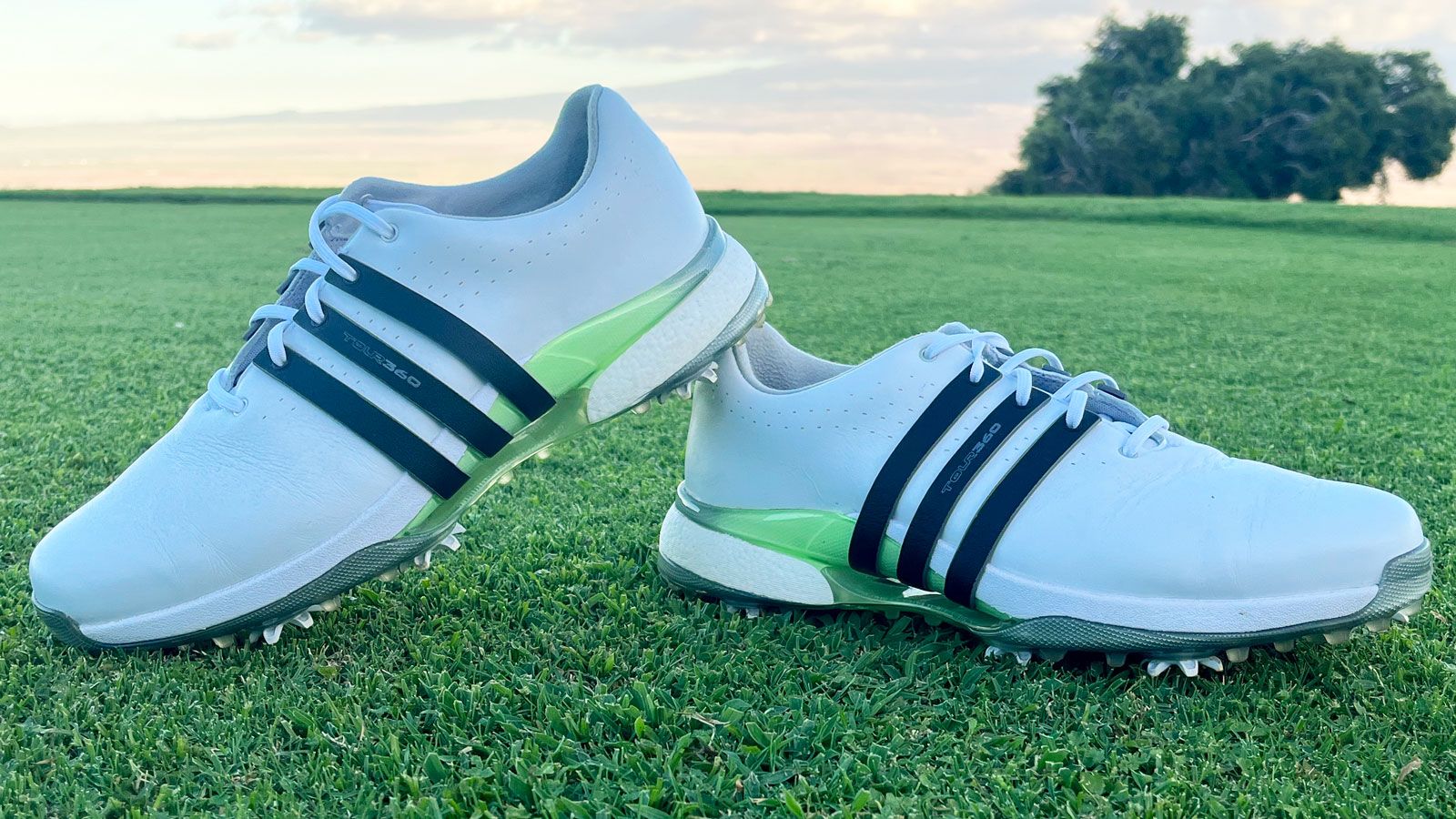
Before the round
Try this gentle routine:
- Walk for five minutes.
- Make slow ankle circles.
- Perform gentle calf raises.
- Stretch the calves without bouncing.
- Take easy practice swings.
- Hit short chips before full shots.
- Increase swing speed in small steps.
This routine suits most healthy adult golfers. It may not suit anyone with acute pain, a recent injury, or a medical restriction.
During the round
Stay aware of changes in pain. Take normal walking breaks when possible. Drink water, use sun protection, and avoid rushing from green to tee.
A golfer who rides in a cart should still stand and walk carefully. Cart safety matters. Keep hands and feet inside the cart, slow down near slopes, and follow course rules.
⚠️ Safety Warning: Stop if pain becomes sharp, causes limping, or changes your swing. Seek a doctor or podiatrist for persistent pain, swelling, numbness, or pain that affects daily walking. Leave the course at the first lightning warning.
After the round
Remove the shoes and check the skin for red areas, blisters, or pressure marks. Gentle movement may feel better than sitting still for a long time. Recovery can include rest, medical advice, and a gradual return to walking.
Do not use aggressive stretching or self-treatment if it increases pain. A health professional can guide treatment based on the cause.
Golf fitness and swing changes that may help
Foot pain can change your swing. You may shorten the backswing, avoid pressure on the lead side, or rush the downswing. These changes can affect contact, launch angle, direction, and follow-through.
Work on balance and lower-leg strength
Golf fitness often includes calf strength, hip mobility, and single-leg balance. These areas help you control posture and pressure shift. Begin with simple exercises and hold onto support when needed.
A beginner may start with two-foot calf raises and supported balance. A fit amateur may add controlled single-leg work. Neither group should train through sharp pain.
Check the stance
A stance that is too wide can make rotation harder. A stance that is too narrow can reduce balance. The best width depends on the club and the golfer’s body.
For a short iron, many golfers use a stance near hip width. Longer clubs may need a slightly wider base. The exact width should let you turn without swaying.
Review the pressure shift
Pressure should move in a controlled way. It should not feel like a sudden lunge onto the lead heel. A PGA professional can use simple drills to improve pressure movement without forcing the foot.
| Skill level | Useful focus | Foot-related goal |
|---|---|---|
| Beginner | Balanced setup and slow swings | Learn stable pressure |
| Improving golfer | Tempo and impact position | Reduce sudden loading |
| Advanced golfer | Ground force and shot control | Match pressure to swing intent |
| Senior golfer | Mobility and balance | Keep motion safe and repeatable |
These ideas support golf movement, but they do not replace medical treatment. A shoe change may not help if the main problem is a swing fault, tight calf, or unrelated injury.
How course management can reduce foot stress
Good course management is not only about score. It can also reduce unnecessary walking and standing. Plan the round before you play.

Choose sensible practice goals
Beginners may benefit from an executive course or nine-hole loop. Improving golfers can use a walking practice round to assess shoe comfort before a full event. Juniors should use age-appropriate tees and avoid excessive practice volume.
Do not chase every lost ball if your foot is hurting. Keep pace of play, but protect your health. The Rules of Golf allow a player to manage the round within the rules, and local policies may guide cart use or relief.
Limit extra steps
Keep needed clubs near your ball when allowed and safe. Walk directly to the next shot instead of taking repeated trips. Avoid crossing steep slopes without reason.
Repair divots, fix ball marks, and rake bunkers. Good course care also supports safe surfaces for everyone.
🌿 Course Care Note: Dispose of broken tees, wrappers, and old balls properly. Keep carts away from restricted areas and follow signs near greens and wet ground.
Pros and cons of common shoe priorities
Every design choice has a trade-off. Use the table to decide which quality matters most for your course and body.
| Priority | Pros | Cons |
|---|---|---|
| Maximum cushioning | More comfort on hard walks | May feel less stable |
| Firm support | Better platform for balance | May feel rigid |
| Very light weight | Less sense of bulk | May offer less structure |
| Strong traction | More grip on slopes | Can feel harsh on paths |
| Flexible sole | Natural walking feel | May twist more during the swing |
| Water resistance | Helps in damp grass | May feel warmer or less flexible |
A walking golfer may value cushioning and water resistance. A golfer on steep, wet turf may value traction and a stable heel. The best choice is the one that matches your main playing conditions without creating pressure.
When to see a medical professional
Footwear advice has limits. Plantar fasciitis may improve with proper care, but heel pain can also come from a stress injury, nerve problem, tendon issue, arthritis, or another condition.

Seek medical guidance when:
- Pain lasts or keeps returning.
- You limp during golf or daily walking.
- The foot is swollen, numb, red, or unusually warm.
- Pain wakes you at night.
- You have diabetes or circulation concerns.
- You recently fell or changed activity sharply.
- A child or junior golfer reports repeated pain.
- Home care and reduced activity do not help.
A podiatrist, physical therapist, or doctor can assess your foot. A PGA professional can review swing mechanics after medical concerns are addressed.
Frequently asked questions
Q: Are spikeless golf shoes better for plantar fasciitis?
A: Not always. Spikeless shoes may feel flexible and comfortable for walking, while spiked shoes may offer stronger traction on wet or steep turf. The better option is the one that keeps your heel stable, avoids pressure points, and matches the course.
Q: Can golf shoes cure plantar fasciitis?
A: No shoe can promise a cure. Supportive footwear can help manage comfort and reduce unwanted movement, but treatment may also involve rest, exercise, physical therapy, or medical care.
Q: Are women’s golf shoes different from men’s golf shoes for plantar fasciitis?
A: The key features are the same: fit, support, cushioning, stability, and traction. Women’s shoes may use different shapes, but foot shape varies more from person to person than from gender label to gender label. Fit your actual foot.
Q: What golf shoes are best for seniors with heel pain?
A: Seniors often benefit from a secure heel, easy closure, moderate cushioning, and dependable traction. A lightweight design can help, but do not sacrifice stability. Persistent pain should be checked by a medical professional.
Q: Can I use running shoes for golf if I have plantar fasciitis?
A: Running shoes may feel cushioned, but they may not provide enough lateral stability or golf traction. They can be suitable for some casual practice settings if the course allows them, but they may be less secure for a full round or wet turf.
Q: How long does it take to get used to supportive golf shoes?
A: It varies. Some golfers feel comfortable at once, while others need several short sessions. Begin with walking and practice swings before wearing any new shoe for 18 holes.
Q: Should golf shoes feel tight around the arch?
A: They should feel supportive, not painful. Sharp pressure, numbness, tingling, or cramping suggests that the shape or fit may not suit your foot.
Q: Can shoe inserts help golfers with plantar fasciitis?
A: They can help some golfers, but the wrong insert may create pressure or alter stance. Use advice from a podiatrist or qualified health professional, especially if pain is persistent.
Q: Does walking or riding help plantar fasciitis?
A: Riding reduces walking distance, but it does not remove standing, swinging, or uneven-ground demands. Walking can be healthy when built up gradually, but current pain may require reduced activity.
Q: Can golf swing mechanics affect heel pain?
A: Yes. A sudden or poorly controlled pressure shift, excessive sway, or unstable stance can change the load on the foot. A PGA professional can assess your setup, tempo, backswing, downswing, impact, and follow-through.
Q: What should I do if my heel hurts during a round?
A: Reduce extra walking, avoid forcing shots, and stop if pain becomes sharp or changes your gait. Do not ignore severe pain. Arrange medical advice if symptoms persist or affect daily activity.
Q: Do golf shoe rules matter in competition?
A: Golf shoes must meet the competition’s equipment and local requirements. Most issues concern dangerous or damaging sole features, but committees may set local policies. Check the latest Rules of Golf and the event committee’s conditions.
Final thoughts
The best women’s golf shoes for plantar fasciitis are supportive, stable, comfortable, and suited to the way you play. Start with your foot shape, walking habits, course conditions, and pain pattern. Then assess the heel hold, arch feel, cushioning, toe room, closure, and traction.
A good shoe can provide a better base for your stance, swing, chipping, pitching, bunker shots, and putting. It cannot replace gradual conditioning, sound golf fitness, or medical care. Test comfort in a golf stance, build up walking time, protect pace of play, and seek professional help when pain does not settle.