Why Are Golf Shoes White: The Real Reasons Explained
Golf shoes are often white because golf grew as an outdoor sport played on bright grass, where light footwear looked clean, traditional, and easy to see. White also reflects more sunlight than dark colors, which can help keep shoes cooler on hot days. Over time, white golf shoes became linked with club style, professional play, and careful course etiquette.
Yet white is not a rule. Golfers may wear shoes in many colors, as long as the shoes are safe, comfortable, and allowed by the course or event. The key feature is not color. It is traction, stability, comfort, and respect for the turf.

Quick answer: Why are golf shoes white?
White golf shoes became common because they suit the look of a green course, reflect heat, show a clean traditional style, and were once easy to make from leather or canvas. They also helped golfers spot dirt and grass, which encouraged players to keep their footwear clean. Today, white is mostly a style and tradition choice, not a requirement of the Rules of Golf.

The simple history of white golf shoes
White golf shoes are tied to the history of golf clubs, country estates, and formal sportswear. Early golfers often dressed in neat, light-colored clothing. Their shoes followed the same pattern. White footwear looked sharp against green fairways and trimmed lawns.
Golf was also shaped by British links courses. A links course is a course built on sandy coastal land, often with firm ground, short grass, wind, and few trees. Early golf clothing had a practical side, but it also reflected the social setting of clubs. A clean white shoe fit that image.
As golf spread to warmer regions, white footwear became even more useful. Light colors absorb less visible sunlight than dark colors. This does not make a shoe cold in every case, since the material, ventilation, and ground temperature also matter. Still, white can reduce the heat felt on the upper part of the shoe.
Television helped make the look famous. Professional golfers often wore polished white shoes with neat trousers or shorts. Fans began to connect the style with skill, tradition, and serious competition. That link remains strong, even though modern golf shoes now come in many colors.
From formal club wear to modern golf gear
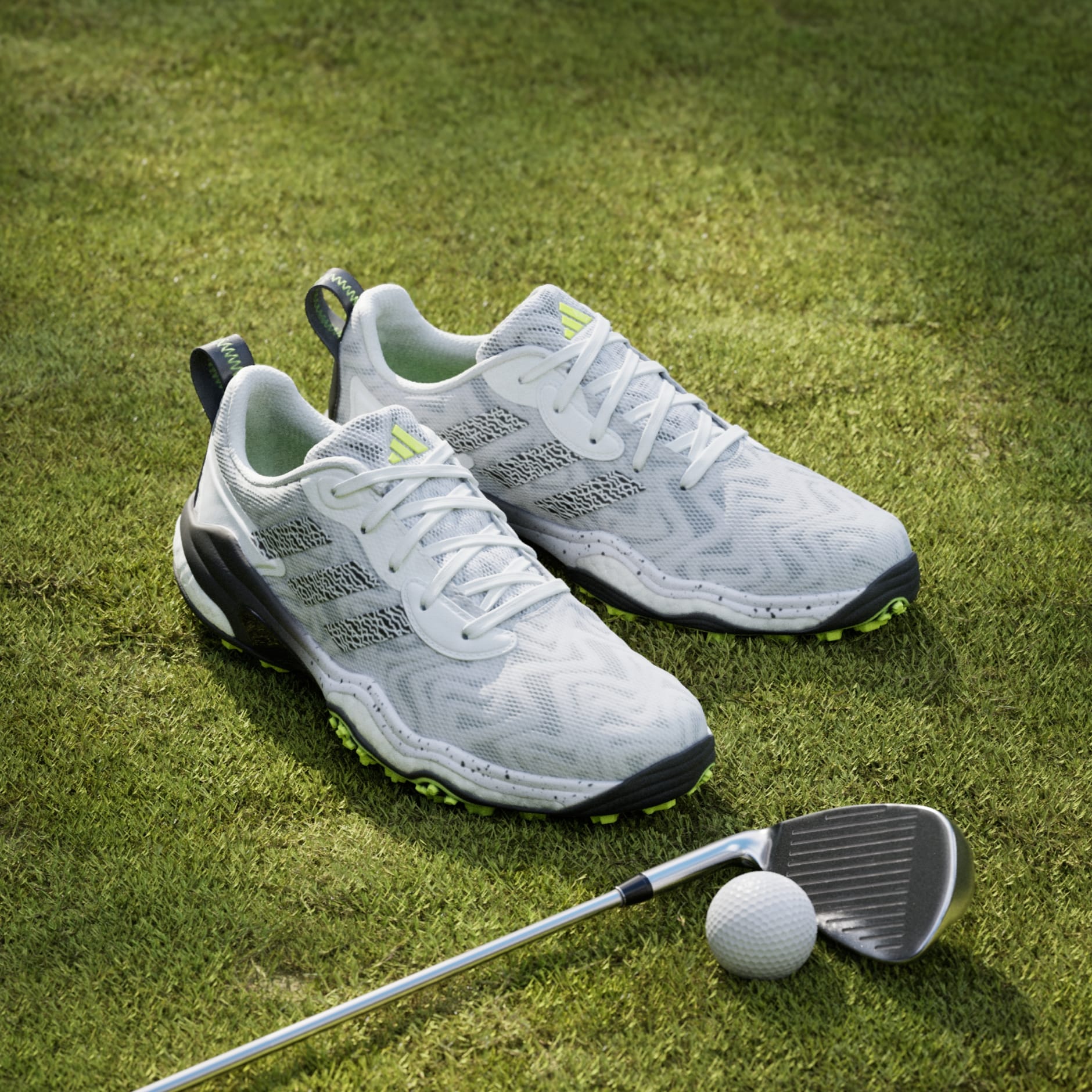
Golf shoes once looked more like dress shoes than athletic shoes. Many had leather uppers, firm soles, and replaceable metal spikes. The design focused on a stable stance for the golf swing rather than long-distance walking.
Modern golf shoes use lighter materials and more flexible soles. Many have soft traction elements instead of metal spikes. This shift supports golfers who walk 18 holes, practice on a driving range, or play on firm paths and mixed terrain.
The color stayed familiar while the construction changed. A white golf shoe today may look classic but may use a flexible upper, padded support, and molded traction. Color alone tells you little about performance.

Why old golf shoes were often two-tone
Two-tone shoes, such as white with black or brown panels, were common in older golf fashion. The darker panels helped hide mud and grass stains. The white sections kept the shoe bright and formal.
This style also made the shoe look less plain. It became part of golf’s visual identity. Players, fans, and collectors may still recognize two-tone designs as a symbol of classic golf.
For a junior golfer or new player, two-tone footwear can seem more “golf-like.” That is a style choice, not a skill need. A beginner does not need a traditional color to learn a good grip, balanced stance, or smooth tempo.
What white golf shoes do well
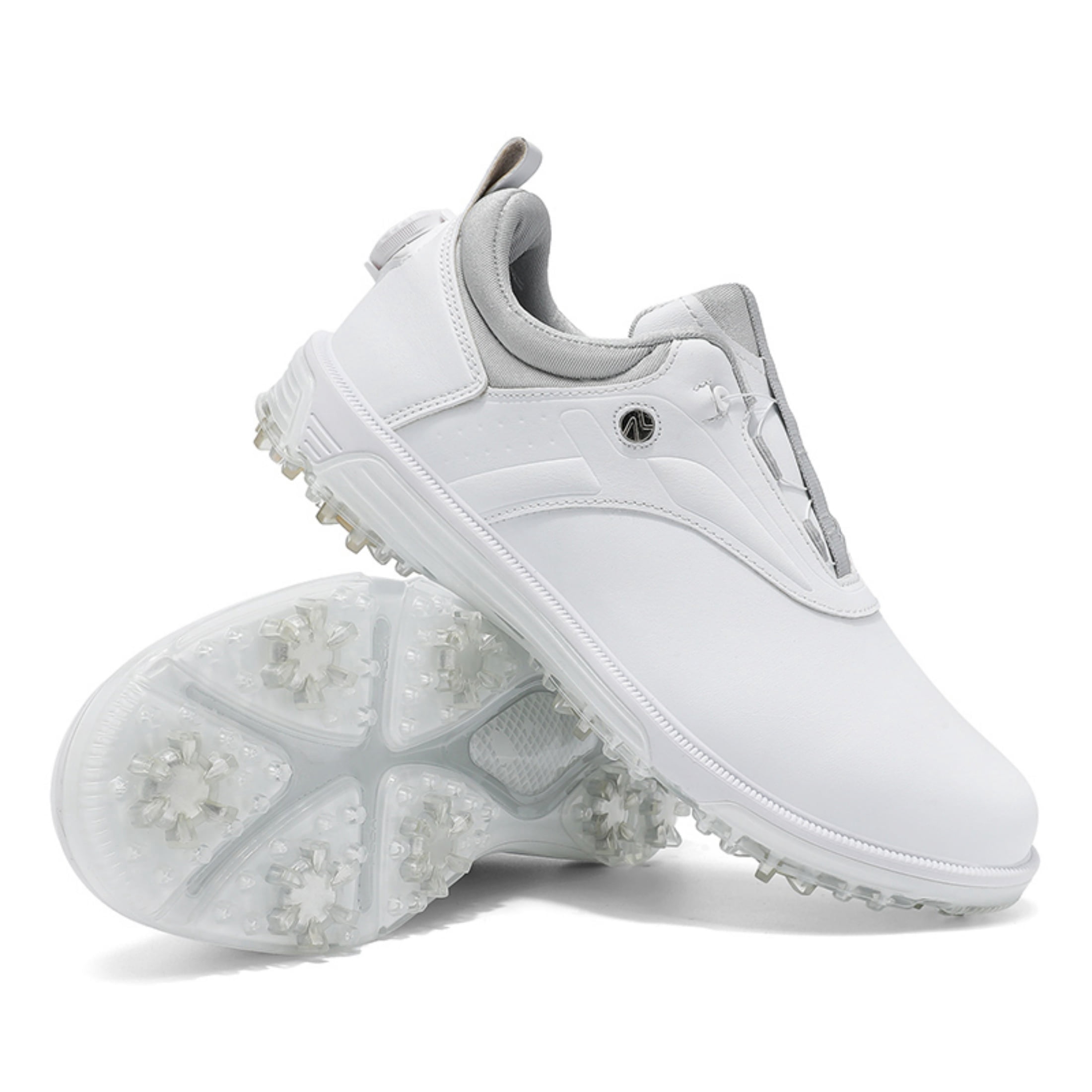
White golf shoes offer several practical benefits, but each benefit has limits. Their strongest advantages relate to heat, visibility, tradition, and appearance. They do not automatically improve your swing or lower your score.
They reflect more sunlight
White surfaces reflect more visible light than black or other dark surfaces. This can help the upper part of the shoe feel less hot in direct sun. The effect is most useful in warm climates, on exposed fairways, and during long walking rounds.
The benefit is not dramatic in every case. Thick material, poor airflow, humid weather, and hot ground can still make any shoe feel warm. A golfer with sensitive feet should focus on fit, support, and moisture control, not color alone.
This point may suit senior golfers, golfers with circulation concerns, and anyone who walks in summer heat. It does not replace hydration, sun protection, or sensible breaks.

They make grass and dirt easy to spot
White shoes show grass, soil, and wet marks quickly. That may sound like a drawback, but it can help a golfer notice when the shoes need care. Clean soles also make it easier to check whether mud is building up and affecting traction.
A muddy sole can reduce grip during the downswing. The downswing is the motion from the top of the backswing toward impact. If the foot slips, the body may lose balance, and the clubface may return to the ball in a different position.
White shoes do not create better traction. They simply make signs of dirt easier to see.
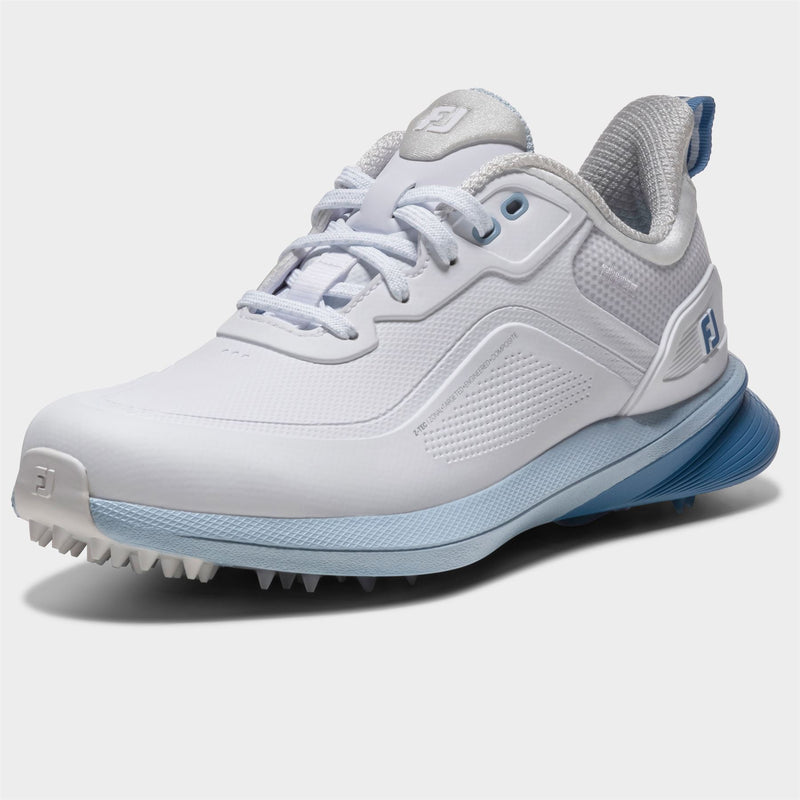
They match the traditional golf look
Golf has a strong visual culture. White shoes match common golf clothing, including light shirts, neutral trousers, and classic caps. They also stand out against green grass in photographs and broadcasts.
This matters to some golfers because clothing can affect confidence. A player who feels prepared may focus better on the first tee. Still, confidence should come from a warm-up routine, a clear game plan, and steady tempo rather than from color.

They can look neat in formal golf settings
Some private clubs, competitions, or golf resorts have dress codes. A dress code may address shirt style, shorts, hats, or footwear. White golf shoes often fit formal standards, but not always.
Rules differ by club and event. A golfer should check the local policy before arriving. The Rules of Golf do not require white shoes, but a committee may set clothing or footwear conditions for its competition or facility.

Quick facts about white golf shoes
The table below separates common beliefs from facts. This is useful for beginners who may assume that a traditional look is also a rule.
| Common belief | What is true |
|---|---|
| White golf shoes are required | No. Color is usually not required by the Rules of Golf. |
| White shoes improve a swing | No. They may support a stable stance, but color does not change technique. |
| White shoes stay cool in all weather | No. Material, airflow, humidity, and heat also matter. |
| White shoes are only for professionals | No. Any golfer may wear them if the course permits. |
| White shoes are better for walking | Not by color alone. Fit, cushioning, weight, and support matter more. |
White shoes can be a sensible choice for hot, sunny rounds and formal club settings. They are not a shortcut to better golf.
White golf shoes and the golf swing
The shoe color has no direct effect on grip, stance, posture, or impact. The shoe design can affect how well your feet stay connected to the ground.
Your feet form the base of the swing. During the backswing, pressure shifts toward the trail foot. During the downswing, pressure moves toward the lead foot. Good golf shoes can help you keep balance while this shift happens.
Traction supports a stable stance
Traction means the shoe’s ability to resist slipping. It matters most during the downswing, impact, and follow-through. Impact is the moment the club meets the ball. The follow-through is the motion after impact as the club and body finish the swing.
A golfer who slips may pull away from the ball, lose posture, or stop the body turn. These faults can lead to thin shots, topped shots, slices, or poor contact. A slice is a shot that curves sharply to the right for a right-handed golfer and to the left for a left-handed golfer.
White color does not create traction. The sole pattern and the ground conditions do.

A steady base helps posture
Posture is the way you set your spine, hips, knees, and head at address. Address is the position you take before starting the swing. A stable shoe can help you keep that posture as the club moves.
Golfers should not lock their knees or grip the ground with their toes. The feet should feel active but relaxed. A shoe that is too loose may allow the foot to move inside it. A shoe that is too stiff may limit natural motion.
This tip suits beginners and improving amateurs. More advanced players may also need different support on steep courses, wet turf, or hard links ground.

Walking comfort affects focus
A full round can involve several miles of walking. The total distance varies by course layout, pace of play, cart use, and how far a golfer walks from the ball to the cart or bag. Foot discomfort can drain attention before the final holes.
When the feet hurt, a golfer may rush a pre-shot routine or avoid walking to study a lie. A lie is the way the ball sits on the ground. That can affect club choice for chipping, pitching, bunker shots, and full swings.
Walking golfers should treat comfort as part of course management. Course management means choosing shots and targets that fit your skill, lie, weather, and risk.
Golf shoes do not fix swing faults
A stable shoe cannot correct poor tempo, an open clubface, weak balance, or a faulty grip. Grip is the way the hands hold the club. Tempo is the pace and rhythm of the swing.
If a golfer keeps falling backward, sliding toward the target, or losing balance, the cause may be technical or physical. A PGA professional can assess the swing. A golf fitness specialist can check mobility, strength, and balance.

Why golfers choose colors other than white
Modern golfers wear black, gray, brown, blue, and mixed colors. Some choose darker shoes because they hide mud. Others prefer a casual look or want footwear that works away from the course.
Color choice may also relate to weather. A golfer playing in a wet climate may value easy cleaning. A golfer playing in a dry, hot region may like a light color. A junior may simply feel more comfortable in a favorite color.
The main question is whether the shoe supports safe movement and follows the course policy.
White versus dark golf shoes
White and dark shoes can both work well. The better choice depends on climate, walking habits, cleaning habits, club dress rules, and personal comfort.
| Feature | White golf shoes | Dark golf shoes |
|---|---|---|
| Heat reflection | Often reflects more sunlight | Often absorbs more sunlight |
| Visible dirt | Shows grass and mud quickly | May hide light dirt better |
| Traditional style | Strong classic golf image | More modern or understated look |
| Formal club use | Often accepted, but check policy | Often accepted, but check policy |
| Care needs | Marks may be easier to notice | Some stains may be less visible |
Neither color is best for every golfer. A senior who walks in strong sun may value lighter footwear. A junior who plays in wet conditions may prefer a color that does not show every mark.

Spikeless and spiked designs
Spikes are traction points on the sole. Traditional metal spikes are now less common in everyday golf. Many modern golf shoes use soft molded patterns instead.
Spikeless shoes can feel natural on paths and in the clubhouse. Some designs provide strong traction on grass, but performance varies with the sole pattern and turf. Spiked designs may offer more direct traction in certain wet or hilly settings.
A golfer should check the course policy. Some facilities restrict certain sole types to protect floors or turf. Local rules and club policies may also affect footwear during events.

Waterproof and breathable construction
Waterproof shoes can help keep feet dry in morning dew or light rain. Breathable shoes may feel cooler in dry heat. No material performs perfectly in every condition.
Wet feet can cause blisters and reduce comfort. Very warm feet can also cause skin problems. Golfers who walk should pay attention to socks, moisture, and breaks.
A links course may have firm, damp ground and strong wind. A parkland course may have softer turf, trees, and more shade. An executive course may involve shorter holes and less walking, but the same need for balance remains.
How course and weather conditions change the choice
White shoes look bright on a dry fairway, but course conditions matter more than appearance. Grass can be wet from rain, dew, or irrigation. Soil can become soft, while slopes can make balance harder.
A course superintendent manages turf, drainage, mowing, and playing conditions. Good golf etiquette includes protecting that work. Avoid unnecessary damage, stay on paths when required, and follow cart signs.
Weather and ground conditions
The table shows how conditions can affect shoe needs. It is a guide, not a substitute for local advice.
| Condition | Main shoe concern | Helpful golfer response |
|---|---|---|
| Hot, sunny day | Heat and foot fatigue | Use a warm-up, hydrate, and protect skin from the sun |
| Heavy dew | Wet feet and slipping | Walk carefully and check traction |
| Rain | Mud and reduced grip | Shorten steps and keep balance centered |
| Firm links ground | Shock and foot fatigue | Use steady pace and avoid forced swings |
| Soft fairway | Mud buildup | Check soles and avoid sudden foot movement |
| Hilly course | Stability on slopes | Take wider, balanced steps and plan each lie |
Weather affects both walking and swing control. A golfer should not chase a perfect look while ignoring a slippery lie or heat risk.
Walking versus riding
Walking gives a golfer more time to observe the course. It can support fitness and help with routine, but it also adds physical demand. Riding reduces walking load but introduces cart safety concerns.
Riders should keep hands and feet inside the cart, obey signs, slow down on turns, and avoid steep or wet areas. Walkers should carry or push equipment in a way that does not strain the back, elbow, or wrist.
A senior golfer, a golfer returning from injury, or a parent managing a junior’s energy should choose the format that supports safe play. There is no skill advantage in becoming exhausted.
Safety during hot or stormy weather
Golfers should leave the course at the first warning of lightning or dangerous storms. Do not wait for a strike nearby. Seek proper shelter and follow the facility’s emergency guidance.
In heat, drink water before thirst becomes strong. Use sun protection, wear suitable clothing, and take shade breaks. Anyone with dizziness, confusion, chest pain, or severe weakness should stop playing and seek medical help.
⚠️ Safety Warning: Shoes cannot protect a golfer from lightning, heat illness, or falls. If pain develops in the back, elbow, knee, ankle, or wrist, stop and seek medical advice. A doctor should assess persistent or sharp pain.
White shoes, golf rules, and etiquette
The Rules of Golf do not generally require a golfer to wear white shoes. They focus on playing the course, counting strokes, taking relief, and following competition procedures. Clothing and footwear may still be controlled by a club, event, or tournament committee.
A local rule is a rule adopted for a specific course or competition. It may address unusual course conditions, temporary areas, or event procedures. Dress policies are often separate from the Rules of Golf.
What the Rules of Golf say about footwear
Golfers should check the latest Rules of Golf and local committee notices for current details. The USGA and R&A govern the Rules of Golf in their areas, but a club may also set entry and dress conditions.
A player should not assume that a shoe is allowed just because it is common on television. Ask the club or committee before a formal event. This is especially important for junior tournaments, school events, professional qualifiers, and match play competitions.
Match play is a format where players or sides compete hole by hole. Stroke play counts the total score for the round or event. Footwear color is not a scoring factor in either format.
📜 Check the Rules: The shoe color is usually not a Rules of Golf issue. A club dress code or event notice may still set footwear limits, so verify the current policy before play.
Etiquette matters even when color does not
Golf etiquette means showing care for other players, the course, and the pace of play. Shoes become part of etiquette when they damage turf or bring mud into shared areas.
Good habits include:
- Repairing ball marks on the green.
- Raking bunkers after a shot.
- Replacing or filling divots when allowed.
- Keeping carts away from restricted areas.
- Walking carefully near greens.
- Keeping pace with the group ahead.
- Disposing of litter, broken tees, and old balls properly.
A ball mark is a small dent caused when a ball lands on the putting green. A divot is a piece of turf removed by a club. These repairs help keep the course playable for the next group.
Metal spikes and clubhouse floors
Metal spikes can scratch floors and damage some surfaces. Many clubs restrict them in dining areas, locker rooms, or indoor spaces. Even when allowed on the course, they may not be suitable inside.
This is a facility policy issue, not a universal Rules of Golf penalty. Ask staff if you are unsure. A considerate golfer changes footwear or follows the posted policy.
Advantages and limits of white golf shoes
White shoes have a clear visual appeal, but every benefit has a tradeoff. The table below can help a golfer think beyond tradition.
| Potential advantage | Possible limit |
|---|---|
| Reflects more sunlight | May not feel cooler if the shoe is thick or poorly ventilated |
| Looks clean and classic | Dirt and grass marks are easy to see |
| Matches formal golf clothing | May not suit every personal style |
| Easy to notice during photos or broadcasts | Appearance does not improve swing mechanics |
| Can encourage regular cleaning | Cleaning takes time after wet rounds |
For beginners, the main lesson is simple: choose footwear for safe movement first. For advanced golfers, course conditions and walking demands may guide the choice more than style.
Choosing the right golf shoe color for your golfer type
There is no universal best color. A player’s age, handicap, swing speed, fitness, climate, and course type can all shape the decision.
Beginners and high-handicap golfers
A beginner should focus on a stable stance, relaxed grip, balanced finish, and comfort. White shoes may help a new golfer feel dressed for the course, but they do not replace instruction or practice.
A high-handicap player often spends more time in the rough, near bunkers, or on uneven ground. Traction and comfort may matter more than color. Beginners should also learn basic golf etiquette before worrying about a traditional look.
The learning curve depends on practice time and physical skill. A new golfer may learn basic contact in a few range sessions, but reliable play on a par-72 course takes longer. Shoe color has no effect on that timeline.
Improving amateurs
Improving golfers may notice how foot pressure affects ball flight. A right-handed player who moves too far toward the toes may lose balance. A player who slides instead of turning may struggle with contact.
At this stage, shoes with a secure base can support practice. Still, the golfer should work on setup, posture, takeaway, backswing, downswing, impact, and follow-through. Video or a lesson can reveal movement faults that footwear cannot solve.
A golfer with a handicap index in the mid to high range may benefit from simple course management. A handicap index is a measure of playing ability used to compare golfers. It considers scores and course difficulty, including the slope rating.
Senior golfers
Senior golfers may value light weight, cushioning, and steady traction. Age can affect balance, joint comfort, ankle mobility, and recovery time. A senior player should warm up and avoid playing through pain.
A short warm-up can include walking, gentle hip turns, shoulder circles, and practice swings. Avoid aggressive stretching that causes pain. Golf fitness work can support strength, balance, and mobility, but it should fit the player’s health status.
White shoes may help with heat on sunny days, but the best color is the one that supports safe walking and steady play.
Women golfers
Women golfers have the same need for traction, comfort, and course-appropriate footwear as men. Foot shape, fit, balance, and walking habits vary by person, not by gender alone.
A woman who plays in hot weather may appreciate a light upper. A woman who plays early in wet grass may value a sole that grips well. The same points apply to men, juniors, and seniors.
Avoid assuming that a certain color or shape is better because it is marketed for one group. Judge footwear by fit, movement, and the demands of the course.
Junior golfers and families
Parents should focus on safe fit, age-appropriate support, and comfort. Junior-sized equipment and clothing can help a child move naturally. Oversized shoes may cause tripping or foot movement during the swing.
Children may outgrow shoes quickly, but the shoe should still fit during play. Check that the heel does not lift and that the toes have reasonable space. A junior should also learn to walk safely, wait for a clear swing area, and respect pace of play.
👪 Parent or Beginner Note: A child does not need white shoes to look like a golfer. Encourage a steady routine, safe behavior, and enjoyment of the game. Skills grow best when the player feels calm and supported.
Left-handed and right-handed golfers
Shoe color does not change based on handedness. However, swing direction can change where pressure and turf force are felt.
A right-handed golfer usually places the left foot closer to the target. A left-handed golfer usually places the right foot closer to the target. Both players need a balanced stance and stable lead side.
If a golfer slips in one direction, a PGA professional can check whether the cause is footwear, swing motion, stance width, or ground conditions.
Common problems caused by focusing too much on color
White golf shoes can create a false sense of readiness. A golfer may look polished but still have poor traction, an unstable stance, or an unsafe walking plan.
Problem and solution guide
Use this table to separate shoe color from the issue that needs attention.
| Problem | Better focus |
|---|---|
| Feet slip during the downswing | Check sole traction, ground moisture, and swing balance |
| Feet hurt after several holes | Review fit, walking load, socks, and warm-up |
| White shoes look dirty | Clean them after play and accept normal course marks |
| Shoes feel hot | Check airflow, moisture, shade breaks, and hydration |
| Golfer loses balance on slopes | Shorten steps and use a stable stance |
| Shoe policy is unclear | Ask the club or tournament committee |
A shoe problem may be easy to solve, but recurring balance loss may point to a physical or technical issue. Do not ignore pain or repeated falls.
Why slipping happens
Slipping can result from wet grass, steep lies, loose soil, worn traction, or poor weight movement. It may also happen when the golfer swings too hard and loses balance.
The best first step is to slow the swing and make a controlled motion. Take a wider stance only when the lie calls for it. Do not spread the feet so far that the hips cannot turn.
A professional lesson is useful when the same fault appears on dry, level ground. A fitness assessment may help when balance or joint control limits movement.
Why white shoes stain
Grass contains moisture and natural pigments. Soil, fertilizer, bunker sand, and cart paths can also mark the upper. This is normal for a shoe used outdoors.
A golfer can brush off loose dirt after the round and follow the care instructions for the shoe material. Avoid harsh cleaning methods that damage the upper or sole. The course is not a showroom; small marks are part of playing.
🌿 Course Care Note: Clean shoes at the edge of the course or in a designated area. Do not wash mud into drains, greens, or planting beds. Keep course waste out of water systems.
How to care for white golf shoes
Care helps preserve comfort and traction. It also makes stains easier to manage before they dry.
After-round care
Start by removing loose grass and soil with a soft brush. Check the sole for stones, mud, and trapped plant matter. Let wet shoes dry in a ventilated place.
Do not place shoes against intense heat. High heat can damage adhesives, leather, synthetic materials, and shape. Allow enough time for the shoe to dry before the next round.
Cleaning is also a good time to inspect the sole. If traction points look worn or damaged, the shoe may not perform well on wet slopes.
Before-round inspection
A quick inspection can prevent problems. Check the sole, laces, seams, heel, and inside lining. Make sure the shoe feels secure before starting a full swing.
Wear the shoes during a short walk or warm-up. Notice pressure points. Do not wait until the 15th hole to discover that a seam rubs the heel.
This practice suits all golfers, especially seniors, juniors, and players who walk. It also helps competitive golfers avoid distractions before stroke play or match play.
Cleaning mistakes to avoid
Some golfers scrub too hard or use unsuitable chemicals. That can remove finish, weaken seams, or change the shoe’s shape. Gentle care is usually safer.
Do not share wet shoes without allowing them to dry. Moisture can create odor and skin irritation. Golfers with diabetes, reduced circulation, or foot sensitivity should take extra care and ask a medical professional about foot health.
White golf shoes in different forms of golf
The meaning of white shoes can change with the setting. A casual nine-hole round is not the same as a championship event or a junior clinic.
Driving range and practice sessions
At a driving range, traction still matters, but the ground may be level and mats may replace grass. A golfer can use the session to test stance width and balance.
Start with short shots. Move from chipping to pitching, then to full swings. Chipping is a low shot played near the green. Pitching is a higher shot that travels farther through the air.
Watch whether the feet stay stable without gripping too tightly. A good practice session builds awareness, not just speed.
Executive courses
An executive course usually has shorter holes and often includes more par-3s. Par is the expected score for a hole or course. These courses can be useful for new golfers, juniors, and players with limited time.
White shoes are not needed for an executive course. Comfortable shoes can help a golfer focus on distance control, green reading, and pace of play. Green reading means studying the slope and speed of the putting surface.
Links courses
Links courses may have firm turf, strong wind, uneven lies, and deep rough. White shoes may look traditional against the landscape, but grip and walking comfort matter more.
The ball may roll farther on firm ground. Wind can change launch and direction. A golfer should use a controlled swing and accept that the course may not reward high-risk shots.
Scrambles and social golf
A scramble is a team format in which players choose the best shot and all play from that spot. Social events may have relaxed clothing policies, but golfers should still check the venue’s rules.
Teams should keep pace and care for the course. A bright shoe may fit the event mood, but safety and comfort remain the main concerns.
How shoe choice fits the mental game
The mental game includes focus, confidence, emotional control, and decision-making. Clothing can create a small sense of routine, but it cannot replace a useful mental plan.
A golfer may use white shoes as part of a pre-round routine. That routine can signal that it is time to focus. The same effect may come from cleaning clubs, checking the weather, or rehearsing the first tee shot.
Do not judge another golfer by shoe color. A quiet player in plain shoes may have a strong process. A stylish player may still be learning basic contact. Golf rewards attention to the next shot, not assumptions about appearance.
A simple pre-round routine
This routine suits beginners and experienced golfers. Adjust the length for age, fitness, and available time.
- Walk for five minutes.
- Make gentle hip and shoulder movements.
- Hit short chip shots.
- Hit half-swings with a wedge.
- Hit a few longer shots at controlled speed.
- Practice two or three putts.
- Review the first hole and choose a safe target.
The goal is to prepare the body and mind. Do not turn warm-up shots into a speed contest.
Building confidence without relying on appearance
A golfer can build confidence through clear targets and realistic choices. Choose a club that fits the distance and lie. Aim away from severe trouble when the risk is high.
This is course management, and it suits every handicap. A beginner may choose the center of the fairway. An advanced player may choose a more exact target based on wind, slope, and pin position.
White shoes may complete a look, but a calm decision is more valuable than a polished outfit.
Frequently asked questions
Q: Are white golf shoes required?
A: No. The Rules of Golf generally do not require white shoes. A club, course, or tournament may have its own dress policy, so check the current local rules before play.
Q: Do white golf shoes improve traction?
A: No. Traction comes from the sole design, condition, and interaction with the ground. White color may look traditional, but it does not help the shoe grip.
Q: Why do golf shoes have white soles?
A: White soles became part of the classic golf look. Some soles are also designed to reduce visible marking on indoor floors, but the exact result depends on the material and design.
Q: Are white golf shoes cooler?
A: They can reflect more sunlight than dark shoes, which may reduce heat on the upper. The full effect depends on ventilation, material, humidity, and ground temperature.
Q: Are white golf shoes good for beginners?
A: They can be, if they fit well and provide safe traction. Beginners should focus first on comfort, balance, walking ability, and course policy.
Q: Should seniors wear white golf shoes?
A: Seniors can wear any permitted color. Light shoes may help in strong sun, but support, comfort, balance, and safe walking are more important.
Q: Are white golf shoes good for junior golfers?
A: They can work well, but children need the correct size and secure fit. Junior golfers should not wear oversized shoes that make walking or swinging harder.
Q: Do women need different golf shoe colors?
A: No. Shoe color is a personal choice. Women golfers should consider fit, traction, comfort, climate, and the course dress code.
Q: Can I wear regular athletic shoes for golf?
A: Some courses permit them, but regular athletic shoes may not provide enough traction on wet grass or slopes. Check the facility policy and consider the ground conditions.
Q: Are spiked shoes better than spikeless shoes?
A: Neither is always better. The best choice depends on turf, weather, walking needs, course policy, and personal comfort. Both types can support a stable stance when properly designed and maintained.
Q: Why do my feet slip during my golf swing?
A: Wet turf, poor traction, an unstable lie, excessive swing force, or poor balance may cause slipping. Slow down, check the ground, and seek professional help if the problem continues.
Q: How long does it take to get used to golf shoes?
A: Many golfers adapt after a few practice sessions, but comfort depends on fit and walking time. Test footwear during short walks and range sessions before a long round.
Q: Can white golf shoes be worn in the rain?
A: Yes, if the construction and care routine suit wet conditions. Rain can expose weak traction and cause stains, so walk carefully and dry the shoes properly afterward.
Q: Do golf shoes lower your score?
A: Shoes do not directly lower scores. They can support balance, comfort, and traction, which may help a golfer move and swing with more control.
Q: Can I wear white golf shoes in a golf cart?
A: Yes, if the course permits them. Cart users still need safe footwear, must obey cart signs, and should avoid driving over restricted turf.
Q: What should I wear on a links course?
A: Wear clothing and footwear suited to wind, firm ground, damp grass, and uneven lies. Check the course policy and prepare for changing weather.
Q: What is a good golf shoe color for hot weather?
A: White or another light color may reflect more sunlight. Still, airflow, moisture control, fit, and hydration matter more than color alone.
Q: Do white golf shoes work for putting and chipping?
A: Yes. Putting and chipping require balance and control, not a particular color. A stable stance helps, but technique remains the main factor.
Final thoughts
White golf shoes are common because they combine tradition, clean visual style, heat reflection, and a strong link to golf culture. Their popularity began with formal club clothing and grew through professional golf, warm climates, and television.
They are not required, and they are not automatically better. The right golf shoe supports a stable stance, safe traction, comfortable walking, and good course etiquette. For beginners, juniors, seniors, women, men, left-handed players, and right-handed players, the same basic rule applies: choose function before fashion, check the local policy, and care for the course.
A white shoe can complete the classic golf look. Your balance, decisions, pace of play, and respect for other golfers define your game far more.