What Is The Purpose Of Golf Shoes: Why They Matter
Golf shoes are made to help golfers stay stable, comfortable, and safe during the swing and while walking the course. Their soles help create traction without damaging the turf, while their shape and cushioning support the feet through the stance, backswing, downswing, impact, and follow-through.
A golf swing may last only a few seconds, but it places clear demands on the feet. The feet connect the golfer to the ground. They help control balance, pressure shift, posture, and rotation. If the feet slide, sink, or hurt, the rest of the swing can lose its shape.
This matters to every golfer. A beginner needs a steady base while learning grip, stance, and posture. An improving player may need reliable traction during a fast downswing. A senior golfer may value cushioning and walking comfort more than aggressive grip. Juniors, parents, women, men, left-handed players, and right-handed players all face the same basic need: stable contact with the ground.
Golf shoes are not magic swing aids. They cannot fix a slice, poor tempo, weak posture, or poor course management. They are one part of a sound setup, much like a balanced stance and a relaxed grip.

Quick answer: What is the purpose of golf shoes?
The purpose of golf shoes is to provide traction, balance, comfort, and support during a golf swing and while walking on the course. Their soles help resist slipping on grass, slopes, wet ground, and loose turf. Their upper structure helps hold the feet in place, while their cushioning can reduce foot fatigue during a long round.
Golf shoes also help protect the course when designed for proper turf use. They are different from running shoes because golf requires both forward movement and rotational force. The best choice for a golfer depends on walking habits, weather, course terrain, foot health, age, swing speed, and personal comfort.

Why golf shoes matter during the swing
Golf shoes matter because the swing starts from the ground up. Your feet create the base for your stance, and that base affects how your knees, hips, spine, shoulders, and arms move.
A stable stance does not mean locking your feet in place. Good footwork allows pressure to shift in a controlled way. During the backswing, pressure often moves toward the trail side. During the downswing, pressure moves toward the lead side. Golf shoes can help you make this move without unwanted slipping.
Traction supports balance and pressure shift
Traction is the grip between the sole and the turf. It helps the feet stay connected to the ground as the body turns.
For a right-handed golfer, the trail foot is usually the right foot and the lead foot is usually the left foot. The opposite is true for a left-handed golfer. In either case, the feet must support a smooth shift from the trail side to the lead side.
If the lead foot slides during impact, the hips may stop turning or move in the wrong direction. If the trail foot slips during the downswing, the golfer may lose balance, block the ball, pull the ball, or strike the ground behind it. Traction does not create a good swing, but it can support a good movement pattern.

A stable stance helps control the swing
The stance is the position of the feet before the shot. It includes foot spacing, toe direction, knee flex, and ball position.
A stable stance helps you keep your posture as the club moves. This is useful for every skill level, but it is especially helpful for beginners who are still learning how wide to stand and how much to bend from the hips.
A stance that is too wide can limit hip rotation. A stance that is too narrow can make balance difficult. Golf shoes do not decide the correct stance width. They simply help you hold the stance you choose.
The soles must allow rotation, not stop it
Golf shoes need grip, but too much resistance can also create problems. The feet must support rotation through the hips and body.
A golfer who feels stuck to the ground may twist the knees, hips, or lower back. This can increase strain, especially if the golfer has limited mobility or poor warm-up habits. Good traction should help control movement, not prevent natural movement.
This is important for older golfers, players returning from injury, and anyone with back, knee, ankle, or hip concerns. Comfort and safe movement should guide the choice of footwear style.

Stability matters more as swing speed rises
A faster swing can create greater force and more ground pressure. A player with a high swing speed may notice slipping more than a beginner who makes a slower, shorter motion.
This does not mean every fast swinger needs a rigid or heavy shoe. It means the footwear should match the player’s movement, balance, and course conditions. A player with a smooth tempo may need less aggressive traction than a player who moves quickly from the top of the backswing.
| Golfer or swing style | Main footwear need | Why it matters |
|---|---|---|
| Beginner with a slow tempo | Basic grip and comfort | Helps build a steady stance |
| Improving player with faster speed | Reliable lateral stability | Supports the downswing and follow-through |
| Senior or limited-mobility golfer | Balanced grip and cushioning | Supports comfort without restricting movement |
The key point is simple: traction should match movement. More grip is not always better if it limits natural rotation.
How golf shoes protect comfort while walking
A golf course can cover several miles, even when a golfer uses a cart. Walking may include hills, uneven lies, wet grass, hard paths, and long distances between the tee box and green.
Foot comfort affects focus. A golfer with sore feet may rush a pre-shot routine, change posture, or lose patience. This can affect putting, chipping, and course management as much as the full swing.
Cushioning reduces repeated impact
Cushioning helps soften the repeated impact of walking. It can matter on firm fairways, cart paths, and hard tee areas.
Cushioning does not replace proper foot support. A soft feel may be comfortable at first but unstable for a golfer who needs more structure. The best balance depends on foot shape, walking habits, body weight, age, and past injuries.
For seniors and golfers with sensitive feet, comfort may be the main purpose of golf shoes. For juniors, a good fit and natural movement matter more than heavy support. Children are still growing, so footwear should not restrict the toes or force the foot into an awkward position.
Water resistance helps in wet conditions
Morning dew, rain, wet rough, and damp fairways can make the course slippery. Water-resistant materials can help keep the feet more comfortable in these conditions.
Wet feet may also lead to blisters and irritation. However, no shoe can keep every foot dry in every storm. Socks, walking pace, course drainage, and weather all matter.
On a links course, wind and rain may change conditions quickly. On a parkland course, tree cover may keep some areas damp. A course superintendent manages drainage and turf health, but golfers still need to walk with care and repair damage.
Breathability matters in heat
Hot weather creates a different challenge. Feet sweat, and heat can increase rubbing and fatigue.
A breathable shoe may help air move around the foot. This can suit golfers in warm climates or players who walk nine or 18 holes. However, more ventilation may offer less protection in heavy rain. The right balance depends on the season and local weather.
Golfers should also drink water, use sun protection, and take breaks when needed. Heat can affect decision-making and swing tempo before a player notices the first signs of fatigue.
Walking comfort can support the mental game
The mental game includes focus, patience, decision-making, and emotional control. Foot pain can become a quiet distraction that grows during a round.
A comfortable golfer may find it easier to follow a pre-shot routine. That routine may include checking the target, taking a breath, making a practice swing, and setting the clubface. This is useful for beginners and experienced players alike.
Golf shoes cannot create focus. They can remove one small source of distraction. In golf, small sources of comfort often matter over four or five hours.
| Course condition | Footwear demand | Useful golfer focus |
|---|---|---|
| Wet morning grass | Grip and water resistance | Walk slowly on slopes |
| Hot, dry course | Breathability and comfort | Hydrate and protect skin |
| Hilly course | Cushioning and secure fit | Shorten the stride |
| Firm links course | Comfort and controlled traction | Watch for uneven lies |
| Soft, muddy ground | Turf-friendly sole and balance | Avoid sudden turns |
Conditions change from hole to hole. A shoe that feels fine on a dry practice range may feel different on wet rough or a sloped fairway.

The main types of golf shoe soles
Golf shoe soles usually fall into three broad groups: spiked, spikeless, and traditional metal-spiked designs. Each type uses a different way to create traction.
The purpose of these designs is similar, but the feel and turf effect can differ. Local course policy also matters. A club may limit certain sole types to protect greens, tees, and other playing surfaces.
Spiked golf shoes
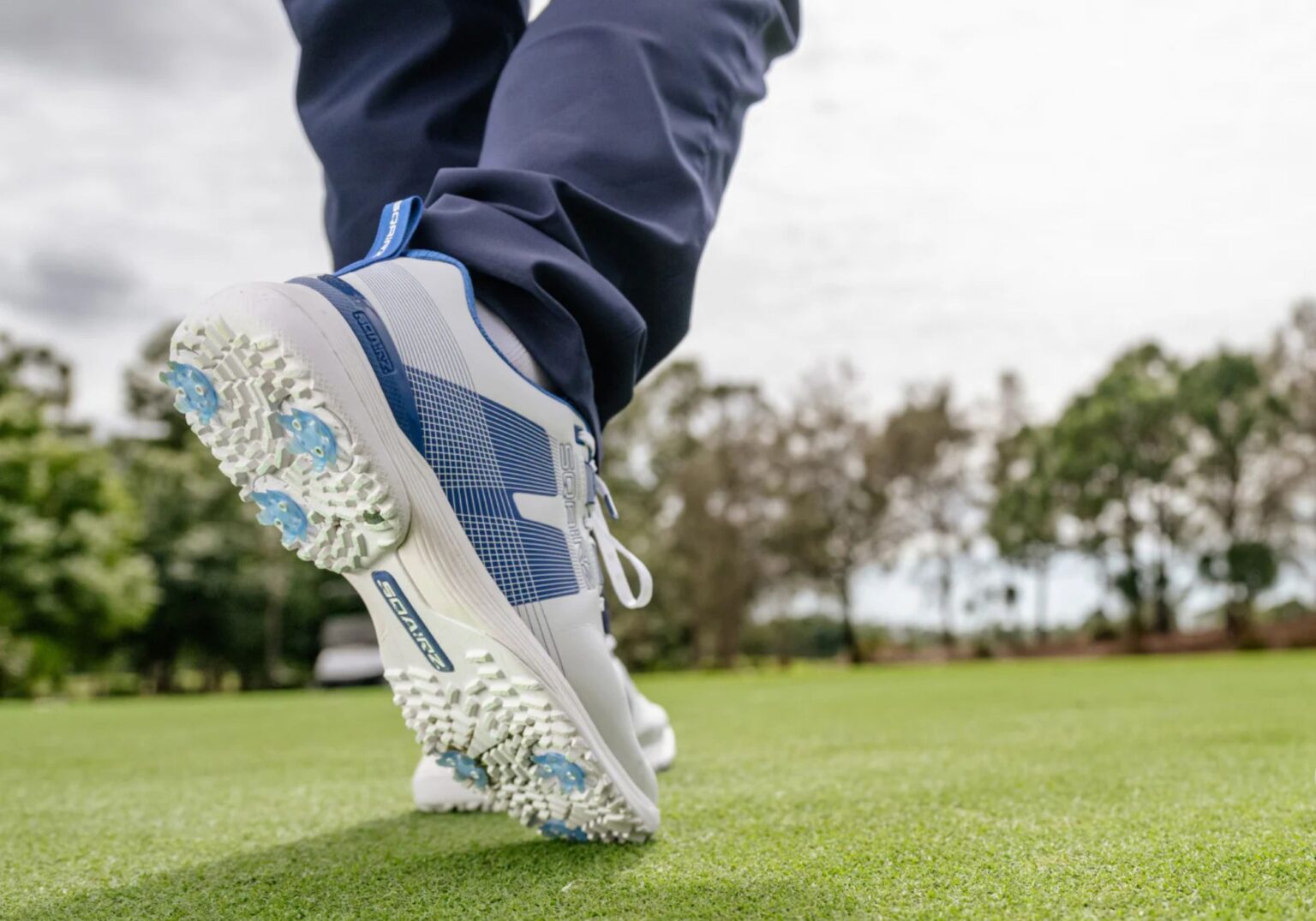
Spiked shoes use replaceable or fixed cleats that press into the turf. They often provide strong grip on wet or sloped ground.
They may suit golfers who play in damp climates, walk hilly courses, or create strong rotational force during the swing. The extra traction can also help a player who often loses balance during the downswing.
Spikes can feel less natural on paved areas or inside a clubhouse. They may also need more care because grass, mud, and sand can collect around the cleats.
Spikeless golf shoes
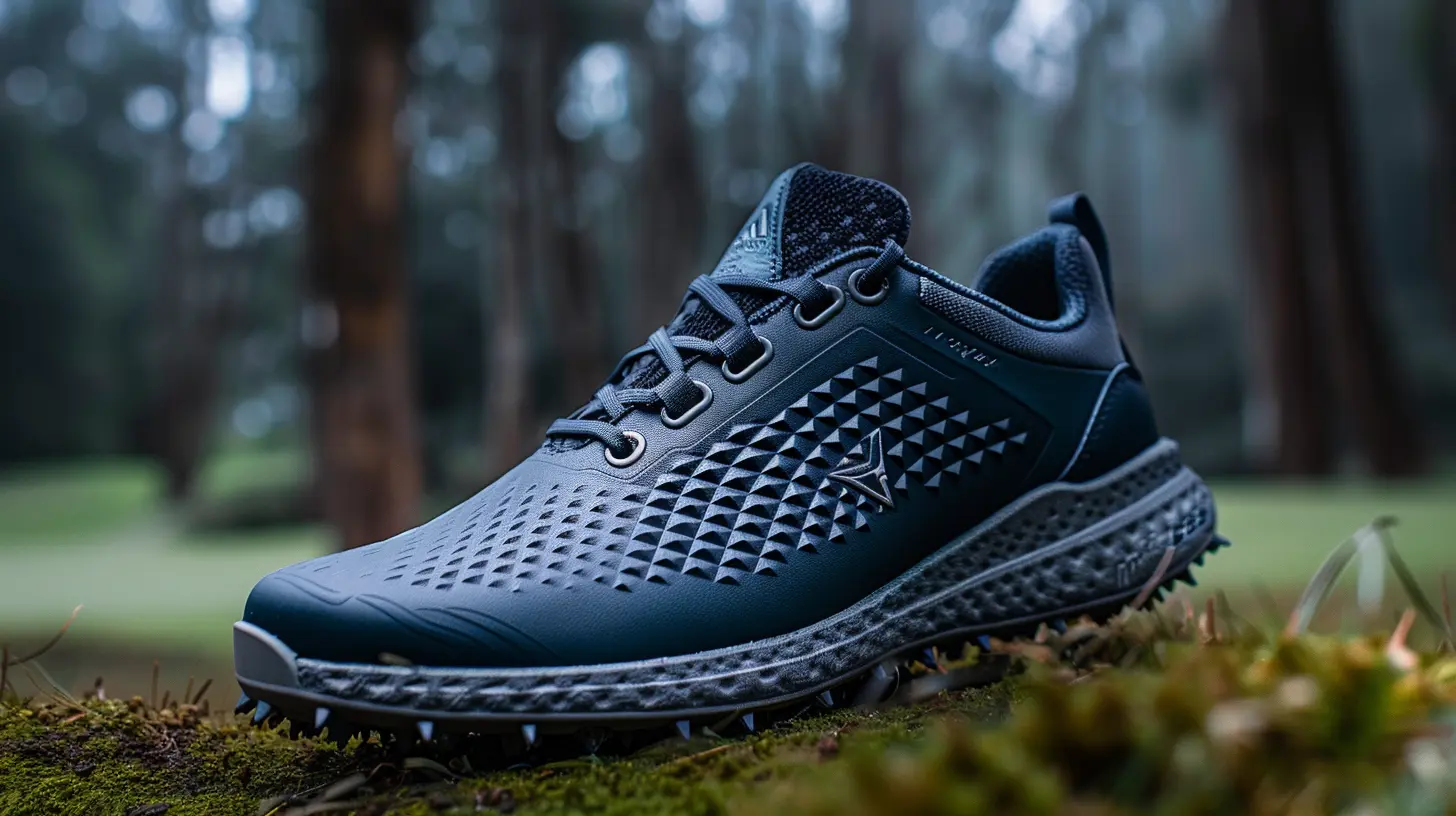
Spikeless shoes use molded patterns, rubber elements, or small traction points across the sole. They can feel more like casual walking shoes and may work well for golfers who move between the course, practice area, and clubhouse.
They often suit beginners, casual players, juniors, and golfers who value walking comfort. They can also suit dry courses with gentle slopes.
Spikeless does not mean traction-free. The amount of grip depends on the sole pattern, turf condition, moisture, and how the golfer moves. A spikeless sole may feel less secure on wet hills for some players.
Traditional metal spikes
Traditional metal spikes were once common, but many courses restrict or prohibit them. They can mark greens and damage turf when a player turns sharply.
The rules of golf do not automatically require one type of shoe. Course policy is separate from the Rules of Golf. Always check the current policy of the club, event, or tournament committee before playing.
| Sole type | Main strength | Main limitation |
|---|---|---|
| Spiked | Strong traction on slopes and wet turf | May feel less comfortable off the course |
| Spikeless | Versatile walking feel | May offer less grip in some wet conditions |
| Traditional metal spike | Very strong turf grip | Often limited by course policy and turf concerns |
No sole type suits every golfer. Weather, walking, foot health, and local rules should guide the decision.

Golf shoes and different course conditions
The same pair of golf shoes can feel very different on different courses. Turf firmness, slope, moisture, sand, grass length, and temperature all affect traction.
A golfer should think about the course, not just the shoe. Course management starts before the first tee shot. It includes planning for lies, weather, walking distance, and safety.
Wet grass and morning dew
Wet grass reduces friction between the sole and the turf. Slipping becomes more likely on slopes and during the downswing.
A golfer can reduce risk by taking shorter steps, avoiding sudden turns, and checking the lie before swinging. Good shoes help, but no sole removes all risk on wet ground.
When the ground is soft, avoid dragging your feet. Dragging can tear turf and leave marks that affect other players.
Slopes and uneven lies
Uneven lies place different demands on each foot. A ball below your feet may require more balance. A ball above your feet may change the swing path and posture.
Shoes with stable soles can help, but the golfer must still adjust. On a sidehill lie, use a shorter swing, keep the balance centered, and select a club that supports control rather than force.
This advice suits beginners and high-handicap players. Skilled players may use a fuller shot, but only when the lie and balance allow it.
Sand and bunkers
Bunker shots require a stable base. The golfer often opens the stance and clubface, then enters the sand behind the ball.
A stable sole can help the feet stay planted while the golfer turns. However, golfers should not dig excessive holes with their feet. Enter the bunker from the low side when possible, and rake the sand after the shot.
Firm or hard ground
Firm ground may feel fast under the feet. It can increase shock during walking and make slipping more likely when the sole has poor contact.
A golfer may need a slower tempo and a shorter finish on hard, uneven lies. This is a course-management choice, not a footwear trick.

Links courses and coastal wind
A links course often has firm turf, rolling ground, natural slopes, and strong wind. The ball may bounce more, and the player may face tight lies.
On this type of course, balance and walking comfort can be more important than a heavily aggressive sole. A golfer must stay aware of wind, stance, and uneven ground.
Executive courses and short courses
An executive course usually has shorter holes and may involve more pitching, chipping, and putting than a full-length course. Players may walk often and move quickly between shots.
Comfortable, turf-friendly footwear can suit beginners and families playing a shorter round. Juniors may also find the shorter layout less tiring, but they still need a warm-up and safe space around each shot.
| Course type | Likely demand | Strategy note |
|---|---|---|
| Hilly parkland | Grip and walking support | Keep steps short on slopes |
| Firm links | Balance and controlled traction | Expect bounces and uneven lies |
| Executive course | Comfort and easy walking | Focus on short-game practice |
| Wet municipal course | Water resistance and grip | Protect turf and avoid sharp turns |
Course type changes the demands on the feet. It also changes the best pace, club selection, and level of caution.

Golf shoes versus regular athletic shoes
Regular athletic shoes can work for some practice settings, but they may not provide the same balance of grip, rotation, and turf care.
A running shoe is built for forward motion. Golf includes forward motion, but it also includes rotation, sidehill stances, and repeated standing on grass. A tennis shoe may offer side-to-side support, but its sole may not suit turf or bunker conditions.
For a beginner, regular athletic shoes may be reasonable during a first lesson or a short range session if the facility allows them. On a course, golf-specific footwear can provide a more secure and consistent base.
When regular shoes may be enough
Regular shoes may be enough for:
- A first visit to a driving range
- Indoor golf practice
- A short putting session
- Dry, flat practice areas
- A casual lesson where the facility permits them
They may not suit wet grass, steep slopes, soft turf, or a full walking round. They may also leave deeper marks or offer poor traction when the body rotates.
Why golf shoes are not the same as hiking shoes
Hiking shoes are designed for uneven trails and forward walking. They may have deep tread and firm ankle support.
That design can feel too heavy or restrictive during a golf swing. Golfers need traction, but they also need to rotate the hips and shift pressure smoothly. A heavy trail sole may not give the same feel as a golf sole.
| Footwear | Designed mainly for | Golf limitation |
|---|---|---|
| Running shoe | Forward running | Limited rotational and turf support |
| Tennis shoe | Court movement | Sole may not suit grass or bunkers |
| Hiking shoe | Trails and uneven ground | May restrict swing rotation |
| Golf shoe | Walking and swinging on turf | Still depends on fit and conditions |
The main difference between golf shoes and athletic shoes is the balance between turf grip and swing movement.

What golf shoes do for different golfers
Golfers do not all move the same way. Age, strength, flexibility, handicap, swing speed, and playing habits change the need for support.
Beginners and high-handicap players
Beginners often benefit from comfort and a stable feel. Early lessons focus on grip, stance, posture, ball position, and basic swing motion.
A beginner does not need to chase maximum traction. A steady, comfortable sole may make it easier to learn balance. The golfer should focus on a repeatable setup rather than blaming footwear for missed shots.
A high-handicap player may lose balance because of a poor finish or rushed downswing. Golf shoes can help the feet stay secure, but a PGA professional can identify the real swing cause.
Improving amateurs
An improving player may notice footwear more clearly. As swing speed and body rotation improve, slipping may become more obvious.
This golfer should observe when the slip occurs. Does the trail foot move in the downswing? Does the lead foot slide at impact? Does the problem happen only on wet grass? These details are more useful than simply choosing a more aggressive sole.
Seniors
Senior golfers may value comfort, cushioning, stability, and easy walking. Foot, knee, hip, and back health may matter more than maximum grip.
A senior golfer should avoid footwear that feels stiff, heavy, or difficult to walk in. A stable but flexible feel can support natural movement. Anyone with ongoing pain should speak with a doctor or qualified health professional.
Women golfers
Women golfers may have different foot shapes, widths, strength levels, and mobility needs. The purpose of golf shoes is the same, but the fit must match the individual foot.
Women who walk often may place a high value on comfort. Women with narrow heels or wider forefeet should pay close attention to movement inside the shoe. A poor fit can cause blisters and change the stance.
Junior golfers
Junior golfers need light, comfortable footwear that supports natural movement. Heavy shoes can add fatigue during a long practice session.
Parents should check that toes can move freely and that the child can walk, squat, and swing without discomfort. Juniors also need clear safety rules: never swing near another person, stay behind the hitting line, and watch for carts.
Players with high swing speed
A high-speed player may need more stable contact with the turf. Still, the player should not choose traction without considering knee and hip movement.
A fast swing with poor balance may create more stress than a smooth swing at the same speed. A PGA professional can assess the player’s footwork, tempo, and pressure shift.
| Golfer | Main priority | What to watch |
|---|---|---|
| Beginner | Comfort and balance | Do not expect shoes to fix swing faults |
| Senior | Cushioning and secure fit | Avoid pain and restricted movement |
| Junior | Light feel and natural motion | Check growth, fit, and safety |
| Fast swinger | Stable traction | Keep rotation smooth |
| Frequent walker | Comfort and moisture control | Monitor blisters and fatigue |
The right purpose depends on the golfer. There is no single ideal design for every player.
How shoes affect stance, posture, and balance
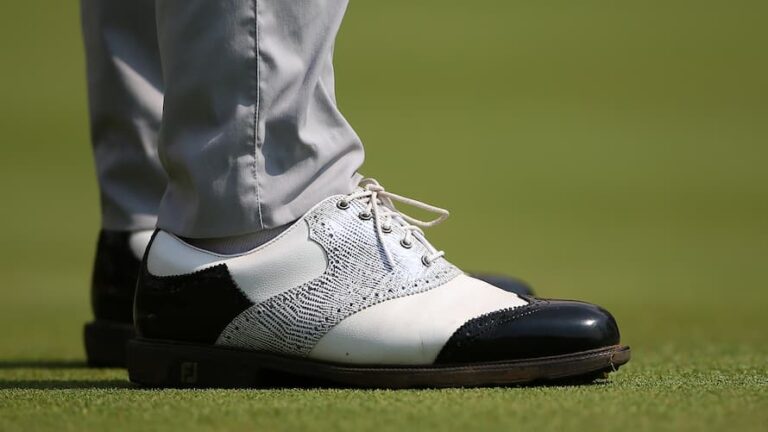
Golf shoes support the stance, but the golfer still controls foot placement. The feet should usually point slightly outward, with the toes relaxed rather than clenched.
Posture begins with a bend from the hips. The knees stay soft, and the spine remains relatively neutral. A shoe that changes how the foot sits can affect this posture, especially if the sole is very thick or uneven.
Ball position and foot pressure
Ball position changes with the club. A wedge may be near the center of the stance. A driver is often played farther forward, closer to the lead heel.
The feet must support these changes without leaning too far toward the toes or heels. If the golfer feels pressure on the outer edge of one foot, the stance or posture may need review.
Ground force and the swing
Ground force is the pressure the body applies into the ground and receives back during movement. Golfers use it to support rotation and speed.
The feet do not simply stay still. They press, release, and shift. Golf shoes can help manage contact, but they cannot replace strength, mobility, or sound technique.
A golf fitness program may include balance work, calf strength, hip mobility, and core control. These areas can support a more stable swing for beginners, seniors, and improving players.
Why shoes cannot correct a slice
A slice is a shot that curves strongly to the right for a right-handed golfer and to the left for a left-handed golfer. It often relates to the clubface and swing path, not the footwear.
If the feet slide, the swing may change. But changing shoes without checking grip, alignment, takeaway, downswing, impact, and follow-through rarely addresses the main cause.
💡 Pro Tip: Film your feet and lower body during a practice swing from face-on and down-the-line views. If the feet move, ask whether the movement is part of a sound swing or a loss of balance. A PGA professional can help separate the two.
Golf shoes and golf rules
The Rules of Golf generally do not require players to wear golf shoes. A golfer may use other footwear if it is safe, suitable for the course, and allowed by the facility.
The course or competition committee may set policies about shoes, spikes, and turf protection. These policies can differ between clubs, public courses, junior events, and tournaments.
Spikes and local course policy
A club may restrict metal spikes to protect greens and other surfaces. A course may also require shoes with soles that do not damage turf.
This is usually a local policy or condition of play, not a general requirement that applies everywhere. Check the club’s current policy before a round.
Unusual footwear and equipment rules
The Rules of Golf regulate clubs, balls, and certain equipment use. Shoes are not a normal source of performance advantage in the same way as a club or distance-measuring device.
Still, unusual equipment or attachments may raise questions if they are designed to help alignment, stance, or swing. If a shoe has an unusual feature, ask the tournament committee before using it in competition.
📜 Check the Rules: Rules and local policies can change. Check the latest Rules of Golf, the committee’s conditions of competition, and the course’s footwear policy before a tournament or club event.
Course care remains every golfer’s duty
Golfers should protect the course regardless of footwear. Repair ball marks, replace or fill divots when asked, rake bunkers, and avoid unnecessary damage around greens.
Keep pace of play, stay alert for other groups, and dispose of litter, broken tees, and old balls properly. Good golf etiquette is part of responsible footwear use because poor footwork can damage turf.

Common golf shoe mistakes
Many footwear problems come from poor fit, poor timing, or poor expectations. A golfer may blame the shoe when the main issue is stance, weather, or swing balance.
Wearing shoes that are too loose
A loose shoe allows the foot to move inside the upper. This can create rubbing, blisters, and an unstable stance.
The heel should not lift excessively during a normal step. The toes should have room to move. The foot should feel secure without pressure across the top.
Choosing maximum traction for every situation
More grip is not always safer. A sole that feels too aggressive may make natural rotation harder.
This can be a problem for golfers with limited hip mobility or knee concerns. The goal is controlled movement, not a locked foot.
Ignoring wet-weather changes
A shoe may work well on dry turf but feel less secure in rain. Golfers should adjust their walking speed and swing length when conditions change.
Do not assume that traction removes the risk of slipping. Wet wooden bridges, cart paths, and steep slopes still require care.
Using golf shoes as a swing fix
Golf shoes can support balance. They cannot correct a slice, hook, shank, poor impact position, or weak putting stroke.
A shank occurs when the ball strikes near the club’s hosel and shoots sharply to the side. It usually needs a technical and setup review, not a shoe change.
Wearing the wrong shoe for the practice area
Some facilities restrict spikes on indoor surfaces or certain practice areas. Follow the posted rule.
For a simple putting session, comfort may matter more than aggressive traction. For a wet grass lesson, turf grip may matter more.
| Mistake | Possible result | Better approach |
|---|---|---|
| Loose fit | Blisters and foot movement | Use a secure, comfortable fit |
| Too much traction | Restricted rotation | Choose controlled grip |
| Ignoring rain | Slips and poor balance | Shorten steps and swings |
| Blaming shoes for a fault | Delayed improvement | Check technique with a pro |
| Breaking facility policy | Turf or safety issue | Follow local rules |
Small footwear errors can become large distractions during a long round.

A simple golf shoe care and safety routine
Care affects comfort, turf protection, and the useful life of footwear. It also reduces the chance that mud or debris changes the sole’s grip.
Before the round
Before playing, check:
- The sole for mud, stones, or damaged traction points
- The upper for tears or loose areas
- The fit while standing and walking
- The weather and course conditions
- The club’s footwear policy
- Your warm-up plan and water supply
A short warm-up can include walking, ankle circles, gentle hip turns, and practice swings. Avoid forceful stretches when the body is cold.
During the round
Walk with short steps on wet slopes. Stay aware of cart paths, bridges, bunker edges, and exposed roots.
Do not swing until the area is clear. Keep a safe distance from other players. Cart users should follow cart paths, slow down near slopes, and avoid sharp turns on soft turf.
After the round
Remove grass and mud from the sole. Let wet footwear dry in a ventilated place. Avoid high heat that may damage materials or change the shape.
Check your feet for hot spots or blisters. A small sore area can become a larger problem during the next round.
⚠️ Safety Warning: Stop playing and leave the course at the first warning of lightning. Golf shoes do not protect against lightning. In heat, drink water, seek shade, and stop if you feel dizzy, weak, confused, or ill.
When golf shoes may not suit a golfer
Golf shoes may not suit every practice setting or every foot. A player with severe foot pain, a recent injury, or a medical condition should ask a doctor or physical therapist for guidance.
A golfer who cannot walk comfortably should not force a full round. A shorter session, a cart, or a professional assessment may be more suitable.
Some golfers also need time to adjust to a new sole pattern. The first session should be short and easy. Do not test unfamiliar footwear for the first time during a major tournament or a long hilly round.
A player with recurring slips should review the sole, course conditions, stance, and swing. If slipping continues in normal conditions, a PGA professional can check balance and movement. Persistent pain needs medical advice, not just different footwear.
How to choose the right golf shoe features
The right features depend on the golfer’s needs. A beginner may need comfort and stable grip. A senior may need cushioning and easy walking. A competitive player may need traction that matches swing speed and course conditions.
Do not judge footwear by appearance alone. The useful questions are simple: Can you walk comfortably? Can you rotate without feeling stuck? Does the sole suit the turf? Does the shoe follow local policy?
Fit and foot movement
The shoe should hold the foot without squeezing it. The heel should stay reasonably secure, and the toes should not hit the front during a downhill walk.
Try walking, bending the knees, and making a slow practice swing. A shoe can feel fine while seated but uncomfortable when the body moves.
Flexibility and structure
A flexible shoe may suit a casual player or golfer who values walking comfort. A more structured shoe may suit a player who needs added stability.
The right amount of structure depends on foot strength, balance, swing speed, and medical history. Very stiff footwear may not suit a golfer with limited ankle movement.
Weight
Heavy footwear can create fatigue over 18 holes. Light footwear may feel easier to walk in but may offer less structure for some golfers.
Juniors and older adults often notice weight more quickly. A golfer should be able to walk and swing without feeling that the feet are working too hard.
| Feature | May suit | Limitation to consider |
|---|---|---|
| Strong traction | Wet or hilly courses | May feel restrictive |
| Flexible sole | Walkers and casual players | May feel less stable |
| Cushioning | Seniors and long walkers | Too much softness may reduce feel |
| Breathable upper | Hot climates | May offer less rain protection |
| Water resistance | Damp courses | May feel warmer in heat |
There is no universal best feature. The best match depends on the golfer and the course.
A practical test for comfort and stability
A simple test can reveal more than a label. Use the same movements you make on the course.
Stand in your normal stance. Bend slightly from the hips, make a slow backswing, shift pressure toward the lead side, and hold the finish. Then walk, climb a few steps, and turn gently on a flat surface.
Look for these signs:
- The heel stays secure
- The toes can move
- The foot does not slide inside the shoe
- The sole does not block natural rotation
- The arch and heel do not develop sharp pain
- The shoe feels stable on both feet
- The fit remains comfortable after several minutes
This test suits beginners who are unsure what golf shoes should feel like. It also helps experienced players compare comfort in a clear way.
Do not perform sharp turns on polished floors or wet surfaces. Safety comes first.
Golf shoes and the short game
Golf footwear matters on more than full swings. Chipping, pitching, bunker shots, and putting also require balance.
A chip shot uses a shorter swing and often a narrow stance. A pitch shot uses more wrist hinge and a higher flight. Both require stable contact with the ground.
Bunker shots place the golfer on loose sand. A secure stance helps the player control the club’s entry point. Putting requires less body motion, but a steady stance still helps with green reading and distance control.
Chipping and pitching
For a short shot, the feet may be closer together. The golfer still needs enough grip to avoid sliding, especially on damp grass.
A golfer who leans too far toward the toes may lose balance. Keep the weight centered and let the club swing with a calm tempo.
Bunker shots
In a bunker, dig the feet in slightly for stability. Do not over-dig or damage the sand more than needed. After the shot, rake the area and leave the bunker ready for the next player.
Putting
Putting uses a quiet lower body. Shoes with a stable base can help the golfer remain still while the shoulders rock the putter.
However, putting success depends on green reading, face control, speed, and routine. Shoes play a small supporting role.
Golf shoes and fitness
Golf fitness can improve the physical qualities that footwear alone cannot provide. Balance, ankle strength, hip mobility, and core control all help the golfer use the ground well.
A simple routine may include:
- Gentle walking for five minutes
- Ankle circles and calf raises
- Hip turns with the arms across the chest
- Single-leg balance near a support
- Slow practice swings
- Short putts before full shots
This routine suits beginners, seniors, and players returning from a break. A fitter player may add strength work under qualified guidance.
Stop if you feel sharp pain. Back, elbow, wrist, knee, and ankle pain should not be ignored. See a doctor for persistent or worsening pain.
Golf shoes and improvement over time
Golfers often ask how long it takes to improve balance or swing consistency. There is no fixed timeline.
A beginner may feel more stable after a few practice sessions, while another player may need weeks of regular work. Improvement depends on practice quality, physical condition, instruction, sleep, stress, and the number of rounds played.
Changing footwear may remove a comfort problem, but it does not replace practice. A good plan includes range work, putting, short-game practice, and play on the course.
A useful practice split
A new golfer may spend:
- 20 minutes on grip, stance, and posture
- 20 minutes on short chips and pitches
- 15 minutes on putting speed
- 20 minutes on half swings
- A few minutes reviewing balance and finish
An improving golfer may add target practice, uneven lies, bunker shots, and course-management decisions. The best practice depends on the current weakness.
Track the right signs
Do not track only the score. Notice:
- Whether balance improves
- Whether contact feels more centered
- Whether the finish is controlled
- Whether foot movement is planned or accidental
- Whether pain or fatigue appears
- Whether decisions become calmer
A handicap index reflects scoring ability, but it does not explain every footwear need. A low-handicap golfer may still need comfort, and a beginner may still play a long walking round.
FAQs about the purpose of golf shoes
Q: Do you need golf shoes to play golf?
A: Not always. Many beginners can take a first lesson or visit a driving range in suitable athletic shoes if the facility allows them. Golf shoes can provide better turf traction, walking comfort, and swing stability, especially on wet, hilly, or uneven courses.
Q: Can golf shoes improve your golf swing?
A: Golf shoes can support a stable base, but they do not correct swing faults. A slice, hook, shank, poor contact, or weak finish usually needs a setup or technique review. A PGA professional can help identify the cause.
Q: Are spikeless golf shoes good for beginners?
A: Spikeless shoes can suit beginners who play on dry courses and value easy walking. They still need to provide a secure feel. Beginners should check local course policy and avoid assuming that spikeless means suitable for every wet or steep condition.
Q: Are spiked golf shoes better in the rain?
A: Spiked shoes may provide strong traction in wet grass, but performance depends on the sole, turf, slope, and walking style. Spikes do not remove the risk of slipping. Walk carefully and shorten your swing when balance is difficult.
Q: Can seniors wear spiked golf shoes?
A: Seniors can wear them if the grip, flexibility, and comfort suit their feet and movement. A senior golfer should avoid footwear that feels heavy, painful, or restrictive. Cushioning and easy walking may be more important than maximum traction.
Q: What golf shoes are best for women golfers?
A: The best golf shoe for a woman is one that fits her foot shape, supports her walking needs, and allows natural swing movement. Foot width, heel security, comfort, weather, and course type matter more than gender labels alone.
Q: What should parents look for in junior golf shoes?
A: Parents should look for a comfortable fit, free toe movement, a secure heel, and a sole that suits the course. The shoe should not feel heavy or restrict the child’s ankle. Juniors also need lessons in swing-area safety and cart awareness.
Q: Do left-handed golfers need different golf shoes?
A: No. Left- and right-handed golfers use the same general types of golf shoes. The key needs are traction, balance, comfort, and natural rotation. The lead and trail feet simply switch roles.
Q: Can golf shoes help prevent slipping?
A: They can reduce the chance of slipping by improving contact with the turf. They cannot prevent every slip, especially on wet bridges, steep slopes, mud, or smooth cart paths. Good judgment and careful walking still matter.
Q: Are golf shoes required by the Rules of Golf?
A: The Rules of Golf generally do not require golf shoes. A course or competition committee may set its own footwear policy. Check the latest Rules of Golf and the local conditions before playing.
Q: Can I wear golf shoes on a driving range?
A: Usually, but the facility may have its own rules. Some indoor areas, mats, or clubhouse spaces may restrict certain soles. Follow posted instructions and protect the practice surface.
Q: How tight should golf shoes feel?
A: They should feel secure without squeezing the toes or causing pressure points. The heel should not lift excessively, and the foot should not slide inside during a practice swing. Comfort should remain steady while walking.
Q: Why do my feet hurt after golf?
A: Possible causes include poor fit, long walking distance, hard ground, weak foot strength, blisters, or an underlying condition. Rest, check the fit, and avoid playing through persistent pain. See a doctor if pain continues or worsens.
Q: Do golf shoes help with bunker shots?
A: They can help create a stable stance in sand. The golfer must still set the feet correctly, control the clubface, and enter the sand at the proper point. Rake the bunker after the shot.
Q: How long does it take to get used to golf shoes?
A: Many golfers adjust after a short practice session, but comfort varies. Walk and make slow swings before a full round. Do not use unfamiliar footwear for the first time during a long, hilly event.
Q: Can I wear golf shoes in the clubhouse?
A: That depends on the club’s dress and footwear policy. Some facilities allow clean, turf-friendly shoes, while others ask players to change before entering certain areas. Check the local rule.
Q: Do golf shoes help putting?
A: They can support a steady stance during putting. Putting results still depend on face control, speed, green reading, and a consistent routine. Footwear is a small part of putting performance.
Final thoughts
The purpose of golf shoes is to help the golfer connect safely and comfortably with the ground. They support traction, balance, pressure shift, walking comfort, and turf care. These benefits matter during the full swing, short game, putting, and movement around the course.
The best choice depends on the golfer, not a label. Beginners need comfort and a steady base. Improving players may need traction that matches swing speed and course conditions. Seniors may value cushioning and easy walking. Juniors need light footwear and safe movement. Men and women, left-handed and right-handed players, face the same core needs.
Golf shoes cannot replace a sound grip, stance, posture, tempo, or lesson. They are a foundation, not a shortcut. Match the footwear to your feet, your swing, the weather, the course, and the local rules. Then walk with care, protect the turf, and let good technique do the rest.