What Do The Bottom Of Golf Shoes Look Like: Sole Guide
If you turn over a pair of golf shoes, the bottom looks very different from a running shoe or casual sneaker. Most golf shoes have a flat, wide sole with molded lugs, small traction bumps, or replaceable spikes. These parts help your feet stay stable while you swing, walk across grass, and move through wet or uneven ground.
The exact design depends on the shoe type, course conditions, player, and rules. A shoe made for a dry parkland course may have shallow rubber nubs. A shoe made for soft ground may have deeper traction. Spiked shoes show clear cleats, while spikeless shoes often look like athletic shoes with many small patterns across the sole.

Quick Answer: What Does the Bottom of a Golf Shoe Look Like?
The bottom of a golf shoe usually has a broad sole with traction arranged under the heel, arch, and forefoot. Spiked golf shoes have visible cleats that grip the turf. Spikeless golf shoes have molded rubber lugs, small teeth, or raised discs built into the sole. Both designs aim to support balance, grip, and smooth weight transfer during the golf swing.
The sole should not look like a smooth street shoe. It should have enough texture to resist slipping but should not tear or mark the putting green.

The Basic Shape of a Golf Shoe Sole
A golf shoe sole is built to support a stable stance and controlled movement. It is often wider than the upper part of the shoe, especially near the heel and forefoot. This shape gives the golfer a firm base during the backswing, downswing, impact, and follow-through.
Most soles have three main visual areas:
- The heel section
- The middle or arch section
- The forefoot and toe section
The heel often has a broad traction pattern. The arch may have less direct contact with the turf. The forefoot usually contains several traction points because it helps the player push into the ground and rotate through the shot.
Golf shoes may also have a slightly raised heel. This does not mean they are high-heeled shoes. The change is small and helps create a posture that suits a golf stance. Good golf posture allows the player to bend from the hips while keeping balance.

The Heel Area
The heel section usually looks wide and stable. It may contain several rubber lugs, a circular traction ring, or one or more spike mounts. A wide heel can help resist side-to-side movement during the backswing.
A golfer who sways away from the target may notice pressure move toward the outside of the back foot. A well-designed heel area can support the foot, but it cannot correct a poor swing pattern. A PGA professional can help a player who has trouble with balance or weight shift.
The Arch and Midsole
The middle of the sole often has a smoother area than the heel and toe. Some designs show a firm bridge under the arch. Others leave small gaps between traction pieces to reduce weight and improve flexibility.
This area supports walking comfort. That matters on a walking round, especially on a hilly course, a links course, or a long championship layout. A golfer who rides in a cart may care less about sole flexibility, but still needs stable support during the swing.
The Forefoot and Toe
The forefoot often contains the most visible traction. It helps the golfer push against the ground and turn through impact. Right-handed players may place strong pressure on the inside of the right foot during the downswing, then move pressure toward the left side. Left-handed players reverse those patterns.
The toe area may have short lugs that point in different directions. This pattern can help resist slipping during rotation. It also helps when a golfer walks up a slope or steps from the fairway into the rough.
Spiked Golf Shoe Soles
Spiked golf shoes have separate cleats attached to the sole. From below, you can usually see several round or triangular spike mounts. The cleats may be soft plastic or another approved material. They are not usually sharp metal points on modern courses.
The number and layout of spikes vary. Many designs place traction under the heel, along the outside edge, and beneath the ball of the foot. This arrangement supports the areas that take pressure during the swing.
Spiked shoes often provide strong grip in soft or wet ground. They can suit golfers who play early in the morning, in rainy regions, or on courses with soft turf. They may also help players with high swing speeds who create large ground forces.
What the Spikes Look Like
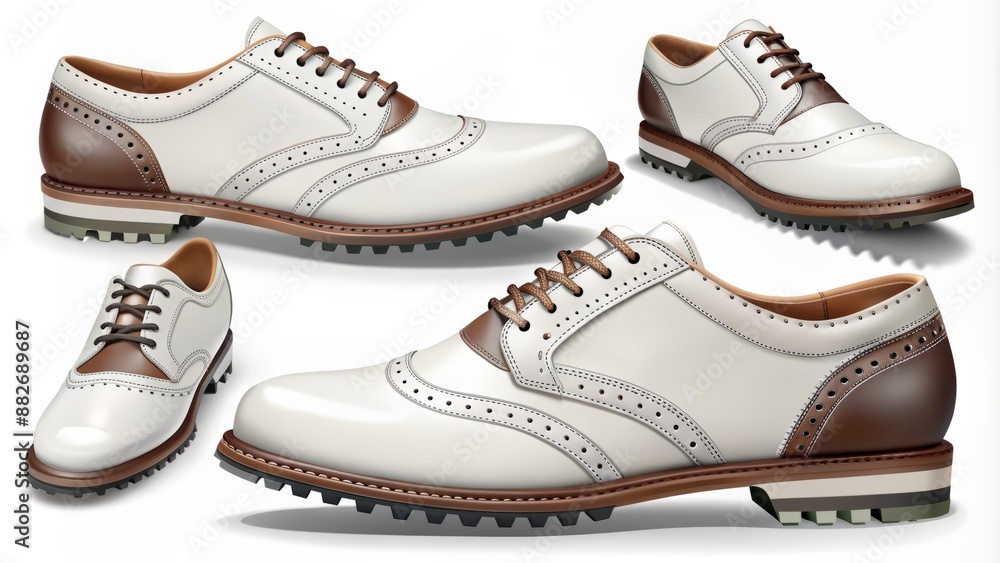
The spikes usually appear as small raised cleats that extend below the main sole. Some have a star-like shape. Others have several short arms or fins. The base of each spike connects to a mount built into the sole.
The cleats should sit evenly. If one is worn down or missing, the foot may feel uneven. That can affect stance comfort and balance. It may also increase the chance of damaging delicate turf.
| Sole feature | What you see from below | Main purpose |
|---|---|---|
| Spike mount | Round or shaped socket | Holds the cleat |
| Cleat | Raised plastic traction piece | Grips soft ground |
| Main sole | Flat platform around the mounts | Supports the foot |
| Flex area | Grooves or gaps | Helps the shoe bend |
Spiked soles often look more mechanical than spikeless soles. They show clear points of contact rather than one continuous rubber pattern.
How Spikes Grip the Turf
Spikes grip by pressing into the surface layer of the ground. They can help limit unwanted sliding when the player rotates. They do not lock the foot in place. The player still needs good stance width, posture, grip pressure, and tempo.
Too much grip can also be a concern. If the shoe holds the foot while the body rotates poorly, stress may move toward the knee, hip, back, ankle, or foot. A golfer with pain should stop and seek medical advice. A PGA professional can also help check swing movement, but a professional is not a substitute for a doctor.
📜 Check the Rules: Golf equipment and footwear must follow the Rules of Golf and any local conditions. Check the latest Rules of Golf and your local committee before playing in a formal event.
When Spiked Soles May Suit a Golfer
Spiked golf shoes may suit:
- Golfers who play in wet climates
- Players who walk on steep or soft courses
- Golfers with a fast swing or strong ground force
- Players who want a clear sense of traction
- Juniors moving from casual shoes to formal golf footwear
They may not suit a golfer who mainly plays on firm paths or courses that limit certain sole types. Local course policy matters.
Spikeless Golf Shoe Soles
Spikeless golf shoes do not have separate cleats. Instead, the sole includes molded traction. The bottom may show dozens of small rubber nubs, raised circles, short bars, hexagons, or directional lugs.
At first glance, a spikeless golf shoe can look like a trainer. The key difference is the shape and placement of the traction. Golf soles often spread grip across a wider area and use patterns that support rotation.
Spikeless designs can be flexible and comfortable for walking. They can suit beginners who want one pair of shoes for practice and casual golf settings. They can also suit seniors or players who prefer a softer, more natural feel under the foot.

Common Spikeless Sole Patterns
There is no single standard appearance. Common patterns include:
- Small round nubs
- Short rectangular lugs
- Triangular teeth
- Circular pods
- Wavy rubber channels
- A mix of firm and flexible zones
The pattern should provide grip in more than one direction. Golfers do not move only forward. They turn, shift pressure, walk sideways on slopes, and step into sand or rough.
| Spikeless pattern | Visual appearance | Typical function |
|---|---|---|
| Round nubs | Small raised circles | Light, flexible traction |
| Directional lugs | Short bars or teeth | Helps resist sliding |
| Traction pods | Larger separated shapes | Supports pressure zones |
| Wavy channels | Curved raised lines | Adds flex and surface contact |
A shallow pattern may feel comfortable on firm ground. A deeper pattern may offer more grip in damp grass. No sole works equally well on every surface.
How Spikeless Soles Work
Spikeless traction works by increasing contact with the ground. The rubber pattern presses into the grass and resists movement. Some soles use firm edges for grip. Others use flexible rubber that bends around small changes in the turf.
A spikeless sole may lose grip when packed with mud. Cleaning the sole after a wet round can restore the shape of the lugs. Never scrape mud with a sharp object that could cut the rubber.
🌿 Course Care Note: Brush grass and mud from your sole before walking onto a green. Clean shoes help protect the putting surface and support good golf etiquette.
Spiked and Spikeless Soles Compared
The main difference between spiked and spikeless golf shoes is how each sole creates traction. Spiked shoes use separate cleats. Spikeless shoes use built-in rubber shapes.
Neither type is automatically best for every golfer. Course type, weather, walking habits, swing motion, age, fitness, and local rules all matter.
| Factor | Spiked sole | Spikeless sole |
|---|---|---|
| Traction design | Separate cleats | Molded rubber pattern |
| Best ground feel | Often strong and direct | Often smooth and flexible |
| Wet turf | Can suit soft ground | Depends on lug depth and rubber |
| Walking comfort | Varies by design | Often flexible |
| Green protection | Must use approved cleats | Usually gentle when clean |
A golfer with a high handicap may benefit from either type. The sole cannot replace sound fundamentals. A beginner should focus first on a balanced stance, relaxed grip, stable posture, and simple tempo.
How Golf Shoe Soles Support the Swing
The bottom of a golf shoe matters because the swing starts at the ground. Your feet create the base for your knees, hips, torso, arms, and club. If your feet slide, your body may change position before impact.
The sole supports several parts of the swing:
- Balance during the address position
- Pressure shift in the backswing
- Ground force in the downswing
- Stability at impact
- Rotation during the follow-through
This does not mean the feet should stay frozen. Good players move pressure in a controlled way. The back foot may accept pressure during the backswing. The lead foot then supports the body as the player turns through impact.

Golf Stance and Sole Contact
A stance is the position of your feet before the shot. For a full iron shot, the feet often sit about shoulder-width apart. A driver stance may be slightly wider. A chip may use a narrower stance.
The sole should sit evenly on the ground. If the outer edge lifts, your stance may be too tilted. If the inner edge carries all the pressure, your knees or hips may be out of position.
A simple check is to feel pressure in the middle of each foot. Avoid standing only on the heels or toes. This applies to right-handed and left-handed golfers.
Foot Pressure and Weight Shift
Pressure is not exactly the same as body weight. Pressure describes how you push into the ground. During a golf swing, pressure can move before the body visibly shifts.
A player who loses balance may have trouble with timing. The issue could come from stance width, posture, backswing length, downswing speed, or poor foot contact. Changing shoes alone may not solve it.
Traction and Swing Speed
Swing speed can affect how much force reaches the ground. A player with a fast swing may create more pressure during the downswing. A player with a slower swing may value walking comfort and easy movement more than maximum traction.
These are general patterns, not strict rules. A senior golfer can have a fast swing. A junior golfer can create strong ground force. Women and men may need similar traction features when their swing motion and course conditions are similar.
💡 Pro Tip: Make a slow practice swing and notice where pressure moves under each foot. If your feet slide, first check your balance and tempo. Do not assume the sole is the only cause.
Sole Designs for Different Course Conditions
The bottom of a golf shoe should match the ground as much as possible. A dry, firm course needs a different balance of grip and flexibility than a wet, soft course.
Course type also matters. A links course may have firm, windy ground with slopes. A parkland course may have soft fairways after rain. An executive course may have shorter holes but still include wet grass, bunkers, and uneven lies.
| Course condition | Sole feature that can help | Main concern |
|---|---|---|
| Wet fairway | Deeper traction or cleats | Mud buildup |
| Firm summer turf | Flexible, shallow lugs | Excess movement |
| Hilly course | Broad heel and side grip | Walking fatigue |
| Sandy area | Stable, covered traction | Sand entering grooves |
| Soft morning grass | Strong ground contact | Turf damage |
The best choice depends on the full setting. A sole that grips well in soft ground may feel too aggressive on hard surfaces. A flexible sole that feels great on dry grass may not give enough traction in rain.
Fairway and Rough
Fairway grass is usually shorter and more even than rough. The sole may make broad contact with the fairway. In rough, grass can wrap around traction parts and reduce contact with the ground.
A golfer should expect different footing from the tee box, fairway, rough, and approach area. Before swinging, check whether the lead foot or trail foot sits on a slope. Adjust stance and club choice before trying to create extra force.
Bunkers and Sand
Sand can fill the spaces in a sole. A sole with deep grooves may hold more sand than a smoother one. After leaving a bunker, tap or brush the shoe away from the putting surface.
Golf etiquette also requires golfers to rake the bunker when local practice or course policy calls for it. Leave the sand ready for the next player.
Putting Greens
The putting green is the most sensitive turf area on the course. Cleats or lugs should not leave deep marks. Dragging your feet can damage the surface even if the shoes are approved.
Walk normally. Do not twist sharply in place. Avoid standing near another golfer’s ball line, and repair ball marks when appropriate.
Golf Shoe Soles for Beginners, Improving Players, and Juniors
The right sole depends on the golfer’s needs, not just skill level. A beginner may need comfort and basic stability. An improving player may want a better sense of pressure and rotation. A junior may need light footwear that supports safe movement.

Beginners and High-Handicap Golfers
Beginners often focus on the club, ball, and swing path. The feet receive less attention. Yet a stable base can make it easier to learn posture and balance.
A beginner should look at the sole and ask:
- Does it have visible traction?
- Does the foot feel stable at address?
- Can the player walk safely on grass?
- Does the sole stay comfortable for nine or eighteen holes?
- Does the course allow that sole type?
A new golfer does not need advanced traction technology to learn. Basic grip, stance, posture, and tempo matter more. Improvement can take weeks, months, or longer. Practice quality matters more than rushing.
Improving Amateurs
An improving player may notice how the sole affects ground feel. During drills, the player can sense pressure under the heel, ball of the foot, and outside edge.
This golfer may benefit from filming a swing from the front and side. Look for a stable address, controlled pressure shift, and balanced finish. If the body slides or the feet spin, ask a PGA professional to assess the movement.
Seniors
Senior golfers may value walking comfort, stable support, and reduced strain. A flexible sole can feel easier during long rounds. A secure heel can help on slopes or uneven lies.
A senior golfer with foot, knee, hip, back, or balance issues should not use footwear to mask pain. Talk with a doctor or qualified health professional. A golf fitness specialist can help with mobility and strength after medical guidance.
Women Golfers
Women golfers may use the same sole principles as men. Traction needs relate to swing motion, course conditions, walking habits, and comfort. Foot shape and fit vary among all golfers, so gender alone does not determine the best sole pattern.
A woman who plays in wet conditions may need more grip. A woman who walks on firm terrain may value flexibility. The same is true for men, juniors, and seniors.
Junior Golfers
Junior golfers need safe, light, well-fitting footwear. A sole should have enough traction for grass but should not make the foot feel stiff or trapped.
Parents should check the child’s movement, stance, and comfort. Shoes that are too large can let the foot slide inside. Shoes that are too small may create pressure and change posture. Junior equipment should match the child’s size and strength.
👪 Parent or Beginner Note: Watch the player walk, stop, and make a slow practice swing. If the foot rolls, slips, or causes discomfort, pause the session. Learning golf should feel active and safe, not painful.
How to Read the Bottom of a Golf Shoe
You can learn a lot by looking at the sole. Start at the heel, then move toward the arch, forefoot, and toe. Check whether the traction is even and whether the rubber or cleats show damage.

| What to inspect | Healthy sign | Warning sign |
|---|---|---|
| Heel | Even wear and firm contact | Smooth patch or loose cleat |
| Forefoot | Clear traction edges | Flattened or torn lugs |
| Center sole | No major cracks | Deep split or separation |
| Spike mounts | Secure and level | Missing or tilted cleat |
| Grooves | Open and clean | Packed mud or stones |
A worn sole may change how the foot meets the turf. It can also make walking less secure. If the sole is separating from the upper, stop using it on the course until it is safe.
Signs of Wear
Common wear signs include:
- Smooth areas under the heel
- Rounded traction lugs
- Cracks in the rubber
- Loose spike mounts
- Missing cleats
- Uneven wear on one side
- Separation between sole and upper
Uneven wear can reflect walking habits, foot shape, or movement. It does not prove a swing fault. A coach or health professional can help interpret recurring problems.
Cleaning the Sole
Clean the bottom after each wet or muddy round. Use a soft brush and water as suitable for the shoe material. Remove stones from grooves before they harden.
Do not use harsh tools that cut rubber or loosen cleat mounts. Let the shoe dry in a ventilated place. Excess heat can damage adhesives and materials.
Common Mistakes Golfers Make With Shoe Soles
A golf shoe sole can support your game, but many players use it poorly. The most common errors involve ignoring wear, choosing the wrong traction for the ground, or expecting shoes to fix a swing.

| Mistake | Why it causes trouble | Better approach |
|---|---|---|
| Playing with worn lugs | Reduces grip and balance | Inspect the sole often |
| Ignoring mud | Blocks traction patterns | Brush the sole clean |
| Dragging feet on greens | Can mark delicate turf | Lift and place each step |
| Using street shoes | May slip on grass | Use approved golf footwear |
| Blaming shoes for a slice | Misses swing causes | Check path, face, and balance |
| Wearing loose footwear | Foot moves inside the shoe | Seek secure, safe support |
A slice is a shot that curves strongly to the right for a right-handed player and to the left for a left-handed player. It usually relates to club-face and swing-path factors, not just the sole.
Mistake: Standing Too Rigidly
Some golfers think strong traction means they should lock the feet into the ground. That can make the swing stiff. The feet should remain connected to the ground while the knees, hips, and torso move freely.
Use a smooth tempo. A fast backswing or rushed downswing can disturb balance even when the sole grips well.
Mistake: Ignoring Different Lies
A flat driving range mat does not feel like wet rough or a sidehill lie. Practice should include changes in stance and balance. The sole may behave differently on each surface.
For safety, do not make a full swing near another player. Maintain swing-area clearance and follow range rules.
Simple Checks and Practice Drills
The bottom of the shoe affects feel, but you can test balance without hitting a ball. These drills suit beginners and improving players. They can also help juniors learn stable movement under adult supervision.

The Foot-Pressure Drill
Stand in your golf posture with feet about shoulder-width apart. Hold a club across your chest. Make a slow backswing and notice pressure under the trail foot.
Then turn through to a balanced finish. A right-handed player should feel pressure move toward the lead side. A left-handed player uses the opposite pattern.
Repeat five times without a ball. Stop if you feel pain or lose control.
The Finish-Hold Drill
Make a half swing with a short club. Hold the finish for three seconds. Keep the chest facing the target and the body balanced over the lead side.
This drill suits beginners who fall backward or step away after impact. It also helps improving players who rush the follow-through.
The Three-Surface Walk
Walk slowly across a safe area of grass, a firm path, and a gentle slope. Notice how the sole feels. Do not run or swing while testing the surfaces.
This is a walking and balance check, not a performance test. It may help seniors and new golfers understand how ground changes affect footing.
| Skill level | Drill | Repetitions |
|---|---|---|
| Beginner | Finish hold | 5 slow swings |
| Improving amateur | Foot-pressure drill | 8 controlled swings |
| Junior | Balance walk | 3 short passes |
| Advanced player | Half swing on varied lies | 10 controlled swings |
Use slow motion first. Speed comes later. A player with pain should stop and seek medical advice.
Golf Shoes, Walking, and Course Etiquette
A round may involve several miles of walking. The sole affects comfort, but pace, posture, hydration, and preparation matter too. Walk at a steady speed and avoid sudden turns on steep ground.
Keep pace of play. Plan the next shot while it is safe. Park a cart in a sensible place, use cart paths when required, and follow local cart rules.
Course care is part of good golf:
- Repair divots when asked by local practice
- Repair ball marks on the green
- Rake bunkers
- Avoid dragging feet through sensitive turf
- Keep carts away from restricted areas
- Dispose of broken tees and litter properly
- Respect players who are preparing to swing

⚠️ Safety Warning: Stop play and leave the course at the first warning of lightning. Drink water in heat, use sun protection, warm up before swinging, and seek medical care for persistent back, elbow, wrist, foot, or knee pain.
Walking Versus Riding
Walking places more demand on the sole and the body. Hills, soft ground, and long distances can increase fatigue. A tired golfer may lose posture and tempo before the round ends.
Riding reduces walking demand but does not remove the need for stable footing. You still walk from the cart to the ball and swing from uneven lies. Cart safety matters too. Keep hands and feet inside the cart and follow course instructions.
Rules and Local Policies About Golf Shoe Soles
The Rules of Golf govern equipment and playing conduct, but clubs and events may also set local policies. Some facilities restrict certain cleats to protect greens. Tournament committees may publish conditions of competition.
The Rules of Golf can change through official updates. Check the latest Rules of Golf, local rules, and the club or tournament committee before a formal round.
Golf shoe soles generally matter under three rule-related ideas:
- The footwear should be suitable for the course.
- The sole should not create an unfair equipment advantage.
- The player must follow local restrictions.
Most modern golf shoes are designed for ordinary play. Problems often arise from local policies, unusual cleats, or deliberate actions that damage the course.
| Situation | What to do | Why it matters |
|---|---|---|
| Unsure about cleat rules | Ask the committee | Local policies can vary |
| Playing a competition | Read conditions of competition | Extra requirements may apply |
| Standing near a ball line | Move carefully | Protects the green |
| Unsure about damage | Ask a rules official | Avoids guessing |
Do not rely on an old rule summary. Official sources and the local committee control the current answer.
Pros and Cons of Common Sole Styles
Each sole style has strengths and limits. The best match depends on the golfer, the course, and the weather.
| Sole style | Advantages | Limitations |
|---|---|---|
| Spiked | Strong grip on soft ground | May feel less flexible |
| Spikeless lugs | Flexible and easy to walk in | Grip may vary in wet conditions |
| Shallow pattern | Light and comfortable | Can struggle in deep mud |
| Deep pattern | More bite in soft turf | May hold mud and feel firm |
These points are general. Sole materials, shape, and construction vary. A golfer should judge the full design and local conditions rather than one feature alone.
Frequently Asked Questions
Q: Do all golf shoes have spikes on the bottom?
A: No. Spiked golf shoes have separate cleats. Spikeless golf shoes use molded rubber lugs, nubs, pods, or teeth. Both types are made to support traction during the golf swing and while walking on grass.
Q: Can I wear running shoes for golf?
A: Running shoes may feel comfortable, but many have patterns made for forward movement rather than golf rotation. They may slip on wet grass. They may also lack the broad, stable base found on golf footwear. Follow the course dress and footwear policy.
Q: What should the bottom of a golf shoe look like when it is worn out?
A: Look for smooth traction areas, rounded lugs, cracks, missing cleats, loose mounts, or sole separation. Uneven wear can also reduce stability. A damaged sole may be unsafe on slopes or wet grass.
Q: Are spikeless golf shoes good for beginners?
A: They can be. Spikeless shoes often offer a flexible walking feel and enough traction for many courses. Beginners should still check local rules and choose footwear that feels stable during stance, swing, and walking.
Q: Are spiked golf shoes better in the rain?
A: They can provide strong grip on soft, wet turf, but the result depends on the cleat design and ground condition. A spikeless sole with deep traction may also work well. Mud can reduce the grip of either type.
Q: Do golf shoe soles change swing mechanics?
A: They can change how stable the feet feel, but they do not replace instruction. Swing mechanics depend on grip, stance, posture, backswing, downswing, impact, tempo, and follow-through. A recurring fault needs a proper assessment.
Q: What type of sole suits senior golfers?
A: Many senior golfers value stable support, walking comfort, and easy flex. The best choice depends on balance, foot health, course terrain, and weather. Anyone with pain or balance concerns should seek medical advice.
Q: What sole should junior golfers use?
A: Junior golfers need a safe, light, secure sole with enough traction for grass. The footwear should match the child’s size and movement. Parents should watch for slipping, rubbing, toe pressure, or changes in posture.
Q: Do women’s and men’s golf shoe soles look different?
A: They can differ in shape and sizing, but the main sole principles are the same. Traction should suit the player’s swing, walking habits, course, and weather. Gender alone does not decide the right sole pattern.
Q: Can golf shoe spikes damage a putting green?
A: Approved modern cleats are designed to reduce damage, but dragging or twisting can still mark turf. Walk normally, avoid sharp turns, and follow local course rules. Repair ball marks and respect other players’ putting lines.
Q: How often should I inspect a golf shoe sole?
A: Check before each round, especially after playing in wet or rocky areas. Look for loose cleats, packed mud, cracks, and worn lugs. Regular checks take little time and can reveal safety problems early.
Q: Can a golf shoe help stop a slice?
A: A stable sole can help you maintain balance, but it cannot directly correct a slice. A slice often involves the club face, swing path, or impact conditions. A PGA professional can identify the cause and guide a suitable change.
Q: How long does it take to get used to a new sole pattern?
A: Many golfers adjust after a few practice swings and a short walk. The time varies with the sole shape, foot comfort, and playing surface. Test balance at the driving range before relying on new footwear in competition.
Q: Do golf shoes matter on an executive course?
A: Yes. An executive course may be short, but it still has grass, slopes, wet areas, bunkers, and greens. Stable footwear can support safe movement and proper golf etiquette. Follow the course’s footwear policy.
Q: Can I play match play or stroke play in spikeless shoes?
A: Usually, the shoe type itself is not the format issue. Match play and stroke play have different scoring and rule structures, while shoe requirements come from equipment rules and local conditions. Check the latest official rules and event terms.
Final Thoughts
The bottom of a golf shoe usually looks like a broad platform filled with traction. Spiked soles show separate cleats. Spikeless soles show molded rubber lugs, nubs, or pods. Both designs aim to keep the feet stable while allowing the body to move through the swing.
Look at more than appearance. Consider the heel, arch, forefoot, wear pattern, course surface, weather, walking distance, and local rules. For beginners, stable footing can support sound setup habits. For improving golfers, it can help reveal pressure and balance. For seniors and juniors, comfort and safety deserve equal attention.
A good sole is one part of a larger foundation. Pair it with a balanced stance, sound posture, controlled tempo, safe movement, and respect for the course.