Graphite iron shafts add distance and dampen vibration; steel iron shafts give tighter control and clearer feedback.
I have worked with golfers, club fitters, and OEM specs for years. I write on steel vs graphite iron shafts from hands-on tests, fitting sessions, and club builds. This guide breaks down material, feel, playability, and who should pick each option. Read on for clear advice, real testing tips, and fitting steps to help you choose the right shaft for your irons.
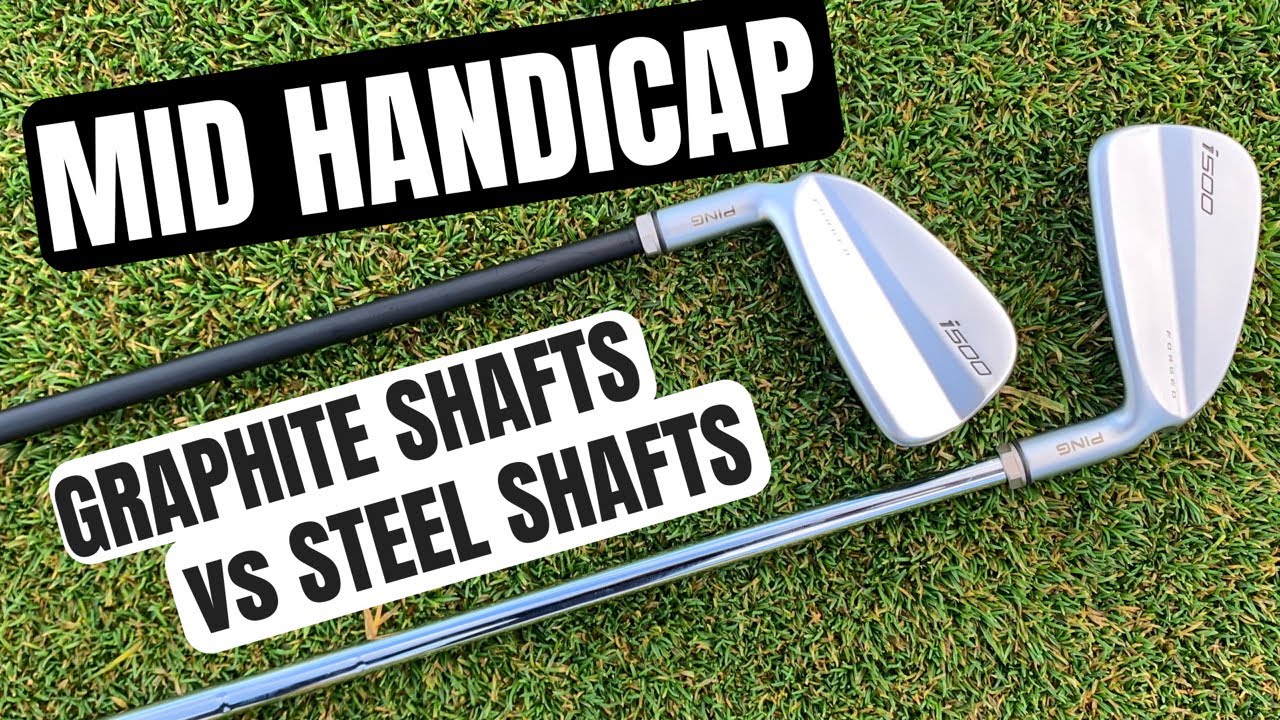
Understanding steel vs graphite iron shafts
Steel and graphite are the two main shaft materials for irons. Steel shafts are made from metal alloys. Graphite shafts are layered carbon fiber. Each material changes weight, flex, torque, and feel.
Key material differences:
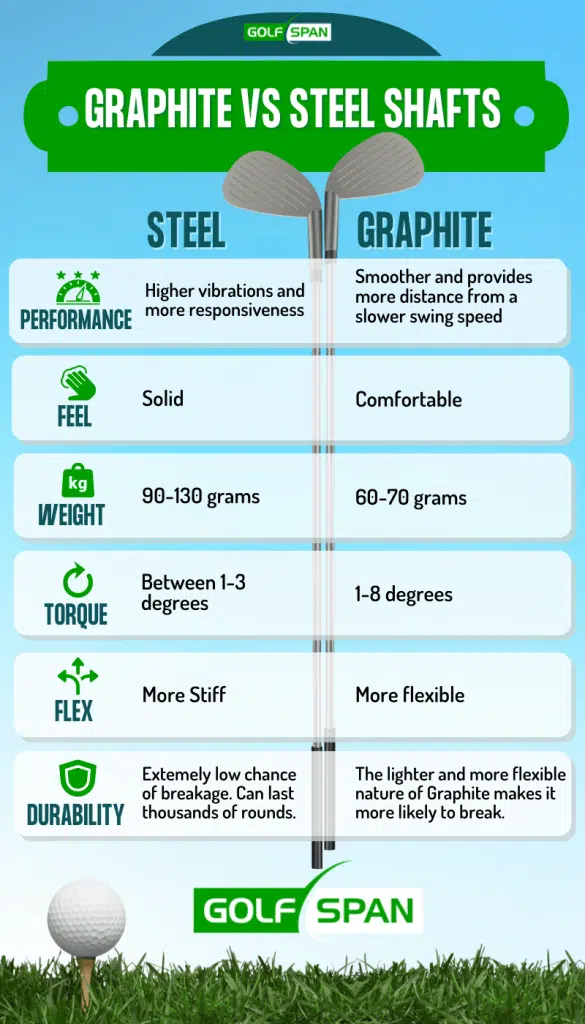
- Weight: Steel shafts are heavier than graphite on average.
- Flex: Both come in varied flex ratings. Flex affects launch and dispersion.
- Torque: Graphite often shows higher torque than steel. That can change feel.
- Construction: Steel is one piece of metal. Graphite is layered composite.
Why this matters: weight changes swing tempo. Flex and torque change spin and shot shape. When you compare steel vs graphite iron shafts, you compare control, distance, and comfort. I tested both in fitting sessions and saw clear patterns across golfers of different swings.

Performance differences: distance, control, and dispersion
How steel vs graphite iron shafts perform matters most to players. The choice alters distance, accuracy, and consistency.
Distance and ball speed
- Graphite often produces slightly higher ball speed for slower swing speeds. This can increase carry by a few yards.
- Steel tends to produce repeatable ball speed for stronger players. For many, it yields predictable distance.
Control and shot shape
- Steel shafts offer tighter dispersion for most mid and fast swing players.
- Graphite can be less precise but better for players needing extra launch or reduced vibration.
Spin and launch
- Graphite can lower spin and raise launch in some installations. This depends on shaft profile.
- Steel often keeps spin and launch more consistent across shots.
Real-world note: In fittings I did, mid-handicap players with swing speed under 85 mph gained distance with graphite irons. Better players kept steel for control. These are patterns, not strict rules.

Feel, sound, and feedback
Feel is personal. It guides many players to one material over the other.
Feel and feedback
- Steel transmits more vibration and gives sharp feedback on mis-hits.
- Graphite soaks vibration and feels softer on contact.
Sound
- Steel sounds clicky or metallic at impact.
- Graphite is quieter and feels muted.
Why it matters: If you rely on impact feel to shape shots, steel is clearer. If joint pain or comfort matters more, graphite can help. I switched a senior player to graphite and saw swing consistency improve simply because he relaxed more when the irons felt softer.
Durability, repair, and cost
Cost and lifespan differ between steel vs graphite iron shafts. Budget and maintenance matter.
Durability and wear
- Steel is robust and resists breakage under normal use.
- Graphite can break under severe impact or when the tip is nicked. But modern graphite is quite durable.
Repair and repowering
- Steel shafts are easy and cheap to replace.
- Graphite shafts need care when re-shafting. Tip trimming and epoxy matter.
Cost comparison
- Graphite shafts usually cost more than basic steel models.
- High-end steel and graphite can both be pricey. Quality varies.
Practical tip: If you play frequently and hit many range balls, steel often lasts longer without worry. If you value comfort and weight savings, invest in quality graphite and inspect regularly.

Fitting advice: how to test steel vs graphite iron shafts
A proper fit beats guesswork. Test both materials during fitting.
What to test at a fitting
- Swing speed measured with a launch monitor.
- Ball speed, launch angle, and spin.
- Shot dispersion and carry distance.
- Feel and comfort across 10-15 swings.
Who benefits from graphite
- Players with slow to moderate swing speed who need carry.
- Golfers with elbow or wrist pain.
- Seniors and many women where lighter total weight helps tempo.
Who benefits from steel
- Players with higher swing speed seeking control.
- Golfers who prioritize shot-shaping and feedback.
- Club players who want tight dispersion.
Fitting steps I use
- Test a matched iron head with a steel shaft set.
- Test the same head with a graphite shaft set.
- Compare numbers on a launch monitor and ask how each feels.
- Make final choice with data and comfort.
Remember: Lighter graphite can change club balance and lie feel. Always hit a full bag or at least three iron heads in both materials before deciding.

My testing notes and practical tips
I have built and tested dozens of sets. Here are direct, practical tips from that work.
Common mistakes to avoid
- Choosing graphite only for marketing claims about distance.
- Not testing with the same head and specs.
- Ignoring feel and comfort during long sessions.
Setup tips
- Match shaft length and lie angle when comparing.
- Use the same brand and model of shaft where possible.
- Test with real course shots, not just short-range swings.
What changed my view
- Early in my work, I favored steel for nearly everyone. Over time, I found graphite often helps specific groups more than I first thought. Modern graphite has improved. It now competes well in control and durability while offering lower vibration.
Club-building note: When switching materials, balance and swing weight change. Adjust head weight or grip to keep your swing consistent.
Frequently Asked Questions of steel vs graphite iron shafts
Are graphite iron shafts slower for high swing speed players?
Graphite can still work for high swing speeds but may feel less precise. Many high-speed players prefer steel for tighter dispersion and clearer feedback.
Will graphite help me hit the ball farther?
Graphite often helps players with slower swing speed gain ball speed and carry. Gains are modest and depend on shaft model and fitting.
Do steel shafts break more often than graphite?
No. Steel rarely breaks under normal use. Graphite can fracture if hit sharply or if the tip is damaged, but modern graphite is robust.
Should I change just one shaft type in the set?
You can mix materials. Some players use graphite in long irons and steel in short irons to balance distance and control. Test mixed setups in fitting.
How much does shaft choice affect spin and launch?
Shaft profile, flex, and weight can change launch and spin moderately. The clubhead and ball also play major roles, so fit both together.
Conclusion
Choosing between steel vs graphite iron shafts comes down to swing speed, feel, and goals. Steel favors control and feedback. Graphite favors comfort and added carry for some players. Test both with matched heads. Use a launch monitor, trust measured data, and listen to how each shaft feels over many shots.
Takeaway: Try both materials in a fitting. Use data and feel to guide your choice. If you found this useful, test your irons, share your results, or leave a comment.