
Spiked Vs Spikeless Golf Shoes: Key Differences
Golf shoes do more than protect your feet. They help you keep your stance stable, transfer force from the ground, and stay balanced through the backswing, downswing, impact, and follow-through. The right sole can feel like a quiet anchor under your feet. The wrong sole can make you feel as if you are swinging on wet grass.
The main choice is between spiked and spikeless golf shoes. Both types can support a sound golf swing. The better option depends on your course, weather, walking habits, foot comfort, swing speed, age, and playing goals. A beginner may value comfort and ease. An improving golfer may want more grip during the downswing. A senior golfer may need stable support without a stiff feel.
This guide explains the difference between spiked and spikeless golf shoes, how each type works, who each style suits, and how course conditions affect the choice. It also covers golf rules, care, walking, junior golf, and common mistakes.
Quick answer: spiked vs. spikeless golf shoes
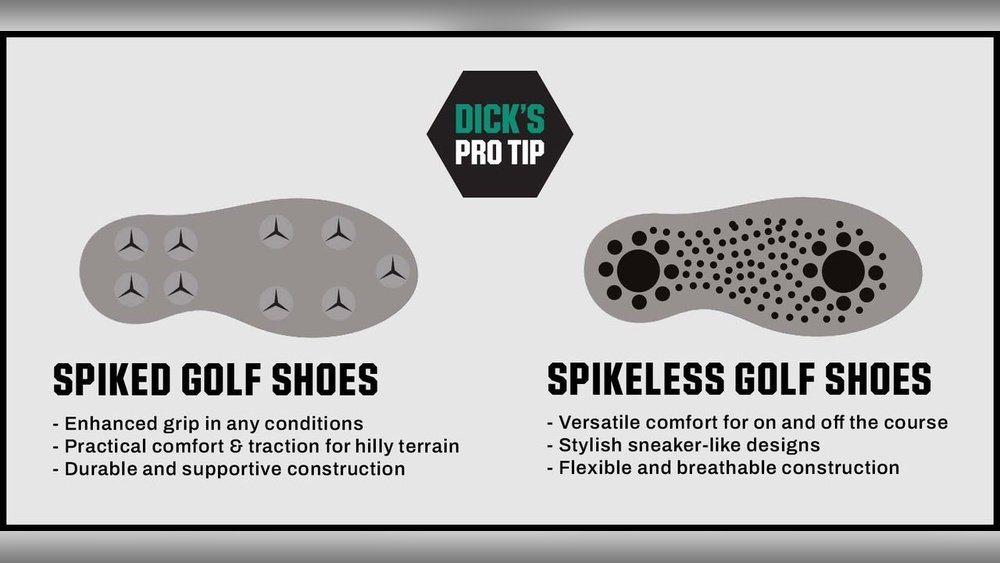
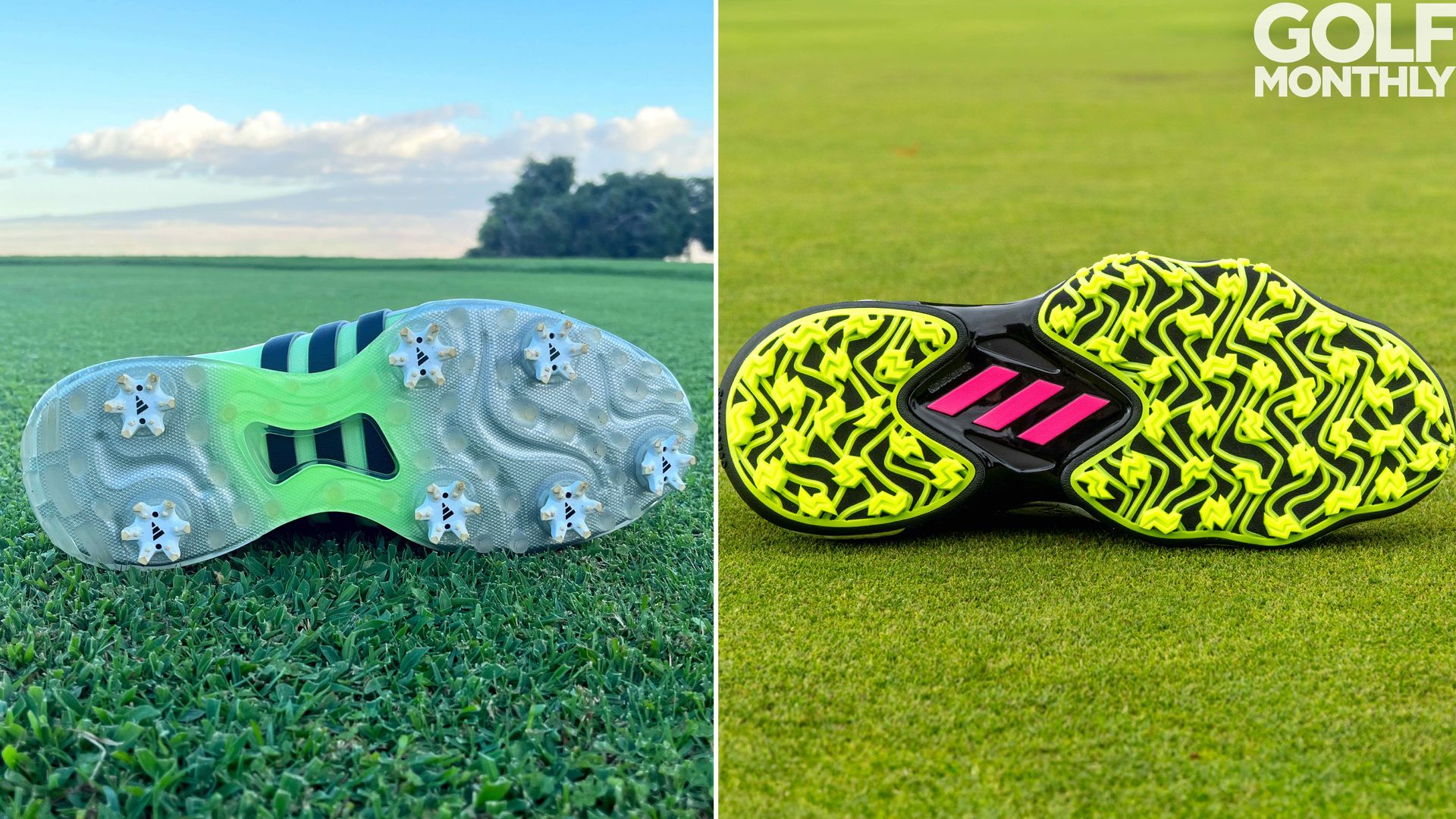
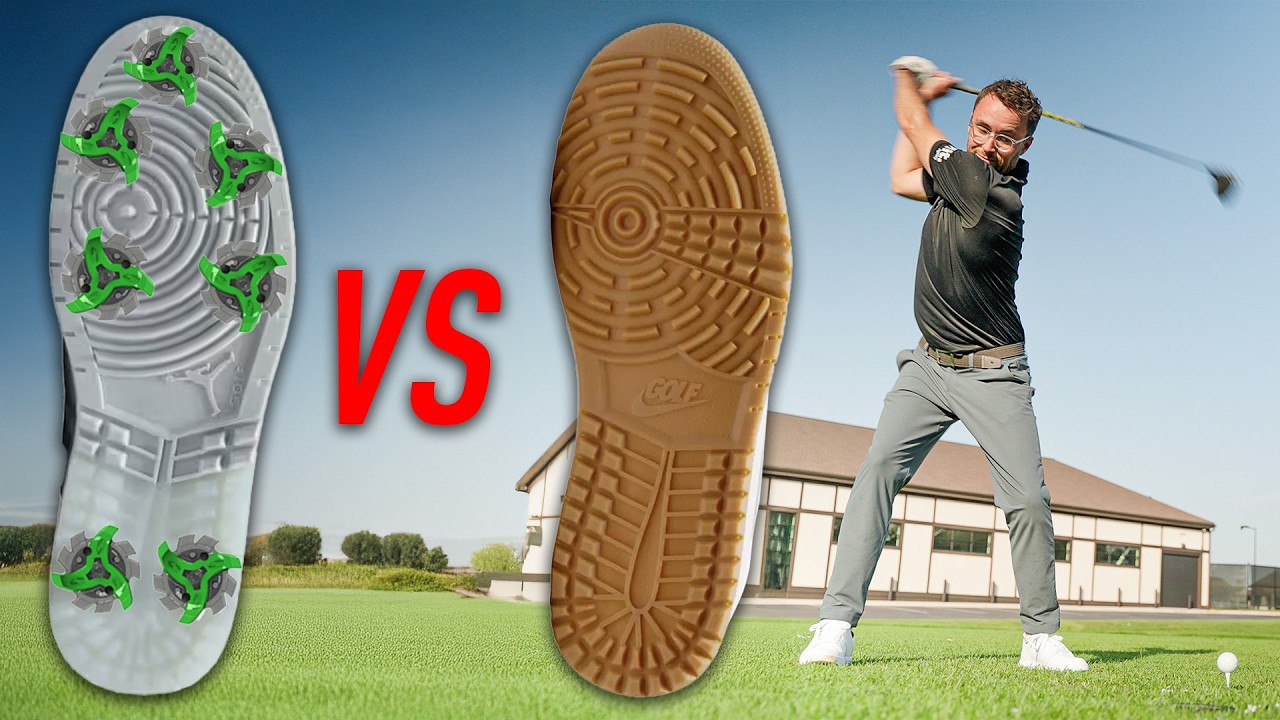
The main difference between spiked and spikeless golf shoes is the sole design. Spiked shoes use cleats, often called soft spikes, that dig into the turf for strong traction. Spikeless shoes use molded rubber lugs, dimples, or tread patterns built into the sole. Spiked shoes often offer more grip on wet or hilly ground, while spikeless shoes often feel lighter and more natural for walking.
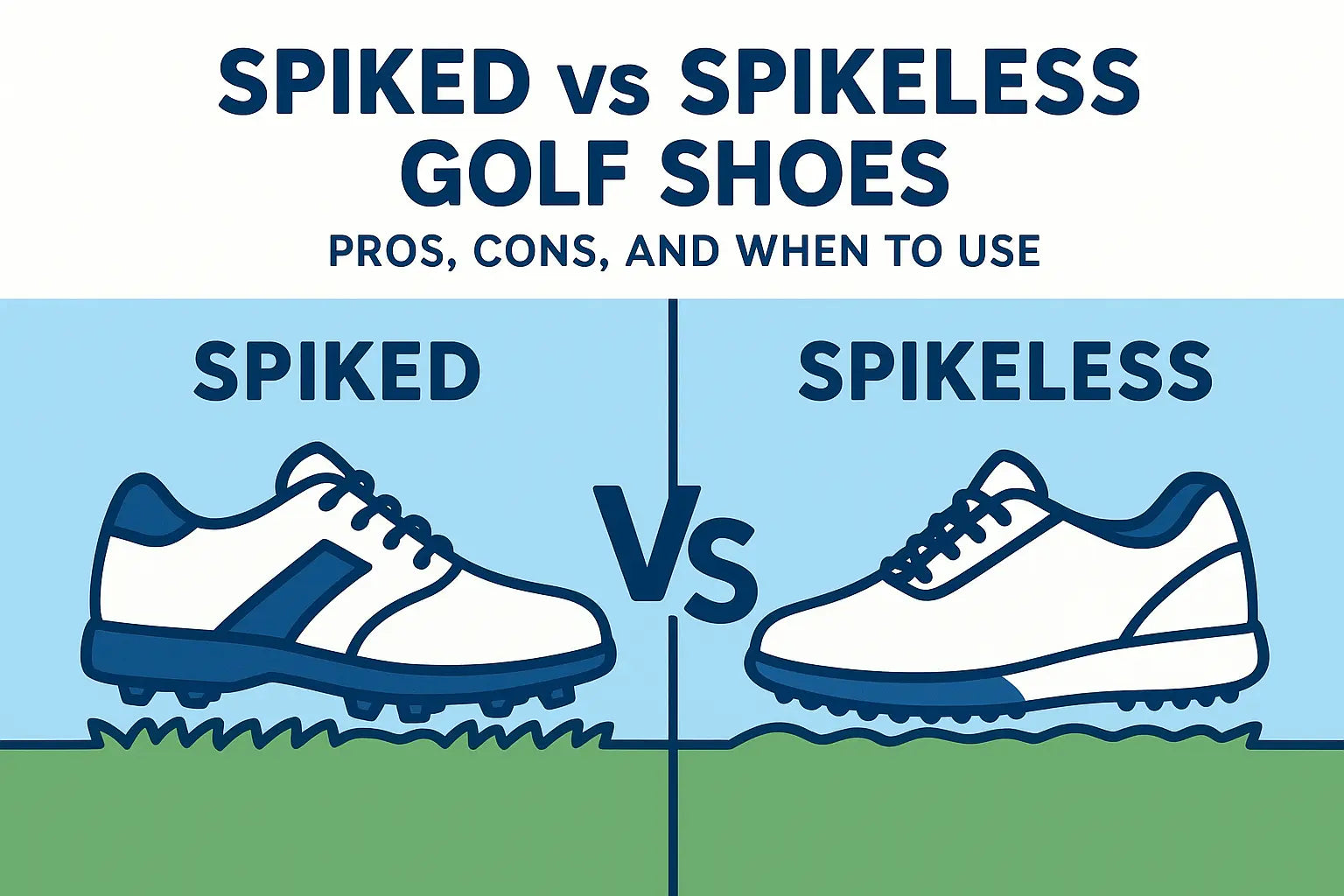
Neither type is automatically better for every golfer. A player who walks a dry parkland course may prefer spikeless shoes. A golfer who plays early in the morning on wet grass, steep terrain, or a links course may prefer the added traction of spikes.
What separates the two shoe types?
Spiked and spikeless golf shoes both aim to keep the foot stable. They reach that goal in different ways. Spikes create small points of grip, while spikeless soles spread traction across a wider surface.
How spiked golf shoes work
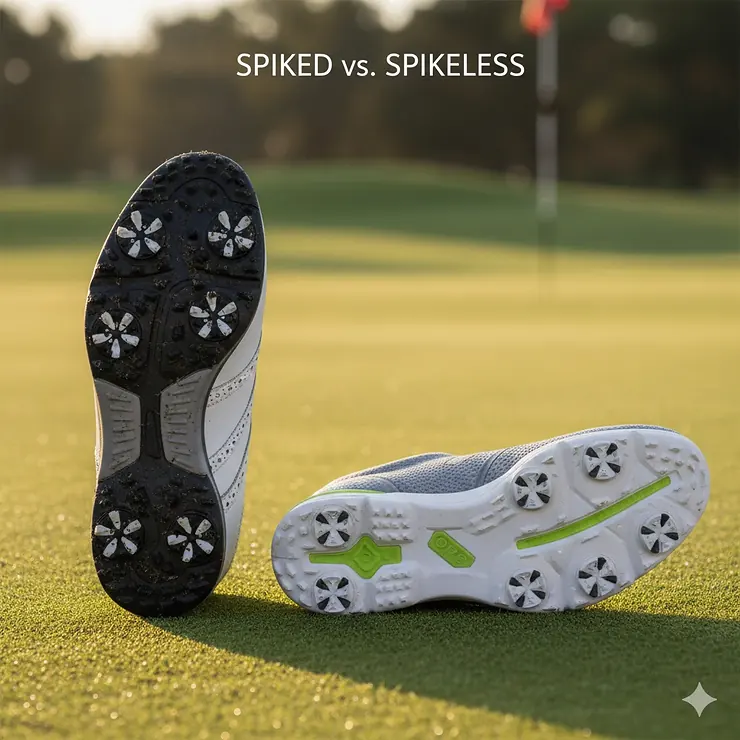
Spiked golf shoes have cleats set into the outsole. Modern golf shoes usually use soft plastic or rubber spikes rather than old-style metal spikes. These cleats press into the turf and resist sliding during the swing.
A golf swing creates force in several directions. The feet push into the ground, the hips rotate, and the upper body turns. During the downswing, the lead foot must accept force while the trail foot helps the body rotate. Spikes can help the shoe stay in place during this movement.
Most soft spikes can be replaced when they wear down. This gives the shoe a longer useful life if the upper and midsole remain sound. The exact spike system varies by shoe, so a golfer should follow the care instructions for that model.

How spikeless golf shoes work
Spikeless golf shoes have no separate cleats. Instead, the sole has molded traction elements. These may look like small lugs, ribs, nubs, or rubber shapes. They grip the grass through surface contact and tread design.
Spikeless shoes often feel more like regular athletic shoes. This can help golfers who walk long distances or move between the course and other parts of a club. Some spikeless soles are built for firm ground, while others have deeper patterns for softer turf.
The word “spikeless” does not mean “without grip.” A well-designed spikeless sole can provide strong traction in normal playing conditions. It may, however, lose grip sooner than a spiked sole on very wet, steep, or slippery ground.
A simple comparison
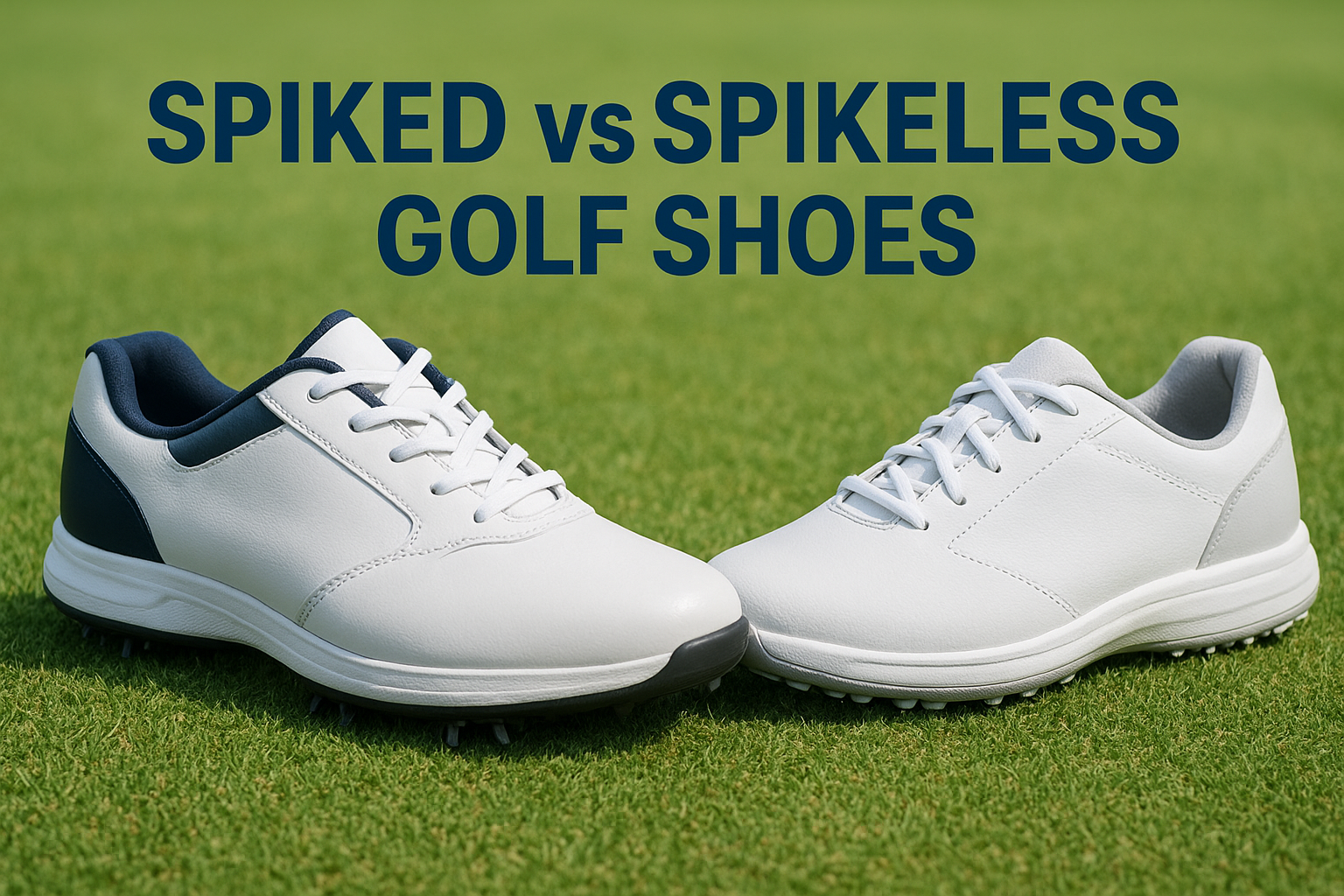
The table below gives the basic difference without treating one type as a universal winner. Your course and movement pattern matter as much as the shoe label.
| Feature | Spiked golf shoes | Spikeless golf shoes |
|---|---|---|
| Main grip source | Replaceable cleats | Molded sole tread |
| Best strength | Strong traction on soft or wet ground | Comfort and easy walking |
| Common feel | More locked to the turf | More flexible and natural |
| Surface contact | Focused at spike points | Spread across the sole |
| Care need | Check and replace worn spikes | Clean and inspect tread |
| Off-course use | Often limited | Often more versatile |
The key takeaway is simple: spikes tend to give more focused traction, while spikeless soles tend to give more comfort and flexibility. This is a general pattern, not a rule for every shoe.
Why traction matters in the golf swing
Traction matters because the ground is part of the swing. Your feet do not simply hold you up. They help you create pressure, rotate your hips, control your posture, and stay balanced at impact.

Grip, stance, and posture
A stable shoe starts with a stable setup. Your grip controls the club, but your stance gives your body a base. Your feet should sit firmly on the ground, with your weight balanced between the balls of your feet and your heels.
If your shoes slide, your knees may move too much. Your hips may rise in the backswing. Your upper body may sway instead of turn. These changes can affect the club path and the quality of impact.
Good traction does not fix poor posture. It simply gives you a more reliable platform from which to use sound technique. This point matters most for beginners, who are still learning how stance width, ball position, and balance work together.

Ground forces during the swing
During the backswing, many players place more pressure into the trail foot. During the downswing, pressure shifts toward the lead side. The exact pattern changes with the player, club, swing speed, and technique.
A player with a fast tempo may notice traction more than a player with a smooth, slow tempo. A golfer who hits a driver at high speed may create greater force than someone hitting a short pitch. Both players still need balance, but the demand is not the same.
Spikes can help some golfers feel secure during this pressure shift. Spikeless shoes can also work well when the sole grips the surface and the player makes a controlled swing.
Traction and different parts of the game
Full swings are not the only time shoes matter. Chipping, pitching, bunker shots, putting, and green reading all require balance. A bunker shot may need a firm base in loose sand. A downhill chip may require careful foot placement. A long putt may require a quiet lower body.
Spiked shoes may help on uneven ground near a green. Spikeless shoes may feel more comfortable during a long walk between shots. For many golfers, the best choice is the shoe that lets them keep their feet stable without distracting them.

Spiked and spikeless shoes by playing condition
Course conditions can change the answer. Dry summer fairways, wet spring rough, sandy links ground, and frozen winter turf each place different demands on the sole.
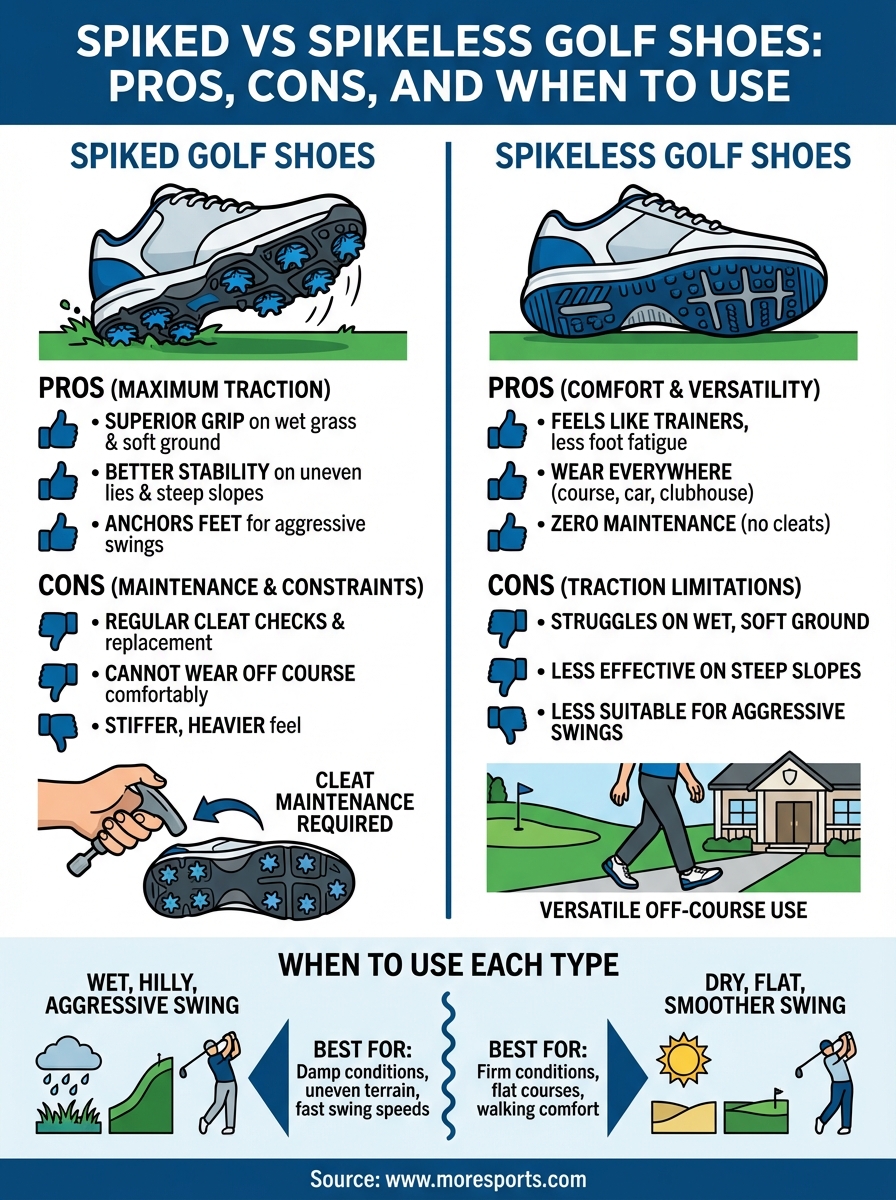
Course and weather guide
Use the chart as a starting point. It does not replace testing your own balance and comfort on the courses you play.
| Playing condition | Often useful | Reason |
|---|---|---|
| Wet morning fairways | Spiked shoes | Cleats can resist sliding in soft grass |
| Dry, firm fairways | Either type | Both can provide suitable grip |
| Steep walking course | Spiked shoes | Focused traction may help on slopes |
| Firm links course | Spikeless shoes | Low-profile tread can suit hard ground |
| Heavy rough | Spiked shoes | Extra grip can help during uneven lies |
| Long walking round | Spikeless shoes | Flexible soles may reduce foot fatigue |
| Indoor golf or practice area | Spikeless shoes | They are often suited to firm floors |
| Hot, dry executive course | Either type | Comfort and fit may matter most |
The main takeaway is that wetness, slope, and turf softness raise the value of traction. Firm, dry surfaces and long walks raise the value of comfort and flexibility.
Wet grass and morning dew
Dew makes grass slick, even when the ground looks firm. A player may feel the lead foot move during impact or the trail foot slip during the downswing. This risk can increase on a course with shade, poor drainage, or heavy rough.
Spiked shoes often suit golfers who play early in wet conditions. They may also help older players or anyone who feels less secure on uneven ground. Still, no shoe makes wet turf risk-free. Shorten your stride, walk carefully, and slow your tempo if the ground is slick.

Firm ground and links courses
Links courses often have firm, rolling ground. They may include exposed areas, tight lies, slopes, and wind. A spikeless shoe with a flexible sole can feel natural on this type of surface.
Firm ground can also make deep spikes uncomfortable. If the cleats press hard into compact turf, the golfer may feel pressure under the foot. That pressure can change the way the golfer walks or sets up to the ball.
A spikeless shoe is not automatically the best choice for every links course. Wet links turf and steep slopes may still call for stronger traction. Ask the local club about normal conditions and follow any footwear rules.

Heat, rain, and changing weather
Weather affects both comfort and safety. Wet weather increases slip risk. Hot weather increases foot sweat and fatigue. A waterproof upper may keep feet dry, but it can also feel warmer than a more breathable design.
Golfers should plan a warm-up routine before playing in cold weather. Cold feet can feel stiff, and stiff movement may affect posture and tempo. In hot weather, drink water, use sun protection, and take breaks when needed.
⚠️ Safety Warning: Leave the course at the first warning of lightning. Shoes with excellent traction do not protect you from lightning, heat illness, or unsafe weather.
Advantages and limits of spiked golf shoes
Spiked shoes can be a strong fit for golfers who need maximum grip. They also have limits that matter for walking comfort, clubhouse rules, and firm ground.

Benefits and drawbacks
A balanced view helps prevent a common mistake: choosing shoes only because they look athletic or feel firm indoors.
| Spiked golf shoes | Benefits | Limits |
|---|---|---|
| Traction | Strong grip on soft, wet, or sloped turf | Can feel too aggressive on hard ground |
| Swing support | May help during fast swings and pressure shifts | Does not correct poor balance or technique |
| Service life | Replaceable spikes can extend sole use | Worn spikes need regular inspection |
| Walking | Stable on uneven ground | Some soles feel less flexible |
| Club access | Accepted at many courses | Some facilities limit certain spike types |
Spikes can suit a fast-swinging player, a golfer on a hilly course, or anyone who often plays in damp conditions. They may not suit a golfer who wants one flexible shoe for walking, practice, and casual use.

Who may benefit from spikes?
Spiked shoes may suit:
- Golfers who play early in wet conditions.
- Players with a fast tempo or high clubhead speed.
- Golfers who play hilly courses.
- Players who feel their feet move during impact.
- Seniors who want a more secure base on uneven ground.
- Players who often hit from wet rough or soft turf.
This list includes golfers of every gender and handedness. A left-handed golfer and a right-handed golfer face the same basic traction needs, but their pressure patterns and comfort may differ.
Limits for beginners
Beginners sometimes think more grip will create a better swing. It does not. A beginner still needs to learn grip, stance, posture, ball position, alignment, and tempo.
Very strong traction can also make a golfer feel stuck. The feet may stay firm while the hips fail to rotate. A smooth turn is better than forcing the body against the ground. New players should focus on balance from setup through follow-through.
Advantages and limits of spikeless golf shoes
Spikeless shoes are popular because they combine golf traction with a walking-friendly feel. They can work well for many players, but their performance depends on the tread, turf, and weather.
Why golfers choose spikeless soles
Spikeless shoes usually have a low, flexible feel. This can make walking from the tee box to the fairway, rough, and green more comfortable. The design may also feel natural during putting and green reading.
Many golfers like the simple care routine. There are no separate cleats to remove or replace. The main task is to clear mud and grass from the tread and check for wear.
Spikeless shoes can suit beginners who want a familiar athletic feel. They can also suit juniors, parents, seniors, and golfers who walk often. However, comfort depends on fit, arch support, foot shape, and the condition of the sole.
Where spikeless shoes may struggle
A shallow tread may lose grip on wet slopes. Mud can fill the sole and reduce contact with the ground. Worn rubber can also become less effective, even when the upper still looks good.
A spikeless shoe may not suit a golfer who plays in heavy rain, soft turf, or steep terrain. It may also be a poor match for a player who regularly feels the lead foot slide during the downswing.
That does not mean every spikeless shoe has weak traction. Sole patterns vary. Judge the actual tread and your playing conditions rather than relying on the name alone.
Who may benefit from spikeless shoes?
Spikeless shoes may suit:
- Beginners learning balance and basic swing motion.
- Golfers who walk nine or 18 holes.
- Seniors who value comfort and a lighter feel.
- Juniors who need flexible movement.
- Players on firm, dry courses.
- Golfers who practice at a driving range.
- Players who move between the course and other areas.
A woman golfer may prefer spikeless shoes if a lighter, flexible feel supports long walks. A man golfer may prefer them for the same reason. Foot shape, comfort, and course use matter more than gender.
👪 Parent or Beginner Note: For juniors, fit and foot comfort come first. Shoes should allow natural movement without being loose. Junior-sized golf equipment and proper supervision matter more than choosing the most aggressive sole.
Which type fits different golfers?
The best choice depends on the golfer, not just the shoe. Handicap index, age, fitness, swing tempo, course type, and walking habits all play a role.
Fit by golfer profile
A handicap index measures a golfer’s playing ability under a handicap system. It does not tell you which shoe to use. A high-handicap golfer may need strong traction, while a low-handicap golfer may value comfort for long practice sessions.
| Golfer profile | Possible fit | Main reason |
|---|---|---|
| New golfer | Spikeless or mild spiked | Comfort and easy balance work |
| Improving amateur | Either type | Match traction to swing and course |
| Fast-tempo player | Often spiked | Extra grip during pressure shift |
| Senior walker | Spikeless or spiked | Choose between comfort and security |
| Junior golfer | Flexible spikeless | Natural movement and easy walking |
| Hilly-course player | Often spiked | Better support on slopes |
| Firm-course walker | Often spikeless | Flexible feel on hard ground |
| Wet-climate player | Often spiked | More focused traction |
The table gives broad guidance. A golfer with foot pain may need a professional fitting or medical advice, not simply a different sole.
Golfers with a high handicap
High-handicap players often make larger balance errors. They may sway, reverse pivot, or finish with weight on the trail foot. A stable sole can provide confidence, but it cannot replace a lesson or basic practice.
For a new golfer, choose the shoe that makes it easy to stand comfortably and walk safely. Practice half swings and short pitches first. These shots teach balance with less force than a full driver swing.
Improving amateurs
Improving players may notice traction during faster swings. They may also play more varied courses and face more demanding lies. A spiked shoe may help on wet slopes, while a spikeless shoe may be better for long walking rounds.
Track when your feet move. Note the weather, slope, club, and shot type. If slipping happens only in wet rough, the issue may be conditions. If it happens on dry fairway shots, have a PGA professional check your setup and movement.
Seniors and golfers with limited mobility
Senior golfers may value stable footing, light weight, and comfort at the same time. There is no single senior golf shoe. Some older players prefer spikes for security. Others prefer spikeless shoes because they reduce foot fatigue over 18 holes.
Fitness also matters. Strong legs and good ankle mobility can support balance, but pain or weakness can change the choice. A golfer with back, elbow, wrist, knee, or foot pain should not use shoes to push through symptoms. See a doctor for pain and seek qualified golf instruction for movement issues.
Women, men, and junior golfers
The basic traction rules apply to women and men. Differences in foot shape, body size, swing speed, and walking habits are more useful than gender labels.
Juniors often need flexible shoes and a secure fit. A child who is still growing may change size often, so parents should check fit and comfort. A shoe that is too large can allow the foot to slide inside, which defeats the purpose of a grippy sole.
Spiked vs. spikeless for walking and riding
Walking changes the role of comfort. Riding changes the role of movement, but it does not remove the need for traction.
Walking 18 holes
A full round can cover several miles, depending on the course layout. Walking on hills, hard paths, and uneven grass places repeated stress on the feet and legs.
Spikeless shoes may feel easier for golfers who walk often. Their flexible sole can support a natural stride. Spiked shoes may suit walkers who need security on slopes or damp turf.
The best choice is the shoe that keeps your feet comfortable late in the round. A shoe that feels fine on the first tee but causes pain by the 16th hole is not a good match for that golfer.
Riding in a cart
Cart users still walk from the cart path to the ball and across slopes. They also need a stable base for full swings, bunker shots, and uneven lies.
A rider may tolerate a firmer spiked sole because total walking distance is lower. A spikeless shoe may still be useful if the golfer walks between the cart and several shots. Cart users must also keep both feet inside the cart, follow course paths, and avoid sharp turns near slopes.
Practice and indoor golf
Driving ranges often have firm mats. A spikeless sole usually feels natural on a mat, but some facilities may have footwear rules. Indoor golf centers, clubhouses, and simulator rooms may also set their own policies.
A mat does not copy the feel of turf. Do not assume that a shoe that grips a rubber mat will behave the same way on wet grass. Practice balance on grass when possible.
Care, fit, and sole checks
Good care helps both types perform as designed. It also helps you spot wear before it affects balance.
What to check before a round
Use this simple checklist:
- Check that the sole is clean.
- Look for packed mud in the tread.
- Inspect spikes for wear or looseness.
- Check that laces or closures hold the foot firmly.
- Make sure the heel does not lift.
- Walk on a safe, dry surface before play.
- Confirm that the course permits your footwear type.
A good fit should feel secure but not tight. Your toes need room to move. Your heel should not slide inside the shoe during a step or swing.
Spiked shoe care
Remove grass and mud after the round. Check each cleat for damage, looseness, or heavy wear. Replace worn spikes according to the shoe maker’s instructions. Do not wait until the cleat is completely smooth if you already notice a loss of grip.
Keep the shoe dry between rounds. Avoid high heat, such as a radiator or car dashboard, because it can damage materials and adhesives. Let wet shoes dry at room temperature.
Spikeless shoe care
Clean the tread with a soft brush. Remove stones, mud, and grass from the grooves. Inspect the rubber lugs for flattening or cracks.
Spikeless traction can fade slowly. You may not notice the change until a wet round. Test the sole on a safe surface and pay attention to whether your feet feel secure.
🌿 Course Care Note: Clean mud from your shoes away from greens and tee areas. Repair ball marks, replace divots, rake bunkers, and dispose of broken tees and old balls properly. Good golf footwear should support good golf etiquette.
Golf rules and course policies
Golf shoes must meet the Rules of Golf and local course policies. Most modern golf shoes are designed for play, but unusual footwear features can raise questions.
What the Rules of Golf say
The USGA and R&A govern the Rules of Golf. Equipment rules address clubs, balls, and other equipment. Golf shoes are generally accepted when they are normal footwear designed for golf and do not include unusual features intended to help a player make a stroke.
Rules and local policies can change. A tournament committee, club, or course may set additional conditions. Check the latest Rules of Golf, the competition terms, and local rules before a formal event.
📜 Check the Rules: Do not assume that every shoe or cleat is permitted in every setting. Confirm the policy with the course or tournament committee, especially when using unusual sole features or playing in a club event.
Metal spikes and local policies
Many courses restrict traditional metal spikes because they may damage greens and floors. Modern soft spikes and spikeless soles are more common, but each facility sets its own policy.
The issue is not only rules. Metal spikes can mark putting surfaces, harm clubhouse floors, or affect pace when golfers change shoes. Follow posted signs and staff instructions.
Can you change shoes during a round?
Changing footwear during a round may raise rules questions if it is done to gain an advantage or because of course conditions. The facts matter, including the reason for the change and the competition terms.
For casual play, a club may allow a change. In competition, ask the committee before starting. Check the latest Rules of Golf rather than relying on old advice.
Common mistakes when choosing golf shoes
Many footwear problems come from simple errors. The sole type is only one part of the result.
Mistake 1: Choosing grip without comfort
A very grippy sole can feel secure but may cause foot fatigue. If your feet hurt, you may change posture or shorten your follow-through. Comfort supports better movement over a full round.
Mistake 2: Ignoring the course
A dry flat course and a wet hilly course ask different things from a shoe. Think about turf, slopes, climate, and walking distance before choosing a style.
Mistake 3: Blaming shoes for a swing fault
A slide may come from poor balance, a sway, a weak lower body, or a rushed downswing. Shoes can help you stay planted, but they do not fix a slice, hook, shank, or poor impact position.
Mistake 4: Wearing worn soles
Old spikes and flat spikeless lugs can lose grip. Inspect them before an important round or junior tournament.
Mistake 5: Using one pair for every setting
A shoe that suits wet fairways may feel poor on hard paths. A flexible walking shoe may not offer enough grip on steep, damp ground.
A simple test for your own needs
You can compare traction without changing your swing. Use the same shoes on similar shots and note how your feet feel.
Three-shot balance test
Try this at a safe practice area:
- Hit five half-wedge shots.
- Hit five medium iron shots.
- Hit five controlled driver swings.
- Notice whether either foot slides.
- Rate comfort from the first shot to the last.
- Repeat on dry and damp ground when safe.
Do not swing hard on a slippery surface. The goal is to observe balance, not to test the limits of traction.
What to record
Write down:
- Course or practice surface.
- Wet, dry, firm, or soft conditions.
- Walking or riding.
- Club used.
- Swing speed and tempo.
- Foot movement.
- Foot, knee, back, or hip discomfort.
- Stability during the follow-through.
This process suits improving amateurs who like clear feedback. It may not suit a beginner who is still learning basic contact. A PGA professional can help separate a shoe issue from a swing issue.
When a lesson makes more sense
Take a lesson if your feet slide during normal shots, your balance changes from club to club, or you cannot finish the swing comfortably. A teaching professional can review stance width, ball position, posture, weight shift, backswing, downswing, and finish.
Seek medical advice for persistent pain. Do not try to solve back, ankle, knee, elbow, or wrist pain with tighter shoes or stronger spikes.
How the choice affects scoring and course management
Golf shoes do not directly determine your score. They can affect confidence, balance, and the choices you make around the course.
Fewer balance distractions
A stable base can help you make a controlled swing from the fairway or rough. That may support better contact, but results vary by golfer. A balanced swing still depends on club selection, alignment, tempo, and impact.
Good course management also means choosing safe targets. On a wet slope, a golfer may choose a wider target instead of attacking a tucked pin. A secure stance helps, but smart decisions matter more.
Putting and green reading
Putting uses less body motion than a full swing, but foot comfort still matters. During green reading, you may walk around the hole and stand on slopes. Spikeless shoes often feel natural for this work. Spiked shoes may help if the green surrounds are wet or uneven.
Avoid dragging your feet across the putting surface. Follow golf etiquette and protect the green for the group behind you.
Formats and footwear needs
In stroke play, each shot counts toward the total. In match play, each hole is won, lost, or tied. A scramble lets a team choose the best shot, while Stableford uses points based on score relative to par.
The format does not change the basic shoe rules. But pace, walking distance, and pressure may change. A long scramble can involve more walking. A tournament round may make comfort and reliable footing more important.
Frequently asked questions
Q: Are spiked golf shoes better than spikeless shoes?
A: Neither is always better. Spiked shoes may offer stronger grip on wet, soft, or steep turf. Spikeless shoes may offer better walking comfort and flexibility on firm, dry ground. Choose based on course conditions, foot comfort, swing tempo, and local policies.
Q: Can beginners wear spiked golf shoes?
A: Yes. Beginners can wear either type. A new golfer should focus on a secure fit, comfortable walking, and basic balance. Spikes may help on wet or hilly courses, but they do not replace lessons or sound setup skills.
Q: Do spikeless golf shoes have enough traction?
A: Many spikeless shoes provide enough traction for normal dry conditions. Their performance depends on the tread, turf, slope, and wear. Wet rough and steep ground may expose the limits of a shallow or worn sole.
Q: Are spikeless shoes better for walking 18 holes?
A: They can be. A flexible spikeless sole may feel more natural over a long walk. Some golfers still prefer spikes for hills or wet grass. Foot shape, support, and fit matter as much as the sole type.
Q: Which shoes are best for senior golfers?
A: The best choice depends on the senior golfer’s balance, foot comfort, course, and walking habits. Spikes may provide confidence on wet slopes. Spikeless shoes may reduce fatigue on firm courses. Pain or weakness should be discussed with a doctor or qualified professional.
Q: Should juniors wear spiked or spikeless golf shoes?
A: Many juniors do well with flexible, secure footwear that allows natural movement. Spikeless shoes may be simple for walking and practice. Spiked shoes can help on wet courses. Parents should check fit, comfort, and course policy.
Q: Do women’s and men’s golf shoes need different traction?
A: Traction needs do not depend on gender alone. Swing speed, foot shape, body movement, course type, and walking habits matter more. A secure fit is important for every golfer.
Q: Can spikeless golf shoes help a golfer stop slicing?
A: Shoes do not directly cure a slice. A slice often involves an open clubface, an outside-in path, or poor impact timing. Stable footing can support practice, but a PGA professional should assess the swing.
Q: Why do my feet slide during my golf swing?
A: Wet turf, worn soles, poor balance, a rushed downswing, or excessive force can cause slipping. Check your shoes and conditions first. Then review stance, posture, pressure shift, and tempo with a professional if the problem continues.
Q: How long do golf shoe spikes last?
A: Lifespan varies with walking distance, turf, care, body weight, and use on hard surfaces. Inspect them often. Replace them when the cleats look worn, feel loose, or no longer provide reliable grip.
Q: Can I wear golf shoes on concrete?
A: Spikeless shoes are usually more suited to paths and firm surfaces than spiked shoes. Spikes may feel uncomfortable and can wear faster on concrete. Follow the course or facility’s footwear policy.
Q: Are metal spikes allowed in golf?
A: Policies vary. Many courses restrict traditional metal spikes. Modern soft spikes and spikeless soles are more common. Check the current local policy before playing.
Q: Do golf shoes improve swing speed?
A: Golf shoes do not create swing speed by themselves. Better traction may help some golfers use the ground with more confidence. Speed still depends on technique, strength, mobility, tempo, and practice.
Q: Can I wear running shoes for golf?
A: Running shoes may work for casual practice on dry, flat ground, but they may not provide enough side-to-side grip for a full swing. They may also fail course dress or footwear rules. Check the facility policy and consider the playing surface.
Q: Should I choose spikes for a fast swing?
A: A fast swing can place more force into the ground, so spikes may suit some fast-tempo golfers. The choice still depends on turf and comfort. A smooth, balanced swing matters more than simply choosing the most aggressive sole.
Final verdict: choose the sole that matches your golf
Spiked golf shoes offer focused traction through cleats. They often suit wet grass, soft turf, steep slopes, fast tempos, and golfers who want a more locked-in feel. Spikeless golf shoes use molded tread. They often suit walking, firm ground, casual practice, juniors, seniors, and golfers who value flexibility.
The best way to choose is to study your normal round. Think about the course, climate, slopes, walking distance, swing tempo, and foot comfort. Check the tread, inspect wear, follow local rules, and pay attention to how your feet feel from the first tee to the final green.
A shoe should support your golf without becoming the focus of it. When your feet feel stable, your stance feels natural, and your walk remains comfortable, you have found a sensible match for your game.