How To Hit A Golf Ball With A Driver: Tips For Distance
Stand tall, tee it up, aim slightly left, swing smooth and up through the ball for a solid drive.
As a player and coach with years on the range and the course, I know how to hit a golf ball with a driver feels simple but hides many small details. This guide walks you through setup, grip, swing mechanics, tempo, drills, and gear so you can hit longer, straighter drives with more confidence. I combine tried-and-true coaching cues, practice drills I use with students, and clear steps you can apply immediately. Read on for a step-by-step plan that turns confusion into repeatable results.
Understand the driver and why it’s different
A driver is the longest, lowest-lofted club. It needs a wide swing and an upward strike to launch the ball high with low spin. Learning how to hit a golf ball with a driver means thinking about launch and direction, not just brute force. The driver rewards good timing and sound impact more than pure strength, so focus on mechanics and contact.
Setup: stance, ball position, and tee height
Your setup sets the tone for how to hit a golf ball with a driver. A repeatable setup creates consistent contact and launch.
- Stance width
- Stand wider than your irons, roughly shoulder to hip-width beyond normal. A wider base helps balance and rotation.
- Ball position
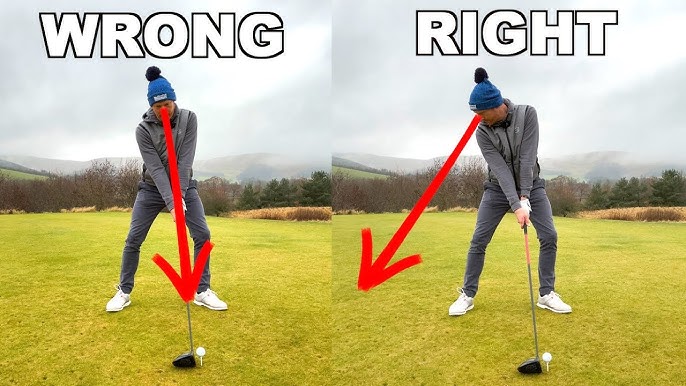
- Place the ball opposite the inside of your front heel. This encourages an upward strike through impact.
- Tee height
- Tee the ball so about half to two-thirds of the ball sits above the crown of the driver. This helps hit up on the ball.
- Alignment and aim
- Align your feet, hips, and shoulders slightly left of your target for a right-handed golfer when aiming for a draw-friendly path. Use a club on the ground to check alignment.
Practice your setup every time. Good setup habits make learning how to hit a golf ball with a driver faster and less frustrating.

Grip and takeaway
A consistent grip and smooth takeaway are vital to control the clubface and swing path.
- Grip basics
- Use a neutral grip: V's from thumb and forefinger point between your chin and right shoulder (for right-handers). Avoid extreme strong or weak grips until your fundamentals are steady.
- Left and right hand roles
- Left hand sets the club; right hand supports and releases. Keep hands soft, not tense.
- Takeaway
- Start the clubhead back with a one-piece takeaway. Keep the club low to the ground for the first few feet. A smooth start prevents early manipulation and promotes an on-plane swing.
A steady takeaway helps you control the face and path when you focus on how to hit a golf ball with a driver.

The full swing: backswing, transition, downswing, impact, and follow-through
This step-by-step swing guide explains how to hit a golf ball with a driver repeatably. Think sequence and rhythm more than brute force.
- Backswing
- Rotate your shoulders while keeping a stable lower body. Let the club arc up and back.
- At the top, the club should point slightly down to the right (for right-handers) with a relaxed wrist hinge.
- Transition
- Start the downswing with a slight shift of weight to your front foot and a rotation of your hips toward the target.
- Avoid rushing; the transition is a tempo change, not a strength surge.
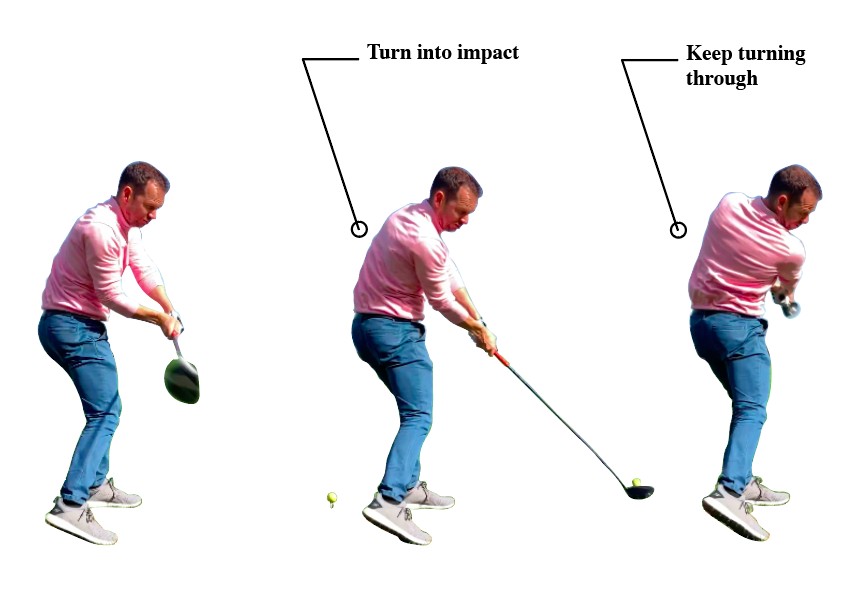
- Downswing and impact
- Maintain your angle and let the clubhead accelerate. Aim to strike the ball slightly on the upswing to reduce spin.
- Keep your head stable and eyes on the ball until after impact.
- Release and follow-through
- Release the wrists naturally and finish with a full rotation so your chest faces the target.
- A balanced finish signals a well-timed swing.
How you coordinate these steps defines how to hit a golf ball with a driver effectively. Focus on rhythm and connection over trying to swing faster.
Should I try to hit up on the ball with my driver?
Yes. Hitting up on the ball creates optimal launch and reduces backspin, which helps the ball carry farther. Aim to make the lowest point of your swing slightly in front of the ball so the club is moving up at impact.
How much weight shift should I make in a driver swing?
Shift about 60% of your weight to the front foot at impact, starting from an even or slightly back-biased setup. A controlled shift gives power without losing balance.
Tempo, timing, and common mistakes
Tempo and timing often separate good drives from wild ones. Learn the cues and fixes.
- Key tempo cue
- A common tempo ratio is 3:1 for backswing to downswing. Count or use a metronome to train it.
- Common mistakes and fixes
- Over-swinging
- Fix: Limit your backswing length. Practice swings to a set wrist hinge mark.
- Slicing
- Fix: Check grip and path. Often weak left hand or outside-in path causes slice.
- Hitting down too much
- Fix: Move ball forward and aim to make a sweeping upstrike.
- Tension and gripping too tight
- Fix: Relax hands and wrists; tension kills swing speed and timing.
- Over-swinging
When you learn how to hit a golf ball with a driver, expect inconsistent strikes early. Use simple tempo and contact drills to gain consistency.
Practice drills and routines
Short, focused drills help you learn how to hit a golf ball with a driver faster. Try these on the range in 10–15 minute blocks.
- Tee-to-target drill
- Tee up and pick a small target 200 yards downrange. Make controlled swings focusing on direction, not power.
- Low-back tee drill
- Tee the ball lower than normal and focus on sweeping the ball with a shallow angle. This improves your feel for hitting up.
- Step-and-swing drill
- Start with feet together, step into your stance on the downswing, and swing through. This helps timing and weight shift.
- Half-swing tempo drill
- Make half swings with a metronome at a 3:1 ratio. Gradually build to full swing while keeping tempo.
Keep a practice log. Record what worked and what didn’t so you can refine how to hit a golf ball with a driver during on-course play.

Equipment, club fitting, and when to change your driver
Having the right driver helps you hit more fairways and longer drives. Fit matters.
- Loft
- Higher loft can help players with slower swing speeds get better launch. Lower loft suits faster swingers who need less spin.
- Shaft flex and length
- Choose a shaft flex that matches your tempo. Too stiff or too flexible hurts distance and direction.
- Clubhead design
- Choose forgiveness and face technology that suit your miss pattern. A neutral head helps reduce hooks or slices.
- When to refit
- Consider a fitting after noticeable swing changes, persistent misses, or if you have used the same driver for several years.
A good fitting helps you understand how to hit a golf ball with a driver using equipment that matches your body and swing.

My personal experience and lessons learned
I spent seasons coaching beginners and playing competitive amateur events. Early on, I tried to hit every ball as hard as possible. That cost me accuracy and consistency. I then learned to focus on set up, tempo, and launching the ball correctly.
One student dropped 15 yards of dispersion after simple setup and ball-position fixes. Another gained confident distance by moving the ball slightly forward and easing the grip. My rule: train small changes, measure results, then refine.
If you want to know how to hit a golf ball with a driver well, work on one change at a time and use drills that build feel as much as mechanics.

Frequently Asked Questions of how to hit a golf ball with a driver
How should I tee the ball for the driver?
Tee the ball so about half to two-thirds is above the driver crown. That height encourages an upward strike and better launch.
What is the ideal ball position for a driver?
Place the ball just inside your front heel for most players. This helps hit up on the ball and deliver a higher launch.
How can I stop slicing with the driver?
Check your grip and path. Use a slightly stronger left-hand grip and work on an inside-to-out swing path to close the face through impact.
How fast should my driver swing be?
Swing speed varies. Focus first on solid contact and a smooth tempo. Speed will increase naturally with better mechanics.
Is it better to hit the driver hard or smooth?
Smooth. A controlled, well-timed swing produces more consistent distance than swinging as hard as possible. Good tempo beats raw force.
How often should I practice driving?
Short, focused sessions 2–3 times a week are better than long, unfocused ones. Practice with specific goals like tempo or ball position for faster improvement.
Conclusion
Mastering how to hit a golf ball with a driver starts with a simple plan: set up well, grip comfortably, place the ball forward, swing with rhythm, and aim to strike slightly on the upswing. Small technical fixes and regular targeted practice will yield steady gains in distance and accuracy. Try one change this week, track your results, and build from there. Share your progress, ask questions, or subscribe for more tips to keep improving your driving game.