How To Drive A Golf Ball: Pro Tips For Distance
Swing smooth, align square, and hit through the ball with balance and tempo.
I’ve spent years coaching and playing golf, and I can tell you exactly how to drive a golf ball with more distance, accuracy, and confidence. This guide breaks down setup, grip, swing sequence, common faults, practice drills, equipment choices, and on-course strategy. Read on to learn simple steps you can practice today to improve how to drive a golf ball and lower your scores.

Why your drive matters and what good driving looks like
Your drive sets up every hole. A good tee shot gives you better angles, shorter approach shots, and fewer strokes. Learning how to drive a golf ball well reduces stress on par 4s and par 5s and opens scoring opportunities.
A reliable drive combines a consistent setup, a repeatable swing, and smart course decisions. Think of the tee shot as the opening sentence of a story. Start clear, finish strong, and the rest of the story is easier to write. When you learn how to drive a golf ball, you gain control over the hole and your score.
Grip, stance, and alignment: build a strong foundation
Grip, stance, and alignment matter most. If your basics are off, the best swing won’t help.
Grip
- Place the club across the pads of your fingers. This gives better wrist hinge and control.
- Use a neutral grip: neither too strong nor too weak. The Vs formed by thumb and forefinger point to your right shoulder (for right-handers).
- Hold firm but relaxed. Tight hands choke speed; loose hands lose control.
Stance
- Stand shoulder-width apart for balance.
- Position the ball just inside your left heel for a driver. This encourages an upward strike.
- Bend from the hips and keep a slight knee flex. Your weight should be balanced over the balls of your feet.
Alignment
- Aim your feet, hips, and shoulders parallel to the target line.
- Pick an intermediate spot on the ground a few feet in front of the ball to help align your swing path.
- Check alignment visually before every tee shot.
When you practice these basics, you improve how to drive a golf ball because every swing starts from the same reliable setup.

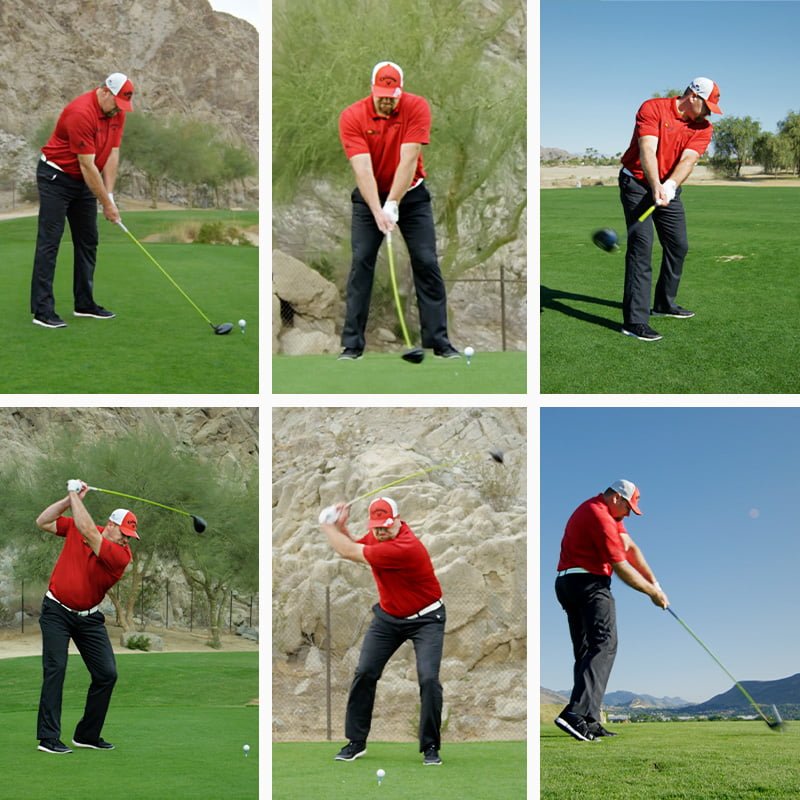
The swing sequence: takeaway, transition, impact, follow-through
A consistent sequence creates a repeatable drive. Break it into four simple parts.
Takeaway
- Start the club back with your shoulders, not your hands.
- Keep the club head low for the first few inches.
- Smooth tempo beats speed. A calm start sets a good rhythm.
Backswing and transition
- Turn your shoulders fully while keeping your lower body stable.
- Load weight slightly to your back foot as you turn.
- Transition smoothly; avoid a sudden cast of the wrists.
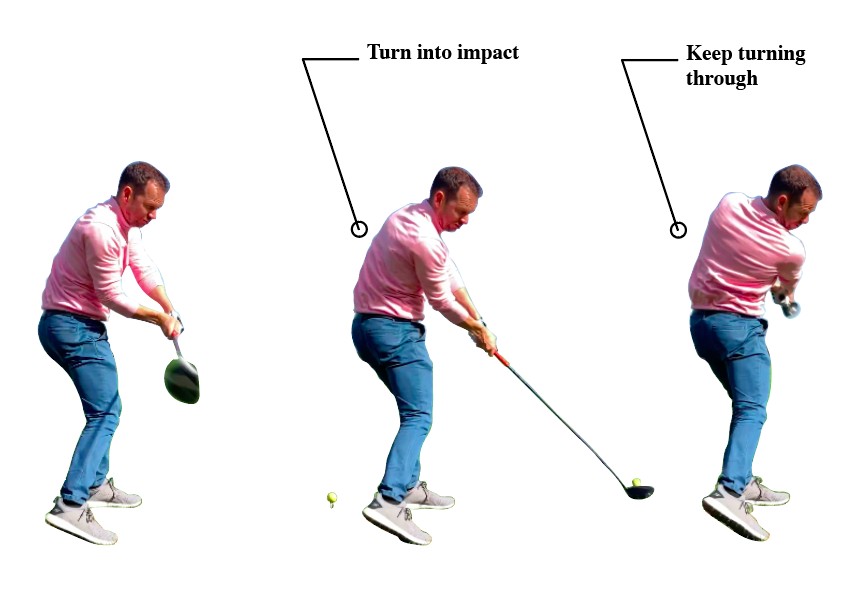
Downswing and impact
- Start the downswing with your hips rotating toward the target.
- Transfer weight from back foot to front foot as you approach impact.
- Strike the ball slightly on the upswing with a driver to launch the ball higher and reduce spin.
Follow-through
- Continue rotating your body toward the target.
- Finish tall with weight mostly on your front foot.
- A full, balanced finish signals a well-executed drive.
Practice this sequence slowly until the timing feels natural. Repeating the sequence improves distance and accuracy, which is central to how to drive a golf ball consistently.
Clubface control and swing path: the keys to accuracy and shape
Distance is great, but direction is king. Control the clubface and path to shape shots.
Clubface control
- At impact, the clubface should be square to the target for a straight shot.
- Open face causes slices; closed face causes hooks.
- Practice aligning the face at address and feeling it through impact.
Swing path
- An inside-to-out path tends to produce a draw. A steep outside-to-in path often causes a slice.
- Work on a shallow, sweeping path with the driver to hit more fairways.
- Use slow-motion drills to feel the correct path.
Understanding clubface and path helps you decide how to shape the ball. If you know how to drive a golf ball with the face and path working together, you’ll hit more fairways and have more manageable next shots.

Common mistakes and simple fixes
Most golfers struggle with the same faults. Fixing these will quickly improve how to drive a golf ball.
Over-swinging
- Mistake: Trying to hit the ball too hard.
- Fix: Focus on rhythm and extension instead of brute force.
Early extension
- Mistake: Hips move toward the ball during the downswing.
- Fix: Keep your spine angle and feel a slight bump of the hips away from the target during transition.
Slicing
- Mistake: Open clubface and outside-to-in path.
- Fix: Strengthen grip slightly, square the face, and swing from the inside.
Hitting down on the driver
- Mistake: Hitting the ball like an iron.
- Fix: Move the ball forward in your stance and feel an upward strike.
Loss of balance
- Mistake: Falling forward or backward after impact.
- Fix: Narrow your stance slightly and feel a smooth weight shift to the front foot.
These fixes are practical. Try one at a time until the change feels natural in your swing. They’re essential steps in learning how to drive a golf ball better.

Practice drills to improve your driver
Good practice beats aimless hours on the range. Use drills that build real skill.
Tee-drill
- Place two tees in the ground a clubhead-width apart, then try to brush the inside tee on the way through.
- This trains a shallow path and square face at impact.
Footwork drill
- Start with weight on your back foot, then pause at the top and practice rotating your hips first on the way down.
- This trains proper sequencing and transfer of power.
One-arm swings
- Hit half shots with your lead arm only to feel the correct swing plane and release.
- This improves clubface control and tempo.
Targeted fairway practice
- Use alignment sticks and aim at narrow targets to build accuracy.
- Track which part of the range you miss to practice specific corrections.
I’ve used these drills with students and myself. They produce quick gains in distance and control. Doing focused drills helps you understand how to drive a golf ball under pressure.

Equipment and ball selection for better drives
The right gear helps but won’t fix poor technique. Still, matching equipment to your swing can add yards and control.
Driver loft
- Higher loft helps slower swingers get the ball airborne and maximize carry.
- Lower loft suits faster swings seeking lower spin and more roll.
Shaft flex and length
- Shaft flex should match swing speed. Too stiff or too soft costs distance and accuracy.
- Longer shafts can add distance but may reduce control. Find the best balance for you.
Clubhead and forgiveness
- Modern drivers offer more forgiveness. Look for a larger sweet spot if you miss the center often.
- Adjustability can help tune launch and spin.
Ball selection
- Use a low-spin ball if you want more roll and a mid/high spin ball if you need more carry and control.
- Test different balls to find the best feel and performance for your swing.
I recommend a fitting session to dial things in. When you pair proper technique with the right gear, learning how to drive a golf ball becomes easier and more enjoyable.

Course strategy and the mental game
Driving well is also about choices and mindset. Smart decisions save strokes.
Know your strengths
- Tee to the safe side of the fairway if accuracy is a priority.
- Take an aggressive line only when the reward outweighs the risk.
Play the hole, not the tee box
- Consider hazards, wind, and the hole shape before swinging.
- Aim where the next shot is easiest, not always at the pin.
Stay calm and focused
- Use a pre-shot routine: alignment, visualization, and a deep breath.
- Trust your practice. Tension tightens the swing and kills distance.
Part of how to drive a golf ball effectively is knowing when to be bold and when to be conservative. Good course sense turns solid swings into good scores.

PAA-style quick questions
How often should I practice driving to improve?
Practice short, focused sessions three to four times a week rather than long, unfocused sessions. Quality reps with drills yield faster improvements.
Should I try to hit the driver farther or straighter?
Aim for a balance. Prioritize fairways if you miss often; add distance once your accuracy and contact improve.
Is it better to tee the ball high or low?
Tee the ball higher to catch the club on the upswing with the driver. Adjust height slightly to find the best launch and spin for your swing.
Frequently Asked Questions of how to drive a golf ball
What is the best ball position for driving?
Place the ball just inside your front heel for a driver. This position helps you hit the ball on the upswing and launch it higher with less spin.
How do I stop slicing the ball off the tee?
Square the clubface at impact and work on an inside-to-out swing path. A slightly stronger grip and hip rotation that starts the downswing can also help.
How much shoulder turn should I have on the backswing?
Aim for a full shoulder turn where your back faces the target at the top. A good shoulder turn stores power while keeping your lower body stable.
How do I add distance without losing control?
Focus on improving ball contact, launch angle, and timing rather than swinging harder. Work with the right shaft flex and a smoother tempo to gain distance.
Is driver length important for beginners?
Yes, but control matters more. A standard length is fine for most beginners; only lengthen the shaft if you can maintain accuracy and balance.
How can I maintain balance during the swing?
Keep your weight centered at address and practice a smooth weight shift to the front foot during the downswing. Short, controlled swings help instill balance.
Can a fitter help me drive better?
A club fitting can match loft, shaft, and clubhead to your swing, which often improves distance and accuracy. Combine fitting with good technique for best results.
What role does tempo play in driving?
Tempo controls timing and balance. A consistent, smooth tempo produces better contact and distance than an all-out fast swing.
How long does it take to see improvement in driving?
With focused practice and good feedback, many golfers see measurable gains in a few weeks. Consistency and the right drills speed progress.
Should I use a tee every time I drive?
Yes, using a tee for driver shots helps you hit the correct launch and reduces mishits. Adjust tee height to suit your swing and desired trajectory.
Personal lessons, mistakes, and tips from experience
I once tried to add distance by swinging harder and lost accuracy and confidence. Slowing down and focusing on sequencing gave me more than the raw power chase ever did. Here are a few lessons I learned:
- Practice with purpose: five focused swings are better than fifty random ones.
- Record your swing occasionally to see what your body is actually doing.
- Work on one change at a time to avoid confusing your motor patterns.
- Use visualization: picture a smooth drive to the target before you swing.
These real-life tips reflect many hours on the range and rounds playing under pressure. They help explain how to drive a golf ball in real play.
Limitations and realistic expectations
Not every shot will be perfect. Progress can be uneven. Equipment can help, but technique and practice matter more.
Expect gradual improvement. Some swings change quickly; others need months of repetition. Be patient. Track your progress with fairways hit and confidence level rather than only distance.
Final thoughts and next steps
Driving well combines simple fundamentals, focused practice, and smart choices. Start with grip, stance, and alignment. Build a reliable swing sequence, fix one common mistake at a time, and use drills that mimic on-course conditions. Pair technique with proper equipment and strategy to see steady gains.
Takeaway: Practice with purpose and patience, and track small wins like ball contact and fairways hit. Try one drill this week and commit to it for two weeks to see real change. If you found this useful, leave a comment, subscribe for more tips, or book a fitting or lesson to speed your progress.