How Do Puma Golf Shoes Fit: Sizing Guide
Puma golf shoes are usually designed to fit close to your normal athletic-shoe size, but the best fit depends on the shoe shape, your foot width, your socks, and whether you walk or ride during a round. A golf shoe should feel secure at the heel and midfoot while leaving room for your toes to move. It should not pinch, slip, or force your toes against the front.
Fit matters more in golf than many new players expect. A round may last four hours or more, and each swing places force through your feet, ankles, knees, hips, and back. The right fit can help you keep a stable stance, transfer pressure during the downswing, and stay comfortable from the first tee to the final green.

Quick answer: How do Puma golf shoes fit?
Puma golf shoes often fit similar to regular athletic shoes, but sizing is not identical across every model. Check both length and width. Your heel should stay in place, your midfoot should feel supported, and your toes should have about a thumb’s width of space in front. Test the shoes with your normal golf socks and any inserts you use.

Why golf shoe fit matters during the swing
A well-fitted golf shoe helps you keep your feet connected to the ground without feeling trapped. Your feet support your posture, stance, balance, and weight shift. If the shoe is too loose, your foot may slide during the backswing or downswing. If it is too tight, you may change your posture to avoid pressure.
Golf shoes also need to handle more than a normal walk. During a full swing, the trail foot helps load the backswing, while the lead foot helps support rotation through impact. A stable outsole can help you resist unwanted movement on grass, but only if the shoe fits your foot correctly.
Beginners often focus on comfort while standing still. That is useful, but it is not enough. Walk, bend, rotate, and make a few slow practice swings. A shoe that feels fine while seated may feel tight across the forefoot when you move.
Improving golfers should also watch for small fit problems. A heel that lifts slightly may seem harmless, yet repeated movement can cause blisters. A narrow toe box can affect balance and may lead to numb toes late in the round.

Fit and swing stability
Your stance is the base of the swing. Stance means how you place your feet in relation to the target line. When your shoes fit well, you can keep even pressure across the feet and maintain a steady posture.
A loose shoe can make the foot roll inside the shoe. This may affect the grip of your feet on the ground and change your balance. A tight shoe may make you widen or narrow your stance without noticing.
For a beginner, the main goal is simple: feel balanced and comfortable. For a lower-handicap golfer, fit can also affect pressure control, ground force, and the timing of the follow-through.

Fit and long-round comfort
Walking golfers need more room for natural foot swelling. Feet often expand during warm weather or after several miles. A shoe that feels exact in the morning may feel tight on the back nine.
Senior golfers may have less tolerance for pressure around the toes, arch, or heel. Players with bunions, high arches, flat feet, or past foot injuries may need a different shape than a golfer with a narrow, low-volume foot.
Riding in a cart reduces walking distance, but it does not remove the need for good fit. You still stand on uneven lies, walk around greens, and make repeated swings.
What a good Puma golf shoe fit feels like
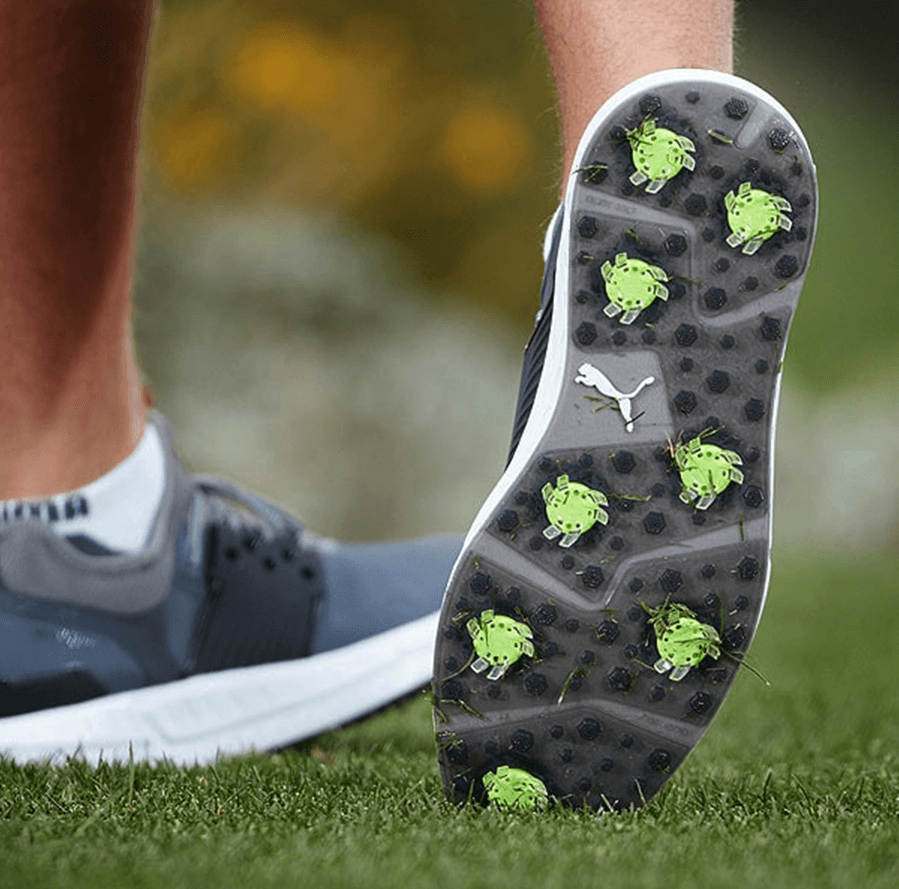
The best fit is secure without being stiff or painful. You should notice support, but you should not focus on the shoe during a normal walk or swing.
Use this table as a quick check. It applies to men’s, women’s, and junior golf shoes, although the exact shape can vary.
| Fit area | What you should feel | Warning sign |
|---|---|---|
| Toes | Toes can move freely without touching the front | Numbness, curled toes, or pressure at the end |
| Heel | Heel stays mostly in place while walking | Repeated lifting, rubbing, or blisters |
| Midfoot | Firm support without painful squeezing | Foot slides side to side |
| Width | No pressure at the little toe or big-toe joint | Pinching, hot spots, or visible bulging |
| Arch | Even contact or comfortable support | Sharp pressure or arch fatigue |
The key test is movement. Walk on a firm surface, bend your knees, rise onto your toes, and make slow practice swings. If the shoe stays with your foot without pain, the fit is likely close.

How much toe room is right?
Most golfers need a small amount of space between the longest toe and the front of the shoe. About a thumb’s width is a useful starting point, but foot shape matters. Some people have a second toe that is longer than the big toe.
Too little space can cause the toes to hit the front while walking downhill. Too much space can make the foot slide and reduce stability. The foot should not swim inside the shoe.
Try the fit while standing. Feet spread slightly when they carry body weight. A shoe that seems long enough while seated may become too short when you stand.

How tight should the heel be?
The heel should feel held in place, but it should not be crushed. When you walk, the heel may lift a small amount because the ankle joint moves. Large or repeated lifting suggests that the heel area is too loose or that the shoe shape does not match your foot.
Use the lacing system to make small changes. Keep the lower laces comfortable over the toes and secure the upper laces around the midfoot. Do not tighten the shoe so much that your toes turn pale or feel numb.
How to find the right Puma golf shoe size
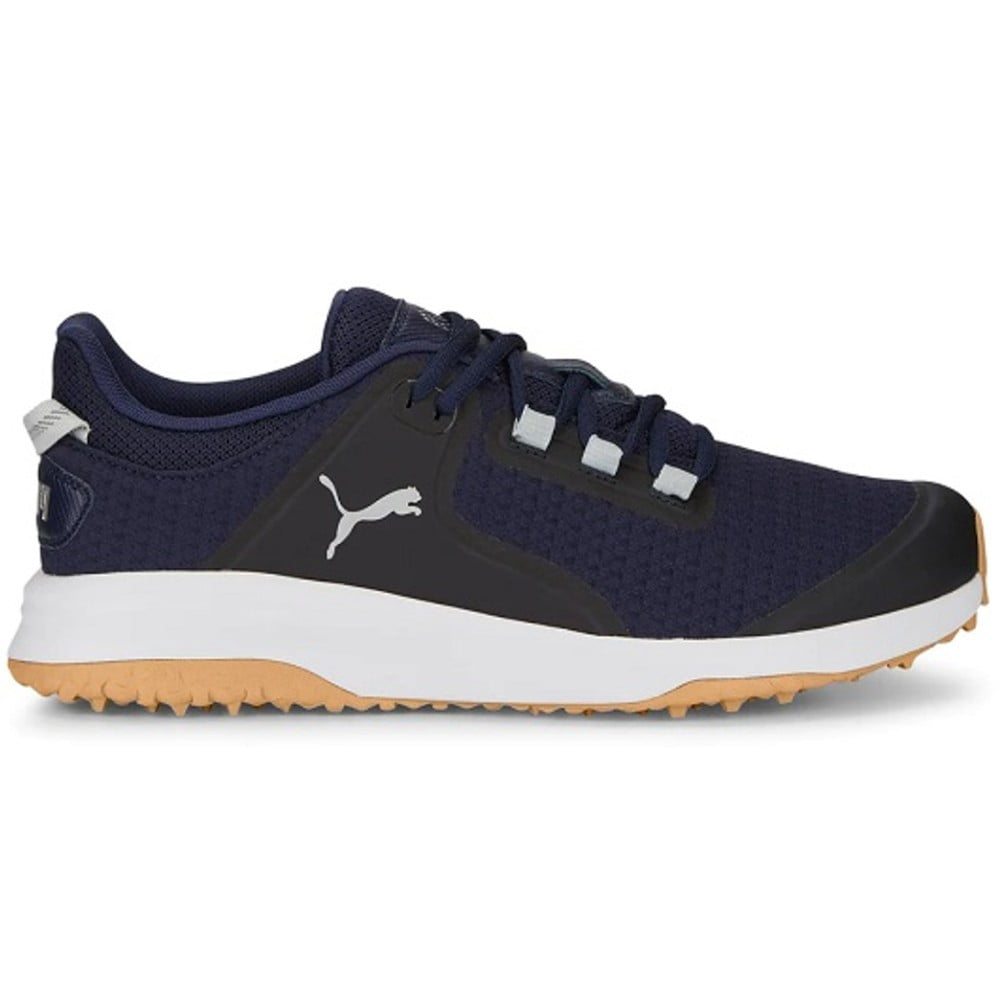
The most accurate process uses your foot measurements, your normal golf socks, and a movement test. Do not rely only on the size printed inside another shoe.
1. Measure both feet
Many people have one foot that is slightly longer or wider. Measure both feet at the end of the day, when they are at their largest. Stand on a sheet of paper with your heel lightly touching a wall.
Mark the back of the heel and the end of the longest toe. Measure the distance between those marks. Then measure the widest part of the forefoot. Repeat for the other foot.
Use the larger foot as the main reference. A shoe that fits the smaller foot may pinch the larger one.

2. Wear the socks used for golf
Socks can change the fit more than expected. Thick winter socks take up extra space, while thin performance socks leave more room. Use the pair you normally wear for a round.
If you use orthotics or another insert, place it in the shoe during the fit test. An insert can raise the foot, reduce internal volume, or change the way the heel sits.

3. Check the length while standing
Stand with your weight spread across both feet. Make sure your longest toe does not touch the front. Walk down a slight slope if possible, because downhill movement can push the foot forward.
Do not solve a width problem by choosing a much longer shoe. Extra length may leave the heel loose and reduce control.

4. Check the width and upper
Look at the widest part of the foot. The upper should lie smoothly over the foot without deep pressure lines. Some stretch is normal, but strong bulging suggests that the shoe is too narrow or too shallow.
Golfers with wide feet should pay close attention to the forefoot. A shoe can have enough length but still feel too narrow across the ball of the foot.

5. Walk and make practice swings
Take at least several minutes to walk. Make a few half swings, a full-motion rehearsal, and a finish pose. Test a stance for driving, chipping, pitching, and putting.
The shoe should remain stable when your pressure moves from the trail side to the lead side. A shoe that feels loose only during the swing may still cause trouble over 18 holes.

6. Test both wet and warm conditions in your planning
You cannot fully recreate every course condition indoors, but you can think about climate. Feet may swell in heat. Wet grass may increase the need for secure footing. Cold weather may require thicker socks.
A links course can have firm, uneven ground and strong wind. A parkland course may have softer turf and more walking through rough. Your fit should support the conditions you face most often.
7. Recheck after a short walk
Take the shoes off and inspect your feet. Red marks, hot spots, or pressure at one toe can show a fit issue before a blister forms. Comfort should improve with movement, not decline.
New golf shoes may need a brief break-in period, but pain is not a normal part of that process. Persistent pressure usually points to a size or shape problem.
Puma golf shoe fit by foot shape
Foot shape often matters more than the number on the size label. Two golfers with the same foot length may need different internal shapes.
| Foot shape | Fit focus | Common issue |
|---|---|---|
| Narrow foot | Secure heel and close midfoot | Foot slides inside a roomy shoe |
| Average foot | Balanced length, width, and volume | Minor heel lift from poor lacing |
| Wide forefoot | More room at the ball of the foot | Pinching near the big toe or little toe |
| High instep | Enough vertical room over the foot | Pressure from the tongue or laces |
| Flat arch | Even support and stable heel | Fatigue from poor foot control |
| High arch | Comfortable arch space | Hard pressure beneath the arch |
The table is a guide, not a diagnosis. Feet change with age, activity, injury, and swelling. If you have ongoing foot pain, consult a qualified health professional.
Wide feet and Puma golf shoes
Golfers with wide feet should not assume that a longer size creates a wider fit. Length and width are separate measurements. A long shoe may still press on the forefoot.
Check where the pressure occurs. Pressure at the sides of the toes points to a width issue. Pressure only at the end of the toes points more toward a length issue.
Women’s and men’s feet can both be narrow, average, or wide. Do not treat a gender label as a perfect guide to foot shape. Measure your feet and focus on the actual fit.
High arches and flat feet
A high arch may need more space across the top and a comfortable footbed. A flat foot may feel better with even support and a stable heel. Neither foot type automatically requires one specific golf shoe design.
The key question is whether the shoe lets you stand and swing without sharp pressure. Your shoes should not force your arch into a painful position.
If you use custom orthotics, ask a podiatrist or physical therapist how they should fit inside golf shoes. The insert may change both shoe size and heel security.
Puma golf shoe fit for different golfers
The best fit can change with age, skill, body size, and playing habits. A junior golfer, a senior walker, and a strong competitive player may need different priorities.
| Golfer | Main fit priority | Useful test |
|---|---|---|
| Beginner | Comfort and secure balance | Walk, bend, and make half swings |
| Improving amateur | Heel lock and pressure control | Rehearse a full swing on uneven ground |
| Senior golfer | Toe room and low pressure | Walk for several minutes and check hot spots |
| Junior golfer | Correct length and flexible comfort | Confirm toes are not crowded after movement |
| Competitive player | Stable midfoot and traction | Test fast swings and aggressive weight shift |
| Frequent walker | Cushioning and swelling room | Fit with normal socks late in the day |
Skill does not change foot anatomy, but it can change how much force you place through the shoe. A beginner may need basic comfort, while a skilled player may notice small movement during impact.
Beginners and new golfers
New golfers often ask whether golf shoes are hard to walk in. They should feel like stable walking shoes, not stiff boots. Start with short practice sessions and notice how your feet feel after 30 to 60 minutes.
Your handicap index may be high or not yet established. That does not change the need for a secure fit. A stable base can help you learn posture, stance width, and weight shift with fewer distractions.
Beginners should not choose a tight fit because it feels more secure. Secure means the foot stays in place while the toes remain relaxed.
Improving amateurs
Improving players may begin to create more speed through the downswing. Faster rotation can expose heel lift, weak midfoot support, or poor traction. Pay attention to the lead foot during impact and the trail foot during the backswing.
If you practice at a driving range, check your feet after a large bucket of balls. Repeated swings can reveal rubbing that a short fitting test misses.
A shoe cannot fix a swing fault. If you slide, sway, or lose balance, work on grip, posture, stance, and tempo with a PGA professional. Footwear is only one part of the movement system.
Seniors
Senior golfers often benefit from comfort, easy walking, and a forgiving fit. Feet can change over time due to joint changes, swelling, reduced skin padding, or past injuries.
Leave enough toe room for walking and avoid pressure over bunions or sensitive joints. Test the shoes later in the day, not only early in the morning.
A senior player with back, knee, ankle, or foot pain should not use shoes to hide a medical problem. Stop if pain persists and seek medical advice.
Women golfers
Women golfers should focus on foot shape rather than assumptions about size. Some women have narrow heels with a wider forefoot, while others have a uniform narrow shape. Fit should follow the foot, not a label.
Hormonal changes, pregnancy, swelling, and long periods of standing can affect shoe comfort. If your foot size changes, measure again.
For women who walk, test the shoes with the socks and inserts used on the course. Comfort on the range may not match comfort after several miles.
Junior golfers
Junior feet grow quickly. Parents should check length often, especially before a season of regular play. Do not leave a large amount of extra space for growth, because a loose shoe can affect balance and increase the risk of tripping.
Junior golfers need room to move their toes and enough heel security for a controlled finish. Their shoes should not restrict normal foot movement.
Use age-appropriate equipment and supervise children around swing areas. A junior should never walk in front of another player who is preparing to hit.
👪 Parent or Beginner Note: Check a junior golfer’s shoes after socks, inserts, and normal movement are in place. A child may not describe pressure clearly, so look for red marks, rubbing, or a change in the way they walk.
Spiked and spikeless Puma golf shoe fit
The main difference between spiked and spikeless golf shoes is the traction system, not the basic sizing method. Both should fit securely at the heel, midfoot, and forefoot.
Spiked shoes may feel more planted on wet or soft turf. Spikeless shoes may feel more natural on firm paths and around the clubhouse. Fit still comes first. A shoe with strong traction is not useful if your foot slides inside it.
| Feature | Spiked design | Spikeless design |
|---|---|---|
| Turf grip | Often strong in soft or wet ground | Often suited to mixed surfaces |
| Walking feel | May feel more structured | May feel more like a casual shoe |
| Course care | Can leave marks if used carelessly | Usually gentler on firm areas |
| Fit priority | Heel and midfoot lock | Forefoot comfort and flexibility |
| Best test | Swing on grass and walk on slopes | Walk, swing, and test firm paths |
Always follow course rules about footwear. Some clubs have local policies about acceptable sole designs. Check with the club or event committee if you are unsure.
Fit on wet grass
Wet grass can make the outside of the shoe and the ground feel less predictable. Your foot should not move inside the upper when you brace for a swing.
Test your stance on a gentle slope if safe. Keep your knees soft and avoid forcing a full swing in slippery conditions. A good shoe cannot replace careful balance.
Fit on hard ground and paths
Firm ground can increase impact through the feet and legs. A very tight or rigid shoe may feel less comfortable on a links course, an executive course, or a dry practice area.
Use a warm-up routine before swinging. Start with walking, ankle circles, body turns, and short chip shots. This helps your body adjust before full swings.
Common Puma golf shoe fit problems and fixes
Most fit problems come from choosing by size alone. The solution depends on where the problem occurs and when you notice it.
| Problem | Likely cause | Practical check |
|---|---|---|
| Heel slips | Shoe is too loose or lacing is poor | Walk and use a heel-lock lace pattern |
| Toes hit the front | Shoe is too short or foot slides forward | Test downhill and while standing |
| Side pressure | Shoe is too narrow | Check the widest part of the forefoot |
| Numb toes | Excess pressure or overly tight laces | Loosen lower laces and reassess |
| Arch pain | Shape or insert does not suit you | Try normal foot support and seek advice if pain stays |
| Blisters | Friction from movement or moisture | Inspect heel and wear proper golf socks |
Do not ignore repeated pain. A small hot spot can become a large blister during a long round. Fix the fit before your next full day on the course.
“My Puma golf shoes feel too tight”
First, identify the location. Tightness over the toes, along the sides, and across the top can have different causes.
Loosen the laces near the forefoot and walk again. If the pressure remains, the shoe may be too short, too narrow, or too low in volume. Do not keep wearing a painful shoe in the hope that it changes shape enough.
A little early stiffness may improve. Numbness, sharp pain, or discoloration is a clear reason to stop.
“My heel keeps lifting”
Heel lift can result from a loose fit, a narrow heel shape, or poor lacing. Try a heel-lock method, which uses the top eyelets to hold the heel more securely.
Then walk and make practice swings. If the heel still lifts often, the shoe may not match your foot shape. Do not solve the problem by overtightening the entire shoe.
“My feet hurt after 18 holes”
Pain after a round may come from fit, socks, walking load, hard ground, poor conditioning, or an existing injury. Note when the pain begins and where it occurs.
If the pain starts at the toes, check length and width. If it starts under the arch, check support and inserts. If it affects the ankle, knee, hip, or back, review your walking habits and movement pattern.
Persistent pain deserves medical attention. A PGA professional can help with swing mechanics, but a doctor or qualified clinician should assess ongoing pain.
🔧 Quick Fix: Before changing sizes, walk for five minutes, adjust the laces in sections, and check your socks. This can reveal whether the issue is loose heel fit, tight forefoot fit, or simple pressure from the lacing.
How socks, inserts, and lacing change fit
Socks act like a thin layer between your foot and the shoe. They should manage moisture and reduce rubbing without creating bunching. Wrinkles under the toes or heel can cause hot spots.
Inserts can improve comfort for some golfers, but they also reduce internal space. If the heel feels loose after adding an insert, the foot may be sitting higher than before.
Lacing should secure the foot from the midfoot upward. The lower section should not squeeze the toes. Tie the upper section firmly enough to reduce movement, but not so tightly that circulation feels restricted.
A simple lacing check
Stand with your feet in a normal golf stance. Keep the toes relaxed and press the foot into the floor. The shoe should feel secure when you rotate the hips and shoulders.
If the shoe folds sharply across the toes, it may be too short or too stiff for your foot. If the upper wrinkles deeply on both sides, it may be too roomy.
Walking, riding, and course conditions
The way you play changes the fit you need. A golfer who walks 18 holes places far more repeated load on the feet than a golfer who rides most of the round.
Walking golfers should allow for natural swelling and test comfort over time. Riding golfers still need stability on slopes, around bunkers, and near the tee box. Both groups should consider the surface they play on most often.
| Playing situation | Fit concern | Helpful response |
|---|---|---|
| Long walking round | Swelling and friction | Test late in the day with golf socks |
| Cart use | Sudden movement and uneven lies | Keep heel and midfoot secure |
| Hot weather | Feet may expand | Avoid a tight toe box and hydrate |
| Cold weather | Thicker socks | Test with the socks you plan to wear |
| Wet course | Foot movement and traction | Check stability on grass |
| Hilly course | Forward sliding and heel pressure | Test slopes and keep toe room |
Weather also affects your body. Heat calls for water, sun protection, and sensible breaks. In lightning, leave the course at the first warning and follow the facility’s safety plan.
Links courses and firm turf
A links course often has firm ground, wind, slopes, and uneven lies. Your feet may work harder to maintain balance. A secure heel and comfortable forefoot can help you adapt your stance.
Keep the swing controlled on severe slopes. Do not chase a normal full-swing finish when your footing is unsafe. Course management begins with accepting the lie you have.
Parkland courses and soft turf
Parkland courses may include softer fairways, rough, wet areas, and more tree-lined paths. Shoes can collect moisture and grass, which may increase friction.
Keep your feet dry when possible and inspect the shoes after play. Repair divots, fix ball marks, rake bunkers, and keep the pace of play moving. Good footwear does not replace good golf etiquette.
Do golf shoe fit and rules affect play?
Golf shoe fit is not usually a Rules of Golf issue by itself. The Rules focus on how you play the ball, where you take relief, how you count strokes, and how you handle equipment and conditions.
However, footwear can matter under local club or event policies. Some courses may restrict certain sole types or require suitable golf footwear for safety and turf care. Check the current Rules of Golf, local rules, and the committee’s instructions.
You cannot use shoes to deliberately damage the putting green or improve conditions. Normal movement is different from intentionally scraping or pressing the ground to gain an advantage.
The same principles apply in stroke play, match play, scramble events, and Stableford. The format changes scoring, not the basic need to follow footwear and course rules.
📜 Check the Rules: Rules and local policies can change. Before a competition, review the latest Rules of Golf and ask the tournament committee about footwear, practice areas, and local conditions.
Footwear and the putting green
When putting, keep your feet steady and avoid unnecessary movement. Do not twist or drag your shoes in a way that damages the green.
Read the green from behind the ball and from the low side when appropriate. Green reading means judging slope, speed, and break. Comfortable shoes can help you stand still, but they do not replace careful observation.
Footwear and pace of play
A poor fit can slow a round if you stop to adjust laces, treat blisters, or change socks. Prepare before the tee time. Carry simple foot-care items when allowed, and avoid stopping in unsafe places.
Good pace means being ready when it is your turn, walking with purpose, and keeping up with the group ahead. It does not mean rushing a swing.
How long does it take to adjust to new Puma golf shoes?
Many golfers can feel comfortable after a short break-in period, but the time varies. A flexible spikeless design may feel familiar quickly. A more structured shoe may need several short sessions.
Use a gradual plan rather than wearing new shoes for a full tournament or long walking round at once.
| Session | Duration | Goal |
|---|---|---|
| First | 15–20 minutes | Check pressure and heel movement |
| Second | 30–45 minutes | Walk and make half swings |
| Third | 45–60 minutes | Practice chipping, pitching, and full swings |
| Fourth | 9 holes | Check comfort under real course load |
| Later | 18 holes | Use only if earlier sessions were comfortable |
Stop if you feel sharp pain, numbness, or skin damage. Break-in should reveal comfort, not force your feet to accept a poor shape.
A beginner may need several practice sessions to learn how a stable shoe feels during the swing. An experienced golfer may notice fit problems at once because the foot responds quickly to changes in pressure.
Fit checks for driving, chipping, pitching, bunkers, and putting
Different shots place different demands on the feet. A driver swing creates strong rotation and pressure shift. Chipping and pitching need a stable lead side and quiet lower body. Bunker shots require balance on sand, while putting requires stillness.
Use a short practice sequence:
- Take a normal driver stance.
- Make three slow swings.
- Hit a few chip shots with a narrow stance.
- Rehearse a pitch with a slightly wider stance.
- Stand in a bunker stance if the practice area allows it.
- Hold a putting posture for 30 seconds.
Notice whether the heel lifts, toes grip the ground, or the foot rolls inside the shoe. Those signs may point to fit, lacing, posture, or balance issues.
The best fit for high swing speed
Swing speed can increase the forces placed through the feet, but speed alone does not determine the right shoe. Tempo, ground contact, body strength, and swing pattern also matter.
A golfer with a fast downswing should test the lead foot during impact and the trail foot during the backswing. The shoe should stay connected without feeling rigid.
Do not confuse traction with stability. Traction relates to grip between the sole and turf. Stability also depends on the shoe structure, your foot position, and your movement.
The best fit for slower swing speed
A slower swing speed does not mean you can ignore fit. New golfers and many senior players still need secure footing to learn balance and tempo.
Comfort may be the top priority. Choose a fit that allows natural walking and does not create pressure during long practice sessions. A shoe that feels too heavy or stiff can make walking less pleasant.
Common mistakes when checking Puma golf shoe fit
Small mistakes can lead to poor decisions. Use the following list before judging the fit.
- Measuring only one foot.
- Trying shoes while seated.
- Wearing different socks from those used on the course.
- Choosing extra length to solve a width problem.
- Tightening every lace section equally.
- Ignoring early hot spots.
- Testing only on a carpeted floor.
- Wearing new shoes for 18 holes without a gradual test.
- Assuming men’s, women’s, or junior sizing always matches foot shape.
- Blaming shoes for a swing fault that needs instruction.
The best fit is a process, not a guess. Measure, move, inspect, and reassess.
Mistake: choosing by normal sneaker size
Your usual athletic-shoe size is a useful starting point. It is not proof that the golf shoe fits. Different lasts, materials, and sole shapes can change the feel.
Use foot measurements and the current size guide for the specific shoe. If your feet are different sizes, fit the larger foot first.
Mistake: testing only a full swing
A full swing can hide a problem because you focus on the ball. Walking, standing, and slow practice swings often reveal more.
Test the shoes through the whole round pattern. Walk from the tee box to the fairway, stand on a slope, chip, putt, and move through light rough.
When to ask a professional for help
Ask a PGA professional for help when poor balance, sliding, or inconsistent impact continues even after you check your footwear. A teaching professional can assess grip, stance, posture, backswing, downswing, tempo, and follow-through.
Ask a podiatrist, physical therapist, or doctor about persistent foot pain, numbness, swelling, or joint problems. Do not keep playing through pain that changes your walking pattern.
Golf fitness can also help. Simple work on ankle mobility, calf strength, hip rotation, balance, and core control may support a more stable swing. Warm up before practice, and increase walking distance slowly.
Safety during practice
Keep the swing area clear. Stand behind the hitting line, watch for nearby players, and follow range rules. Warm up with easy movements before hitting drivers.
Protect your skin from the sun, drink water in heat, and take breaks when needed. If you hear thunder or receive a lightning warning, leave the course at once. Cart users should follow cart paths, avoid unsafe slopes, and never drive recklessly.
Frequently asked questions
Q: Do Puma golf shoes run true to size?
A: Many golfers find that Puma golf shoes are close to their usual athletic-shoe size, but fit can vary by model and foot shape. Measure both feet, use the current size guide, and test the shoes with golf socks.
Q: Should golf shoes fit tight or loose?
A: They should fit close but not tight. The heel and midfoot should feel secure, while the toes need room to move. Pain, numbness, or side pressure means the fit is too tight.
Q: Should I size up in Puma golf shoes?
A: Do not size up automatically. First find out whether the issue is length, width, or volume. Extra length may create heel slip. Measure your feet and follow the specific size information for the shoe.
Q: Do Puma golf shoes fit differently for men and women?
A: Men’s and women’s versions may use different shape and sizing systems, but foot shape varies within every group. Focus on length, width, heel security, and comfort rather than gender assumptions.
Q: How should Puma golf shoes fit for wide feet?
A: The forefoot should not feel squeezed at the big-toe joint or little toe. A longer size is not always a wider size. Look for comfortable width and inspect your feet after walking.
Q: How much room should be in the toe of a golf shoe?
A: Leave roughly a thumb’s width between the longest toe and the front of the shoe while standing. The exact amount depends on foot shape, socks, and how much your feet swell.
Q: Can golf shoes improve my swing?
A: Properly fitted shoes can support balance and stable contact with the ground. They cannot fix a slice, hook, poor posture, weak grip, or timing fault. Those issues need practice and, when needed, instruction.
Q: Are spikeless Puma golf shoes more comfortable?
A: Comfort depends on the shoe shape, your foot, and the surface. Spikeless designs may feel natural for walking, while structured traction may suit wet or soft turf. Fit matters more than the category alone.
Q: Can I wear thick socks with Puma golf shoes?
A: Yes, if the shoes still leave enough toe room and do not create pressure. Always test the shoes with the socks you plan to use during a round.
Q: How should Puma golf shoes fit for seniors?
A: Seniors should look for comfortable toe room, low pressure, steady heel support, and enough space for normal swelling. Test the shoes later in the day and stop if pain persists.
Q: How should Puma golf shoes fit for juniors?
A: Junior shoes should not be oversized for growth. Toes need room, but the heel must stay secure. Check the fit often because children’s feet can change quickly.
Q: Can I use orthotics in Puma golf shoes?
A: You may be able to, but an orthotic changes the internal space and heel position. Test the shoes with the insert in place. Ask a health professional about custom orthotics.
Q: How long should new golf shoes take to break in?
A: Use several short sessions before a full round. If the shoes cause sharp pain, numbness, or repeated rubbing, they are not simply waiting to break in.
Q: Do golf shoe rules differ between stroke play and match play?
A: The basic footwear expectations do not change because of the format. Always check the current Rules of Golf, local rules, and the event committee’s instructions.
Final thoughts
Puma golf shoes usually fit best when you start with your measured foot length and width, then confirm the fit through movement. Look for a secure heel, supported midfoot, and relaxed toes. Test with your normal socks, inserts, and golf stance.
A good fit suits your golf life. Walkers need comfort and swelling room. Beginners need balance and simple support. Improving players need a stable base for pressure shift. Seniors and juniors need special attention to comfort, growth, and foot health.
Do not judge a golf shoe by its label alone. Walk, swing, inspect your feet, and listen to pain signals. When the fit is right, the shoes become quiet support beneath your game, letting you focus on the target, the lie, and the next shot.