Cavity back irons offer more forgiveness for most golfers, while blade irons deliver superior feel and shot control.
I have spent years testing irons on courses and at fittings. I know the feel of a blade and the forgiveness of a cavity back. This guide on cavity back vs blade irons breaks down design, performance, fitting tips, and real-world advice. Read on to choose the right iron for your game with confidence.

Overview: What are cavity back vs blade irons?
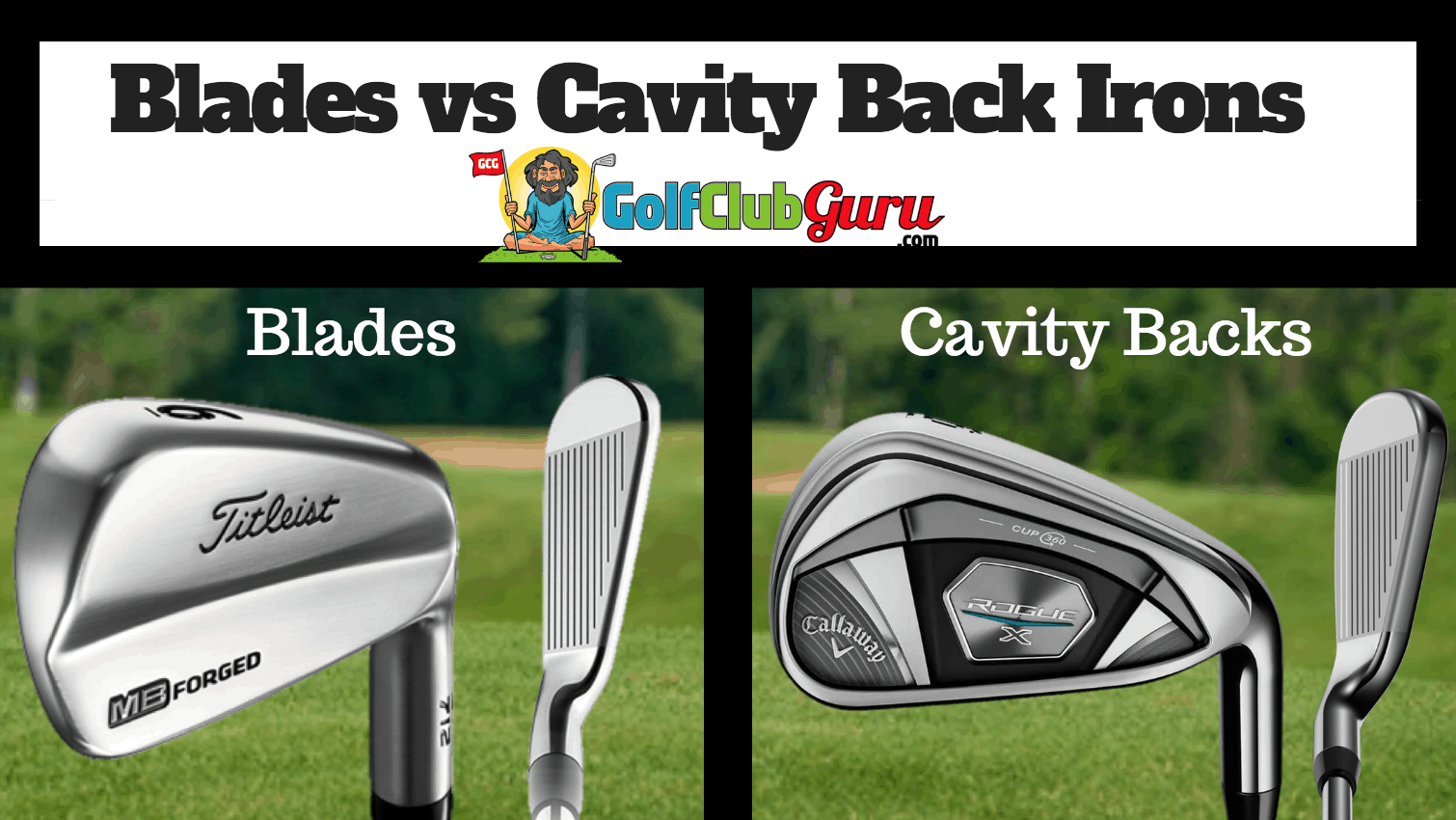
Cavity back vs blade irons refer to two main iron designs. Cavity back irons move weight to the club perimeter. This makes them more forgiving on off-center hits. Blade irons have a thin, compact head with weight centered behind the face. That gives blades a crisp feel and sharper feedback.
Most players feel better results with cavity back irons at higher handicaps. Better players often prefer blades for control. I have used both types at different stages of my game. Each has clear strengths and trade-offs.
Design differences between cavity back vs blade irons
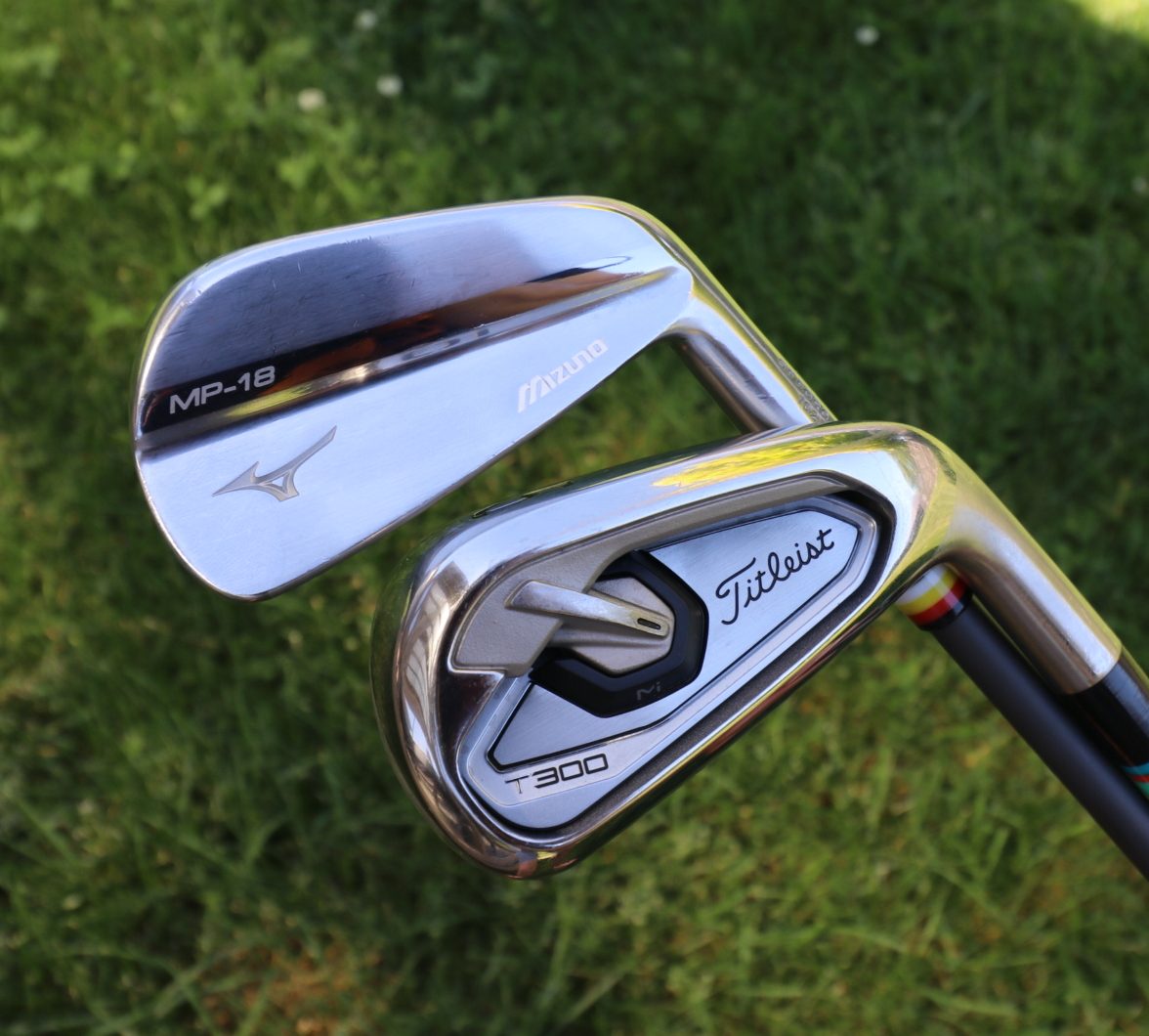
Cavity back vs blade irons differ in shape, weight, and construction. Blade heads are thin and compact. Cavity backs have a hollow or milled pocket behind the face. That pocket shifts mass to the toe and heel.
Key design contrasts:
- Face thickness: Blades usually have a thinner face for better feedback and workability.
- Weight distribution: Cavity backs place weight away from the sweet spot to boost forgiveness.
- Offset and sole width: Cavity backs often have more offset and wider soles to promote straighter shots.
- Materials and construction: Modern cavity backs may use multi-material cores or inserts to tune feel and speed.
From my testing, cavity back vs blade irons feel like night and day on mishits. Cavity backs save balls. Blades reward precise strikes.

Performance comparison: forgiveness, feel, and control
Cavity back vs blade irons perform differently across key metrics. Pick the attribute you value most.
Forgiveness
- Cavity back irons reduce side spin on off-center strikes. This keeps shots straighter and more playable.
- Blade irons punish misses with larger distance and direction loss.
Feel and feedback
- Blade irons transmit more vibration to your hands. That gives instant feedback on strike quality.
- Cavity backs feel softer on mishits thanks to perimeter mass and face inserts.
Distance and launch
- Many cavity back irons launch higher and keep ball speed across the face.
- Blades require precise contact to match carry distance and offer less passive help.
Shot shaping and workability
- Blade irons allow easier shot shaping for draws and fades.
- Cavity backs tend to fly more on a set path, making shape control harder but consistency higher.
In short, cavity back vs blade irons trade forgiveness for feel and workability. Your choice depends on skill, goals, and how you value feedback versus consistency.
Who should choose cavity back vs blade irons?
Choosing between cavity back vs blade irons depends on your handicap, goals, and preferences.
Beginners and high handicaps
- Choose cavity back irons for forgiveness and confidence.
- They reduce the penalty of off-center hits and improve consistency.
Mid-handicap players
- Try both. Many mid-handicaps benefit from hybrid sets that mix cavity backs and blades.
- Use cavity backs in long irons and blades in scoring irons if you want control.
Low handicaps and single-digit players
- Blades often fit better for players who strike the ball consistently.
- If you want maximum feel and control and can live with lower forgiveness, pick blades.
Personal note: I switched from blade-style irons in my 20s to cavity backs when my game became less consistent. The confidence gain was immediate.

Fitting and testing tips for cavity back vs blade irons
A proper fit beats guessing. Test both types before you buy.
How to test
- Hit at least a dozen shots with each iron on the range and on the short course.
- Use a launch monitor to compare launch angle, spin, and dispersion.
Fit considerations
- Check lie angle, shaft flex, and grip size.
- Consider set makeup: mixing cavity back vs blade irons can give the best of both worlds.
Notes from fittings
- I found that many players improved dispersion with small changes in lie and shaft torque. Try different shafts when comparing cavity back vs blade irons to avoid blaming the head alone.

Maintenance, longevity, and resale
Care keeps irons playing well. Both cavity back vs blade irons need basic upkeep.
Maintenance tips
- Wipe faces clean after each round to preserve grooves and spin.
- Inspect for dents and loose ferrules. Address issues early.
Resale and lifespan
- Blades hold value well among better players if they are from reputable lines.
- Cavity backs often have broader resale appeal and can be easier to sell.
Aging and upgrades
- If you want to modernize feel or forgiveness, re-shafting or adding a new set of wedges may be more cost-effective than replacing an entire set.

Frequently Asked Questions of cavity back vs blade irons
What is the main difference between cavity back vs blade irons?
Cavity back irons move weight to the perimeter for forgiveness. Blade irons keep weight behind the face for feel and control.
Which iron type helps reduce slices and hooks?
Cavity back irons help reduce shot curves by stabilizing off-center hits. Proper fitting and swing path changes also matter a lot.
Can a mid-handicap player use blade irons?
Yes, a mid-handicap can use blades, but they must strike the ball consistently. Many mid-handicaps prefer mixed sets for balance.
Are cavity back irons slower or faster than blades?
Modern cavity back irons often produce similar ball speed to blades due to thin faces or face inserts. Differences are usually small with modern designs.
Should I mix cavity back vs blade irons in one set?
Mixing is common. Use cavity backs in long irons for forgiveness and blades in scoring irons for touch and control.
Will a fitter recommend different shafts for cavity back vs blade irons?
Yes. Fitters often pair stiffer or lighter shafts based on head design, launch needs, and player tempo. Shaft choice can change performance more than head shape.
Conclusion
Cavity back vs blade irons have clear trade-offs. Cavity backs bring forgiveness, higher launch, and consistency. Blades offer superior feel, feedback, and shot-making for consistent strikers. Test both types, get a proper fitting, and pick the set that matches your swing and goals.
Take action this week: hit both styles at a fitting or demo day. Try a mixed set if you are unsure. Leave a comment about your experience or subscribe for fitting tips and reviews.