How To Get A Golf Ball In The Air: Easy Launch Tips
Get the ball airborne by using more loft, a slightly upward strike, proper ball position, and balanced weight shift.
As a golfer and coach with years on the range and hundreds of fitting sessions, I’ll walk you through exactly how to get a golf ball in the air. This guide covers the physics, setup, swing moves, drills, equipment tips, and common mistakes. Read on and you’ll learn practical, tested steps you can use today to get consistent height and carry on your shots.

How ball flight works and why it matters
Ball flight starts with clubface loft, clubhead speed, and the angle the clubhead meets the ball. When you want to know how to get a golf ball in the air, think of three things: loft, angle of attack, and spin. Loft creates lift. Upward strike and proper spin let the ball climb.
Lift depends on the club’s loft and the dynamic loft at impact. Spin keeps the ball stable and helps it climb. Clubhead speed and the strike location change how much lift and spin you get. Small tweaks in setup and swing lead to big changes in height and carry.
What I’ve seen working time and again is that golfers often try to muscle the ball up. That rarely helps. Smart changes to setup and swing feel are faster and more reliable to get the ball airborne.

Key fundamentals to get a golf ball in the air
Use this checklist each time you practice. These fundamentals are the fastest route to better launch.
- Ball position: Place the ball slightly forward for drivers and mid-forward for long irons. This encourages a shallower or upward angle of attack.
- Stance and posture: Stand tall but athletic. Bend from the hips and keep a slight knee flex. A balanced posture helps you swing freely.
- Tilt and spine angle: For higher launch with a driver, tilt your spine slightly away from the target at address. This helps you strike on an upward path.
- Weight distribution: Start with about 55% of your weight on your back foot for a driver and shift forward through impact. This promotes an upward strike and solid compression.
- Club selection and loft: Use clubs with enough loft. If you can’t get the ball up, consider a higher-lofted club or adjust loft with a fitting.
- Grip and relaxed hands: Hold the club firmly but not tight. Tension in the hands kills speed and blocks a clean upward strike.
- Angle of attack: For drivers aim for a slightly upward angle of attack. For irons aim for a shallow divot or crisp compression rather than a steep downward hit.
- Swing path and release: A smooth, accelerating release gives you speed and lift. Hold the lag and let the clubhead release through impact.
When you focus on these basics, learning how to get a golf ball in the air becomes far less confusing. Small, repeatable habits beat big, inconsistent swings.
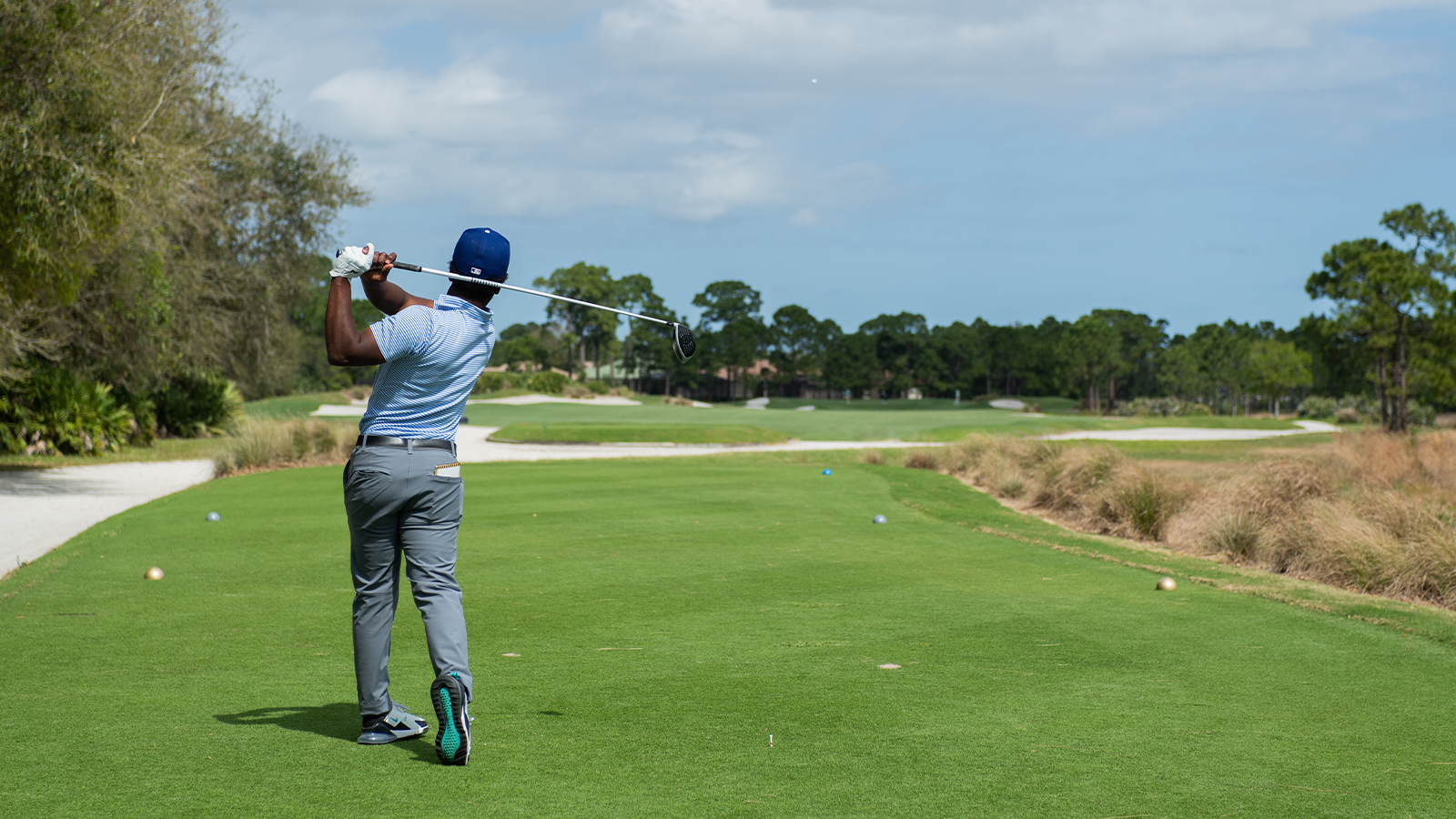
Step-by-step swing checklist to get the ball in the air
Follow these short steps on the range. Repeat each step until it feels natural.
- Set up with the ball slightly forward in your stance for long clubs and driver. This helps you hit up.
- Tilt your spine away from the target just a touch for driver shots. Keep your chin up and eyes on the ball.
- Make a smooth takeaway. Keep the club on plane and don’t rush the backswing.
- Transition with your lower body. Shift weight forward through impact to compress the ball.
- Strike the ball with a gentle upward shaft lean for driver, or a shallow descending blow for irons. Focus on a clean, centered hit.
- Accelerate through the ball. Maintain a relaxed grip and full follow-through.
Practice these steps in slow motion, then build speed. Slow practice builds the feel you need to get the ball airborne under pressure.

Simple drills to raise ball flight fast
Drills beat theory when you want reliable results. Try these on the range.
- Tee drill for irons: Tee up an iron so the ball is slightly above the sole. Make half swings and aim to hit the ball cleanly off the tee. This trains a shallow attack and crisp contact.
- Headcover or towel under hips drill: Place a towel under your trail hip. Keep it stable through impact to prevent flipping and encourage an upward or shallow strike.
- Impact bag drill: Hit into an impact bag to feel the correct compressive strike and weight transfer. This helps you feel forward pressure at impact.
- Launch monitor or alignment-stick feedback: Use numbers or sticks to check ball position, launch angle, and spin. Adjust based on data, not just feel.
- One-plane rhythm drill: Swing on a single plane with a slow backswing and fast downswing. This promotes consistent path and solid contact.
I used the tee drill for weeks to fix a low ball flight. Within a month my driving carry increased noticeably. Small, daily reps made the difference.

Club selection, ball choice, and equipment tips
Equipment matters. The right setup makes how to get a golf ball in the air easier.
- Choose the right loft: If you can’t launch a club, move to a higher lofted fairway or hybrid. Modern clubs have more effective lofts than older models.
- Shaft flex and length: Use a shaft that fits your swing speed. Too stiff a shaft can reduce launch. Too long or too short can harm contact quality.
- Ball type: Low-spin balls fly lower at speed. Choose a ball with a mid spin profile if you need more height.
- Driver settings: Many modern drivers let you increase loft or adjust face angle. Small loft increases often raise launch and carry.
- Get a fitting: A brief fitting session can quickly identify loft, shaft, and ball combos that help you get the ball up.
In my fittings, raising a driver loft by 1–1.5 degrees often raised launch and improved carry for mid-speed players. Simple equipment tweaks are low-effort and high-impact.

Common mistakes and fixes
These errors show up most often. Fixes are short and clear.
- Mistake: Ball too far back. Fix: Move the ball forward in your stance to promote upward strike.
- Mistake: Tension in hands and arms. Fix: Lighten the grip pressure; swing with rhythm.
- Mistake: Steep, downward angle of attack with long clubs. Fix: Tilt the spine slightly away and feel a shallow takeaway.
- Mistake: Wrong club choice. Fix: Use a club with more loft or a hybrid for tight launch windows.
- Mistake: Over-swinging to create height. Fix: Slow down and focus on solid contact and acceleration through the ball.
These fixes are simple. Try one change at a time and test it on the range.

When to seek a coach or custom fitting
You’ll save time and avoid bad habits by getting outside help when needed.
- If swing changes don’t create steady flight, work with a coach. A trained eye spots path and face issues quickly.
- If you’re unsure about loft, shaft, or ball choices, book a club-fitting. Data can prove what feels right.
- If pain or unusual motion limits your swing, see a physical coach or therapist. Clear movement matters for consistent launch.
A short lesson or a 45-minute fitting often gives immediate tweaks that change trajectory and distance. That time is worth it.

Quick questions answered while you practice
What loft should I use to get the ball in the air?
- Use more loft if you struggle to launch. For fairway woods and long irons, consider hybrids or higher-lofted heads to help carry.
Will faster swing speed always make the ball go higher?
- Not always. Speed helps, but correct angle of attack and spin are key. Without a good strike and launch, more speed can create low spinning bullets.
How much should I move my weight forward at impact?
- Move your weight to the front foot through impact. Think about starting 55% back and finishing 60–70% front for a driver or long club.

Frequently Asked Questions of how to get a golf ball in the air
What is the easiest change to help get a golf ball in the air?
Move the ball slightly forward in your stance and tilt your spine away from the target for driver shots. These small changes encourage a more upward strike and improved launch.
How does grip pressure affect ball flight?
Too-tight grip pressure reduces clubhead speed and blocks a clean release. A lighter grip lets you accelerate and create the spin needed to lift the ball.
Should I use a lower-spin ball to get more height?
Lower-spin balls tend to fly lower at high speed. If you need height, choose a ball with moderate spin to help the ball climb and stop on landing.
Can changing shaft flex help me get the ball in the air?
Yes. Using a shaft that matches your swing speed helps deliver the clubhead in the right position. A shaft that is too stiff can keep the face from releasing and lower launch.
Is it better to hit up or down on the ball with long clubs?
For driver and low-lofted fairway woods, hit slightly up. For irons, aim for a shallow descending blow that compresses the ball. The goal is crisp contact and the right launch angle.
How long will it take to change my ball flight?
With focused practice and the right drills, many players see improvement in weeks. Consistent reps and feedback speed up learning and build new habits.
Conclusion
You can change how to get a golf ball in the air with simple, repeatable steps: adjust ball position, mind your loft and angle of attack, practice the right drills, and use gear that matches your swing. Start small. Pick one change, practice it until it feels natural, and then add another. Your ball flight will improve and your scores will too.
Take action this week: try one drill and one equipment tweak. Track your results and share what you discover. If this helped, leave a comment or subscribe for more practical golf tips.