How Heavy Is A Golf Ball: Exact Weight Explained
A standard golf ball weighs up to 1.62 ounces (about 45.93 grams), typically right near that limit.
I’ve spent years testing clubs and balls, so I know the small facts that matter. If you’ve wondered how heavy is a golf ball and why that number matters, this guide will explain the rules, feel, and real-world effects. I’ll show you what the official weight means, how tiny weight changes affect flight, how different ball types compare, and practical tips from my own testing to help you pick the right ball.
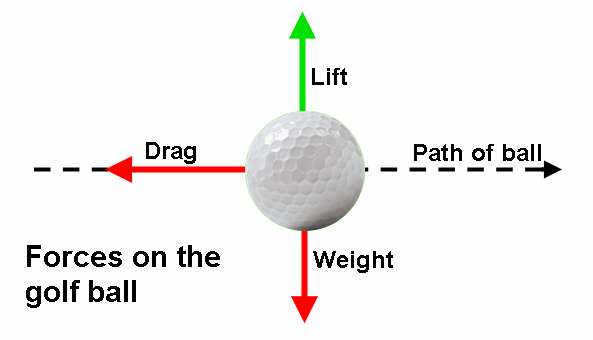
Official weight and the rules: exactly how heavy is a golf ball?
The rule makers set a clear top limit. A golf ball may not weigh more than 1.620 ounces or 45.93 grams. The ball must also be at least 1.680 inches in diameter. These limits ensure fairness in play and consistent performance across brands.
Manufacturers aim to make balls very close to that maximum. Most tour and premium balls sit right under the 45.93 gram cap. Slight variation can occur from production. Those variations are usually a few tenths of a gram at most.
Why this matters for you
- It keeps competition fair for all players.
- It sets a baseline for performance and testing.
- It limits extreme designs that could change the game.

Why weight matters: how heavy is a golf ball and how it affects play
Weight affects speed, feel, and ball physics. In simple terms, a heavier ball needs more force to reach the same speed as a lighter ball. But because regulation balls are all near the same mass, real differences are subtle.
Short, clear effects
- Speed and carry: Given the same club head speed, a slightly heavier ball will have a tiny drop in launch speed. The carry change is usually a few feet, not yards.
- Spin: Ball construction matters more than tiny weight differences. Softer covers and multilayer cores change spin much more than 0.1–0.5 grams.
- Feel: Heavier-feeling balls often feel firmer at impact. Perception matters a lot; many players sense small differences even if the physics change is small.
Practical takeaway: Because official balls cluster near 45.93 grams, choose by compression and cover, not just mass. How heavy is a golf ball matters, but it’s only one part of the puzzle.

Types of balls and their weight differences
Most common types of balls weigh about the same. But some special balls can differ:
-
Tour and premium balls
- Weight: Around 45.9 grams, just under the limit.
- Use: Maximum performance and consistency.
-
Distance balls
- Weight: Similar to tour balls, but tuned for speed.
- Use: Players seeking extra yards.
-
Soft feel or low-compression balls
- Weight: Still near the standard, but compressed differently on impact.
- Use: Players wanting softer feel and more short-game spin control.
-
Practice, range, and wiffle or plastic balls
- Weight: Can be much lighter, from about 10 to 30 grams for hollow plastic practice balls.
- Use: Training and casual play. These do not match true playing characteristics.
-
Junior or training balls
- Weight: Often lighter for slower swing speeds.
- Use: Introduction to golf for kids and beginners.
How heavy is a golf ball in real life? For real play, it’s almost always about 45.9 grams. Only non-regulation and training balls stray far from that.
How to measure and test ball weight at home
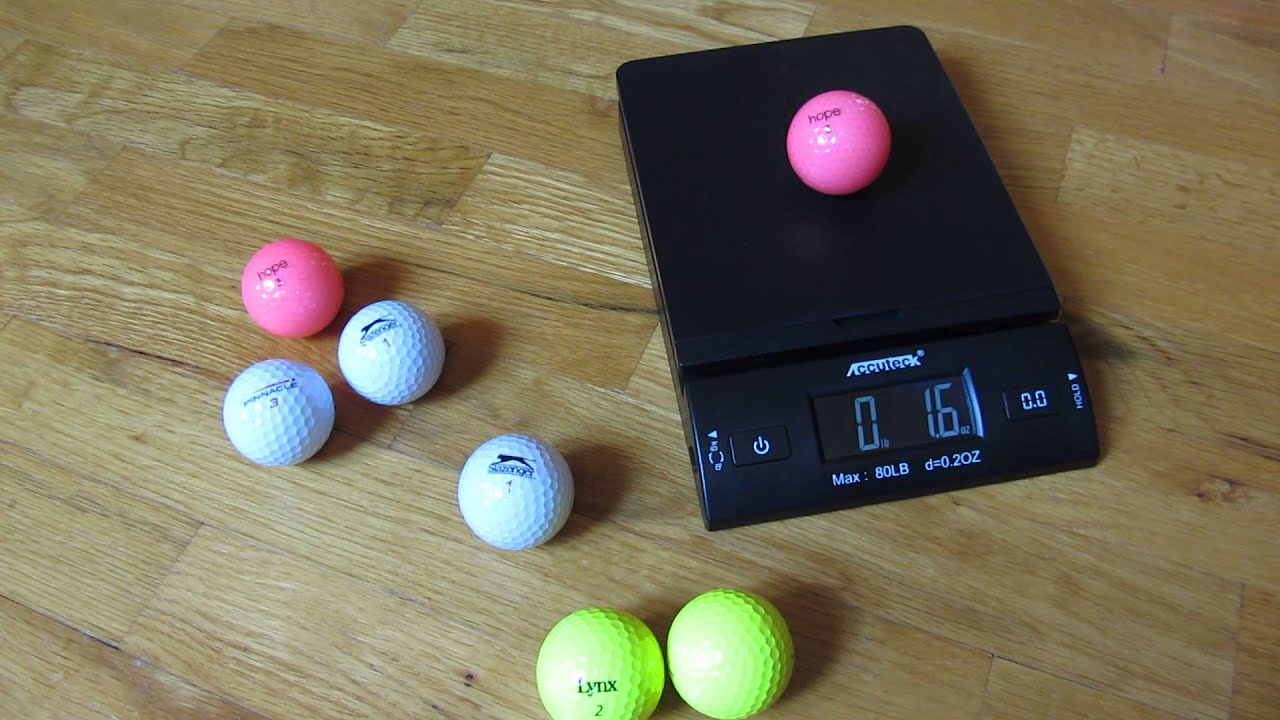
If you’re curious how heavy is a golf ball you own, you can check it easily.
What you need
- A digital scale with gram precision.
- A calm, dry surface, and a stable setup.
Steps
- Calibrate the scale per instructions.
- Place the ball gently on the center of the scale.
- Record the weight from multiple balls for consistency.
Tips from my testing
- Test several balls from the same sleeve. Small manufacturing variance can appear.
- If one ball reads well above 45.93 grams, don’t use it in tournament play.
- Use a case for the scale to avoid drafts and errors.

Real-world impact: picking the right ball for your game
When choosing a ball, focus on what you want to improve.
Key factors beyond how heavy is a golf ball
- Compression and feel: Affects feel on short shots and spin control.
- Cover material: Urethane covers offer more spin; ionomer covers tend to be firmer and longer.
- Layers: Multilayer balls give a mix of feel and distance.
Practical matchups
- If you want more distance: try a low-compression, high-speed core ball.
- If you want more spin around the greens: choose a softer, urethane-covered ball.
- If you’re a beginner or junior: try lighter practice balls or lower compression models.
From my experience testing dozens of models, players improve most by matching ball feel and spin to their swing speed. How heavy is a golf ball is less critical than how the ball reacts when you hit it.
Common myths and facts about golf ball weight
People often overstate the role of weight. Here are quick clarifications.
-
Myth: Heavier balls always fly farther.
- Fact: No. Speed, launch, spin, and aerodynamics matter more.
-
Myth: Lighter balls are illegal.
- Fact: Lighter, non-regulation balls exist for practice. For tournament play, the max weight still applies.
-
Myth: All brand claims about weight changes are critical.
- Fact: Most brands keep weights within the legal range. Their performance claims often come from core design and cover chemistry, not raw weight.

Personal experience and testing notes
I’ve weighed dozens of sleeves in my club fitting lab. Most balls read between 45.5 and 45.9 grams. A few older or scuffed balls showed tiny losses from water or wear. Practice balls were noticeably lighter and flew much differently.
Lessons learned
- Don’t obsess over 0.1 gram differences. They matter less than swing mechanics.
- Test a ball yourself. Personal feel matters.
- Keep at least two sleeves of your preferred ball for consistency.
Practical tip: When I test new balls, I hit 20 shots with a 7-iron and driver. I note carry, spin, and feel. That gives a clear picture compared to just reading specs.
Quick PAA-style questions
What is the maximum weight of a golf ball for play?
- The official maximum weight is 1.620 ounces or 45.93 grams. Balls above that are not legal for competition.
Do lighter practice balls affect my swing?
- Yes. Lighter balls fly and feel differently and can give a false sense of distance. Use them for basic practice, not for fitting.
Can ball weight change with wear?
- Small changes can happen from scuffs, dirt, or moisture. The change is usually minor and rarely affects play.
Are junior balls much lighter?
- Many junior or training balls are lighter, but regulation junior balls for competition still follow the same weight rules if used in official play.
How precise are manufacturers on weight?
- Manufacturers keep tight tolerances. Most balls are within a few tenths of a gram of the limit.
Frequently Asked Questions of how heavy is a golf ball
What is the exact weight limit for a golf ball?
The maximum legal weight is 1.620 ounces, which equals 45.93 grams. Any ball heavier than that is not allowed in official competition.
Do different brands make different weights?
Most brands make balls that sit very close to the legal limit. Differences are usually tiny, often just a few tenths of a gram.
Can I use a lighter ball in tournaments?
No. Tournament play requires balls that meet the official weight and size rules. Lighter practice balls are only for casual use.
How much does 1 gram change ball flight?
A one gram change is small and causes minimal real-world change. Other factors like launch angle and spin have larger effects.
Are there benefits to a heavier-feeling ball?
Heavier-feeling balls can feel firmer at impact and may help some players sense contact better. Performance changes are usually minor.
How do I check if my ball is legal?
Weigh the ball on a precise digital scale. If it’s at or below 45.93 grams and meets diameter rules, it’s legal.
Conclusion
Knowing how heavy is a golf ball helps you make smarter gear choices. The official cap is 1.620 ounces or 45.93 grams, and most play balls sit right under that. Weight matters, but club speed, spin, cover, and core design shape real performance more. Try different balls, weigh a few yourself, and pick the one that feels best to your swing. Want better results? Test balls on the course and track shots to see what truly works for you. Share your findings, subscribe for more gear tips, or leave a comment about the ball you like most.