How Much Does A Golf Ball Cost: Price Guide & Tips
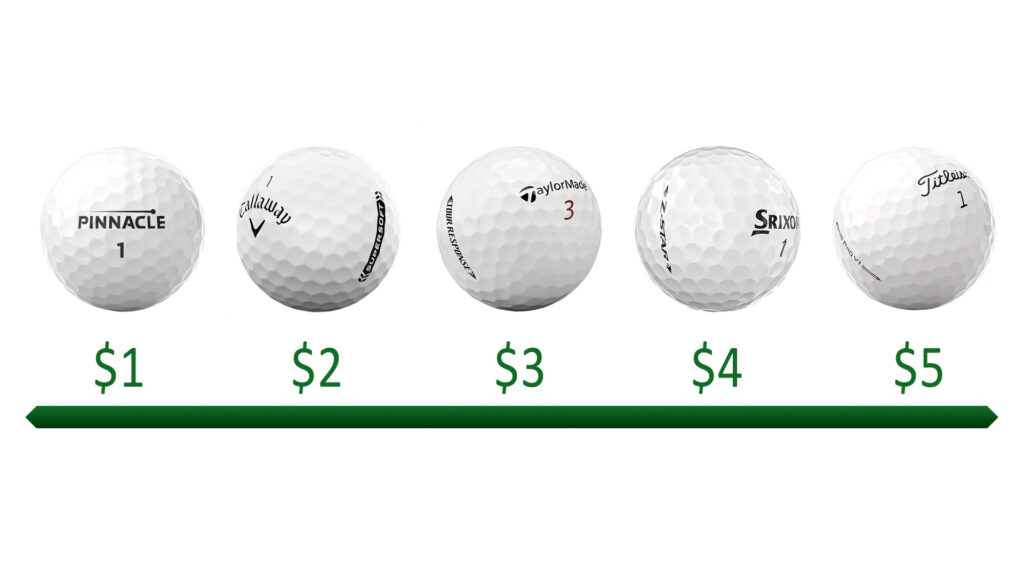
Most golf balls cost about $1 to $6 each; tour-level balls can run $4 to $6 or more.
I’ve spent years testing golf gear and tracking prices, so I can clearly explain how much does a golf ball cost and why prices range so widely. Read on to learn realistic price ranges, what drives those prices, and practical tips to get the best value for your game.
Typical price ranges and what they mean
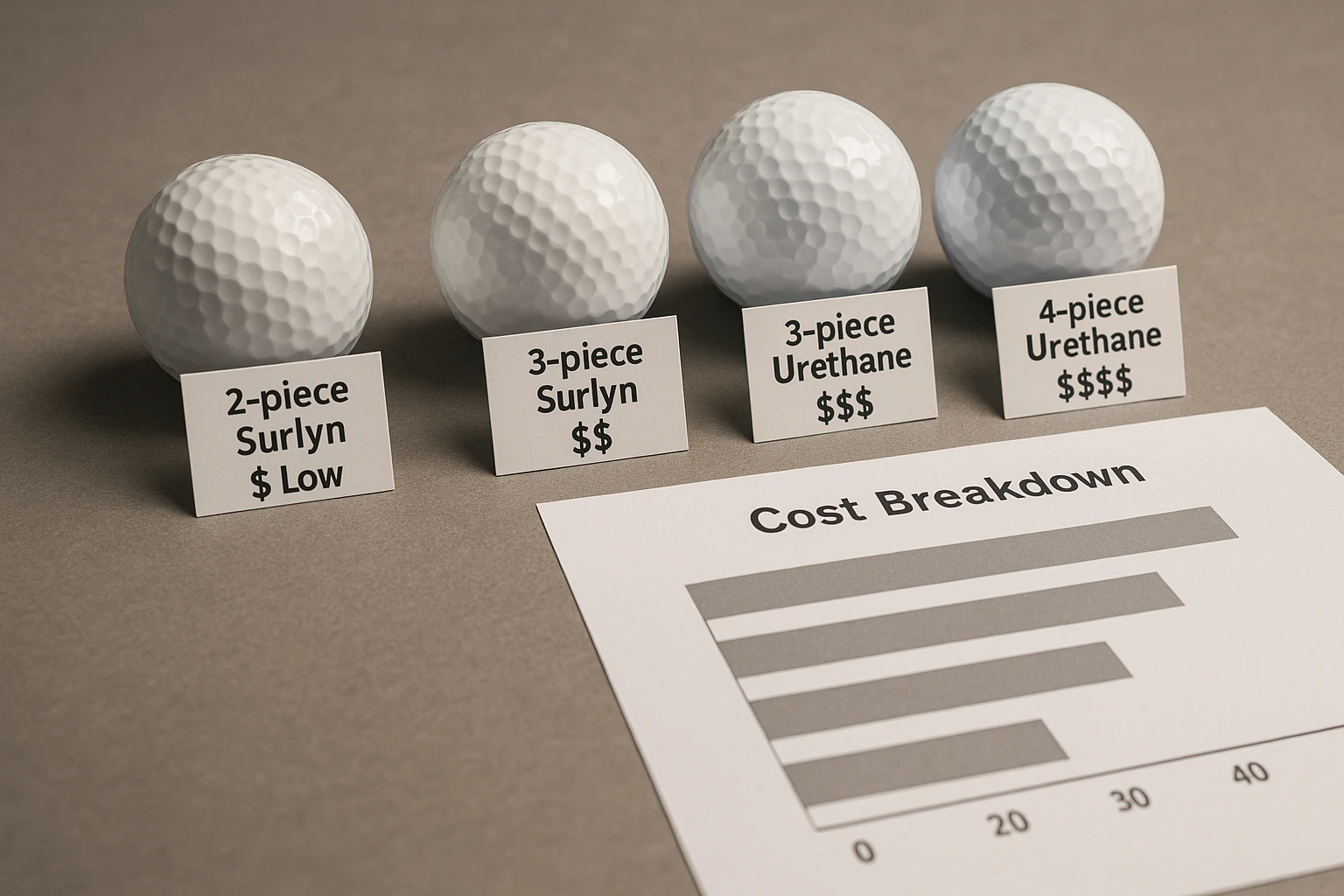
Retail golf-ball prices vary by brand, model, and package size. Mass-market practice balls often cost $0.50 to $1 each when bought in bulk. Mid-range balls typically run $1.50 to $3 each and suit most recreational players. Premium and tour-level balls cost $3 to $6 or more per ball and target serious players who want specific spin, feel, and distance.
How much does a golf ball cost will depend on whether you buy single balls, sleeves, dozen packs, or value buckets. Buying a dozen or a box lowers the per-ball cost. Custom or limited-edition balls add a premium that can double the price.

Why prices vary: materials, construction, and technology
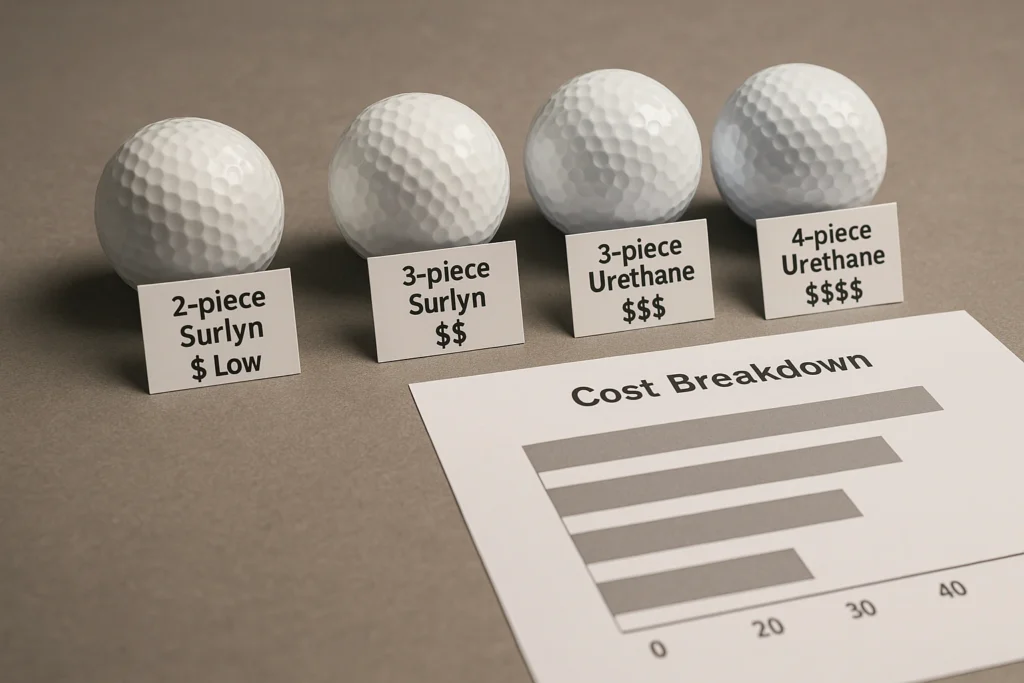
Several factors explain why how much does a golf ball cost is not a fixed number. Core materials, cover type, and layer count influence both performance and price. Advanced urethane covers and multi-layer constructions cost more to design and make. Brand marketing and tour sponsorships also push prices higher.
Manufacturing location and quality control matter too. Higher-priced balls often undergo more testing and tighter tolerances. R&D and patents add cost that shows up in retail prices.
How different ball types affect price and play
Understanding types helps answer how much does a golf ball cost for your needs.
- Distance balls. Designed to fly far with firmer cores. Cost ranges from budget to mid-level.
- Soft-feel balls. Softer cores for better feel; often mid to premium priced.
- Spin-control balls. Multi-layer with urethane covers. Usually premium or tour-level prices.
- Practice or range balls. Made for durability; cheapest per ball.
Choose a ball type based on your priorities. A beginner asking how much does a golf ball cost should focus on value and forgiveness rather than tour-level spin.
How to pick a golf ball based on price and play style
Match your purchase to your skill and goals to keep value high.
- If you are a beginner, prioritize durability and cost. Choose mid or budget balls to limit losses.
- If you are an intermediate player, test mid-range balls to find feel and spin trade-offs.
- If you are advanced, invest in premium balls to fine-tune distance and spin.
Testing matters. Buy one dozen of a model and play a few rounds. That hands-on test helps you answer how much does a golf ball cost in terms of value for your game.
Where to buy and how to save money on golf balls
Smart shopping reduces how much does a golf ball cost without hurting performance.
- Buy in bulk. Dozens or big packs cut per-ball cost significantly.
- Shop end-of-season sales. Retailers discount older models.
- Compare online and local stores. Prices can vary by region and store.
- Look for certified pre-owned or grade-A used balls to save money.
Consider subscription services or factory seconds for steady savings. I’ve saved dozens of dollars per season this way.

Environmental options: used, recycled, and value choices
Eco-friendly balls often cost less and reduce waste. Recycled and reconditioned balls are cleaned, graded, and sold by quality. Grades affect price: mint, near-mint, and playable grades give different savings.
Buying recycled balls answers both the question how much does a golf ball cost and a sustainability goal. You can get good play from near-mint used balls at a fraction of new premium price.
Personal experience and practical tips from testing
I’ve tested dozens of balls on range and course. Early in my play I bought premium balls thinking they’d instantly improve my game. They did not. I lost many and regretted the spend.
Lessons learned:
- Start with mid-range balls until your ball-striking improves.
- Track how often you lose balls to justify higher spend.
- Use premium balls for tournament rounds where small gains matter.
One season I switched to recycled near-mint balls for practice. I saved money and kept premium balls for key rounds. That balance cut overall costs and improved my confidence on the course.

Frequently Asked Questions of how much does a golf ball cost
How much does a golf ball cost if I buy a single ball?
Single retail balls usually cost $2 to $6 each for premium models and $1 or less for budget or practice balls. Buying singles at a pro shop often comes at a higher per-ball price.
How much does a golf ball cost when bought by the dozen?
A dozen typically ranges from $12 for budget balls to $40+ for premium tour-level dozen packs. Bulk packs or sales can reduce the per-ball cost to under $1 in some cases.
Does brand affect how much a golf ball cost?
Yes. Major brands charge more due to R&D, marketing, and tour use. Lesser-known or store brands often offer similar basics at lower prices.
Are recycled golf balls much cheaper and are they worth it?
Recycled balls can be 30–70% cheaper and are often worth it for practice and casual play. Near-mint recycled balls can perform close to new ones at much lower cost.
How often should I upgrade to a newer ball model?
Upgrade when your skills or needs change, or a new model offers a clear performance benefit. For most players, changing models every 1–2 seasons is reasonable given how much a golf ball cost and wear.
Conclusion
Knowing how much does a golf ball cost helps you buy smartly and play confidently. Prices range from pennies per ball for bulk practice options to several dollars for top-tier tour models. Match the ball to your skill, buy in bulk or used when sensible, and test before committing to a pricey dozen.
Takeaway: spend where it helps your game, save where it doesn’t. Try one model for a few rounds, track your losses, and make choices that fit your budget and goals. Want more tips on comparing specific models or finding deals? Leave a comment or subscribe for gear guides and savings strategies.