How To Pack A Golf Bag: Pro Tips For Better Play
Pack clubs by frequency, protect heads, balance weight, and stash essentials last.
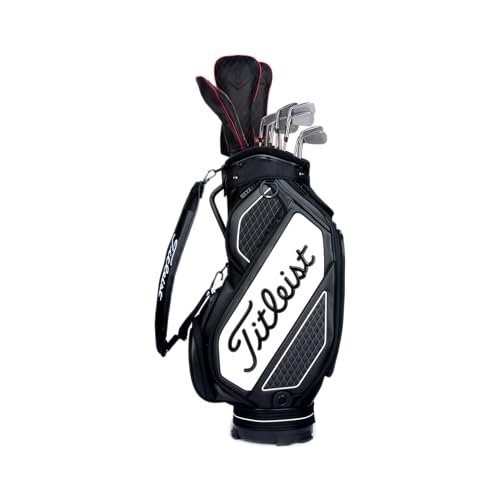
I’ve packed hundreds of golf bags for rounds, trips, and tournaments. In this guide I’ll show you how to pack a golf bag step by step, with pro tips and real-life notes from my own experience. You’ll learn what to pack, how to arrange clubs, ways to protect gear during travel, and simple routines that save time on the first tee. Read on to make packing fast, reliable, and stress-free.
Why packing matters
How you pack affects your game, your back, and how fast you move on the course. A well-packed bag keeps clubs safe, speeds up club selection, and prevents damage during transport. I’ve seen rounds ruined by a wet glove or a broken head cover. Taking a few minutes to pack right pays off in comfort and performance.

Essentials to pack
Focus on must-haves first. Pack items you will use every hole. Keep extras to a minimum.
- Set of clubs
- You may carry up to 14 clubs according to the rules of golf.
- Balls and tees
- Pack 6–12 balls and a handful of tees.
- Gloves
- Bring at least one spare glove in case one gets wet.
- Rangefinder or GPS
- Ensure it is charged or has fresh batteries.
- Water and snacks
- A refillable bottle and a light snack keep you sharp.
- Rain gear and towel
- Small umbrella or rain jacket and a microfiber towel.
- Basic repair tools
- Divot tool, ball marker, and a small multi-tool.
Personal tip: I tuck a small first-aid item and a zip bag for wet clothes. These small items solve big problems on tough days.

Step-by-step: How to pack a golf bag
Follow this order to keep your bag balanced and efficient. Doing it the same way every time builds muscle memory.
- Clear and inspect
- Empty pockets. Check for loose items and trash. Look for wear and tear.
- Protect club heads
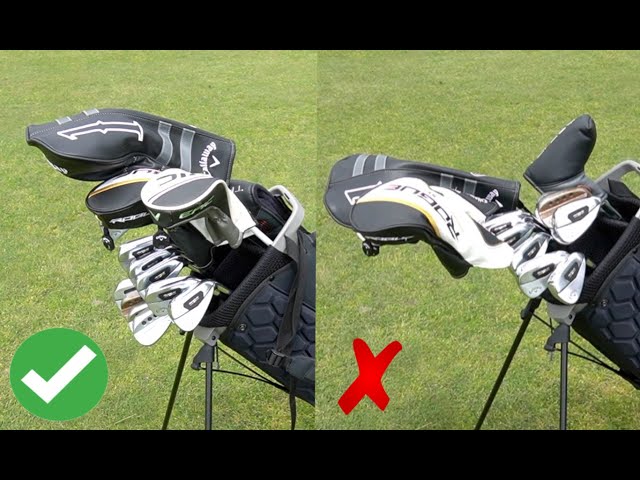
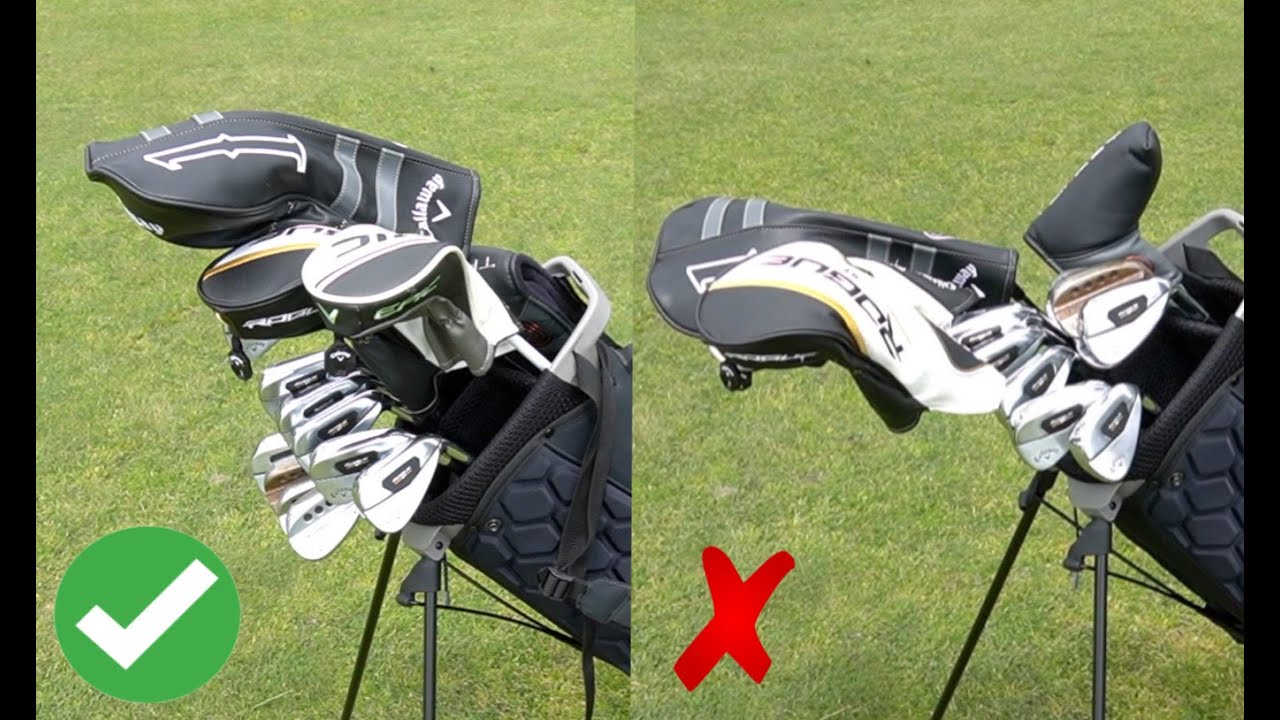
- Put headcovers on woods and hybrids first to avoid dings. Driver and fairway woods go in first if you use covers.
- Arrange clubs by frequency
- Place wedges and short irons in the front or easy-access slots. Mid and long irons follow. Put the driver at the back or top for protection.
- Balance weight
- Distribute heavy items near the center and top of the bag for stability. Keep water and balls toward the middle to lower the center of gravity.
- Pack bulky gear next
- Rain jacket, towel, and extra shoes go in larger pockets or the bottom compartment.
- Place small items last
- Wallet, phone, tees, gloves, and snacks go in accessible pockets.
- Final check
- Zip pockets, secure straps, and test the shoulder fit.
From experience, packing clubs by frequency saves time during a round. I always place pitching wedge and sand wedge at the front for quick grabs.
Club order and layout
A clear layout speeds club choice. Use a system that suits your game.
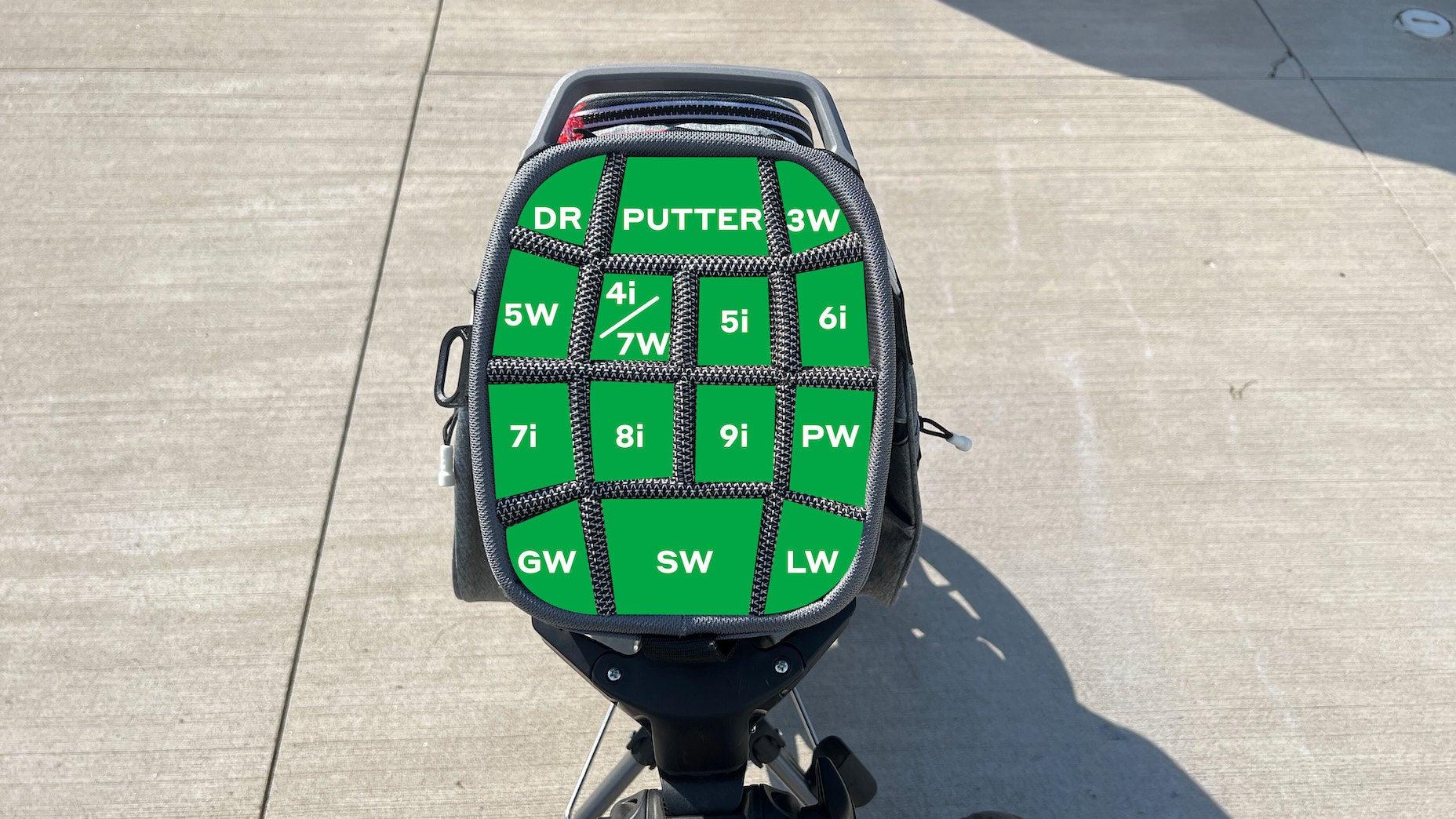
- Typical layout for a 14-club set
- Front: wedges and short irons
- Middle: mid irons
- Back: long irons and hybrids
– Top/back: driver and fairway woods
- Left- or right-handed players
- Place clubs so shafts point toward the dominant shoulder for easier removal.
- Numbered versus oversized grips
- Keep similar grip sizes together to avoid interference.
- Tournament or course-specific changes
- Swap a long club for an extra wedge for tight courses.
I once had clubs jammed because a hybrid landed across two dividers. Now I test the pull on each club before zipping the bag. It adds 30 seconds and saves frustration.

Organizing accessories and small items
Small items cause the most lost-time moments. Use pocket strategy.
- Upper pockets
- Keep valuables: wallet, phone, rangefinder, sunscreen.
- Side pockets
- Store gloves, tees, and spare balls for fast access.
- Cooler pocket or insulated sleeve
- Use for drinks and snacks to keep them cool.
- Valuables pouch
- Use a waterproof pouch for keys and cards.
- Towel and brush placement
- Clip the towel outside for easy drying and a groove brush in a zip pocket.
Tip: Label or color-code your dividers if you play multiple sets. This reduces search time between shots.
Packing for travel and flying
Travel packing requires extra protection and prep. I’ve flown with clubs multiple times and learned these rules.
- Use a hard travel case for checked luggage
- Hard cases protect shafts and heads better than soft covers.
- Wrap fragile items
- Use towels or clothing to cushion clubheads and the driver.
- Remove or protect electronics
- Take rangefinders, chargers, and batteries in carry-on.
- Check airline rules
- Confirm size and weight limits and any sport-equipment fees.
- Lock and tag
- Use TSA‑approved locks and clearly label your bag.
One time my bag arrived with a cracked clubhead. Since then I always pad the head and put heavy items around it inside the travel case.

Tips by bag type: stand, cart, and travel bags
Each bag type packs differently. Match your layout to how you carry or ride.
- Stand bag
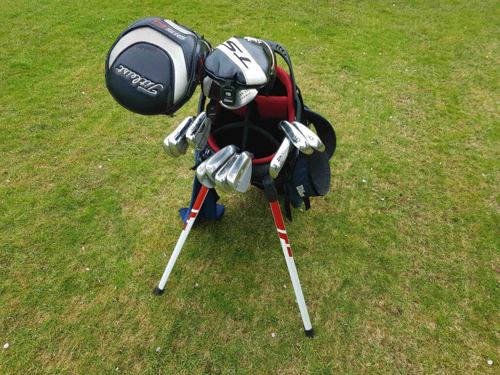
- Keep weight low and straps balanced. Use the back pockets for heavier items.
- Cart bag
- Tools and valuables go in top pockets. Secure loose items so they don’t jostle.
- Travel bag or case
- Remove headcovers and pad clubs. Place shoes and clothing around clubs for cushion.
I prefer a stand bag for walking. I pack lighter and keep my most used clubs in the easiest slots. For cart play I bring a heavier rain jacket and more snacks.

Common mistakes and how to avoid them
Avoid these errors to save time and protect gear.
- Overpacking
- Carrying too many extras makes the bag heavy and slow. Bring what you need.
- Loose pockets
- Small items fall out. Use zipped pockets or pouches.
- Poor club protection
- No headcovers leads to nicks and chips. Always cover woods.
- Imbalanced weight
- Heavy items on one side cause strain. Distribute weight evenly.
- Forgetting weather gear
- Check forecast and pack for rain or cold.
I once learned the hard way by carrying two dozen balls and no water. Now I keep a short checklist on my phone. It’s simple and reliable.
Maintenance and care after packing
A tidy bag lasts longer. Small habits extend gear life.
- Clean clubs and dry the bag after play
- Moisture breeds rust and mildew.
- Check zippers and seams
- Repair or replace damaged parts early.
- Rotate grips and inspect shafts
- Replace worn grips and note any cracks or dents.
- Store in cool, dry place
- Avoid hot car trunks for long periods.
I clean and air my bag after every rainy round. It stops smells and keeps pockets working well.
Frequently Asked Questions
How many clubs should I pack in a golf bag?
You may carry up to 14 clubs under the rules of golf. Pack the clubs that match your game and the course layout.
What is the best order to pack clubs in a bag?
Put wedges and short irons in front, mid irons in the middle, and long clubs and driver at the back or top. Balance weight left-to-right and top-to-bottom for stability.
How do I pack a golf bag for air travel?
Use a hard travel case, pad clubheads with towels or clothing, and carry electronics in your carry-on. Check airline rules on weight and fees before you fly.
Should I leave headcovers on while traveling?
Yes, headcovers help protect woods and hybrids, but when packing in a tight travel case add extra padding around the heads. Remove fragile covers if they might be crushed.
How do I keep small items organized in my golf bag?
Use zipped pockets, pouches, and an organized pocket system: valuables up top, accessories to the side, and food/drink in insulated pockets. Consistent placement reduces search time.
Conclusion
Packing your golf bag well makes rounds easier and protects your gear. Use a simple routine: clear the bag, protect heads, arrange clubs by use, balance weight, and stow small items last. Try the step-by-step system for a few rounds and adjust it to your play style. Ready to save time and play better? Pack your bag with purpose, and leave a comment with your favorite packing tip or trick.