How Many Centimeters Is A Golf Ball: Size In Cm
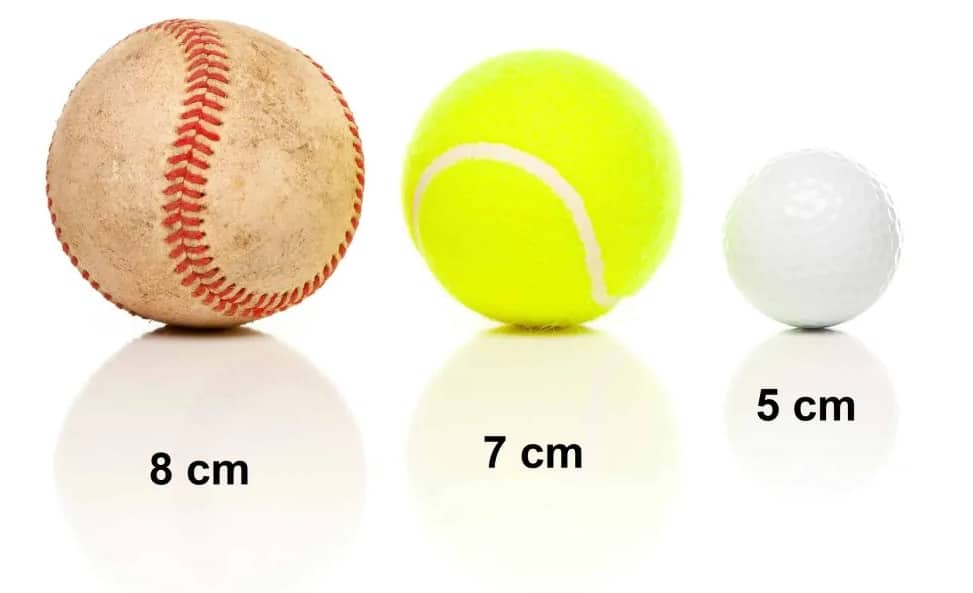
A standard golf ball measures 4.267 centimeters in diameter, according to official rules.
I’ve measured hundreds of golf balls and studied the rules and tech behind them, so I’ll walk you through exactly how many centimeters is a golf ball, why that number matters, and how to measure one yourself. Read on for clear conversions, practical tips, and real-world examples so you know the precise size, how to check it, and what small size differences mean for play.

Understanding golf ball size standards
A regulation golf ball must not be smaller than 1.68 inches in diameter. That inch measurement converts to 4.267 centimeters. So when someone asks how many centimeters is a golf ball, the correct answer is 4.267 cm for a standard, competition-legal ball.
Size rules exist to keep equipment fair. The same rule also caps weight and relates to performance limits set by governing bodies. Knowing how many centimeters is a golf ball helps when comparing balls, checking legality, and understanding design choices.

How to measure a golf ball in centimeters (step-by-step)
Measuring a golf ball is simple with the right tools. Here are reliable methods I use in the field and at home.
- Use a digital caliper. Close gently across the ball’s widest point. Read the measurement in millimeters or centimeters. Convert if needed.
- Use a ruler. Place the ball next to a metric ruler and measure across the widest point. This is less precise but works in a pinch.
- Water displacement for volume. Submerge the ball in a graduated cylinder and calculate diameter from volume if you need an indirect check.
When measuring, avoid squeezing the ball. Minor manufacturing variance of about 0.01–0.05 cm can occur. If you need the official size, measure to at least two decimal places. A reliable caliper gives the best result when confirming how many centimeters is a golf ball.
Why the diameter matters: performance, rules, and design
Diameter affects aerodynamics, feel, and legality. A larger ball can create slightly different lift and drag characteristics. The governing diameter of 4.267 cm ensures designers focus on other performance features like compression, dimple patterns, and cover materials.
Manufacturers optimize spin and distance within that size limit. When golfers ask how many centimeters is a golf ball, they are often checking if a ball is legal for tournament play. Nonconforming balls can be used for practice, but they are not allowed in official competition.
PAA-style quick questions
Does ball size affect distance?
Yes. Size can subtly affect aerodynamics, but within legal limits, distance differences come mainly from construction and compression rather than small diameter changes.
Can a ball be slightly over the standard diameter and still be legal?
No. Official rules set a minimum diameter. A ball significantly smaller than 4.267 cm is not conforming for competition.
Are practice or novelty golf balls the same size?
Not always. Many practice and toy balls are smaller or softer. Always check the diameter if you plan to use them in organized play.

Variations and exceptions: do all golf balls have the same size?
Most golf balls made for adults and competition follow the 4.267 cm rule. However, there are exceptions and variations.
- Practice balls and range balls often match regulation size but can be lighter or harder.
- Junior or novelty balls can be smaller. These are not competition-legal.
- Mini-golf and promotional balls are deliberately smaller. They are clearly labeled for non-regulation use.
If you ever doubt a ball’s size, measure it. I once found a batch of range balls that were off by 0.03 cm. They still played fine, but they were not match-legal. That small difference illustrates why knowing how many centimeters is a golf ball matters to serious players.

Practical conversions and examples
Here are quick, useful conversions and numbers you can use when checking a ball.
- Diameter in centimeters: 4.267 cm (standard, regulation)
- Diameter in millimeters: 42.67 mm
- Diameter in inches: 1.68 in
- Circumference: about 13.40 cm (π × diameter)
- Radius: about 2.1335 cm
- Approximate volume: about 40.7 cubic centimeters
- Typical weight limit: 45.93 grams (1.62 ounces) — note weight is separate from size
These conversions help when you have a ruler in centimeters or millimeters. Keep them handy. If you want to know how many centimeters is a golf ball from a measurement in inches, multiply inches by 2.54.

Tips for buyers, players, and clubs
Choosing the right ball goes beyond diameter. Use these practical tips I’ve learned over years on the course.
- Check the stamp. Tournament-legal balls often have a certification mark indicating conformity.
- Use a caliper for accurate checks. Digital calipers are inexpensive and easy to carry.
- Don’t worry about minute size variance for casual play. A 0.01–0.03 cm difference rarely affects recreational rounds.
- For club fitting, focus on compression and spin features. The size standard means other ball traits drive performance.
If you’re buying in bulk for a club or team, spot-check a few balls to confirm consistent manufacturing and that each ball matches the 4.267 cm standard.

Frequently Asked Questions of how many centimeters is a golf ball
What is the standard diameter of a golf ball in centimeters?
A standard golf ball measures 4.267 centimeters in diameter. That equals 1.68 inches under official rules.
Can a golf ball be smaller than 4.267 centimeters?
For competition, a ball must not be smaller than the standard diameter. Smaller balls are typically for practice or novelty use only.
How do I measure a golf ball accurately in centimeters?
Use a digital caliper and measure across the widest point. Read the result in millimeters or centimeters for best accuracy.
Does ball size change the rules or scoring?
No. Size itself does not change scoring, but nonconforming balls cannot be used in official tournament play.
Are there penalties for using a non-regulation-sized ball in competition?
Yes. Using a non-regulation ball in competition can result in disqualification or penalties depending on the event rules.
Is circumference or diameter more commonly used to check ball size?
Diameter is the standard measurement used to define ball size. Circumference can be useful but is less commonly cited in rules.
Can temperature or wear change how many centimeters is a golf ball?
Temperature and wear have negligible effect on raw diameter. Long-term wear might slightly alter surface but not the core diameter in a meaningful way.
Conclusion
Knowing how many centimeters is a golf ball gives you a clear baseline for legality, measurement, and comparison. The standard 4.267 cm diameter matters most in competitive play but also helps when shopping, testing, or fixing equipment. Use a caliper, keep conversions handy, and focus on other performance factors like compression and spin once size is confirmed.
Put this into practice: check a ball with a caliper, compare weights, or test a few models on the range. If you found this useful, leave a comment, share your measuring tips, or subscribe for more practical gear guides and easy measurement tricks.