How To Put Spin On A Golf Ball: Simple Pro Tips
Use a square stance, clean grooves, descending strike, and faster clubhead speed to create spin.
I’ve spent years teaching and testing shots on the range and course, so I know exactly how to put spin on a golf ball and why it matters. This guide breaks the process into clear steps, drills, and gear tips you can use today to add backspin, control rollout, and shape shots with confidence. Read on for practical advice, mistakes to avoid, and simple drills that deliver real results.
Basics of spin: what it is and why it matters
Spin is the rotation of the golf ball after impact. Backspin makes the ball climb and stop sooner. Sidespin makes the ball curve left or right.
Why spin matters
- Controls distance on approach shots.
- Helps the ball stop quickly on the green.
- Lets you shape shots to fit holes and hazards.
Types of spin
- Backspin: ball spins backward, creates lift and stopping power.
- Sidespin: causes draws and fades when unwanted, or used on purpose to shape a shot.
- Topspin: rare in full swing, useful in punch shots or specialty shots.
How to think about spin
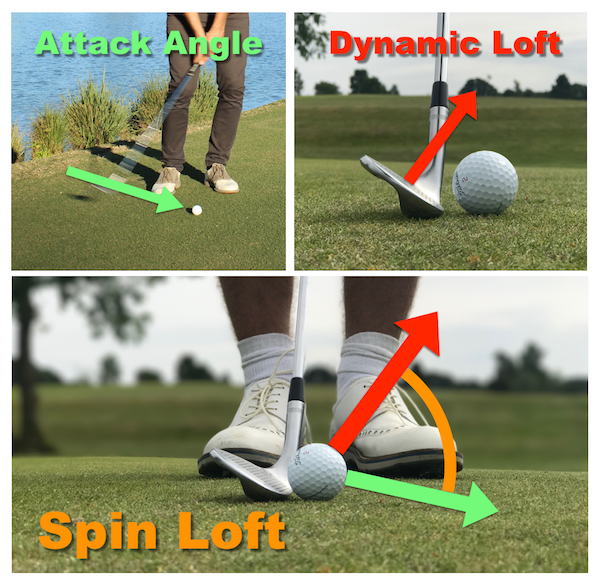
- Spin comes from loft, speed, angle of attack, and friction at impact.
- Small technique tweaks give big spin changes. Learning how to put spin on a golf ball is about repeatable contact and control.

How to put spin on a golf ball: step-by-step techniques
Follow these steps to add reliable spin to your shots. The order matters. Practice one change at a time.
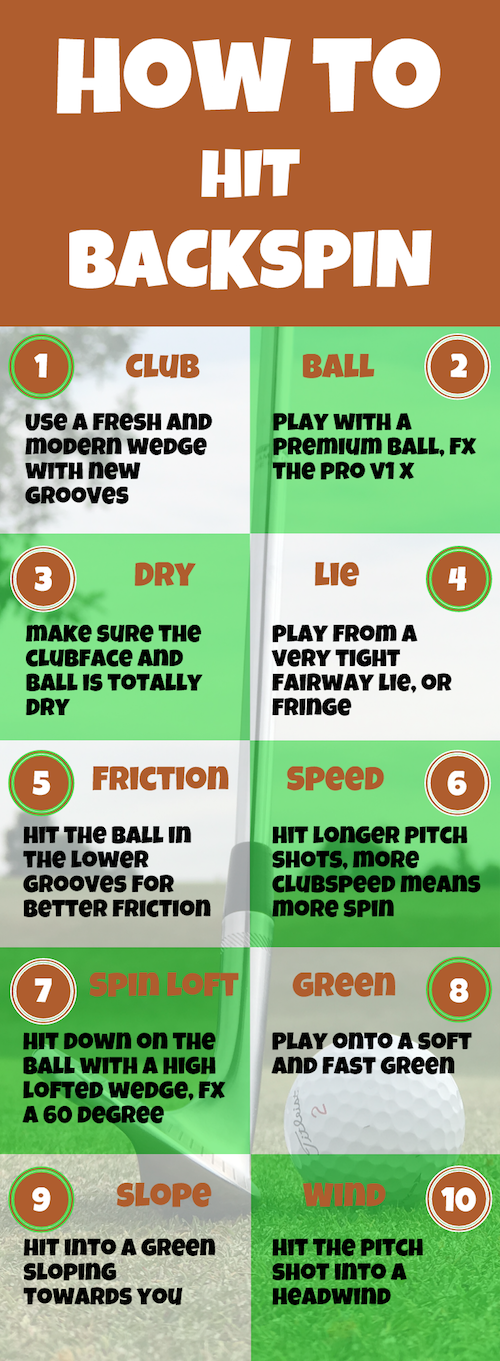
- Choose the right club
- Use higher-loft clubs for more spin. Wedges and short irons spin more than long irons.
- For approach shots, pick a club that gives a comfortable swing while keeping loft in play.
- Set your grip and hands
- Grip pressure should be firm but relaxed. Tension kills speed and feel.
- Hands slightly ahead of the ball at address for a descending strike.
- Position the ball
- Move the ball slightly back of center for wedges and short irons to hit down.
- For maximum spin around the green, play the ball in the center and square the face.
- Align your body and feet
- Use a square or slightly open stance for control.
- Keep shoulders and hips aligned to the target to avoid unwanted sidespin.
- Work on angle of attack
- Hit down on the ball with wedges. A steep, descending strike grinds the grooves into the cover and creates spin.
- For full shots, aim for forward shaft lean at impact.
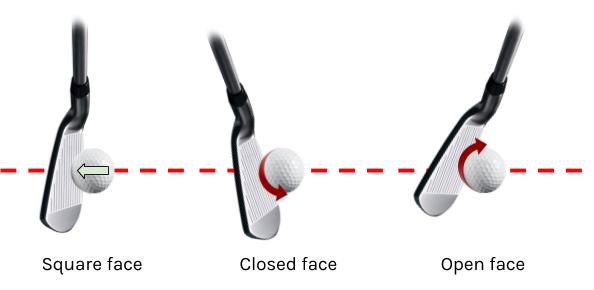
- Square the clubface at impact
- Face angle controls spin axis. A closed face can add draw spin; an open face adds fade spin.
- Practice hitting the ball with a square face for consistent backspin.
- Increase clubhead speed with control
- Faster clubhead speed increases spin torque, but must be paired with clean contact.
- Avoid wild swings. Speed without control hurts spin.
- Create friction at impact
- Clean grooves and a dry ball increase grip between club and ball.
- Brush grass and debris from the clubface before shots.
- Use the right ball
- A softer, urethane-cover ball grips the clubface better and spins more on iron and wedge shots.
- Finish low and controlled
- A lower, controlled follow-through helps keep the spin axis stable.
- Avoid flipping at the bottom. Keep the wrists quiet through impact.
Personal tip from the range
I remember trying to add more spin by just swinging harder. It made me miss the center more. Once I focused on a descending strike and cleaner contact, my spin rates jumped without extra speed. Learning how to put spin on a golf ball is mostly about contact quality, not brute force.
Short game spin: chips, pitches, and bunker work
Short shots demand finesse. Here’s how to get spin around the green.
Chips and pitches
- Use a wedge with clean grooves and a square face.
- Open the clubface for flop shots but swing along the line to avoid scooping.
- Brush the grass behind the ball. Let the club crepe under the ball to create backspin.
Bunker shots
- For soft sand, open the face and splash the sand. Spin is lower, so control distance first.
- From firm sand, sweep slightly less and focus on a crisp strike to get more spin.
Putting spin on the ball near the green
- For higher spin, use less loft from the clubface and a slightly firmer ball strike.
- Practice three to five yard pitch shots and adjust ball position to control spin and rollout.
Equipment and conditions that affect spin
Gear and course conditions play a big role in how to put spin on a golf ball.
Ball choice
- Urethane-cover balls spin more than ionomer balls.
- Older, scuffed balls spin less.
Club face and grooves
- Sharp, clean grooves bite the ball. Worn grooves reduce spin.
- Check groove condition regularly and regrip or replace clubs when needed.
Shaft and clubhead design
- Shorter shafts and heavier clubheads give more control and better spin on short shots.
- Wedges with higher bounce are better in fluffy sand but can reduce spin on tight lies.
Weather and turf
- Wet grass or rain reduces friction and spin.
- Firm fairways and dry greens increase spin and stopping power.
Course setup
- Firm greens require more spin to stop. Soft greens allow more rollout.
- Adjust your technique to the day’s conditions.

Common mistakes and how to fix them
Avoid these frequent errors when trying to put spin on a golf ball.
Scoop at impact
- Problem: Lifting the body or flipping the wrists causes thin or weak shots.
- Fix: Keep forward shaft lean and accelerate through the ball.
Dirty grooves or ball
- Problem: Mud on the clubface reduces friction.
- Fix: Clean your grooves between shots and use a clean ball.
Too much wrist action
- Problem: Excess wrist releases reduce control and spin.
- Fix: Keep wrists quiet through impact and focus on body rotation.
Wrong ball position
- Problem: Ball too far forward makes sweeping contact.
- Fix: Move ball back slightly for wedges and short irons.
Overemphasis on speed
- Problem: Swinging faster without contact quality lowers spin.
- Fix: Build speed after mastering crisp contact.
Drills to fix mistakes
- Impact bag drill: promotes forward shaft lean.
- Towel under armpits: keeps body connected and prevents scooping.
- Strike-only drill: make short swings to feel the descending strike.
Practice drills and progressions
Practice smart. Use simple drills to learn how to put spin on a golf ball step by step.
- Clean the clubface and hit 10 wedge shots. Note feel and spin.
- Repeat with a wet face to learn difference.
- Towel impact drill
- Place a towel a few inches behind the ball. Hit down to compress the ball and avoid hitting the towel.
- This promotes a descending strike.
- Brush-the-grass drill
- Take shallow practice swings that brush the grass before the ball. Then hit shots and note spin.
- Clock-face distance control
- Use a wedge and swing like clock hands: 9-3 for full, 10-2 for three-quarter, 11-1 for half.
- This builds consistent speed and spin control.
PAA-style questions
Q: How fast do I need to swing to get spin?
A: You don’t need max speed. Controlled speed with crisp contact is best for spin. Focus on technique first, then add speed.
Q: Can any ball spin more if I swing right?
A: All balls spin more with better contact, but urethane balls tend to hold spin better on wedges and irons.
Q: How much does loft affect spin?
A: Loft is critical. More loft generally makes it easier to get backspin, especially on short shots.
Personal practice note
When I focused on short, crisp swings with clear feel, my wedge spin improved in a few sessions. Start slow and be patient.

Frequently Asked Questions of how to put spin on a golf ball
What is the easiest way to add backspin to a wedge shot?
Hit down and brush the grass, keep your hands ahead of the ball, and strike cleanly. Clean grooves and a soft-cover ball also help.
Does clubface condition really matter for spin?
Yes. Clean, sharp grooves increase friction and allow the ball to grip the face, producing more spin.
Should I swing harder to get more spin?
No. Swinging harder often hurts contact. Focus on a solid descending strike and controlled speed for better spin.
How does ball selection affect spin?
Softer, urethane-cover balls produce more spin on short shots than harder, ionomer balls. New, unscuffed balls perform best.
Can I practice spin indoors?
Yes. Use impact bags, mats, and controlled swings to practice the feeling of a descending strike. Real spin tests need turf and actual balls outdoors.
Conclusion
Mastering how to put spin on a golf ball comes down to repeatable contact, clean gear, and smart practice. Focus on a descending strike, square clubface, the right ball, and simple drills. Track small gains and be patient; control grows with steady practice.
Take one tip to the range this week: clean your grooves, set the ball slightly back, and strike five wedges with a focus on brushing the turf. Share your results, subscribe for more tips, or leave a comment about your favorite spin drill.