Putter Grip Styles: Best Grip Types For Better Putting
The right putter grip style improves alignment, control, and stroke consistency on the green.
I’ve spent years testing putter grip styles on public courses and in fitting bays. I know what small changes do to feel and numbers. This guide breaks down every major putter grip style, why each one works, how to test them, and real tips I learned from playing and fitting golfers of all levels. Read on to pick the style that helps your stroke, lowers your scores, and feels right.
Why putter grip styles matter
Putter grip styles change how your hands guide the club. They affect wrist movement. They change face rotation and the path of the putter. Small grip changes can fix big problems like yips, inconsistent pace, and misreads.
From my experience, a simple grip tweak once cut three strokes off my weekly rounds. I learned to match grip style to stroke type, not the other way around. If you want repeatable strokes, start with grip choices.

Common putter grip styles
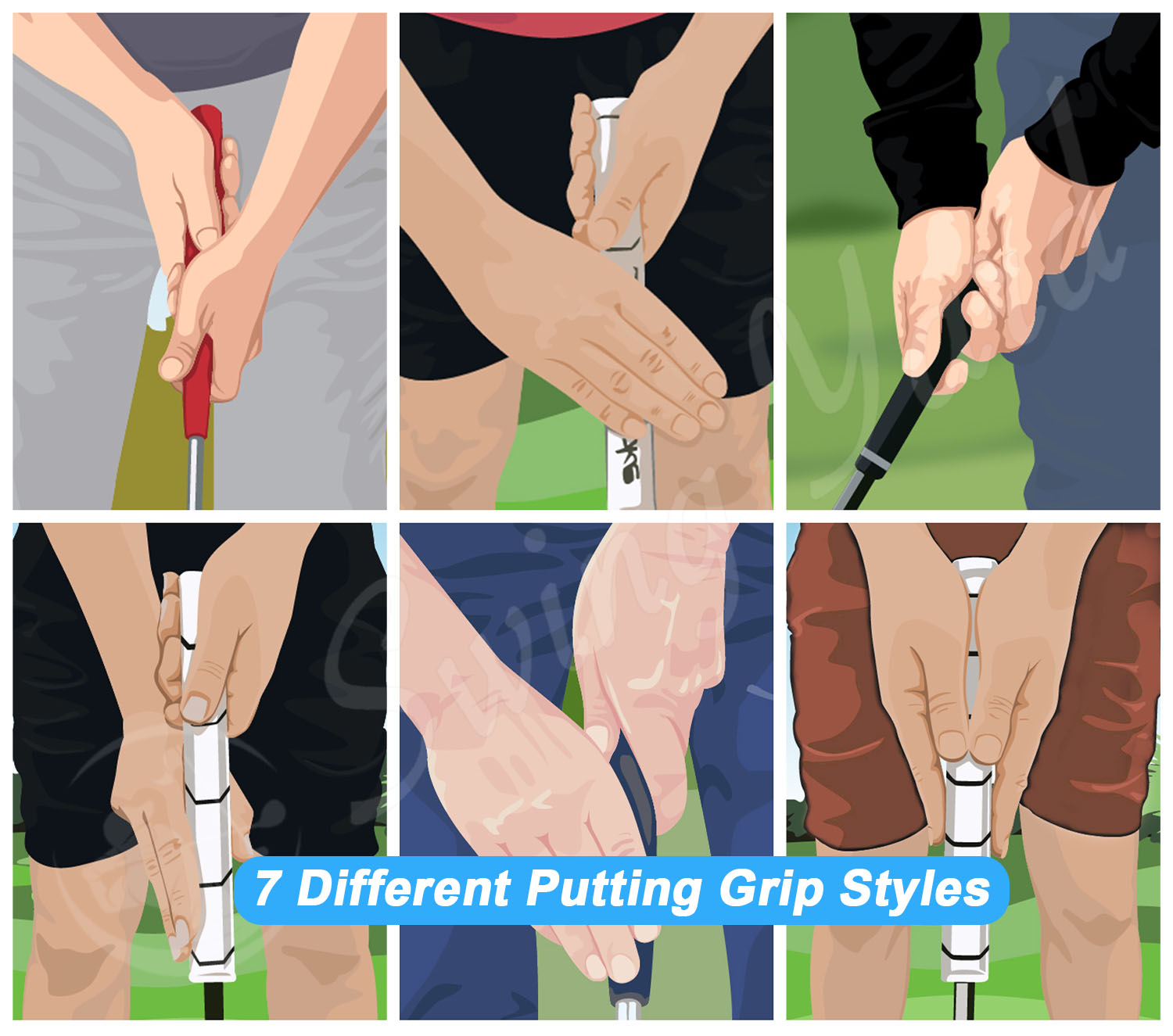
Below are the most common putter grip styles. I describe how each one feels, who it helps, and the usual pros and cons.
Reverse Overlap
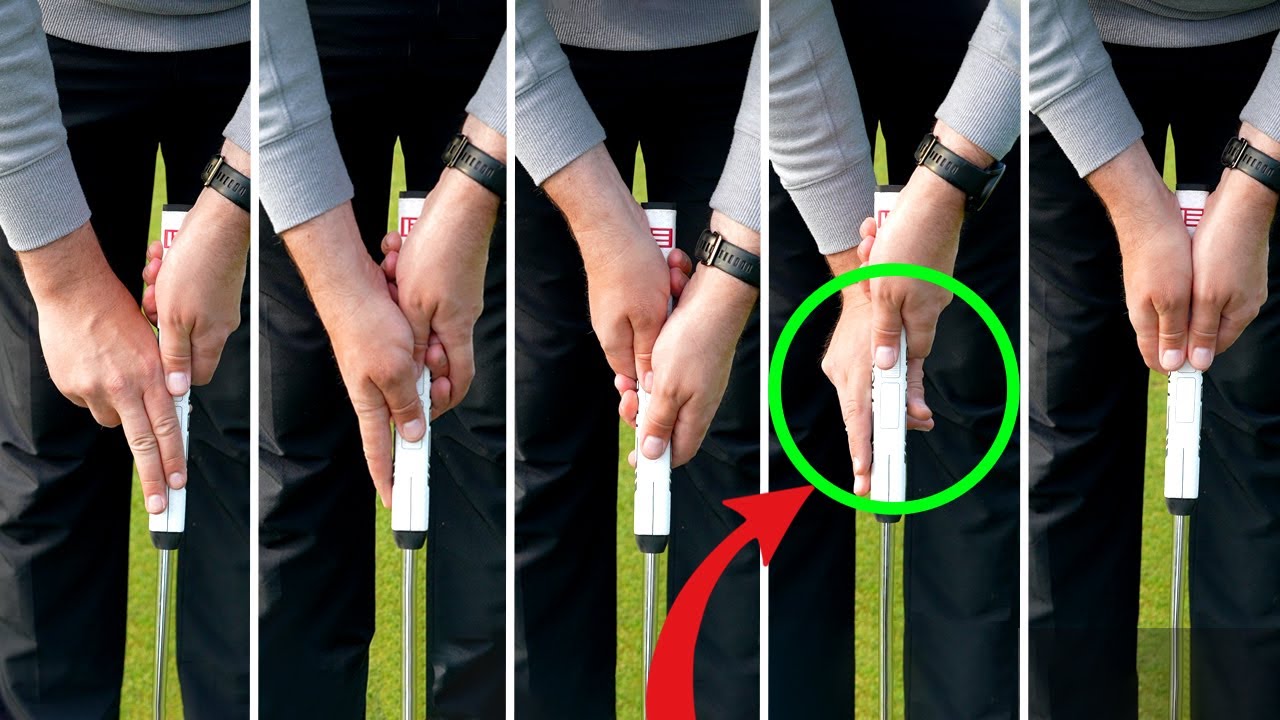
Reverse overlap is the classic grip. The left index finger lays over the fingers of the right hand (for right-handed golfers). It promotes light wrist action and feel. Many teaching pros use it to teach pace and aim.
- Pros: Good feel, natural for most golfers.
- Cons: Can let wrists add unwanted roll on longer putts.
Cross-handed (Left-hand low)
Cross-handed puts the left hand below the right on the shaft. This cuts wrist break. It helps keep the face square through impact. I switched to this for a year and my short putts tightened up.
- Pros: Reduces wrist flip, helps beginners.
- Cons: Can feel odd initially and affect distance control for long putts.
Claw grip
The claw grip keeps the right hand in a claw-like posture and minimizes wrist motion. It isolates the forward stroke to the shoulders. A few tour players use it to avoid the yips.
- Pros: Stable, great for yips.
- Cons: Takes practice, less feel for touch putts.
Pencil grip
The pencil or fingertip grip uses the fingers rather than the palms. It gives great feel and control over rotation. I used this in windy conditions for soft touch putts.
- Pros: High feel, good for finesse.
- Cons: Requires strong hands and consistent tempo.
10-finger or Baseball grip
All ten fingers on the shaft like a baseball bat. This gives power and is simple. Some recreational players prefer the natural hold.
- Pros: Natural, easy to learn.
- Cons: Can increase wrist action and face rotation.
Arm-lock and Long/Higher Grips
Arm-lock grips rest the shaft against the forearm or use longer grips to stabilize the stroke. These styles reduce wrist movement a lot. They are legal under current rules when fitted correctly.
- Pros: Excellent for stability and reducing hand motion.
- Cons: May require different setup and length adjustments.

How to choose the right putter grip style
Choosing a style starts with honest testing. Try these steps.
- Identify your stroke type.
- If you have an arc stroke, reverse overlap or pencil may work.
- If your stroke is straight-back-straight-through, consider cross-handed or arm-lock.
- Test for face rotation.
- Record short putts. Watch the face at impact. If it opens or closes a lot, a grip that limits wrist action helps.
- Check comfort and confidence.
- Pick the grip that feels natural. Confidence reduces tension.
- Use a fitting session when possible.
- A fitter can test grip sizes and styles in real time. Data often confirms what your feel tells you.
I recommend trying each style for at least a week on the practice green. Give your motor memory time to adapt. In my fittings, golfers often switch grips and see immediate changes in lag putting accuracy.

How to change your grip and practice
Switching grips requires simple drills and patience. Follow this plan.
- Make small changes first.
- Loosen your wrap or move one finger at a time. Small shifts are easier to accept.
- Practice short putts.
- Start with 3–6 foot putts to build confidence. Repeat until the stroke feels steady.
- Use alignment aids.
- Use tees or a chalk line to track path and face angle. Feedback helps speed the learning curve.
- Do tempo drills.
- Count or use a metronome. Stable tempo makes new grips feel natural fast.
- Play a few holes under pressure.
- Test in real play to see if the grip holds up. I avoid switching mid-round. Test on practice days.
A change felt awkward at first in my case, but after 200 controlled putts I saw better face control and fewer three-putts.

Common mistakes and quick fixes
Many golfers make the same grip mistakes. Fix these to get cleaner strokes.
- Gripping too hard.
- Fix: Hold the putter like you would a small bird. Light and steady.
- Hands too far apart on the shaft.
- Fix: Move hands closer together to improve control.
- Changing grip mid-putt.
- Fix: Commit to a grip before setup and keep it steady.
- Ignoring grip size.
- Fix: Try thicker or thinner grips; the wrong size causes tension.
- Switching styles without practice.
- Fix: Practice drills for at least a week before using on the course.
These quick fixes often cut down on wrist action and calm nerves on short putts.
Equipment and fitting considerations
Grip size, texture, and length affect how a grip style performs. Consider these points.
- Grip size
- Thicker grips reduce wrist action. Thinner grips increase feel. Test several sizes.
- Grip texture and material
- Soft grips add comfort. Firm grips give more feedback. Choose what reduces tension.
- Putter length and lie
- Longer grips pair well with arm-lock styles. Shorter putters suit pencil and reverse overlap grips.
- Legal rules
- Check equipment rules if you use long or anchor-style grips. Make sure your setup follows current rules.
A proper fitting saved me time and strokes. It revealed how small changes to size and length supported my chosen putter grip styles.

Frequently Asked Questions of putter grip styles
What are the best putter grip styles for beginners?
Beginners often do well with cross-handed or reverse overlap to control wrist action. These grips simplify face control and build consistent mechanics.
Can changing my putter grip style fix the yips?
Yes, changing to a claw, cross-handed, or arm-lock style can reduce yips by limiting wrist motion. Many golfers see quick improvement after switching.
How long does it take to adapt to a new grip?
Most golfers need at least a week of focused practice, with 200–300 reps for solid muscle memory. Play practice rounds to confirm the change under pressure.
Does grip size matter for accuracy?
Yes. The right grip size helps reduce wrist action and tension. Test thicker and thinner grips to find the one that helps your stroke.
Are arm-lock and long grips legal?
Yes, arm-lock and properly fitted long grips are legal under current rules. Always confirm your setup meets official equipment rules before competition.
Should I match my grip style to my putter head?
Match by feel, not by head type. Some head shapes suit certain grips but comfort and control should guide your choice. Try combinations to see what feels best.
Conclusion
Putter grip styles shape your stroke, control, and confidence. Try the main styles, test them with simple drills, and pick the one that matches your stroke and comfort. Small changes to grip size and hand placement can free your hands and cut strokes fast. Start by testing one new style for a week, log your results, and adjust based on feel and data. If this guide helped, try a fitting, leave a comment about your experience, or subscribe for more tips on improving your short game.