What Spikes Fit FootJoy Golf Shoes: Find The Right Ones
FootJoy golf shoes do not all use the same spikes. The correct replacement depends on the cleat system built into the outsole, such as P.I.N.S., Fast Twist, Fast Twist 3.0, or another model-specific fitting. Some FootJoy shoes are spikeless and have no replaceable spikes at all.
The safest way to identify the right spikes is to check the sole, the shoe model, and the fitting pattern. A spike that looks close may not lock into the receptacle. The wrong fit can loosen during a round, damage the cleat base, or reduce grip when you swing, walk on a wet slope, or play from a bunker.

Quick answer: what spikes fit FootJoy golf shoes?
The spikes that fit FootJoy golf shoes are the ones made for the cleat system in that exact shoe. Many traditional FootJoy golf shoes use systems such as P.I.N.S., Fast Twist, or Fast Twist 3.0. Some use a different pattern, while spikeless FootJoy shoes use molded traction and do not accept replacement spikes.
Look at the bottom of the shoe and count the locking points around the receptacle. Then check the model instructions or FootJoy’s current fitting information. Do not choose a spike only because it says “FootJoy compatible.” The locking pattern matters more than the brand name.
A simple compatibility guide
The table below gives a useful starting point. It is not a substitute for checking the exact shoe model because FootJoy has used several sole designs over time.
| FootJoy sole type | Likely spike type or fitting | What to check |
|---|---|---|
| Replaceable cleat shoe with a three-point pattern | P.I.N.S. or a matching three-point cleat | Receptacle shape and locking points |
| Replaceable cleat shoe with a twist-lock pattern | Fast Twist or Fast Twist 3.0 | Number and shape of twist posts |
| Older or special-edition shoe | Model-specific cleat system | Shoe manual and outsole markings |
| Spikeless shoe | No replacement spikes | Molded traction pods and tread |
| Damaged or worn receptacle | A matching cleat may still not hold | Receptacle condition and security |
The main takeaway is simple: identify the fitting system first. The word “spike” describes the traction part, but the locking base determines whether it fits.
Why the spike system matters
A golf spike is more than a small piece of plastic or rubber. It connects to a receptacle built into the shoe outsole. That connection must match in diameter, depth, and locking shape.
If the fit is correct, the cleat can support your foot during the golf swing. It helps resist unwanted movement as your feet move from the backswing to the downswing and through impact. This matters most when the ground is soft, damp, steep, or covered in grass clippings.
Grip during the golf swing
Your feet create the base for posture and balance. A right-handed player often pushes into the ground with the trail foot during the backswing. In the downswing, pressure moves toward the lead side. A left-handed player makes the same pattern in reverse.
Loose or worn spikes can make this movement feel uncertain. You may notice sliding in the heel, a rolling ankle, or a loss of balance at the finish. New spikes cannot fix poor stance, poor tempo, or a weak grip, but sound traction can remove one source of doubt.
Walking and course conditions
Walking golfers place thousands of steps on their shoes during a round. A spike that is secure on the driving range may loosen after walking through wet rough, cart paths, slopes, and clubhouse floors.
Course type also matters. A links course may have firm, windy turf and tight lies. A parkland course may have softer fairways after rain. An executive course may involve less walking time, but wet grass around small greens can still challenge your footing.
Comfort for different golfers
Beginners may not notice small traction problems until they swing hard. Improving amateurs often feel them during fast transition drills or uneven lies. Seniors and golfers with reduced balance may value a stable base even more, but overly aggressive traction can make walking feel stiff.
Women’s, men’s, and junior FootJoy shoes can use different outsole designs. The cleat system is not determined by gender. It is determined by the shoe’s construction. Junior shoes may be spikeless or use a smaller, model-specific traction design, so parents should check the child’s exact shoe.
How to identify the correct FootJoy cleat system
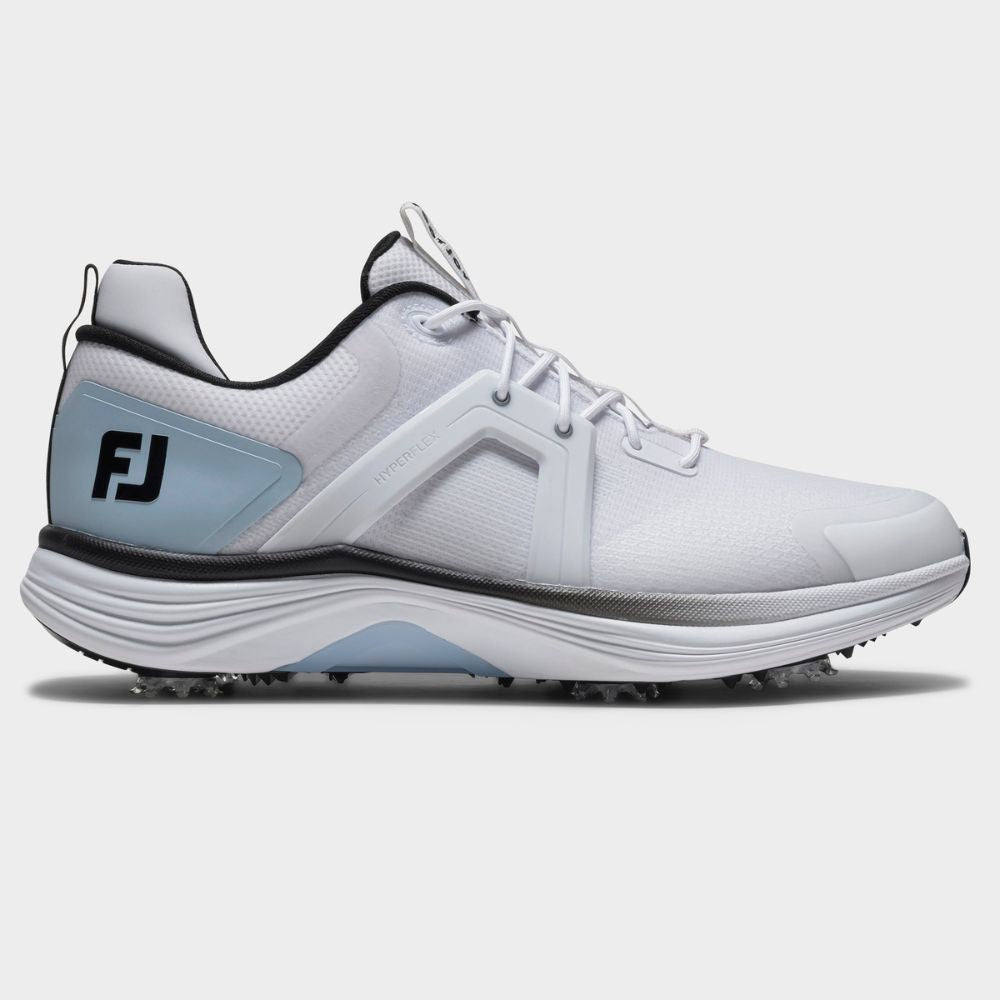
The best way to find compatible FootJoy spikes is to inspect the sole before removing anything. Take a clear photo of the bottom of the shoe, note the model name, and compare the fitting pattern with the shoe’s instructions.
1. Check whether the shoe is spiked or spikeless
Turn the shoe over and look for removable cleats. A replaceable cleat usually has a visible base with slots, posts, or a twist-lock shape. A spikeless outsole has fixed rubber lugs or traction circles molded into the sole.
Do not try to unscrew molded traction. It is part of the outsole. Forcing it can damage the shoe and may create a sharp edge.
2. Find the model name
FootJoy often places the model name on the tongue, inside label, heel, or side of the shoe. Write down the full name, not just the series name. Two shoes in the same family may use different outsoles.
A model name can also help separate older and newer versions. A shoe that looks similar to a current model may have a different receptacle. This is common with golf shoes that have been updated over several seasons.
3. Inspect the receptacle
The receptacle is the part fixed to the sole. It may show three locking points, a twist pattern, or a branded shape. Look for packed mud and grass first. Debris can hide the pattern and make a correct cleat look wrong.
Use a soft brush or wooden tee to clear dirt. Avoid a metal tool that could gouge the base. If the receptacle is cracked, bent, or missing a locking tab, a new spike may not hold.
4. Count the locking points
Many cleat systems use a set number of posts or wings. The posts must enter the matching slots before the spike can lock. Count and compare the shape rather than relying on color.
Some replacement cleats have a similar appearance but a different connection. The spike may turn part of the way and then stop. That is a sign to stop, not to apply more force.
5. Check the manufacturer’s current information
FootJoy’s current instructions are the best source for a specific model. The USGA and R&A govern equipment rules, but they do not tell you which replacement cleat fits a FootJoy outsole.
If the model is old, contact a qualified golf-shoe service source or a FootJoy representative. Keep the shoe in hand while checking. A guess based on a product photo is less reliable.
Compatibility clues to record
These details make identification faster and reduce mistakes.
| Detail to record | Why it helps | Best method |
|---|---|---|
| Full shoe model | Separates similar outsole designs | Read the tongue or inner label |
| Approximate age | Older versions may use another system | Note when the shoe was issued or used |
| Spiked or spikeless design | Avoids forcing a cleat into molded tread | Inspect the outsole |
| Locking shape | Shows the system more clearly than color | Clean and photograph the receptacle |
| Condition of base | A worn base may not hold a new cleat | Look for cracks and missing tabs |
Use the model name and the outsole pattern together. Either detail alone can mislead you.
Common FootJoy spike systems
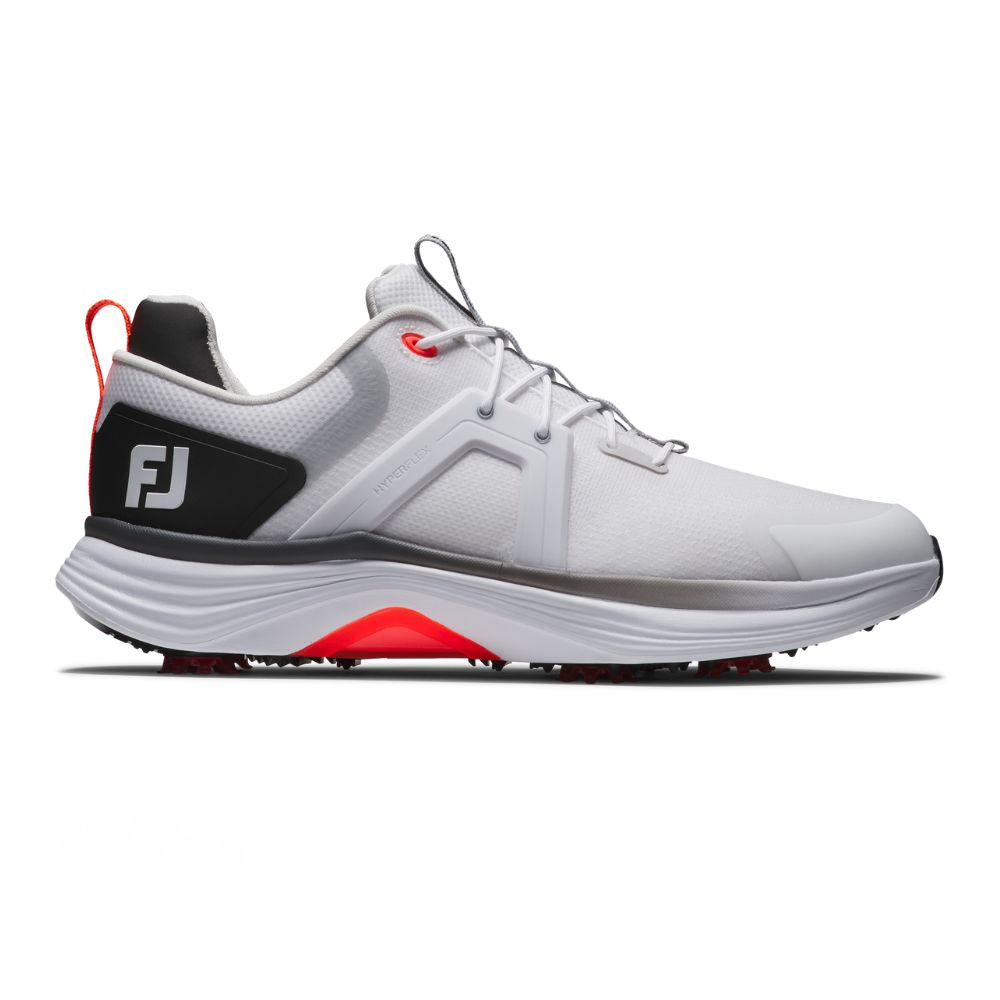
FootJoy has used several replaceable cleat systems. Names can vary by model, region, and production period, so treat this section as a guide rather than a universal list.
P.I.N.S. cleats
P.I.N.S. is a common term associated with some FootJoy replaceable-cleat shoes. The fitting uses a defined locking pattern, so the matching cleat must have the same shape.
P.I.N.S. does not mean that every FootJoy shoe uses that system. It also does not mean that any three-point cleat is automatically correct. The receptacle must match the cleat’s posts and locking wings.
Fast Twist cleats
Fast Twist is a twist-lock fitting used across many golf-shoe designs. The cleat enters the base and turns into place. Fast Twist and Fast Twist 3.0 may look similar, but the exact connection can differ.
Do not assume that the number in the name is a cosmetic update only. Confirm the system for the shoe. If the cleat does not seat smoothly, remove it and recheck the pattern.
Other or model-specific fittings
Some FootJoy shoes may use another fitting system, a regional version, or a cleat supplied for a specific outsole. Older shoes are especially difficult to identify from a photograph alone.
A spike system may also be shared across brands, but shared use does not remove the need to check the shoe. Compatibility comes from the physical base, not from a marketing label.
Spikeless traction
Spikeless FootJoy golf shoes have fixed traction. They may use rubber pods, bars, circles, or other tread shapes. These shoes can provide useful grip for walking, putting, chipping, and full swings, but the traction cannot be removed like a replaceable cleat.
Spikeless shoes may suit golfers who walk on firm courses, use a cart, or want one shoe for the clubhouse and course. They may not suit a player who often walks on very soft turf or plays in heavy rain. The best choice depends on conditions, balance, comfort, and local course policy.
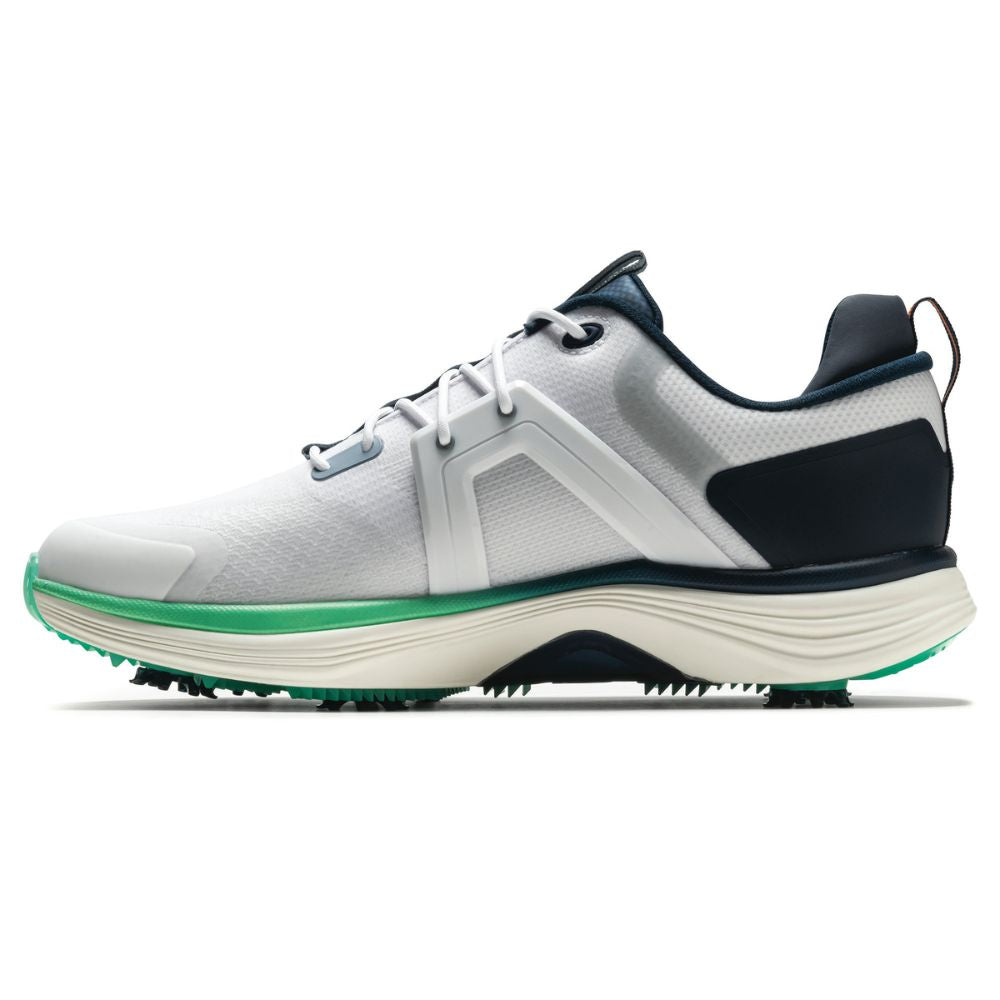
Are FootJoy Fast Twist and P.I.N.S. spikes interchangeable?
Fast Twist and P.I.N.S. spikes are not automatically interchangeable. They use different locking designs in many shoes, so a cleat that fits one pattern may not lock into the other.
The main difference is the shape and movement of the connection. A Fast Twist cleat is designed for its matching twist-lock base. A P.I.N.S. cleat is designed for its own post-and-lock pattern. Even if both cleats have a similar number of points, that does not prove compatibility.
Signs that two systems are not the same
Watch for these signs:
- The posts do not enter the receptacle.
- The cleat sits high instead of flush with the sole.
- It turns only a small amount.
- It needs unusual force.
- The locking wings remain visible.
- The cleat rocks after installation.
- One shoe accepts it but the other does not.
Remove the cleat if any of these signs appear. A correct cleat normally seats in a clear, controlled way. It should not require hammering, excessive twisting, or a tool that damages the plastic.
Why a near fit is unsafe
A near fit can fail when your foot loads the shoe during impact. A loose cleat may twist, fall out, or leave an uneven base. That can affect balance and may increase the chance of a trip while walking.
For a beginner, this can create fear during the swing. For an experienced player, it can change pressure movement and tempo. For a senior or golfer with a history of ankle trouble, an unstable shoe deserves immediate attention.
| Fit result | What it may mean | Correct response |
|---|---|---|
| Cleat sits flush and locks with normal effort | System may match | Check all cleats and test by hand |
| Cleat stops before sitting flush | Wrong system or debris | Remove and inspect |
| Cleat turns but feels loose | Worn base or poor match | Do not play until fixed |
| Cleat will not enter | Wrong pattern or damaged post | Compare with the exact system |
| Base is cracked | Outsole problem | Seek repair advice or retire the shoe |
A flush fit is necessary but not enough. Check for firm engagement and inspect the base around the cleat.
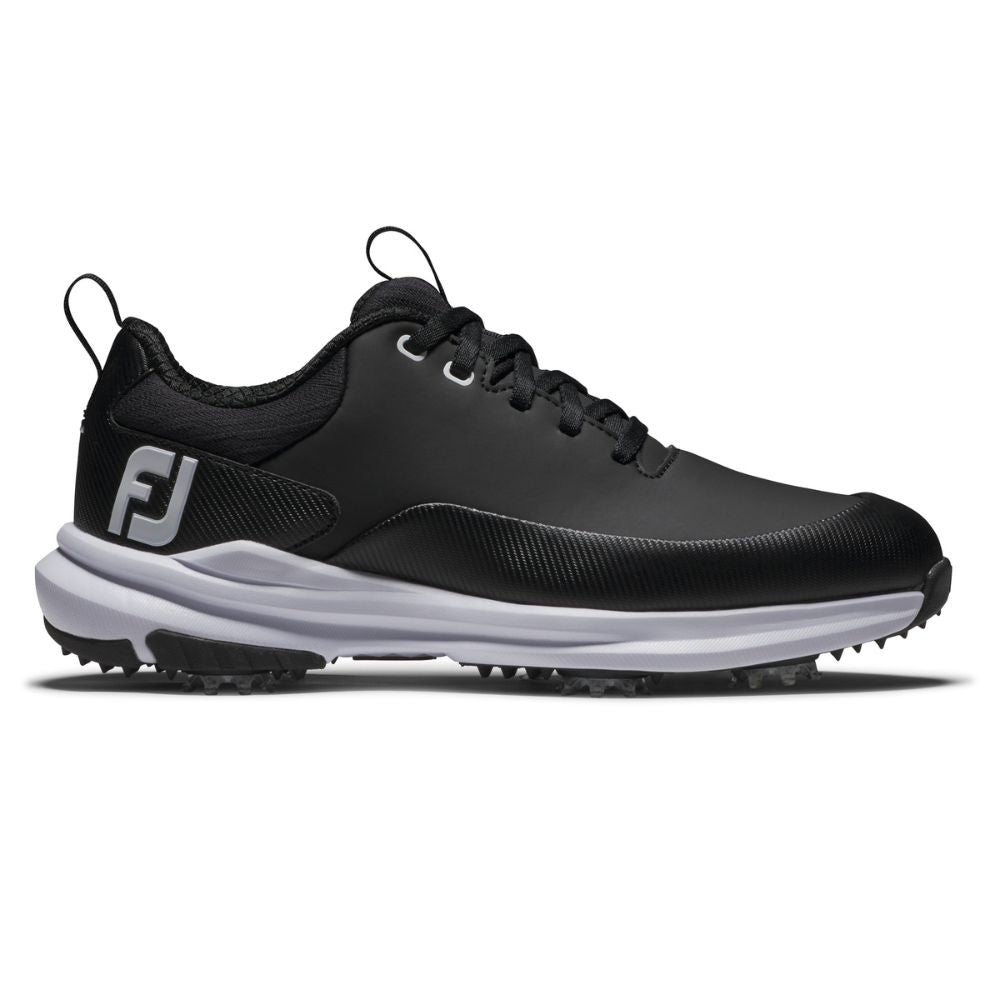
How to replace FootJoy golf spikes safely
Replacing spikes is a simple maintenance task when the shoe uses a removable system. Work slowly, keep the shoe stable, and stop if the base looks damaged.
What you need
You may need:
- The correct cleat system
- A cleat removal tool made for that system
- A soft brush
- A dry cloth
- A small amount of water for cleaning
- Good light
A tool made for another system may slip. If a cleat is stuck, do not use a sharp knife near your hand or foot. A golf professional, repair shop, or qualified shoe service worker can help with a seized cleat.
Replacement steps
- Clean the outsole. Remove grass, mud, and small stones from the cleat and receptacle.
- Secure the shoe. Hold it on a firm surface with the sole facing up.
- Remove the old cleat. Turn it in the direction marked by the fitting system. Use steady pressure.
- Inspect the base. Look for cracks, stripped areas, missing tabs, or a loose receptacle.
- Match the new cleat. Compare the posts and locking points with the old one and the base.
- Insert it gently. Keep the cleat straight as the posts enter.
- Lock it in place. Turn it until it stops at the correct position. Do not force it.
- Check for movement. Pull and twist the cleat by hand.
- Repeat on the other shoe. Inspect every cleat, not just the worn one.
- Test indoors first. Walk on a clean floor before using the shoes on the course.
When replacement is not enough
A new cleat may not solve the problem if the receptacle is worn. The base can loosen from the outsole, especially on an older shoe or after many seasons of walking.
The outsole itself may also be cracked. Water can enter through a damaged area, and the shoe may lose support. If you see a gap between the receptacle and the sole, stop using that shoe until it has been checked.
⚠️ Safety Warning: Do not play if a cleat rocks, spins freely, or pulls out by hand. A loose traction part can affect balance on a slope and may cause a fall.
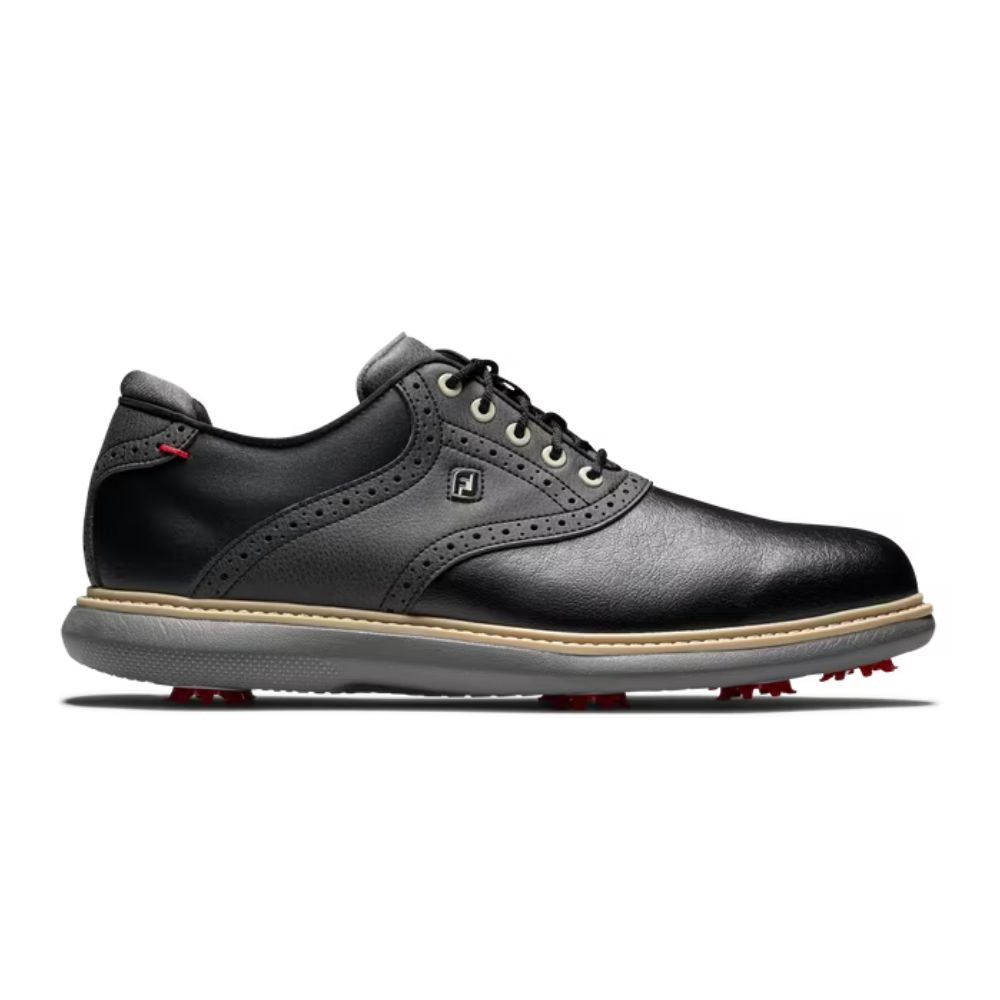
How often should FootJoy spikes be replaced?
Replaceable spikes should be checked before every round and replaced when the traction edges are worn, rounded, damaged, or loose. There is no single time limit because wear depends on walking distance, surface type, body weight, swing force, and care.
A golfer who walks four rounds each month on wet, hilly turf may wear cleats faster than a golfer who rides on dry, flat fairways. A junior may outgrow the shoe before wearing the spikes out. A senior who walks slowly may still need replacement if the cleat rubber has hardened with age.
Wear signs to watch
Look for:
- Rounded traction points
- Missing or split plastic
- Smooth areas where the grip pattern used to be
- A cleat that will not lock
- A cleat that loosens during play
- Uneven wear between the lead and trail foot
- Cracks near the base
- Less confidence on wet grass
The lead foot may show more wear because it braces the body during impact. The trail foot may show wear from pushing through the downswing. Check both shoes and all cleats.
A simple inspection schedule
| Time | Inspection | Reason |
|---|---|---|
| Before each round | Pull each cleat gently | Finds loose parts |
| After a wet round | Clean and dry the outsole | Prevents trapped grit and moisture |
| Every few rounds | Compare wear on both shoes | Finds uneven traction loss |
| Before a tournament | Check locking and base condition | Avoids equipment trouble |
| At season change | Inspect the full outsole | Finds age and storage damage |
A short inspection can take less than two minutes. It is useful for new golfers, junior families, and players who walk often.

Spiked versus spikeless FootJoy shoes
Spiked and spikeless shoes both have a place in golf. The better option depends on turf, weather, walking habits, balance, and comfort rather than handicap alone.
Spiked shoes use removable cleats. They can offer strong traction on wet or soft ground. Spikeless shoes use fixed tread, which can feel more natural on firm turf and hard surfaces.
Comparison of the two designs
| Feature | Replaceable-spike shoe | Spikeless shoe |
|---|---|---|
| Traction part | Removable cleats | Fixed outsole tread |
| Maintenance | Cleats need inspection and replacement | Tread needs inspection |
| Wet or soft turf | Often useful when cleats are sound | Depends on tread depth and design |
| Walking comfort | Can feel firm or focused | Often feels more flexible |
| Clubhouse use | May need care on hard floors | Often easier to wear between holes |
| Repair concern | Receptacle can wear or crack | Entire outsole may wear |
Spiked shoes may suit golfers who play in wet climates, walk hilly courses, or need more resistance during the swing. Spikeless shoes may suit casual players, beginners, or golfers who play on firm ground and value easy walking.
Conditions matter more than labels
On a dry summer day, a spikeless shoe can provide ample grip. After rain, the same shoe may feel less secure on a sloped tee box. A cleated shoe can help, but only if the cleats are fresh and the course allows them.
Some courses restrict certain aggressive traction designs to protect greens. Always follow local club rules. Never drag your feet across a putting green, regardless of shoe type.
Fitness and age considerations
Golf fitness includes ankle strength, calf control, hip stability, and balance. A shoe can support these qualities, but it cannot replace them. Older golfers or players returning from an ankle injury should walk slowly during the first few holes and avoid testing a new traction setup on a steep course.
A shoe with firm grip may not suit someone with a stiff ankle or knee. If traction makes rotation feel blocked, speak with a PGA professional or health professional. Persistent foot, ankle, knee, hip, back, or wrist pain needs medical attention.

Course rules and golf etiquette for FootJoy spikes
Golf shoes must meet local course policies and the Rules of Golf. The main concern is not whether the shoe says FootJoy. It is whether the outsole is allowed and whether it damages the putting surface.
Modern soft spikes and spikeless tread are widely used, but policies vary. Some facilities restrict metal spikes or certain high-profile designs. Tournament committees may also publish special conditions.
Rules and local policies
The Rules of Golf cover equipment and playing conditions, but the club or committee may set local rules about footwear and course access. Check the latest Rules of Golf and your local committee for updates.
If a competition says shoes must use non-metal spikes, comply before starting. In stroke play, a breach may create a serious issue. In match play, the result can differ under the applicable rule. Ask the committee before teeing off if the policy is unclear.
📜 Check the Rules: Local course rules can be stricter than general guidance. Read the notice board, event sheet, or club policy before a round, especially for metal spikes, practice areas, and clubhouse access.
Protecting the course
Good golf etiquette matters with every shoe:
- Repair ball marks on the green.
- Replace divots when the course asks players to do so.
- Rake bunkers after a shot.
- Keep carts away from restricted areas.
- Do not twist sharply on the putting green.
- Keep pace of play.
- Dispose of broken cleats, tees, and litter properly.
A shoe with strong traction does not give permission to drag feet. Green surfaces are living turf. Small scars can affect another golfer’s putt and increase work for the superintendent.

Common mistakes when choosing FootJoy spikes
Most cleat problems come from guessing the fitting system, ignoring wear, or forcing a part into place. These mistakes are easy to avoid with a short inspection.
Mistake 1: Choosing by brand only
A FootJoy shoe does not guarantee one universal cleat pattern. The model and outsole determine the fit. Other brands may use the same system, but brand labels alone are not enough.
Mistake 2: Confusing similar systems
Fast Twist, Fast Twist 3.0, P.I.N.S., and other patterns may look close. Similar appearance does not prove compatibility. Compare the locking points and check the model information.
Mistake 3: Installing over dirt
Mud can prevent a cleat from sitting flush. It can also hide a crack in the base. Clean the outsole before identifying or replacing a spike.
Mistake 4: Tightening too hard
Over-tightening can strip the cleat or damage the receptacle. A proper cleat should lock with controlled pressure. If it does not, stop and reassess.
Mistake 5: Replacing only the worst cleat
One new cleat next to several worn cleats can create uneven traction. This may be fine if the remaining cleats are in excellent condition, but compare all of them first.
Mistake 6: Testing only on a hard floor
A shoe can feel stable indoors and slide outdoors. Test it on clean grass near the practice area. Walk, stand, and make a slow half swing before a full round.
Mistake 7: Ignoring foot movement
If your heel lifts or your foot rolls, the problem may involve fit, lacing, socks, stance, or balance rather than spikes. A teaching pro can help separate a shoe issue from a swing issue.
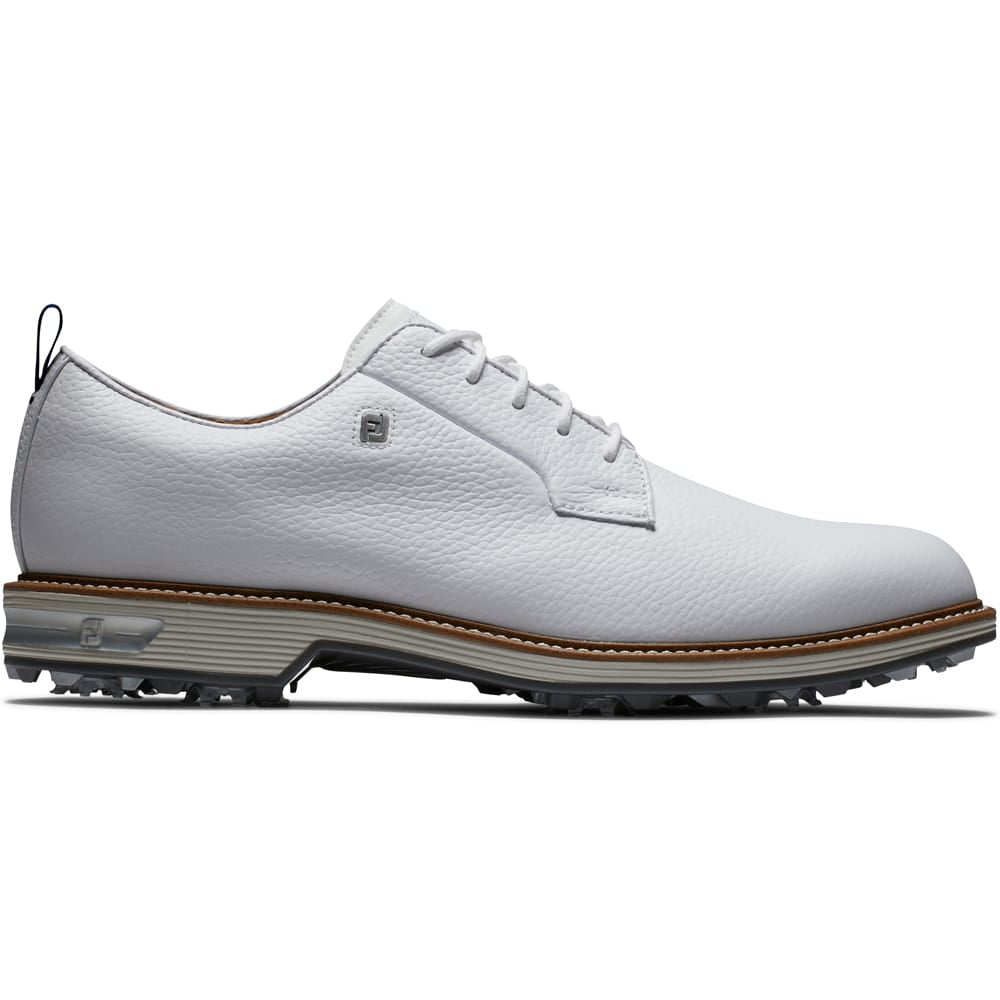
Who needs which level of traction?
There is no single best spike choice for every golfer. Skill level, handicap index, course conditions, and physical needs all shape the answer.
Beginners and new golfers
A beginner needs a secure and comfortable base while learning grip, stance, posture, ball position, and tempo. A simple spiked or spikeless design can work if it fits correctly and follows the course policy.
New golfers should focus on walking safely, keeping pace, and learning basic etiquette. They do not need to chase a certain spike style to learn chipping, pitching, bunker shots, putting, or full swings.
Improving amateurs
Players working to lower a handicap index may notice traction during pressure shots. A stable shoe can support a repeatable stance and finish, especially on uneven lies. It cannot replace work on the backswing, downswing, impact, or follow-through.
Players with faster swing speed may load the lead foot more strongly. Players with a smooth tempo may place less sudden force on the sole. Both still need a secure cleat connection.
Seniors
Seniors may benefit from checking balance, ankle comfort, and walking fatigue. Strong traction can help on wet slopes, but too much stiffness may make the stride less natural.
Warm up with ankle circles, calf raises, gentle hip turns, and a few easy practice swings. Do not stretch into pain. If foot or joint pain lasts after the round, seek medical advice.
Women and men
FootJoy’s women’s and men’s shoes can use different shapes and sole designs. The correct spike follows the outsole, not the golfer’s gender. A narrow shoe that pinches can cause more trouble than a cleat issue.
Check toe room, heel hold, and arch comfort. A stable shoe should allow natural movement without the foot sliding inside it.
Juniors and families
Junior golfers grow fast. Parents should check shoe fit, cleat wear, and outsole damage often. A child should not practice in a shoe with a loose spike or a split sole.
Keep replacement parts away from small children. During practice, maintain swing-area clearance and make sure no one stands close to the golfer. Teach juniors to avoid running on wet slopes and to follow cart safety rules.

Troubleshooting loose or missing FootJoy spikes
A loose spike is a maintenance problem until proven otherwise. It can come from the wrong fitting, a damaged cleat, a worn receptacle, or dirt in the base.
| Symptom | Likely cause | What to do |
|---|---|---|
| Spike spins after installation | Wrong fit or stripped base | Remove and compare the system |
| Spike falls out during walking | Damaged lock or worn receptacle | Stop using the shoe until checked |
| One spike sits higher | Dirt or bent post | Clean and inspect |
| Both shoes show loose spikes | Wrong cleat system or tool use | Verify the model and fitting |
| Sole separates around the base | Outsole damage | Seek repair advice |
| Grip feels poor but cleats look fine | Wet turf, worn tread, or foot movement | Test conditions and seek a fit check |
Do not glue a loose cleat into place. Glue may hide the issue and make proper repair harder. It can also create an uneven surface under your foot.
What to do during a round
If a spike loosens during play, move to a safe place away from the line of play. Do not stop in front of another group or near a swing area. If you cannot secure the shoe, walk carefully and arrange a repair before the next round.
A broken cleat can be a trip hazard. In a tournament, ask the committee whether a shoe change is permitted and follow the current Rules of Golf and local conditions.
🔧 Quick Fix: If a cleat feels loose, remove grass and grit, then inspect the locking base. If it still does not lock firmly, do not rely on it for a full round.

How spike choice affects practice and performance
Footwear is part of your practice setup. It should support a stable stance without distracting you from the task.
At the driving range, use the same type of shoe you plan to wear on the course when possible. Practice a few half swings first. Notice whether your lead foot stays stable, your trail heel moves naturally, and your finish feels balanced.
For putting and green reading, traction is less about force and more about comfort. You need to stand still, read the slope, and make a smooth stroke. Avoid dragging your feet between the ball and the hole.
A short shoe check before practice
- Walk for one minute on grass.
- Stand in your golf posture.
- Make five slow practice swings.
- Make five half swings.
- Check both feet after each swing.
- Stop if you feel pain, slipping, or a loose cleat.
This check suits beginners and returning golfers. Advanced players can add uneven lies, but only after confirming the shoe is secure.
Why footwear does not fix swing faults
A golfer may blame shoes for a slice, hook, thin shot, fat shot, or poor contact. Traction can affect confidence, but most shot patterns come from club path, face angle, grip, posture, ball position, tempo, and impact.
A slice often comes from an open clubface and an out-to-in path. A hook often comes from a closed face and an in-to-out path. Changing spikes will not address those causes. A PGA professional can assess whether your foot movement is part of the fault.

Care and storage for FootJoy golf shoes
Proper care helps preserve the outsole, cleat base, and upper. It also makes compatibility checks easier because dirt cannot hide the fitting pattern.
After a round, remove grass and mud with a soft brush. Wipe the shoe with a damp cloth, then let it air dry at room temperature. Avoid high heat, such as a radiator or hair dryer, because heat can affect adhesives and materials.
If the cleats are removable, inspect them before storage. Do not leave the shoes wet in a sealed bag. Moisture and grit can harden around the receptacle and make later removal difficult.
Storage checklist
| Care task | How to do it | Benefit |
|---|---|---|
| Brush the outsole | Use a soft brush after play | Removes grass and grit |
| Dry the shoe | Air dry in a ventilated place | Reduces trapped moisture |
| Check each cleat | Pull gently and inspect the lock | Finds looseness early |
| Store upright | Keep the sole from pressing against debris | Protects the tread |
| Keep parts together | Store the removal tool safely | Makes future service easier |
Clean shoes also help you see whether a cleat sits flush. This is useful before a club event, a junior tournament, or a long walking round.

Frequently asked questions
Q: Do all FootJoy golf shoes use the same spikes?
A: No. FootJoy uses more than one cleat system, and some FootJoy shoes are spikeless. Check the full model and outsole pattern before selecting a replacement.
Q: Can I put Fast Twist spikes in a P.I.N.S. shoe?
A: Not automatically. Fast Twist and P.I.N.S. use different locking designs in many shoes. Use the system that matches the receptacle in the exact outsole.
Q: How can I tell whether my FootJoy shoes are spikeless?
A: Look for fixed rubber traction pods or bars with no removable locking base. If the traction is molded into the outsole, the shoe does not take replacement spikes.
Q: Do men’s and women’s FootJoy shoes use different spikes?
A: Sometimes the shoe designs differ, but gender does not determine the cleat system. The outsole and receptacle determine the correct fit.
Q: Do junior FootJoy shoes take replacement spikes?
A: Some may, while others are spikeless. Check the exact junior model. Parents should inspect the shoe often because growth, wear, and rough play can affect fit and safety.
Q: Can left-handed golfers use different spikes?
A: No. Left- and right-handed players use the same cleat system for the same shoe model. The swing direction can change wear patterns, but it does not change compatibility.
Q: How tight should a FootJoy spike be?
A: It should lock firmly and sit flush without excessive force. If it keeps turning, rocks, or sits high, the cleat may be wrong or the receptacle may be worn.
Q: Why does one shoe wear more than the other?
A: The lead foot often takes more braking and turning force during impact, while the trail foot helps push through the downswing. Stance, swing path, walking habits, and course slopes also affect wear.
Q: Can I use FootJoy spikes on another golf-shoe brand?
A: Only if the other shoe has the same physical cleat system and the manufacturer permits that use. The FootJoy name alone does not prove compatibility.
Q: Are metal spikes allowed on a golf course?
A: Policies vary. Many courses restrict metal spikes, but the local club or tournament committee controls access. Check the current local rule before play.
Q: Can worn spikes cause a golf swing problem?
A: They can affect confidence, balance, or foot movement, especially on wet turf. They do not usually cause the main technical faults in a swing. Check grip, stance, posture, tempo, and impact as well.
Q: How long does it take to learn to replace golf spikes?
A: Many golfers can learn the basic process in a few minutes after identifying the system. The difficult part is confirming compatibility and spotting a damaged receptacle. Ask a qualified professional if the cleat is stuck or the base is cracked.
Q: Should I change all spikes at once?
A: Not always. If only one cleat is damaged and the others are nearly new, one replacement may be suitable. If several are rounded, loose, or uneven, replacing the worn set can create more consistent traction.
Q: Can I play after a spike falls out?
A: It is better to stop and inspect the shoe. A missing cleat may expose a sharp base or create uneven support. Repair the shoe before returning to full play.
Q: Do spike changes matter on a links course?
A: They can. Firm links turf may favor a comfortable, stable outsole, while wet wind and slopes can increase the need for secure traction. Follow the course’s footwear policy and test your shoes before the round.
Q: Do spikes help putting?
A: Secure footing can help you stand comfortably while putting and reading greens. It does not replace green-reading skill, a steady setup, or a smooth putting stroke.
Q: What should I do if my shoes hurt after a round?
A: Stop using the shoes if pain continues. Check fit and lacing, but do not play through sharp or persistent pain. A doctor or qualified health professional can assess foot, ankle, knee, hip, or back pain.
Final thoughts
The right spikes for FootJoy golf shoes are the spikes that match the shoe’s exact cleat system. P.I.N.S., Fast Twist, Fast Twist 3.0, and other fittings are not universal substitutes, and spikeless FootJoy shoes do not accept replacement cleats.
Start with the outsole. Confirm the model, clean the receptacle, compare the locking pattern, and inspect the base. A secure shoe can support balance and confidence for beginners, improving amateurs, seniors, women, men, juniors, walkers, and riders alike.
Before your next round, check the spikes, warm up, protect yourself from sun and heat, and leave the course at the first lightning warning. Good footwear is only one part of sound golf. A stable stance, safe movement, course care, and respect for local rules complete the job.