Golf Shoes And Sneakers: What’s The Difference?
Golf shoes and sneakers can look similar, but they serve different jobs. The main difference is traction. Golf shoes are built to help your feet stay stable while you swing, walk on grass, and move across slopes. Sneakers are made for general walking, running, or daily use. They often feel soft and light, but they may not grip the ground well during a golf swing.
That difference matters for beginners, improving amateurs, juniors, seniors, and anyone who plays in wet or hilly conditions. Your shoes affect your stance, balance, posture, footwork, and comfort. They do not fix a slice or replace good technique, but the right footwear can help you make a more stable swing and walk the course with less strain.

The Quick Answer: Golf Shoes vs. Sneakers
The main difference between golf shoes and sneakers is their sole design. Golf shoes use golf-specific traction, such as molded lugs or replaceable spikes, to help resist slipping during the backswing and downswing. Sneakers use soles made for pavement, gyms, or general movement. Sneakers can work for casual golf in dry conditions, but golf shoes are usually better for regular play, wet grass, slopes, and long walking rounds.

Golf shoes also tend to offer more side-to-side support. That support can help when your feet rotate through impact. Sneakers may have good cushioning, yet their softer or smoother soles can allow unwanted movement on grass.
For a new golfer, the difference may seem small during putting or chipping. It becomes clearer during a full driver swing, a bunker shot, or a shot from a sloped lie. A stable base gives you a better chance to repeat your setup and maintain balance.
At a Glance
| Feature | Golf Shoes | Sneakers |
|---|---|---|
| Main purpose | Golf swings and course walking | General walking, running, or daily use |
| Ground grip | Designed for grass, slopes, and swing forces | Designed for hard surfaces or general movement |
| Water resistance | Often available in golf-specific designs | Varies widely and may be limited |
| Side support | Usually built for golf movement | Depends on the sneaker type |
| Course use | Accepted at most courses, subject to local policy | May be accepted for casual play |
| Best setting | Full rounds, wet grass, hills, and tournaments | Dry practice areas or casual rounds |
The key takeaway is simple: sneakers focus on general comfort, while golf shoes focus on traction, stability, and movement on a golf course.
Why Footwear Matters During a Golf Swing
Footwear matters because the golf swing begins at the ground. Your feet connect you to the surface. They influence your stance width, posture, balance, weight shift, and ability to turn your hips.

During the backswing, a right-handed golfer often turns the shoulders and hips away from the target. During the downswing, pressure moves toward the lead side. At impact, the feet help support the rotation of the hips and torso. If the feet slide, the body may react by changing the swing path or losing posture.
A left-handed player makes the same movement in the opposite direction. The footwear need is still the same: stable contact with the ground and enough comfort to repeat the motion.
Traction and Swing Stability
Traction is the grip between the sole and the ground. Good traction can help you resist slipping when the grass is wet or when your swing creates strong rotational force.
This does not mean more grip is always better. A sole that grips the ground too aggressively may feel awkward if it does not let the foot move naturally. Golf shoes aim to balance grip with controlled rotation.
Sneakers may work well on a driving range with firm, dry turf. On soft grass, they can slide during the downswing. A slide may cause a weak strike, a pulled shot, a pushed shot, or a loss of balance after impact.
Comfort During a Walking Round
A full golf round can involve several miles of walking. The exact distance depends on the course layout, route, and whether you walk directly from the green to the next tee box. A flat executive course may feel very different from a long links course or a hilly parkland course.
Golf shoes are designed for repeated steps on grass, dirt, slopes, and paths. Sneakers may feel comfortable at first but may lack the support needed for several hours of changing ground.
For seniors and golfers with sensitive feet, comfort is especially important. Foot pain can change posture and shorten the backswing. A junior golfer may also lose focus when shoes pinch, slip, or become wet.
Balance, Posture, and Pressure Shift
A good golf posture includes a balanced stance, a slight bend from the hips, and relaxed knees. Your feet should feel planted without feeling stiff. If your shoes slide, you may stand too upright or grip the ground with your toes.
During the swing, pressure does not simply move from the back foot to the front foot in a straight line. It shifts and rotates. Your footwear should allow that pressure change without unwanted slipping.
💡 Pro Tip: For beginners, make a slow practice swing and notice your feet. If your heels lift too early, your toes grip the turf, or your feet slide, check your balance and the traction under your shoes before changing your swing.
How Golf Shoes Are Built Differently
Golf shoes differ from sneakers in the sole, upper material, support, and protection from moisture. These features work together to meet the demands of a golf course.

The upper is the part that covers the top and sides of the foot. A golf shoe upper may provide more structure around the heel and midfoot. The sole may use small lugs, ridges, or spikes to grip turf.
Sneakers vary widely. A running shoe is built for forward motion on firm surfaces. A court shoe is built for quick side-to-side movement. A casual sneaker may focus on soft cushioning. None of those designs is made specifically for the sequence of a golf swing.
Spiked Golf Shoes
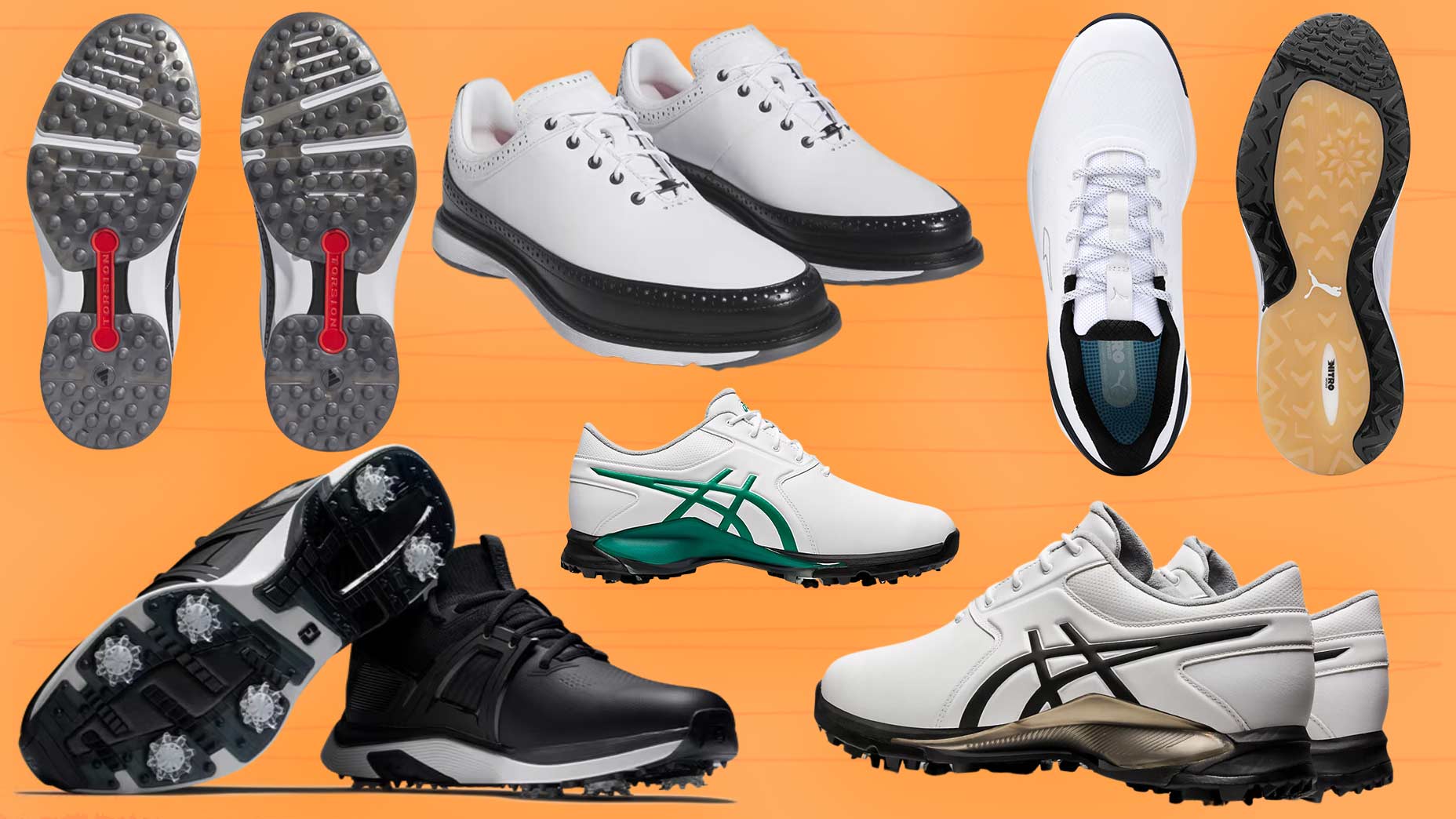
Spiked golf shoes use removable spikes or cleats in the sole. These spikes can provide strong traction on wet or soft turf. They may suit golfers who play often in damp climates, walk hilly courses, or create a lot of force during the downswing.
Spikes can also create more pressure under the feet. Some golfers like the secure feel. Others prefer the smoother feel of a spikeless sole, especially when walking on paths or entering a clubhouse.
Course policies can differ. Some clubs allow only certain types of spikes in specific areas. Always check the latest local policy before playing.
Spikeless Golf Shoes
Spikeless golf shoes use molded patterns, rubber lugs, or textured sections instead of removable spikes. They often feel more natural when walking between grass, paths, and indoor spaces.
They can provide enough grip for many golfers, especially on dry or moderately damp courses. Their performance depends on the sole pattern, turf condition, body weight, swing speed, and slope.
A golfer with a smooth tempo may find spikeless traction fully adequate. A golfer with a fast transition, high swing speed, or powerful weight shift may notice more foot movement on wet slopes.
Sneaker Soles
Sneaker soles are designed around the shoe’s main purpose. Running shoes often use cushioning and a curved shape to support forward motion. Training shoes may offer a wider base. Casual sneakers may use a flat sole with limited turf grip.
Some athletic sneakers can feel stable on dry grass. However, a sneaker is not automatically a golf shoe because it is comfortable or has a thick sole.
The most important question is not how soft the shoe feels. It is whether the sole helps you stay balanced while walking and swinging on grass.
| Construction feature | Golf shoe purpose | Sneaker effect |
|---|---|---|
| Turf lugs or spikes | Improve grip on grass | Usually absent or not shaped for turf |
| Firm heel counter | Supports the foot during rotation | Varies by activity and model |
| Water-resistant upper | Helps manage dew and wet grass | Depends on the sneaker |
| Stable midsole | Supports stance and pressure shift | May favor soft cushioning |
| Flexible walking areas | Helps comfort between shots | Common in many sneakers |
A golf shoe does not need to feel rigid. It needs controlled support. A sneaker does not need to be unsafe. It simply may not offer the same turf-specific design.
Comparison Table: Golf Shoes and Sneakers by Playing Need
The right footwear depends on how and where you play. A beginner walking a dry nine-hole round has different needs from a low-handicap golfer playing early in wet conditions.

| Playing need | Golf shoes usually offer | Sneakers may offer |
|---|---|---|
| Full 18-hole walking round | Turf grip and golf-specific support | General cushioning |
| Wet morning tee time | Better control on damp grass | Possible slipping |
| Dry driving range session | Stable stance | Often adequate for light practice |
| Hilly course | More traction and side support | Comfort, but less slope control |
| Golf cart round | Stable shots and course grip | May feel acceptable in dry weather |
| Putting and chipping practice | Consistent foot contact | Often comfortable on short grass |
| Junior practice | Course traction and fit | Easy movement for casual activity |
The best match depends on the surface, weather, walking distance, and swing demands. A golfer should not judge footwear only by appearance or softness.
When Sneakers Can Work for Golf
Sneakers can work for casual golf when the ground is dry, the course allows them, and the golfer does not need much traction. They may suit a beginner who is trying a short practice session, a family playing a casual scramble, or a junior learning basic chipping and putting.

Sneakers are also common on indoor golf simulators, paved practice areas, and some short executive courses. These settings place less demand on turf grip than a wet 18-hole course.
Still, sneakers can become a problem when the sole is smooth, worn, or made for polished floors. They can also collect mud or become uncomfortable after repeated walking on uneven ground.
Good Uses for Sneakers
Sneakers may be reasonable for:
- A first putting lesson.
- A short chipping session in dry weather.
- An indoor simulator.
- A casual nine-hole round on firm ground.
- A junior’s early practice session.
- A golf cart round with little walking.
- A driving range session with a stable hitting area.
These uses suit beginners and families who are learning the game. They may not suit golfers who play in wet conditions or who have a fast, forceful swing.
When Sneakers Become a Poor Fit
Sneakers may be less suitable for:
- Wet morning rounds.
- Steep courses.
- Soft fairways.
- Long walking rounds.
- Fast swing transitions.
- Tournament play.
- Rough, bunker, and uneven-lie practice.
- Golfers who already feel unstable at impact.
The rough is the longer grass beside the fairway. It often creates an uneven lie, which is the position of the ball and your feet before the shot. Uneven lies increase the need for balance.
Walking Versus Riding
Golf carts reduce walking distance, but they do not remove the need for traction. You still walk from the cart to the ball, stand on slopes, and make swings from different lies.
Walking golfers place greater demands on comfort, moisture control, and support. Riding golfers may tolerate general athletic shoes in dry conditions, but course rules and turf conditions still matter.
🌿 Course Care Note: Wet turf can show more damage from sliding feet and careless cart use. Follow cart paths, avoid restricted areas, repair ball marks, replace divots, and keep litter, broken tees, and old balls off the course.
Which Golfers Benefit Most From Golf Shoes?
Golf shoes can suit any golfer who plays on grass, but the reasons vary by player. Skill level, handicap index, age, swing speed, climate, and course type all affect the value of stable footwear.
A handicap index estimates a golfer’s potential scoring ability under set conditions. A high-handicap beginner may benefit from stable footing because balance is still developing. A low-handicap golfer may notice small changes in traction because the swing is faster and more repeatable.
Beginners and New Golfers
Beginners often focus on grip, stance, posture, and ball position. Footwear should support these basics without distracting the player.
A new golfer does not need advanced swing speed to benefit from traction. Even a slow swing can cause a slide on wet grass. Golf shoes can also help a beginner feel the difference between a stable stance and a cramped stance.
That said, shoes cannot replace lessons, practice, or good warm-up habits. If a beginner slices the ball, the cause may involve the clubface, swing path, grip, or alignment rather than footwear.
Improving Amateurs
Improving players often work on tempo, impact, and consistent contact. They may start to notice that a shot feels different from a flat lie, a downhill lie, or a wet tee box.
For these golfers, footwear can support a repeatable base. This is useful during practice drills that include a full backswing, controlled downswing, and balanced follow-through.
A golfer with a handicap index in the mid or high range may notice comfort first. A lower-handicap golfer may notice pressure shift and rotational control. Neither group should expect footwear alone to produce lower scores.
Seniors
Senior golfers may value cushioning, stable heel support, and reduced foot fatigue. Many seniors also play courses with slopes, uneven paths, or long distances between the green and the next tee.
Footwear should not force a rigid movement pattern. A comfortable shoe can help a golfer maintain a relaxed stance and smooth tempo. If foot, knee, hip, back, or ankle pain persists, consult a medical professional.
A senior golfer with reduced balance may need more caution on dew-covered grass. Swinging at a lower speed does not remove the risk of slipping.
Women Golfers
Women golfers have the same core footwear needs as men: traction, comfort, support, and protection from changing ground. Foot shape, width, arch structure, and personal comfort vary from golfer to golfer.
There is no single footwear rule for women. A woman with a fast swing may need strong rotational stability. Another golfer may place greater value on light weight and walking comfort.
Golf instruction should focus on the individual, not assumptions about gender. The same applies to footwear.
Junior Golfers
Junior golfers need proper fit, enough room for movement, and a sole that suits the course. Shoes that are too large can cause sliding. Shoes that are too tight can affect posture and focus.
Parents should look for signs of discomfort during a round. A child who keeps removing a shoe, rubbing a heel, or avoiding slopes may be dealing with a fit or traction problem.
Junior golfers should also learn course safety. They need to stay clear of swings, avoid running near carts, and wait for the group ahead to move out of range.
Left-Handed and Right-Handed Golfers
Footwear does not need to change based on whether a player is left-handed or right-handed. The pattern of pressure changes reverses, but both players need secure contact with the ground.
A right-handed golfer often feels more pressure move toward the left side through impact. A left-handed golfer often feels more pressure move toward the right side. The shoes should support both the lead and trail foot.
| Golfer type | Main footwear concern | Why it matters |
|---|---|---|
| Beginner | Stable stance | Helps build balance and posture |
| Improving amateur | Rotation and pressure shift | Supports repeatable impact |
| Senior | Comfort and slope control | May reduce fatigue and instability |
| Junior | Fit and safe movement | Helps focus and prevents slipping |
| Fast swinger | Traction during transition | Limits unwanted foot movement |
| Walking golfer | Cushioning and support | Helps during long rounds |
Every golfer should judge footwear by personal movement and course conditions. Handicap and age can guide the question, but they do not decide it alone.
Course and Weather Conditions Change the Answer
The same shoes can feel different in dry, wet, cold, hot, sandy, or soft conditions. Weather affects the grass, the soil, and the amount of traction underfoot.

Dew can make early-morning grass slippery. Rain can soften the fairway and create mud. Heat can increase foot swelling and fatigue. Cold weather can reduce flexibility during the warm-up routine.
A links course may have firm turf, strong wind, and uneven ground. A parkland course may have softer fairways and more tree-lined slopes. An executive course may require less walking but still include wet or hilly areas.
Conditions Table
| Condition | Footwear demand | Common concern |
|---|---|---|
| Dry, firm turf | Moderate grip | Sneakers may work for casual play |
| Morning dew | Stronger turf traction | Sliding during the swing |
| Heavy rain | Grip and water control | Wet feet and unstable footing |
| Hilly course | Side support and grip | Foot rolling or loss of balance |
| Soft fairway | Sole that sheds mud | Clogged or slippery tread |
| Hot weather | Comfort and moisture control | Blisters and swelling |
| Cold weather | Warmth and flexibility | Stiff feet and poor warm-up |
The takeaway is clear: conditions can matter more than brand or appearance. A shoe that feels fine in summer may not suit a wet spring morning.
⚠️ Safety Warning: Stop play and leave the course at the first lightning warning or when a club official gives an evacuation signal. Wear sun protection, drink water in heat, and warm up before making full-speed swings.
Wet Grass and Mud
Wet grass lowers friction. Mud can fill the sole pattern and reduce contact with the ground. A golfer may feel the lead foot slide open or the trail foot spin during impact.
If your feet move, slow your tempo and shorten the swing. This tip suits beginners and seniors, but it may not suit a golfer who needs a full swing to clear a hazard. In severe weather, safety comes first.
Cold Weather
Cold muscles feel less ready for a fast backswing and downswing. Begin with walking, gentle mobility, and slow practice swings. Do not start with a full-speed driver swing.
A stable sole can help, but it cannot make cold ground safe. Pay attention to frost, ice, and frozen slopes. Follow course guidance about frost delays and restricted areas.
Heat and Humidity
Heat can increase sweat and swelling in the feet. Socks, fit, and moisture control affect comfort. A golfer may change posture or gait to avoid a hot spot, which can then affect the swing.
Drink water before thirst becomes strong. Use shade when possible. Seniors, juniors, and golfers with medical conditions should follow personal health guidance.
Golf Shoes and the Rules of Golf
Golf footwear is part of a golfer’s equipment, but shoes do not normally receive the same attention as clubs and balls. The Rules of Golf regulate equipment and player conduct, while clubs and tournaments may add local policies.

Golf shoes are generally accepted when they meet the course or event’s footwear policy. Some facilities restrict certain spike types or require soft-spike or spikeless designs. A tournament committee may also set conditions of competition.
Under the Rules of Golf, a player must not use equipment in a way that gives an unfair advantage or delays play. Footwear used only for normal support and traction is different from using equipment to test the ground or improve a lie.
Rules and Local Policy
Check the latest Rules of Golf, local rules, and the club or tournament committee before play. Policies can vary by facility, event, clubhouse, practice area, and weather condition.
The rules for golf shoes are not the same as general dress expectations. A shoe may be legal under the Rules of Golf but not allowed by a club’s policy.
📜 Check the Rules: The USGA and R&A update and interpret the Rules of Golf. For competition, confirm the current rulebook and the committee’s local conditions before teeing off.
Spikes and the Putting Green
Do not twist your feet on the putting green. Spikes, sneakers, or bare soft soles can damage the surface if a player drags or twists carelessly.
Walk normally on the green. Repair your ball mark and any other damage you are allowed to fix under the current rules. Avoid standing close to another player’s putting line.
Golf Etiquette
Good golf etiquette includes more than quiet behavior. It also includes care for the course and respect for the group behind you.
- Keep pace of play.
- Stay still while another player swings.
- Shout “Fore!” when a ball may endanger someone.
- Rake bunkers when required.
- Replace divots where appropriate.
- Repair ball marks.
- Keep carts away from restricted areas.
- Dispose of litter, broken tees, and old balls properly.
Footwear can affect turf, but player behavior has a larger effect on course condition.
Common Problems Caused by the Wrong Footwear
Wrong footwear can create clear symptoms, but those symptoms do not prove that shoes are the only cause. Swing faults, poor balance, fatigue, and course conditions can create similar problems.

A player who slips may blame the shoes, yet the real issue may be a stance that is too wide, a rushed transition, or poor weight control. Use footwear as one part of the check.
Problems and Possible Causes
| Problem | Possible reason | First response |
|---|---|---|
| Lead foot slides | Wet turf or weak traction | Shorten the swing and slow tempo |
| Trail foot spins | Fast transition or soft ground | Improve balance and use smoother pressure |
| Blisters | Friction, moisture, or poor fit | Stop if skin damage develops |
| Foot fatigue | Long walk or weak support | Rest, hydrate, and review walking pace |
| Poor balance on slopes | Sole lacks side grip | Take a wider, stable stance |
| Mud under sole | Soft fairway conditions | Clean soles before the next shot |
These responses are general. They may not suit golfers with foot injuries, balance disorders, or persistent pain.
Why Do I Slip During My Swing?
You may slip because the ground is wet, the sole lacks turf grip, or your transition is too quick for the conditions. You may also place too much pressure on the outside edge of the foot.
Start with half swings. Keep your feet quiet and finish in balance. If the issue continues on dry, level ground, ask a PGA professional to check your setup and footwork.
Why Do My Feet Hurt After Golf?
Foot pain can come from long walking, poor fit, heat, blisters, hard paths, or a change in normal activity. It can also link to ankle, knee, hip, or back stress.
Do not play through sharp or worsening pain. Rest and seek medical advice when pain persists. A golf fitness professional or PGA professional can help connect mobility and swing demands, but medical concerns require a qualified health provider.
Why Do My Shoes Feel Fine on the Range but Not on the Course?
A driving range often has a flat stance and a controlled surface. The course adds rough, slopes, bunkers, wet grass, long walks, and uneven lies.
A golfer may also hit fewer full shots on the range. Fatigue can expose weaknesses in support and comfort. This is common for beginners and new walkers.
A Simple Footwear Check Before a Round
A short check can help you decide whether your footwear suits the day. This is not a substitute for course policy, health advice, or proper equipment care.

Use the check before you leave the practice area. Look at the ground, the weather, the walking plan, and your own balance.
Five-Step Check
- Check the sole. Make sure the tread is not worn smooth or packed with mud.
- Test your stance. Stand on grass and make a slow practice swing.
- Test your walk. Walk across a slope without rushing.
- Check comfort. Look for pressure, rubbing, heat, or numbness.
- Check the policy. Confirm local rules for spikes and footwear.
A shoe that passes these checks may still not suit a very wet or steep course. Conditions can change during the round.
Warm-Up With the Shoes You Will Use
Warm up in the same footwear you plan to wear for play. Walk for a few minutes, move the ankles gently, and make slow swings.
Start with wedges and short shots. Then move to longer clubs. This routine suits all skill levels, especially seniors and players returning after a break.
Do not swing hard to test traction. A controlled half swing gives useful information with less risk.
Golf Shoes and Different Parts of the Game
Footwear can affect movement in every part of a round, but the demand changes from tee shots to putting.

A full driver swing creates more rotation than a short putt. A bunker shot demands stable footing in loose sand. Chipping and pitching require control of low-point, which is the bottom of the swing arc.
Driving and Full Iron Shots
Full shots place the greatest demand on traction. The stance is wider, the backswing is longer, and the downswing is faster.
A stable base can help you maintain posture through impact. It does not decide clubface angle, swing path, launch angle, or spin rate. Those remain technical parts of the swing.
Chipping and Pitching
Chipping uses a shorter motion with a lower flight. Pitching uses a longer motion and sends the ball higher. Both shots still require balance, especially from rough or a downhill lie.
Sneakers may work for dry short-game practice. On damp grass, golf-specific traction can help prevent the lead foot from sliding.
Bunker Shots
Sand changes the way the feet interact with the ground. Many golfers dig their feet into the sand for stability, but they still need controlled movement.
Avoid scraping or damaging the bunker more than needed. Rake the area after the shot. Footwear with a deep sole pattern may collect sand, so check the sole before walking onto the green.
Putting and Green Reading
Putting places less force on the feet, but balance still matters. Green reading means judging the slope and break that influence the ball’s path.
Keep a steady base and avoid walking on another player’s line. Soft sneakers may feel comfortable during putting practice, but comfort should not lead to careless foot movement on the green.
Golf Shoe Pros and Cons
No footwear type suits every golfer or every setting. The table below shows the main trade-offs without treating one option as perfect.
| Footwear type | Pros | Cons |
|---|---|---|
| Spiked golf shoes | Strong turf grip; useful in wet or hilly conditions | May feel firm; local policies may limit use |
| Spikeless golf shoes | Balanced grip; comfortable for walking and paths | May lose traction in very wet or soft ground |
| Athletic sneakers | Familiar feel; often comfortable for casual activity | May slide on grass; support is not golf-specific |
| Casual sneakers | Light and easy for short practice | Often limited grip and water protection |
| Court or training shoes | Stable base on firm surfaces | Sole may not handle turf or long walking well |
The right answer depends on the golfer and the ground. A beginner on dry turf may be fine in sneakers, while a regular walker on wet slopes may need golf-specific traction.
Mistakes to Avoid
Many footwear mistakes come from focusing on appearance instead of movement. Others come from using one pair for every surface and season.

Mistake 1: Assuming Soft Means Stable
A very soft midsole may feel pleasant indoors. On grass, it may allow excess movement. Stability and comfort are not always the same thing.
Mistake 2: Ignoring Worn Tread
Even golf shoes lose traction as the sole wears. Check the pattern, especially under the lead foot. Smooth areas may show first on the outside edge or heel.
Mistake 3: Wearing New Footwear for a Tournament
A tournament often involves more walking and more pressure than practice. Any unfamiliar footwear can cause blisters or change your stance.
Test footwear during normal practice before an important event. This advice suits all golfers, especially juniors and seniors.
Mistake 4: Forgetting the Course Policy
A player may arrive ready to play and learn that the facility has a spike or dress restriction. Check ahead with the club or event committee.
Mistake 5: Blaming Shoes for Every Bad Shot
A slice happens when the clubface is open relative to the swing path at impact. A hook often happens when the face is closed relative to the path. Shoes can affect balance, but they do not explain every ball flight.
Mistake 6: Playing Through Pain
Pain can change your posture and swing. It can also become worse with repeated walking and rotation.
Stop if pain is sharp, severe, or growing. See a doctor for ongoing pain, and seek a PGA professional for swing changes once medical concerns are addressed.
How Long Does It Take to Adjust to Golf Shoes?
Most golfers can understand the basic feel of new footwear during a short practice session, but full adjustment may take longer. Your body may need time to adapt to different sole stiffness, heel height, weight, and traction.
A beginner may notice the change after a few swings. An experienced player may notice small differences in pressure and balance. Neither response predicts performance.
Use short practice sessions first. Begin with putting, chipping, and half swings. Then progress to full shots if your feet remain comfortable and your balance feels natural.
Adjustment Guide
| Stage | Focus | Best suited for |
|---|---|---|
| First session | Walking and slow swings | All golfers |
| Second session | Short game and half swings | Beginners and juniors |
| Later practice | Full shots and uneven lies | Improving amateurs |
| Course use | Normal walking and pace | Players with no pain or slipping |
There is no fixed number of days that guarantees comfort. Foot shape, activity level, age, climate, and the change from sneakers all matter.
FAQs About Golf Shoes and Sneakers
Q: Can I wear sneakers on a golf course?
A: Often, yes, if the course allows them and conditions are dry. Sneakers may work for putting, chipping, a simulator, or a casual short round. They may not provide enough grip for wet grass, steep slopes, or a powerful full swing.
Q: Are golf shoes required to play golf?
A: Not always. Many courses allow suitable athletic shoes, but local policies differ. Check the course’s current footwear rules, especially for spikes, clubhouse access, and tournaments.
Q: Do golf shoes improve your swing?
A: Golf shoes do not replace instruction or practice. They can provide a more stable base, which may help you maintain balance and posture. Swing faults still require technical work with a qualified instructor.
Q: Are spiked or spikeless golf shoes better?
A: Neither is best for every golfer. Spiked shoes may provide strong grip in wet or hilly conditions. Spikeless shoes may offer a smoother walking feel. Course policy, turf, weather, and personal comfort should guide the decision.
Q: Can beginners wear golf shoes?
A: Yes. Golf shoes can help beginners feel more stable during stance, weight shift, and impact. A beginner can also learn in sneakers during dry, casual practice if the sole provides enough grip.
Q: Do seniors need golf shoes?
A: Seniors do not have a special rule, but stable and comfortable footwear can be helpful during long walks and on slopes. Persistent foot, knee, hip, or back pain should be assessed by a medical professional.
Q: Do women need different golf shoes from men?
A: The basic needs are the same: traction, comfort, support, and a good fit. Foot shape and personal movement vary more than gender. A woman with a fast swing may need the same rotational stability as any other fast swinger.
Q: What should junior golfers wear?
A: Junior golfers should wear comfortable footwear that fits well and grips the course surface. Shoes that are too large can cause slipping. Parents should also teach safe walking, swing-area awareness, cart safety, and care for the course.
Q: Can I wear running shoes for golf?
A: Running shoes may work on a dry range or for casual practice. Their curved sole and soft cushioning may feel less stable on slopes or during a full swing. Test them on grass before relying on them for a round.
Q: Why do my feet slide during a golf swing?
A: Wet grass, worn tread, a smooth sneaker sole, a rushed transition, or poor balance can cause sliding. Start with slower half swings and check your footing. A PGA professional can assess the swing if the problem continues.
Q: Do golf shoes help with a slice?
A: They may help you keep balance, but they do not directly fix a slice. A slice often involves an open clubface relative to the swing path. A lesson can identify the actual cause.
Q: Can golf shoes be worn off the course?
A: Some spikeless designs are made for movement between grass and paths, but use depends on the sole and the setting. Spiked footwear may damage indoor floors or be unsuitable in public spaces.
Q: Are golf shoes important for putting?
A: Putting uses less force, so traction demands are lower. Stable footwear can still help you keep a steady base and avoid slipping on damp greens. Good green reading and pace control matter more than shoe type.
Q: Should I wear golf shoes on a driving range?
A: Golf shoes can help on grass ranges, especially when the hitting area is damp. Sneakers may be fine on mats or dry, level surfaces. Follow the range’s footwear and safety rules.
Q: Do left-handed golfers need different golf shoes?
A: No. Left-handed and right-handed golfers need the same basic qualities. The direction of pressure shift changes, but stable contact and comfortable movement matter to both.
Q: How hard is it to learn to walk and swing in golf shoes?
A: The basic adjustment is usually simple. Start with walking, putting, and half swings. If the footwear changes your balance, causes pain, or makes you feel trapped in the ground, stop and reassess.
Final Verdict
Golf shoes are made for traction, balance, support, and comfort on grass. Sneakers are made for general movement and can work for dry, casual golf, short practice, indoor sessions, or a simulator. The more you walk, the wetter or steeper the course, and the faster your swing, the more important golf-specific traction becomes.
For beginners, footwear should help you feel stable while you learn grip, stance, posture, tempo, and impact. For improving amateurs, it should support repeatable pressure shifts and balanced follow-through. For seniors and juniors, comfort, fit, and safe movement deserve special attention.
Check local course policy, weather, walking distance, and your own physical needs. No shoe can replace sound technique, a sensible warm-up routine, good course management, or proper golf etiquette. But footwear that matches the ground and the golfer can make each shot feel more controlled and each round more comfortable.