What Are The Best Golf Shoes For Wide Feet: Best Fit Guide
If you have wide feet, the right golf shoe is not simply the shoe with the largest size. A good fit must give your toes room to spread, hold your heel in place, and keep your foot stable during the golf swing. It must also stay comfortable through walking, wet grass, firm fairways, and long practice sessions.
Golf shoes for wide feet come in several shapes. Some use a wide or extra-wide width. Others have a naturally broad toe box, a soft upper, or a footbed that allows more space. The best choice depends on your foot shape, walking habits, swing speed, course conditions, age, and any past foot, knee, or back pain.
This guide explains how to find the best golf shoes for wide feet without focusing on brands or products. It covers fit, traction, waterproofing, comfort, stability, spiked and spikeless designs, and special needs for men, women, juniors, and seniors.

Quick answer: What are the best golf shoes for wide feet?
The best golf shoes for wide feet have a roomy toe box, a true wide or extra-wide fit, secure heel support, flexible forefoot movement, and enough grip for your course. They should feel comfortable at setup and during the follow-through, with no pressure on the toes or sides of the foot. Walking golfers often need more cushioning and weather protection than riders.

A wide golf shoe should let your toes spread without making the rest of the shoe loose. Your heel should stay in place when you walk uphill, rotate in the downswing, and finish on your front foot. A flexible upper can reduce pressure, but the sole still needs enough structure for balance.
For most golfers, fit matters more than the label. A shoe marked “wide” may still feel narrow if its toe box is pointed. Another shoe with a standard width may feel roomy because its front shape is rounder. Try to judge the whole shape, not one word on the size tag.
Why wide-foot fit matters in golf
A proper wide-foot fit can improve comfort, balance, and confidence. It does not replace sound technique, but it can remove a source of distraction during the swing. When your feet feel squeezed, you may change your stance, grip pressure, posture, or weight shift without noticing.

Golf asks your feet to do several jobs at once. They support your posture, help you create ground force, control rotation, and keep you steady on uneven ground. During a full swing, the pressure moves from the trail foot toward the lead foot as the club travels from the backswing to impact and the follow-through.
A narrow shoe can press against the little toe or the ball of the foot. That pressure may become worse after several holes because feet can swell during walking, heat, or long periods of standing. It can also cause blisters, numbness, hot spots, and poor balance.
How a tight shoe can affect your swing
A tight shoe may limit how your toes spread at address. That can make your stance feel less stable, especially on a firm tee box or sloped fairway. Some golfers then grip the ground with their toes, which can create tension in the calves and legs.
The issue can affect players at every skill level. A beginner may struggle to learn a balanced finish. An improving amateur may lose confidence in the downswing. A low-handicap golfer may notice small changes in pressure during chipping, bunker shots, or putting.
Foot comfort also matters to juniors and families. Children may not complain about a tight shoe until a round is over. Parents should check for red marks, blisters, numbness, or complaints after practice.
The main signs of a shoe that is too narrow
Look for these signs:
- Your toes touch the front or press against each other.
- The widest part of your foot spills over the sole.
- You feel pressure across the ball of the foot.
- Your little toe rubs against the side.
- Your heel lifts because you loosen the laces to create more room.
- You develop blisters in the same spot.
- Your foot feels numb after walking or standing.
- Your balance changes late in the round.
A shoe can feel comfortable for five minutes and still be too narrow for 18 holes. Walk in it, bend your knees, and make a few slow practice swings before judging the fit.
The best fit features for wide feet
The best golf shoes for wide feet combine space, support, and stability. No single feature solves every problem. A broad front with a loose heel can create slipping, while a firm heel with a cramped toe box can cause pain.

Start with the shape of the shoe. The front should follow the natural outline of your foot. Your toes should have space to move up and out, rather than being forced into a narrow point. The widest part of your foot should rest over the widest part of the sole.
Roomy toe box
A roomy toe box is one of the most important features for wide feet. It gives the toes space to spread during walking and at impact. It can also reduce pressure on bunions, although a shoe cannot treat a bunion or correct a foot problem.
Do not confuse a long toe box with a wide toe box. Extra length may leave space in front of your toes while the sides still squeeze them. The best fit has both enough length and enough width.
Secure heel counter
The heel counter is the firm area around the back of the heel. It helps prevent excess movement as you walk and swing. Wide-foot golfers often need a secure heel because loosening the upper to create toe room can make the heel slide.
A heel that moves too much can cause rubbing and blisters. It can also reduce confidence on wet slopes or during a full finish. The heel should feel held, but not pinched.
Flexible upper
The upper is the material over the top and sides of the foot. A flexible upper can adapt to a broader foot and reduce pressure across the forefoot. Mesh and soft synthetic materials often allow more movement than stiff materials.
Flexibility has limits. If the upper stretches so much that your foot rolls inside the shoe, stability may suffer. Golfers with fast swing speed, strong leg drive, or a history of ankle rolling may need more structure.
Stable midsole and outsole
The midsole is the layer between your foot and the outer sole. It affects cushioning, balance, and how much the shoe bends. A stable midsole can help you stay centered during the backswing and finish.
The outsole is the part that meets the ground. It needs enough width and contact to support your foot on grass, slopes, and firm paths. A very soft shoe may feel pleasant at first but less stable during a full swing.
| Fit feature | What it does | What to check |
|---|---|---|
| Toe box | Gives toes room to spread | No side pressure or toe overlap |
| Heel counter | Limits heel movement | Heel stays down when walking |
| Upper | Holds and adapts to the foot | Soft, secure, and not overly loose |
| Midsole | Supports cushioning and balance | Stable under the arch and heel |
| Outsole | Connects with the ground | Broad contact and suitable traction |
These parts must work together. The roomiest toe box is not helpful if the heel slips or the sole twists too much.
Spiked versus spikeless golf shoes for wide feet
The main difference between spiked and spikeless golf shoes is how they grip the ground. Spiked shoes use removable or fixed traction elements. Spikeless shoes use molded patterns and rubber surfaces across the outsole.
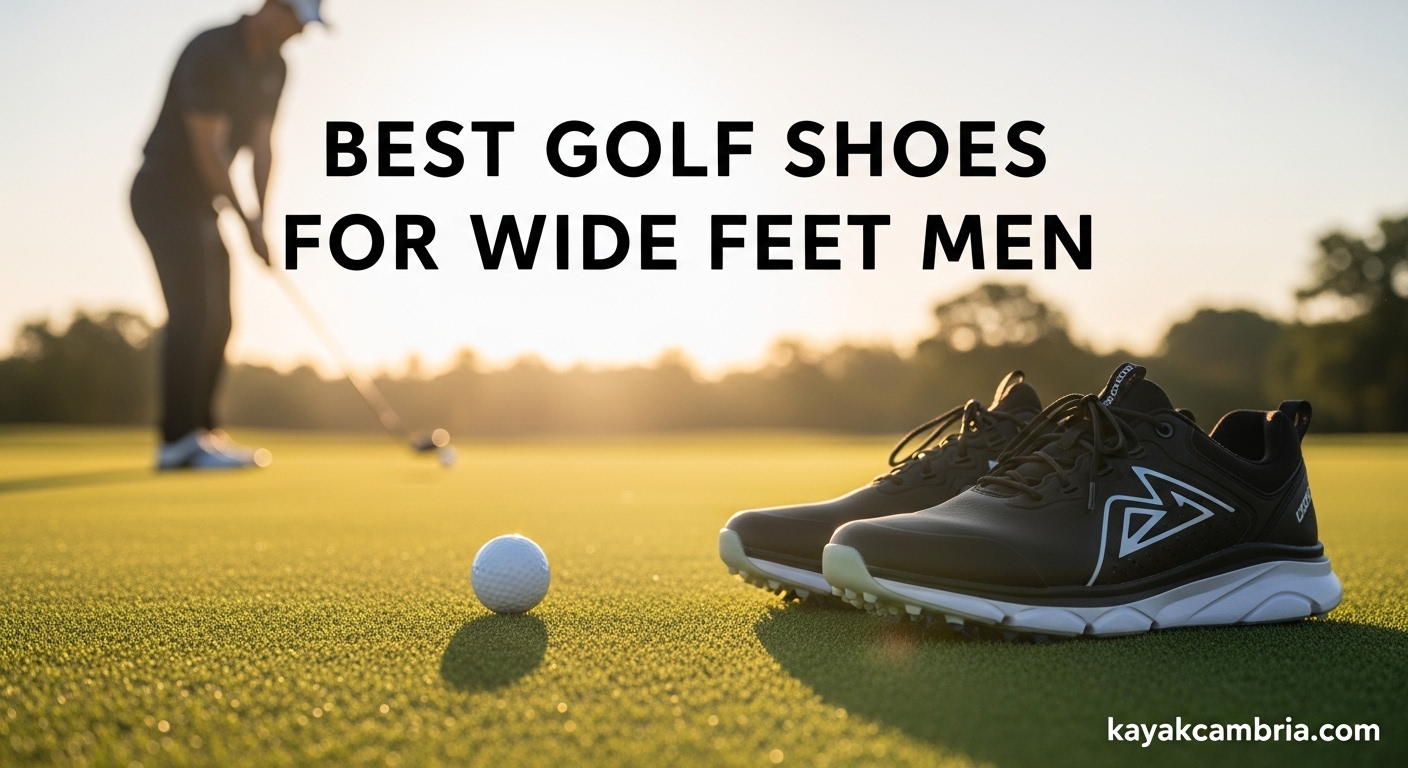
Both types can suit wide feet. Width comes from the shoe shape, not from the presence of spikes. A spiked shoe is not automatically more stable, and a spikeless shoe is not automatically more comfortable.
Spiked golf shoes
Spiked shoes can offer strong grip on wet grass, soft turf, and steep slopes. That may help golfers who create a lot of ground force or play in rainy areas. They can also feel secure during the downswing when the feet rotate and push against the ground.
The trade-off is a firmer feel under the foot. Some golfers find that a rigid sole makes walking less natural. Spikes may also be less suitable for clubhouse floors, paved paths, or indoor use.
Spikeless golf shoes
Spikeless shoes often feel lighter and more flexible. They may suit golfers who walk frequently, play executive courses, or move between the course and practice area. Their flat contact can also feel comfortable during putting and short-game practice.
Their grip depends on the outsole design and course condition. Wet slopes, soft rough, and heavy dew can test spikeless traction. Check the sole often for worn tread.
| Course need | Spiked design may suit | Spikeless design may suit |
|---|---|---|
| Wet or soft turf | Strong ground grip | Moderate grip with good tread |
| Frequent walking | Firm support if comfortable | Flexible, natural movement |
| Dry summer course | Stable on hard swings | Light feel and easy walking |
| Practice and clubhouse use | Less convenient | More versatile |
| Steep or uneven ground | Extra traction | Broad outsole contact |
Your foot width does not decide this choice by itself. A walking golfer with wide feet may prefer a flexible spikeless design, while a powerful golfer on wet hills may prefer a stable spiked design.
Waterproofing, breathability, and weather
Weather changes what wide-foot golfers need from footwear. Wet grass can make a shoe feel heavier and less flexible. Hot weather can increase swelling and moisture, while cold weather can make stiff materials feel even less forgiving.

Waterproofing helps keep rain and dew out. It can be useful for early tee times, winter golf, links courses, and wet rough. Yet a waterproof upper may feel warmer than a breathable one, especially for golfers who walk.
Breathability lets heat and moisture escape. It can reduce damp socks and some forms of rubbing in hot weather. However, a highly breathable upper may offer less protection during rain.
Which weather features suit each golfer?
| Playing condition | Useful shoe feature | Reason |
|---|---|---|
| Heavy rain or morning dew | Waterproof upper and sealed areas | Helps keep feet dry |
| Hot summer walking | Breathable upper and moisture control | Limits heat and dampness |
| Cold weather | Flexible insulation and thicker socks | Helps maintain comfort |
| Dry, firm fairways | Stable sole with moderate grip | Supports balance on hard ground |
| Soft, wet turf | Strong traction and water resistance | Reduces slipping |
No shoe handles every climate perfectly. A senior golfer with cold-sensitive feet may value warmth more than ventilation. A junior playing short rounds may need light weight and easy movement. A golfer in a humid region may need breathability for comfort.
How to measure wide feet correctly
The best way to find a wide golf shoe fit is to measure both feet at the end of the day. Feet often expand after walking, so a morning measurement may not show your full playing size.

Wear the socks you use for golf. Stand with your weight evenly spread on both feet. Measure length and width while standing, not while sitting, because the foot changes shape under body weight.
A simple home measurement method
- Place a sheet of paper on a hard floor.
- Stand on it with your heel lightly against a wall.
- Trace around each foot or mark the heel and longest toe.
- Measure the longest foot from heel to toe.
- Measure the widest part across the forefoot.
- Compare both feet rather than using only one measurement.
- Record the result and check the maker’s fit guide when available.
Do not pull the paper tight or press your toes together. Keep your natural stance. If one foot is larger, fit the larger foot and adjust the smaller side with lacing or an insert only if it remains comfortable.
How much space should be in front?
Your longest toe should not touch the front of the shoe. A small amount of space is needed because the foot moves forward during walking and downhill steps. Too much space, however, can make the foot slide.
The correct amount depends on foot shape, sock thickness, and the shoe’s internal design. Your toes should move freely, but your foot should not travel inside the shoe when you walk or swing.
When to seek professional help
Persistent pain is not a normal part of finding golf shoes. A podiatrist or doctor can assess bunions, plantar heel pain, arthritis, nerve symptoms, or other conditions. A PGA professional can also help if foot discomfort changes your stance, posture, balance, or swing pattern.
Lacing and fit adjustments for wide feet
Lacing can improve comfort, but it cannot turn a narrow shoe into a wide shoe. Use it to fine-tune pressure after you choose a shape that already fits.

If the forefoot feels tight, leave the lower eyelets slightly less tight while keeping the middle and upper eyelets secure. If the heel slips, use a heel-lock pattern near the top. This can hold the rear of the foot without crushing the toes.
Wide-foot golfers often make one of two mistakes. They loosen every lace to create room, or they pull the laces too hard across the forefoot. Both can cause problems.
| Fit problem | Possible adjustment | Limit |
|---|---|---|
| Pressure across forefoot | Reduce tension on lower laces | Does not fix a narrow toe box |
| Heel movement | Use a heel-lock lace pattern | May feel tight if overdone |
| One foot smaller | Use a thin, secure insert | Must not reduce toe space |
| High instep pressure | Skip one upper eyelet | Keep the heel stable |
| Uneven pressure | Recheck sock folds and foot position | Pain needs medical advice |
Walk after each adjustment. Then make slow practice swings. Stop if you feel numbness, sharp pain, or a burning sensation.
💡 Pro Tip: Put your shoes on at the course before your warm-up routine. Walk on level ground, then make half swings. If the shoe feels tight before you reach the first tee, it is unlikely to feel better after 18 holes.
Cushioning and support for walkers
Walking golfers place repeated stress on the feet, ankles, knees, hips, and lower back. Cushioning can soften the impact of paths and firm fairways. Support can help the foot remain stable as fatigue sets in.

Cushioning should not feel like standing on a soft pillow. Too much softness can reduce ground feel and make the foot less stable during the golf swing. The right amount depends on your body weight, walking distance, course surface, and personal comfort.
Golfers who walk a hilly course may need more heel comfort and a stable midsole. Golfers who ride most of the round may care more about swing stability and traction. A player who walks a flat executive course may prefer a lighter, more flexible shoe.
Support needs by golfer type
| Golfer | Main need | Why it matters |
|---|---|---|
| Beginner walker | Comfort and easy flex | Builds confidence during long rounds |
| Senior golfer | Cushioning and stable footing | Helps manage fatigue and uneven ground |
| Powerful swinger | Firm support and traction | Handles strong pressure during impact |
| Junior golfer | Light weight and natural flex | Allows free movement and growth awareness |
| Cart golfer | Stable base and breathability | Comfort still matters during standing |
These are broad guides, not medical rules. A senior golfer with foot pain may need a professional assessment. A young golfer with a fast swing may need more support than an older player with a smooth tempo.
Wide golf shoes for men, women, seniors, and juniors
Foot width is personal, so the best golf shoe for wide feet cannot be chosen by gender alone. Men’s and women’s shoes often use different shapes, but many golfers need a fit that does not follow the usual category.
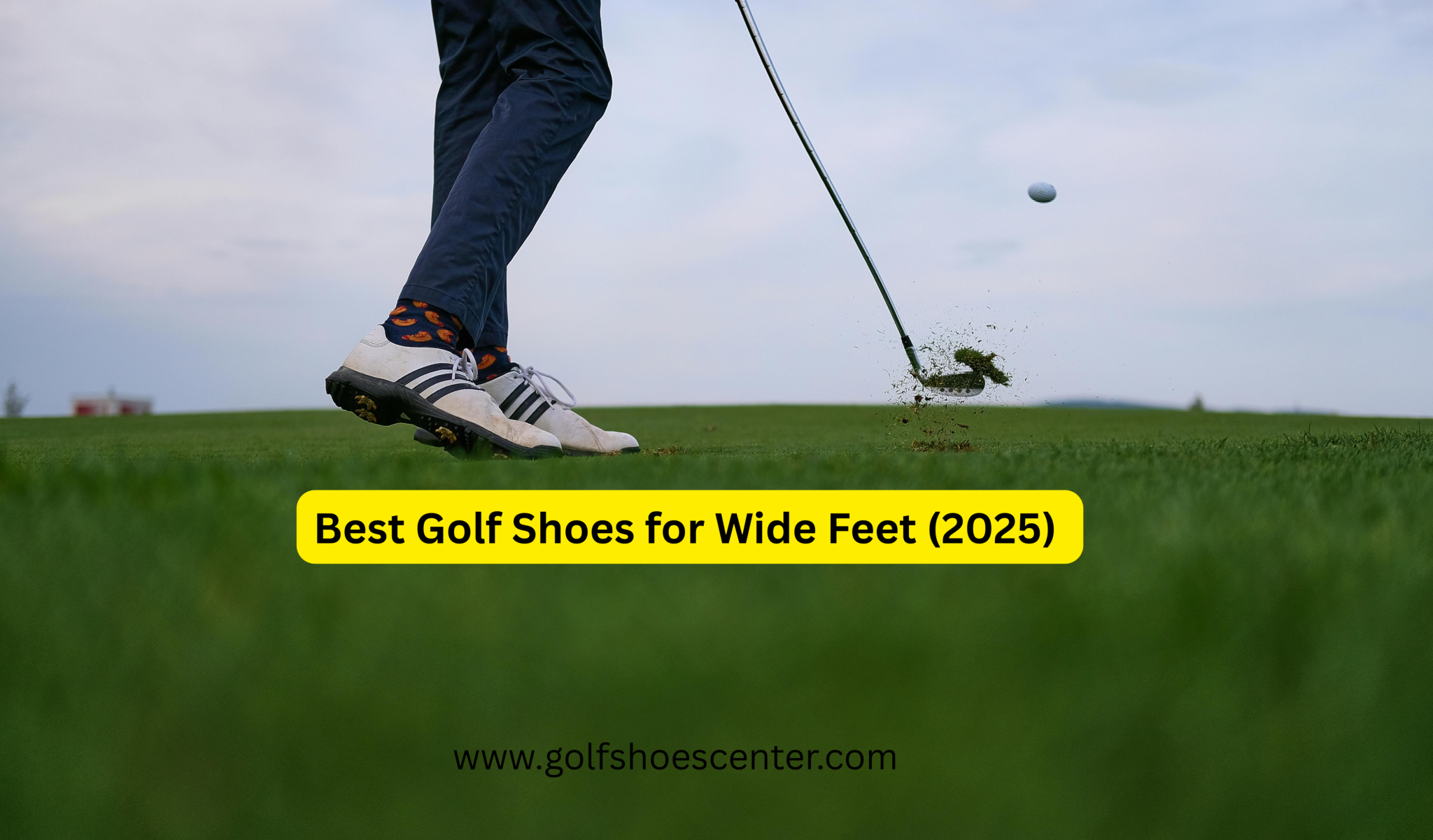
Women may have a narrower heel with a wider forefoot, but this is not true for every player. Men may need more total volume, yet some men have a narrow heel and broad toes. The key is the actual foot shape.
Senior golfers may have changes in foot size, arch height, flexibility, or joint comfort. Shoes should be checked more often if feet swell, balance changes, or old footwear causes new pressure.
Juniors need special care because their feet grow. A shoe that is too large can cause slipping and poor balance. A shoe that is too small can create pressure before a child notices it.
Guidance for each group
| Golfer group | Fit priority | Tip that suits this golfer |
|---|---|---|
| Women with broad forefeet | Toe room and heel hold | Check both width and heel fit |
| Men with high volume feet | Upper space and stable lacing | Avoid forcing the foot into a low upper |
| Seniors | Cushioning and easy walking | Check comfort after several minutes |
| Juniors | Light, flexible structure | Recheck fit as feet grow |
| Left- or right-handed players | Balanced ground support | Shoe needs do not change by handedness |
A left-handed golfer and a right-handed golfer use opposite lead feet, but both need secure traction and balanced support. A golfer with a strong fade, draw, or neutral ball flight does not need a special shoe for that shot shape.
👪 Parent or Beginner Note: Let a junior walk, bend, and make a few slow swings in both shoes. Watch for heel lift, toe curling, or a change in balance. Do not assume a child will report discomfort clearly.
Golf shoe features by course and playing style
Course type changes the demands placed on your shoes. A flat municipal course, a hilly parkland course, and a windy links course can feel like different sports under your feet.

A links course often has firm, uneven ground and exposed wind. A shoe with stable contact and reliable traction can help. A parkland course may have soft turf, wet rough, and steep paths. Waterproofing and grip may matter more.
An executive course usually involves shorter holes and less time on the course. Light weight and comfort may be more important than maximum traction. A driving range may require flexible movement because you stand on mats or hard surfaces for long periods.
| Setting | Main challenge | Helpful shoe quality |
|---|---|---|
| Links course | Firm, uneven ground | Stable sole and dependable grip |
| Parkland course | Wet rough and slopes | Water resistance and traction |
| Executive course | Repeated walking and short play | Light comfort and flexibility |
| Driving range | Mats and long practice sessions | Cushioning and forefoot movement |
| Tournament round | Long focus and pace | Secure fit with no pressure points |
A shoe that feels ideal on a flat range may not suit a wet, hilly course. Test your footwear in conditions close to your normal play when possible.
Common mistakes when choosing wide golf shoes
Many fit problems come from judging the shoe while sitting still. Golf shoes must work during walking, setup, rotation, and fatigue. A short indoor test is useful, but it is not enough.

Another mistake is choosing extra length to gain width. This can make the toes miss the front while the heel slides. It may also change how your foot contacts the ground during the stance.
Some golfers also focus only on softness. A soft shoe may feel comfortable for a few minutes, but a golfer with a strong downswing may need a firmer platform. Comfort and stability must be balanced.
Problems and better solutions
| Common mistake | Why it causes trouble | Better approach |
|---|---|---|
| Buying longer for more width | Creates heel movement | Find a wider shape |
| Loosening every lace | Reduces heel security | Adjust forefoot and heel separately |
| Testing only while seated | Hides swelling and pressure | Test while standing and walking |
| Ignoring socks | Changes internal space | Use normal golf socks |
| Choosing by gender label | May not match foot shape | Measure both feet |
| Wearing worn traction | Reduces grip | Inspect the outsole often |
Also avoid wearing new shoes for a full tournament round before testing them. Gradual use lets you find hot spots before they become blisters.
A practical fit test before a full round
A short fit test can reveal most problems. It suits beginners, parents, seniors, and experienced golfers who have changed shoe shape or foot size.

Wear the shoes with your normal golf socks. Stand in your golf posture. Make a few slow swings, then walk for 10 to 15 minutes. Try a short chip, a gentle pitch, and a few putts if you are at a practice area.
Check whether your toes stay relaxed. Notice whether the heel moves, the arch feels strained, or the sole twists during the finish. The shoe should not cause sharp pain or numbness.
A simple on-course readiness checklist
- Toes can move without pressure.
- The widest part of the foot sits over the widest part of the sole.
- The heel stays secure during walking.
- The upper does not create red marks.
- The sole feels stable at address.
- Traction suits the turf and weather.
- The shoe remains comfortable after 30 minutes.
- You can walk and swing without changing posture.
Do not judge the shoe only during a perfect swing. Walk on a slope, stand in the rough, and practice a bunker stance. Golf rarely gives you flat, dry ground for every shot.
Breaking in wide golf shoes safely
Breaking in shoes should mean allowing your feet and the materials to adapt, not tolerating pain. Start with short periods. Use them for practice, putting, or a few holes before wearing them for a long walking round.

Keep your socks smooth and dry. Wrinkles can create pressure in a roomy shoe because the foot slides against the fabric. If you develop a hot spot, stop and address it early.
A gradual break-in period also helps reveal whether the upper stretches too much. Some materials soften with use. If the heel becomes loose or the foot rolls inside the shoe, the fit may not be right.
⚠️ Safety Warning: Stop playing if you feel sharp pain, numbness, major swelling, or loss of balance. Persistent foot, ankle, knee, back, wrist, or elbow pain needs medical advice. Warm up before golf, drink water in heat, use sun protection, and leave the course at the first lightning warning.
Foot comfort and golf fitness
Golf shoes work best when the feet, ankles, hips, and trunk can move well. A shoe cannot fix weak balance, limited ankle motion, or poor posture. Basic golf fitness can support better movement for walking and swinging.
Before a round, take five to ten minutes to warm up. Walk briskly, move the ankles, bend the knees, rotate the hips, and make easy practice swings. Start with short clubs before moving to longer clubs.
Balance work may help some golfers. Stand near a stable support and practice holding a comfortable single-leg position. This suits healthy golfers who want basic control, but it may not suit anyone with dizziness, recent injury, or poor balance.
Simple foot and lower-body routine
- Walk slowly for two minutes.
- Make 10 ankle circles in each direction.
- Do 10 gentle calf raises.
- Perform 10 shallow knee bends.
- Hold a balanced golf posture for 20 seconds.
- Make five half swings with a wedge.
- Progress to normal swings only if you feel ready.
This routine is not a treatment plan. If you have diabetes, nerve symptoms, arthritis, or a past lower-limb injury, ask a health professional which exercises are safe.
How shoes affect stance, posture, and swing
Footwear can influence how you stand, but it should not force a major swing change. At address, your feet should feel grounded without gripping the turf with your toes. Your knees should have a small amount of flex, and your spine should tilt from the hips.
A shoe with too much heel lift may change your balance and posture. A very flat, flexible shoe may feel natural but lack support for some golfers. The best setup depends on your body and swing.
During the backswing, the trail foot accepts pressure. During the downswing, pressure shifts toward the lead side. At impact, the lead foot needs a stable base, while the follow-through requires enough comfort for the body to rotate.
A wide shoe can help only if it fits securely. If it is too loose, your foot may slide during the weight shift. If it is too stiff, you may feel blocked during rotation.
Shoe fit and short-game shots
Chipping and pitching require control, not maximum force. Many golfers feel more comfortable with a shoe that allows small foot movements and steady contact. For bunker shots, traction matters because sand can shift under the feet.
Putting requires less rotation, but comfort still matters. A golfer who stands for a long time while reading greens may notice pressure before a full swing does. Good golf etiquette also means keeping pace rather than taking long breaks to adjust footwear during a round.
Golf shoe care for wide-foot comfort
Proper care can help preserve the shape, grip, and comfort of golf shoes. Wet footwear should dry at room temperature. High heat can damage adhesives and make materials stiff or misshapen.
Remove grass and dirt from the outsole after each round. Check the traction elements for wear. If the sole has lost its pattern, it may not grip wet ground as it once did.
Let shoes rest between rounds when possible. Rotate socks, keep them dry, and inspect your feet for blisters or red marks. Foot care is especially important for seniors, people with diabetes, and golfers who walk often.
🌿 Course Care Note: Brush loose soil from your shoes away from greens and paths. Repair ball marks, replace divots where allowed, rake bunkers, and dispose of broken tees, wrappers, and old balls properly. Good footwear supports golf, but good conduct protects the course.
Questions golfers ask about wide golf shoes
These answers cover common concerns from new golfers, improving amateurs, parents, and players who walk or compete.
Q: How do I know if I need wide golf shoes?
A: You may need a wide fit if your toes feel crowded, the sides of your feet bulge over the sole, or you often get blisters on the forefoot. Compare both feet while standing. A professional fitting can help if the correct width remains unclear.
Q: Are wide golf shoes better for beginners?
A: They can be better for a beginner whose feet need more room. Comfort helps a new golfer focus on grip, stance, posture, and pace of play. Wide shoes do not suit every beginner, though. A narrow foot may slide inside them.
Q: Can wide golf shoes help my balance?
A: A proper fit can provide a stable base and reduce distractions. It cannot replace balance practice, sound posture, or good course management. If your foot moves inside the shoe, a wider shape with secure heel support may help.
Q: Are spikeless golf shoes good for wide feet?
A: Yes, if the shape gives enough width and the heel stays secure. Spikeless shoes often suit walkers and golfers who want flexible movement. Check the tread if you play on wet slopes or soft turf.
Q: Are spiked golf shoes better for a fast swing?
A: Not always. Spikes can offer strong traction, especially on wet ground, but swing speed alone does not decide the best design. Your foot movement, course conditions, walking habits, and comfort all matter.
Q: Should I buy a longer shoe if my feet are wide?
A: Usually, no. Extra length may leave your heel loose while the sides still feel tight. Look for more width or a broader toe box instead. Measure the larger foot and compare length and width.
Q: What are the best golf shoes for wide feet for seniors?
A: Seniors often benefit from a roomy toe box, secure heel, stable sole, and comfortable cushioning. Easy walking and low pressure points matter more than a very soft feel. Persistent pain or balance trouble needs medical advice.
Q: What are the best golf shoes for wide feet for women?
A: The best choice depends on the individual foot. Many women need a broad forefoot with a secure, narrower heel, but others need more volume throughout. Measure both feet and judge the actual shape rather than relying on a category.
Q: What are the best golf shoes for wide feet for juniors?
A: Juniors need a light, flexible shoe with enough toe room and a secure heel. Avoid shoes that are so large that the foot slides. Check the fit often because children’s feet grow quickly.
Q: Can wide golf shoes reduce foot pain?
A: They can reduce pressure caused by a poor fit, but they cannot treat a medical condition. Pain from plantar problems, bunions, arthritis, nerves, or injury needs assessment from a qualified health professional.
Q: How long does it take to break in wide golf shoes?
A: Many shoes need several short sessions before a full round. Walk and practice in them first. If pain, numbness, or major rubbing continues, the shape may be wrong rather than simply unbroken.
Q: Do left-handed golfers need different golf shoes?
A: No. Left- and right-handed golfers need the same basic fit qualities: toe room, heel security, traction, and comfort. Both lead feet need support during the swing.
Q: Can shoe width change my golf swing?
A: It can change how your feet feel at address and during the weight shift. A tight shoe may make you tense your toes or alter your stance. A loose shoe may let your foot slide. The goal is a stable, natural base.
Q: Should I wear thick socks with wide golf shoes?
A: Use the socks you normally wear for golf. Thick socks may add warmth and reduce rubbing, but they also take up space. Test the full combination while standing and walking.
Q: What is a good golf shoe fit for 18 holes?
A: Your toes should move, your heel should stay secure, and your foot should remain comfortable after at least 30 minutes of walking. The sole should provide traction for your normal course and weather. No area should feel numb or sharply pressured.
Choosing the right type for your game
The best golf shoes for wide feet are the ones that match your foot shape and your golf life. A new golfer who plays nine holes may need simple comfort and easy flex. A walking senior may need cushioning, grip, and strong heel control. A powerful amateur on wet courses may need a firmer sole and dependable traction.
Think beyond size. Check the toe box, heel, upper, midsole, outsole, weather protection, and walking comfort. Test the shoes in a golf posture, during a slow swing, and while walking on surfaces similar to your course.
Do not ignore pain to stay on schedule. Golf is a long-term activity, and a small fit problem can become a larger movement problem when repeated over many rounds. When in doubt, use a professional fitting or ask a medical professional about ongoing foot symptoms.
Good footwear should fade into the background. Your attention can then stay on the shot, the target, your tempo, and the next safe decision. That is the real goal of a wide golf shoe: a stable, comfortable foundation for every tee box, fairway, bunker, green, and walk home.