Best Golf Shoes For Walking With Plantar Fasciitis: Guide
The best golf shoes for walking with plantar fasciitis combine arch support, cushioning, fit, grip, and low weight.
A long golf round can mean five or more miles on hard paths, slopes, and wet grass. If each step brings heel pain, burning, or tight calves, the right golf shoe can make a major difference. I looked at support, comfort, traction, fit, and value to find the best golf shoes for walking with plantar fasciitis. These three picks suit different needs. One focuses on strong orthopedic support, one offers a classic golf-shoe design, and one blends trail comfort with a roomy fit.
See the differences between my top picks at a glance.
| Golf shoe | Best for | Support feel | Walking comfort | Traction style | Amazon |
|---|---|---|---|---|---|
| OrthoComfoot Men’s Orthopedic Running Shoes | Strong arch support | High | High | Trail-style rubber | View on Amazon |
| adidas Tech Response 3.0 | Traditional golf use | Moderate | Moderate to high | Golf outsole | View on Amazon |
| Men’s Orthopedic Hiking Shoes | Wide, trail-like comfort | High | High | Outdoor tread | View on Amazon |
OrthoComfoot Men’s Orthopedic Running Shoes

The OrthoComfoot shoe stands out for golfers who need more support than a basic athletic shoe can offer. Its design centers on arch support and everyday walking comfort. That makes it a strong match for a golfer who feels pain under the heel or along the inside of the foot. The running-shoe shape also feels more natural on long walks than a stiff, narrow golf shoe.
I like this model for golf paths, practice areas, and casual rounds where comfort matters most. The lightweight build can help reduce the tired feeling that builds late in a round. Its trail and walking focus may also suit golfers who move across mixed ground. Still, check the fit and outsole before using it on very wet or steep courses, since it does not present itself as a traditional spiked golf shoe.
Pros:
- Strong focus on arch support
- Useful for heel pain and long walks
- Lightweight running-shoe design
- Suitable for golf, trails, and daily use
- Friendly choice for high arches
- Room for an orthotic may vary by size
Cons:
- May not provide the same golf-specific grip as a dedicated golf shoe
- Fit can feel different for golfers used to a wide toe box
- Supportive inserts may feel firm at first
What Amazon Buyers Are Saying
Buyer feedback for orthopedic walking shoes often centers on arch comfort, reduced foot fatigue, and the ability to wear the shoes for daily activity. Shoppers who need extra support tend to value the removable or supportive insole design and the light feel. Some buyers also like using this type of shoe for travel and errands because it works beyond the golf course.
The main concerns to watch for involve fit and break-in feel. A shoe with a firm arch can feel unusual during the first few wears, especially if your current shoes have little support. As with any Amazon footwear purchase, reviews also show why you should measure both feet and check the current size chart before ordering.
My Recommendation
I recommend the OrthoComfoot as the best choice here for golfers who place plantar fasciitis relief above traditional golf styling. It gives the foot a support-first platform and works well for walking-heavy rounds. I would pair it with moisture-wicking socks and test it on a short walk before playing 18 holes. It earns the highest rating in this guide for support and all-day comfort.
| Category | Rating |
|---|---|
| Plantar fasciitis support | 4.5/5 |
| Walking comfort | 4.5/5 |
| Golf-course traction | 3.5/5 |
| Versatility | 4.5/5 |
| Value for money | 4/5 |
| Overall rating | 4.3/5 |
adidas Tech Response 3.0 Golf Shoes

The adidas Tech Response 3.0 is the most traditional golf shoe in this review. It has the familiar look and purpose of a course-ready model. Golfers who want a light shoe with golf-focused traction may prefer it over a walking sneaker. Its athletic shape can also feel less bulky than many older golf shoes.
This shoe makes the most sense for golfers who need reliable grip but only moderate extra support. It may work well for a player with mild plantar fasciitis who already uses a good insert. I would not rely on the stock footbed alone if you need strong arch control. Instead, check whether your preferred plantar fasciitis insole fits without crowding the toe area.
Pros:
- Purpose-built golf shoe design
- Light feel for walking rounds
- Golf outsole suited to course use
- Sporty adidas styling
- Works well with a compatible support insole
- Good option for golfers who dislike heavy shoes
Cons:
- Stock support may not meet the needs of severe plantar fasciitis
- May feel less cushioned than an orthopedic walking shoe
- Golf-specific fit may feel narrow to some feet
What Amazon Buyers Are Saying
Customer discussions around the Tech Response line often praise its light weight, familiar golf look, and useful on-course traction. Many golfers seek this type of shoe because they want a simple option for regular rounds. Buyers also tend to like the value of a recognized golf brand, especially when they need a shoe for routine play rather than tournament-level features.
Fit remains the point to review closely. Some golfers may find the shoe comfortable right away, while others may need a different width or an added footbed. Reviews can also vary by sock choice and foot shape. I suggest trying it indoors first and paying close attention to heel movement, toe pressure, and arch contact.
My Recommendation
The adidas Tech Response 3.0 is worth buying when course traction and a classic golf look rank high on your list. It is not my first choice for severe plantar fasciitis without an upgraded insole. However, it can be a smart value pick for golfers with mild symptoms and a normal foot shape. It receives a strong score for golf use but a lower score for built-in orthopedic support.
| Category | Rating |
|---|---|
| Plantar fasciitis support | 3.5/5 |
| Walking comfort | 4/5 |
| Golf-course traction | 4.5/5 |
| Insole flexibility | 4/5 |
| Value for money | 4.5/5 |
| Overall rating | 4.1/5 |
Men’s Orthopedic Hiking Shoes for Golf
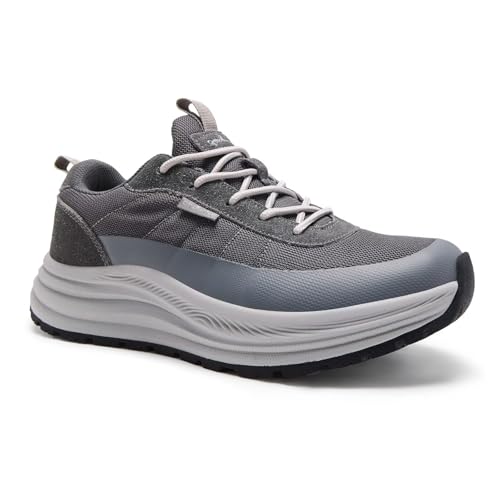
This orthopedic hiking shoe targets golfers who want a stable, roomy walking shoe. Its description highlights plantar fasciitis support, a high instep fit, and trail use. Those traits can help golfers who dislike tight uppers or narrow athletic shoes. The hiking-inspired shape may also feel secure on paths, slopes, and uneven ground.
I see this as a practical middle ground between a running shoe and a course shoe. It offers more outdoor structure than a casual sneaker, yet it still aims to support long walks. The composite-toe reference may appeal to some users, but golfers should focus on comfort, weight, and fit rather than toe protection alone. As with the other models, confirm the outsole pattern and wear it on a short walk before a full round.
Pros:
- Designed for supportive walking
- Suitable for high insteps and many roomy-foot needs
- Trail-style shape for uneven ground
- Orthopedic focus may help reduce foot fatigue
- Useful beyond golf, including hiking and daily exercise
- Stable feel for golfers who dislike soft, loose shoes
Cons:
- May feel heavier than a lightweight running shoe
- Not a standard golf shoe with a dedicated golf outsole
- Roomy fit may not suit narrow feet
What Amazon Buyers Are Saying
Buyers who choose orthopedic hiking shoes commonly look for room, support, and a stable base. Review patterns for this type of product often focus on comfort during work, walking, travel, and outdoor use. Shoppers also value a shoe that can handle more than one setting, since a golf shoe that works for errands can offer better everyday value.
Common points to check include overall weight, toe-room preference, and the way the arch support matches your foot. A roomy hiking fit may feel excellent for one golfer and too loose for another. I recommend reading the newest size comments on the Amazon listing and checking whether the current model uses the same fit as the size shown in the product title.
My Recommendation
I recommend this model for golfers who need a supportive outdoor shoe with more room and a firm, stable feel. It can be a good choice for walking courses with rough paths or uneven terrain. It ranks below the OrthoComfoot for pure plantar fasciitis comfort only because the fit and structure may feel less flexible. Still, it offers strong versatility and useful support for the price.
| Category | Rating |
|---|---|
| Plantar fasciitis support | 4.2/5 |
| Walking comfort | 4.3/5 |
| Outdoor stability | 4.4/5 |
| Golf-course traction | 3.8/5 |
| Everyday versatility | 4.5/5 |
| Overall rating | 4.2/5 |
What Makes a Golf Shoe Helpful for Plantar Fasciitis?
Plantar fasciitis affects the thick band of tissue that runs under the foot. Pain often shows near the heel, but the whole foot can feel tired after a long walk. A golf shoe cannot cure the condition. Yet the right shoe can reduce strain by giving the foot a stable base, useful cushioning, and better support.
The American Academy of Orthopaedic Surgeons and other foot-care groups often point to supportive shoes, good fit, and cushioned soles as part of basic foot-care plans. Each foot differs, so no single feature works for every golfer. Some players need a firm arch. Others need a soft heel, a roomy toe box, or space for a custom insert.
The best golf shoes for walking with plantar fasciitis should also match the course. A soft walking shoe may feel great on a dry, flat path but slide on wet grass. A firm golf shoe may grip well but feel too stiff after 18 holes. I always judge the full balance rather than one feature alone.
How to Choose the Best Golf Shoes for Walking With Plantar Fasciitis
Choosing the best golf shoes for walking with plantar fasciitis takes more than picking the softest pair. You need to match support, fit, cushioning, and traction to your feet and your course. Use the points below before you order.
1. Look for Real Arch and Heel Support
Arch support should meet your foot without pushing hard into one small spot. If the arch feels too high, it can create new pressure. If it feels flat, it may not reduce strain during a long round. Walk indoors for several minutes and notice how the shoe feels from heel to toe.
A cushioned heel can make each step feel smoother. Still, very soft foam does not always provide enough stability. I prefer a shoe that blends a padded heel with a steady midsole. If you already use a plantar fasciitis insert, check for a removable footbed and enough interior space.
Do not assume that a product labeled “orthopedic” will fit every foot. That word can describe a design goal, not a medical result. If you have strong pain, numbness, swelling, or pain that persists, ask a podiatrist for advice. A professional can check your gait and suggest an insert or treatment plan.
2. Match the Fit to Your Foot Shape
Fit matters as much as cushioning. Your heel should stay in place without a tight squeeze. Your toes should have room to spread and move. The widest part of your foot should sit in the widest part of the shoe.
Many golfers wear shoes that are too short. Feet can swell during a long round, and tight shoes can increase pressure. Measure your feet late in the day, when they may be at their largest. Measure both feet and choose the size that fits the larger foot.
Think about your arch height, instep, and toe shape too. A high instep may need a deeper upper. A wide forefoot may need a wide version or a more forgiving sneaker shape. If your feet differ in size, use the return policy to test the fit safely.
3. Balance Cushioning With Stability
Cushioning protects comfort, but too much softness can make the foot feel unstable. This matters on slopes and sidehill lies. A stable shoe helps limit unwanted foot movement and can make walking feel more controlled.
Look for a sole that bends near the toes but does not fold in the middle. A mild rocker shape may help some walkers move through each step. The right amount depends on your gait. Try the shoe on hard flooring and carpet. Notice if your heel sinks, rolls, or slips.
For many golfers, the best golf shoes for walking with plantar fasciitis have moderate cushioning. They soften heel impact while keeping the foot level. The OrthoComfoot focuses most on support. The adidas offers a lighter golf feel. The hiking shoe adds a more stable outdoor platform.
4. Check Traction for Your Normal Course
Traction becomes vital when grass is wet or the course has steep sections. A traditional golf outsole may grip better during a swing. A trail outsole may work well on paths and mixed ground. Neither tread is perfect for every setting.
Spikeless shoes can feel comfortable on pavement and clubhouse floors. They also make an easy everyday option. However, tread wear can reduce grip over time. Clean the outsole after muddy rounds and inspect it before playing in wet weather.
If you walk hilly courses, test lateral stability. Stand on a slight slope and take a few steps. The shoe should not let your foot slide inside. Good traction should support your stride without making the shoe feel stiff.
5. Consider Weight, Breathability, and Weather
A heavy shoe can make a long round feel harder. Weight matters more when you walk often or deal with tired legs. Mesh uppers can improve airflow on hot days. Water-resistant materials can help in morning dew, but they may feel warmer.
Think about your local weather. A dry-climate golfer may prefer a breathable walking shoe. A golfer who plays early in the morning may want more protection from wet grass. No shoe handles every condition equally well, so choose based on your regular tee times.
6. Review the Insole and Return Policy
The insole can change the fit and feel of a shoe. A removable insole gives you more control. It may let you add a podiatrist-recommended insert. But an insert that is too thick can lift your heel and cause slipping.
Before buying, read the current Amazon listing for sizing, materials, and return details. Product colors, sizes, and seller terms can change. Make sure you buy from a listing that shows the exact model you want. Try the shoes indoors, keep the packaging, and avoid course use until you know the fit works.
How I Evaluate Walking Golf Shoes for Heel Pain
I focus first on comfort during movement. A shoe can feel soft in a chair yet fail after several miles. I look for a stable heel, smooth toe flex, and enough room for normal foot swelling.
Next, I compare the shoe’s stated purpose with a golfer’s real needs. A running shoe may deliver better support but less golf traction. A golf shoe may grip well but need a better insole. An outdoor shoe may offer a roomy fit but weigh more. The best choice depends on which trade-off matters most to you.
I also consider value over time. A versatile shoe can work for golf, walking, travel, and errands. That can make a slightly higher price easier to justify. However, no discount makes a poor fit a good deal. Foot comfort should lead the decision.
Important Plantar Fasciitis Walking Tips for Golfers
Start with short walks before you play a full round in new shoes. This gives your feet time to adjust. It also helps you find pressure points before they become blisters.
Stretching can help some people, especially when tight calves add strain to the foot. Simple calf and foot stretches may fit into your warm-up. Do not force a stretch or ignore sharp pain.
Use socks that fit well and do not bunch under the arch. Replace worn shoes when the midsole feels flat or the outsole loses tread. Old shoes may look fine but still lack support.
Finally, do not treat ongoing pain as a shoe problem alone. Plantar fasciitis can have several causes. A podiatrist can help if home care and better footwear do not improve your symptoms.
Final Verdict: Which Should You Buy?
For most golfers with plantar fasciitis, I would choose the OrthoComfoot for its strong arch focus and walking comfort. Choose adidas for golf-specific traction, or the orthopedic hiking shoe for roomy outdoor support.
The best golf shoes for walking with plantar fasciitis should fit your foot, support your stride, and match your course. Start with comfort, then confirm grip and return terms.
FAQs Of best golf shoes for walking with plantar fasciitis
Are golf shoes good for walking with plantar fasciitis?
They can be, if they offer arch support, heel cushioning, a stable base, and a proper fit. A dedicated golf shoe may need a supportive replacement insole.
What type of golf shoe is best for heel pain?
A lightweight shoe with moderate cushioning, steady arch support, and a secure heel is often a good starting point. Your foot shape and pain level still matter.
Can I use running shoes for golf if I have plantar fasciitis?
Yes, for casual or dry-course use, if the shoe gives enough grip and stability. Running shoes may not hold as well on wet grass or during a golf swing.
Should plantar fasciitis golf shoes have soft or firm soles?
A balanced sole usually works best. Heel cushioning can reduce impact, while moderate firmness can improve stability on slopes and uneven ground.
Do I need custom orthotics in golf shoes for plantar fasciitis?
Not always. Some golfers do well with built-in support or an over-the-counter insert. Ask a podiatrist about custom orthotics if pain continues or your gait needs correction.