How Do Ecco Golf Shoes Fit: Sizing Guide
Choosing the right golf shoe fit can shape your whole round. A shoe that slips can affect balance, grip, and confidence. A shoe that feels too tight can lead to hot spots, numb toes, or pain after several holes.
ECCO golf shoes often fit close to the foot, with a firm heel hold and room that varies by model, last, and width. The best fit is not simply your usual shoe size. Your foot shape, socks, walking style, age, climate, and the type of golf you play all matter.
This guide explains how ECCO golf shoes tend to fit, how to check the fit at home, and how to spot common problems. It also covers fit for men, women, seniors, juniors, wide feet, narrow feet, and golfers who walk or ride.

Quick answer: How do ECCO golf shoes fit?
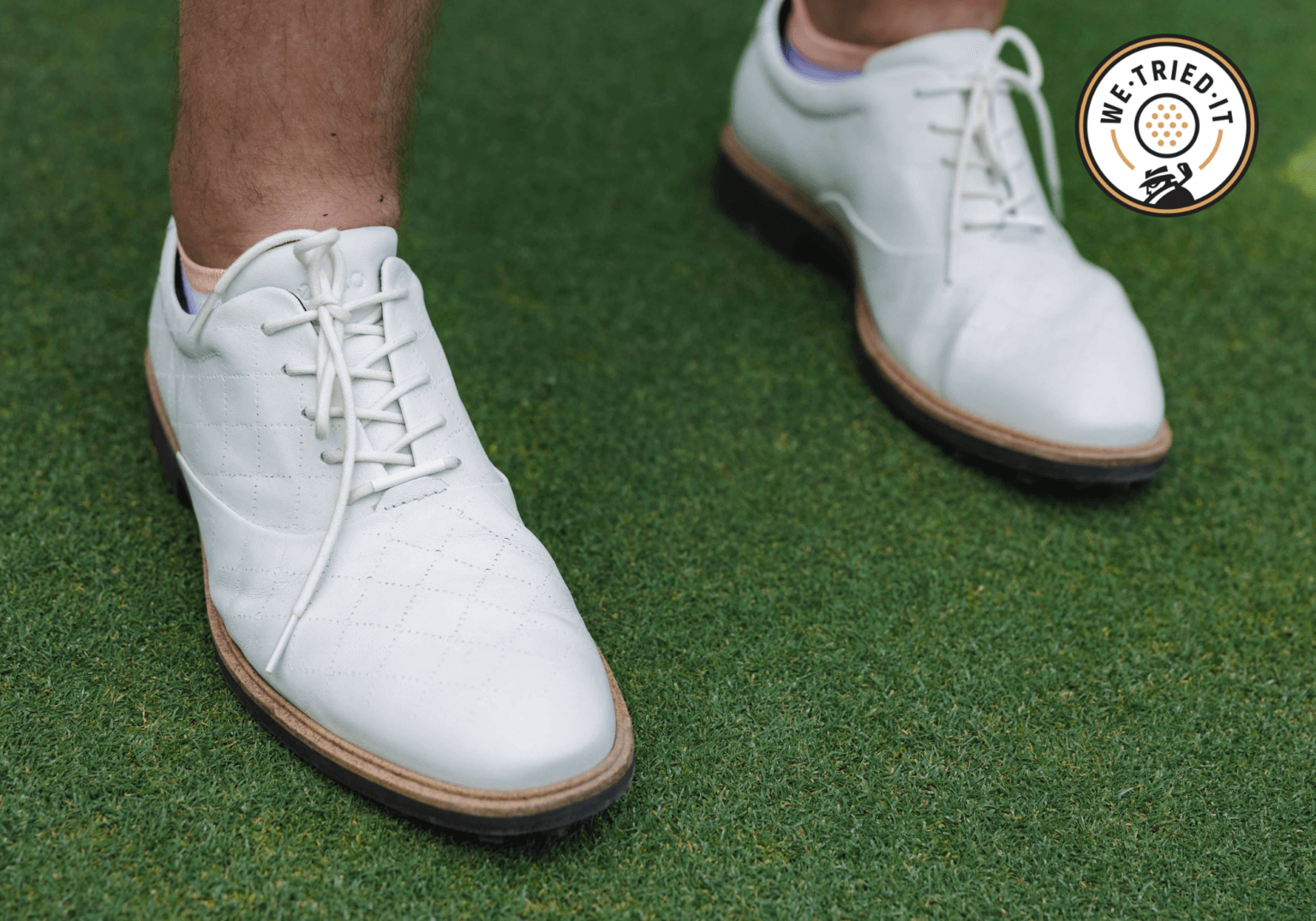
ECCO golf shoes usually fit true to size in length, but the shape can feel more structured and close than casual sneakers. Many golfers find a secure heel, a supportive midfoot, and moderate toe room. Check both feet, wear your golf socks, and leave about a thumb’s width in front of the longest toe. Model shape and width can change the feel.
Why golf shoe fit matters
A golf shoe must do more than feel soft. It must keep your foot stable during the swing and comfortable while you walk across changing ground. A poor fit can affect your stance, posture, weight shift, and follow-through.
During the backswing, pressure often moves toward the inside of the trail foot. During the downswing, pressure moves quickly toward the lead side. A loose shoe can let the foot slide inside the shoe. A tight shoe can limit natural movement.
Golf shoes also face more stress than most daily shoes. You may walk on firm fairway grass, soft rough, slopes, wet ground, bunker sand, and paved paths. A round can last several hours. Even a small fit problem may become clear by the back nine.

Fit affects balance and swing control
A stable shoe can help you keep your feet connected to the ground. That does not replace good grip, stance, or tempo. It simply gives your feet a sound base.
If your heel lifts at impact, your lower body may feel less stable. If your toes press against the front, you may change your posture to avoid pain. These small changes can affect contact and direction.
This matters most for improving golfers who are working on weight shift or ground force. Beginners may notice the issue as general discomfort. A low-handicap player may notice it as a change in strike quality.
Fit affects walking comfort
Walking golfers need space for normal foot swelling. Feet can become slightly larger during a long round, especially in heat. Tight shoes may feel fine on the first tee but painful near the 15th hole.
Senior golfers, players with stiff feet, and golfers with past foot injuries should pay close attention. A shoe that feels supportive should not create pressure on the bunion, arch, heel, or little toe.
⚠️ Safety Warning: persistent foot pain is not a normal part of golf. Stop if pain changes your walking pattern, and speak with a medical professional. A PGA professional can help with swing changes, but a doctor or qualified foot specialist should assess ongoing pain.
The main parts of ECCO golf shoe fit
ECCO golf shoes can feel different from one another because each model uses a different upper, sole, footbed, and internal shape. The word “fit” includes more than length. You should assess five areas: length, width, heel hold, instep space, and toe shape.

Length
Length is the distance from the heel to the end of the shoe. Your longest toe should not touch the front. It is common for one foot to be slightly longer than the other, so fit the larger foot.
A useful guide is about 10 to 15 millimeters of space in front of the longest toe. A thumb’s width is a simple home check, but it is not exact. Too much space can let the foot slide. Too little space can cause pressure on downhill walks.
Your toes should be able to move slightly. They should not be forced together or pressed down by the upper. When you stand, your toes spread more than they do when you sit.
Width
Width is the amount of room across the forefoot and midfoot. A shoe can have enough length but still be too narrow. This is one of the most common fit mistakes.
Signs of a narrow fit include:
- Pressure at the widest part of the foot
- A little toe that rubs the side
- Numbness or tingling
- A bulge in the upper near the forefoot
- A red line across the ball of the foot
- Toes that cannot spread when standing
ECCO models may have different width options or different internal shapes. Do not assume that every ECCO golf shoe fits the same way.
Heel hold
The heel should stay in place without a painful squeeze. A small amount of movement can occur when you walk, but your heel should not rise noticeably with every step.
Good heel hold helps during uneven lies. It also helps when you rotate through impact. If the heel slips, you may tighten the laces too much. That can create pressure over the instep.
Instep space
The instep is the top of the foot between the toes and ankle. A high instep needs more vertical room. A low instep may need a snugger upper to prevent movement.
If the top of the shoe presses on your foot, the shoe may be too shallow. If you must tighten the laces to the final eyelet and still feel movement, the shoe may be too deep for your foot.
Toe shape
Some shoes taper toward the front. Others have a more rounded or anatomical toe box. Your toes should point forward without being squeezed.
A rounded toe box may suit golfers with broad forefeet. A tapered shape may feel secure for a narrow foot but crowded for a wide foot. This is why the same size can feel different across models.
The table below gives a simple way to separate each fit area. Use it during a home check or a fitting session.
| Fit area | What good fit feels like | Warning sign |
|---|---|---|
| Length | Longest toe has free space | Toe touches the front |
| Width | Forefoot feels held, not squeezed | Side pressure or numbness |
| Heel | Heel stays mostly in place | Repeated heel lift |
| Instep | Even pressure from laces | Top of foot feels compressed |
| Toe box | Toes can spread slightly | Toes overlap or curl |
The main takeaway is simple: length alone does not prove a good fit. A shoe must hold the heel while allowing the forefoot to work.
ECCO golf shoe sizing and shape
ECCO uses European sizing on many footwear labels. The conversion to US men’s or women’s sizing can vary by chart and by maker. Use the current size chart for the exact model rather than relying only on a past conversion.

Why your usual size may feel different
Your usual size may come from a running shoe, work shoe, or casual sneaker. Those shoes can use different internal shapes. A soft sneaker may hide extra space. A firm golf shoe may show pressure sooner.
Golf socks also change the fit. Thick socks take up more room across the forefoot and instep. Compression socks may feel thinner but can change pressure in other areas.
Foot shape changes with age, activity, and body weight. A golfer who wore the same size for years may need to reassess fit after a foot injury, pregnancy, or major change in walking habits.
EU size versus US size
A European size is not a direct measurement in inches. It is a sizing system. The same EU number may not feel identical in every shoe.
Use your foot measurement as a starting point. Measure both feet while standing, then compare the result with the current chart. If you fall between sizes, the correct choice depends on width, socks, foot shape, and the shoe’s fastening system.
| Measurement | Best method | Why it matters |
|---|---|---|
| Foot length | Stand on paper and mark the longest toe | Standing adds natural foot length |
| Foot width | Measure the widest part of each foot | Width can differ from length |
| Both feet | Record left and right separately | One foot is often larger |
| Sock thickness | Measure with golf socks | Socks change internal space |
Measure later in the day if your feet tend to swell. Then test the shoe while standing, walking, and making a slow practice swing.
Left- and right-foot differences
Left- and right-handed golfers do not need different shoe shapes. The swing direction does not change the shoe size. However, the lead foot and trail foot may experience different forces.
A right-handed player often places more pressure on the left foot during the downswing. A left-handed player often places more pressure on the right foot. Both shoes still need the same basic fit, but the lead foot may reveal pressure first.
A step-by-step ECCO golf shoe fit test
The best way to check ECCO golf shoe fit is to test the shoes while standing, walking, and moving like a golfer. Do not judge them only while seated.

1. Measure both feet
Place each foot on a sheet of paper while standing. Keep your weight even. Mark the heel and the longest toe, then measure the distance.
Repeat the process for width. Measure the widest part of the forefoot. Record the larger foot’s measurements.
This step suits every golfer. It is especially useful for juniors, seniors, and anyone with one foot larger than the other.
2. Wear your golf socks
Wear the socks you use for a normal round. Do not test a golf shoe with thin dress socks if you usually wear thick athletic socks.
If you use an orthotic or custom insole, test with it in place. The insole can change heel height, arch pressure, and toe space.
3. Check the toe gap
Stand upright and slide your foot forward until your toes lightly touch the front. You should be able to place a finger behind the heel.
Then move your foot back and check the space in front of the longest toe. The toe should not touch the front during a normal stride.
4. Walk on a firm surface
Walk for several minutes. Notice whether your heel lifts, your toes grip the footbed, or the shoe bends in the right place.
The flex point should sit near the ball of your foot. If the shoe bends behind the toes or across the arch, the shape may not suit your foot.
5. Test a golf stance
Take your normal stance. Your feet should feel planted without being trapped. Check whether the shoe presses when your knees flex and your hips hinge.
A beginner should use a relaxed stance. An improving player can also test a wider stance and a slow half swing. The goal is not to judge swing quality. The goal is to find pressure or movement inside the shoe.
6. Make slow practice swings
Make a few slow swings without a ball. Move from address to the top of the backswing, then through impact and the follow-through.
Notice the lead heel, trail foot, and forefoot. If the foot slides inside the shoe, the fit may be too loose. If the upper cuts into the foot, the fit may be too tight.
7. Test stairs and slopes
Walk up and down a few steps if safe. A golf course rarely stays flat. Slopes can push the toes forward or move the foot toward one side of the shoe.
A good shoe should hold the foot without making the toes hit the front. This check is useful for golfers who play hilly courses or walk links-style terrain.
8. Recheck after 15 to 20 minutes
Some problems appear only after the foot warms up. Walk, stand, and flex your feet for at least 15 minutes.
Look for red marks, numb spots, hot spots, and pressure across the nails. A shoe does not need to hurt during a short test to become painful over 18 holes.
| Test | What to do | Good result |
|---|---|---|
| Toe test | Stand and check front space | Toes do not touch |
| Heel test | Walk and stop often | Heel stays mostly secure |
| Stance test | Take normal golf posture | No pinching or sliding |
| Swing test | Make slow practice swings | Foot stays stable |
| Slope test | Walk carefully on an incline | Toes do not jam forward |
A shoe should feel secure but not rigid. Comfort and stability must work together.
How ECCO golf shoes fit different golfers
No single fit suits every golfer. Foot shape, age, handicap, swing speed, and walking habits all change the answer.

Men’s fit
Men’s golf shoes often have a longer and broader base than women’s versions, but foot shape varies more than labels suggest. A man with a narrow foot may need a narrower shape. A man with a broad forefoot may need more room across the toes.
Do not choose a size based only on height or shoe history. A tall golfer can have a narrow foot. A shorter golfer can have a wide foot.
For men who swing fast, heel security and midfoot hold may matter during the downswing. For beginners, comfort and natural toe movement may matter more than a very firm feel.
Women’s fit
Women’s feet often have a narrower heel compared with the forefoot, though this is not true for every player. A shoe that feels wide at the heel may allow movement even if the toes feel comfortable.
Women who walk should check both the heel and forefoot. A snug heel can help with stability, but laces should not create pressure across the top of the foot.
Foot size can change during pregnancy or after major body changes. Recheck the fit instead of relying on an old size.
Junior golfers
Junior feet are still growing. Children may not describe pressure well, and some may say a shoe fits because they like its look. Check the fit yourself.
Leave room for natural growth, but do not use a shoe that is clearly too large. Excess space can cause slipping and poor balance. Junior golfers need stable footing for learning grip, posture, stance, and basic swing control.
👪 Parent or Beginner Note: Ask a junior to walk, squat, and make a slow practice swing. Watch for toe curling, heel lift, or a change in walking style. Growth room should be modest, not enough to make the foot slide.
Senior golfers
Senior feet may become wider or flatter over time. Joint stiffness, bunions, reduced balance, and circulation concerns can affect comfort.
A senior golfer may prefer easy entry, stable heel hold, and enough toe room. The shoe should not force the foot into a narrow shape. Test it with the socks and any support device used during a round.
If swelling is common, check the fit later in the day. Stop if the shoe causes numbness, color change, or pain.
Golfers with wide feet
Wide-foot golfers often make one of two mistakes. They choose a longer shoe to gain width, or they tighten the laces over a shoe that is too narrow.
A longer shoe can let the heel slide. Tight laces can reduce blood flow and create instep pain. Look for a shape that gives space at the widest part while still holding the heel.
The shoe’s upper should not bulge sharply over the sides. That bulge often shows that the foot is asking for more width.
Golfers with narrow feet
Narrow-foot golfers may struggle with heel movement or excess space near the toes. Tightening the laces can help only up to a point.
If the shoe still moves after normal adjustment, the internal shape may be too broad. Thick socks are not always a good fix because they can create uneven pressure and heat.
Walking golfers versus riding golfers
Walking golfers need a fit that remains comfortable over several miles. They should give extra attention to swelling, heel friction, and toe room.
Riding golfers may spend less time on foot, but they still need stable shoes. Getting in and out of a cart, walking slopes, and standing on uneven lies can create sharp pressure.
| Golfer type | Main fit need | Common concern |
|---|---|---|
| Beginner | Comfort and steady footing | Choosing by appearance only |
| Low-handicap player | Secure heel and midfoot | Over-tightening for control |
| Senior | Room, support, and easy movement | Swelling or joint pressure |
| Junior | Stable fit with modest growth room | Wearing shoes that are too large |
| Walker | Long-round comfort | Hot spots late in the round |
| Cart rider | Stable stance and easy walking | Ignoring fit because of less walking |
The right fit depends on the golfer, not just the label. A beginner and a tournament player may need different levels of structure.
How break-in changes the fit
Leather and other upper materials can soften with use. They may become more flexible, but they do not usually become much longer. A shoe that is too short should not be expected to stretch into a good fit.

What may improve with use
A firm upper may soften around the flex point. The footbed may also feel more familiar after a few sessions. This can reduce mild stiffness.
Break-in should not be used to justify pain. Blisters, numbness, toe pressure, and sharp rubbing are signs to reassess the fit.
A safe break-in plan
Wear the shoes indoors for short periods. Walk on a clean surface and check for pressure. Then use them for a short practice session before a full 18-hole round.
Start with putting, chipping, and half swings. Move to a nine-hole round only when the shoes remain comfortable. This approach suits all golfers, especially seniors and players with a history of blisters.
Why wet conditions can change the feel
Water can make socks thicker and increase rubbing. Wet grass can also change how your foot loads inside the shoe. A shoe that feels fine in a dry room may feel different during rain.
Dry your feet and shoes between rounds. Do not place leather footwear directly against high heat. Heat can dry materials and change their shape.
🌿 Course Care Note: Wet conditions can damage turf when foot traffic is heavy. Repair ball marks, replace divots when allowed, and follow cart paths and local course rules.
Common ECCO golf shoe fit problems and fixes
Most fit problems come from a mismatch between foot shape and shoe shape. Lacing can fine-tune a fit, but it cannot turn a narrow shoe into a wide one or a short shoe into a long one.

| Problem | Likely cause | Useful response |
|---|---|---|
| Heel slips | Shoe is too deep or loose | Adjust lacing and recheck shape |
| Toes hit front | Shoe is too short or foot slides | Check length and heel hold |
| Little toe rubs | Forefoot is too narrow | Seek more toe space |
| Top of foot hurts | Instep is too shallow or laces are tight | Reduce lace pressure |
| Arch feels sore | Footbed shape does not suit you | Test with normal support |
| Blisters form | Friction from movement or moisture | Stop, dry the area, reassess fit |
“My usual size feels tight”
First check the socks and foot position. Make sure your heel is fully back before you judge the toe area.
If the toe box remains tight while standing, the shoe may be too narrow or too short. Do not solve this by loosening every lace. Loose laces can create heel movement.
“My heel slips”
Heel slip may come from extra length, excess volume, or a lacing issue. Use a heel-lock lacing method only if the shoe already fits in length and width.
If the heel still lifts, the shape may not match your foot. Repeated heel movement can cause blisters and reduce stability on slopes.
“My toes go numb”
Numbness often comes from pressure across the forefoot or instep. It may also result from tying the laces too tightly.
Remove the shoe and check for red marks. If numbness continues after you change the fit, stop using the shoe for golf and seek medical advice.
“The shoes feel stiff”
Some stiffness is normal in a structured golf shoe. Walk indoors and make gentle movements before using the shoes for a long round.
Stiffness should lessen as the materials flex. Sharp pain or pressure is not normal break-in.
Footwear fit and the golf swing
Golf shoes do not fix a swing fault. They can, however, change how stable and comfortable you feel during the swing.

At address
At address, your feet should be about shoulder-width apart for a mid-iron, with the knees soft and weight balanced. Your shoes should allow this stance without squeezing the toes.
If the shoes force you to stand on the outside edges of your feet, your base may feel unstable. If they let your feet roll inward, you may feel too much pressure through the arch.
In the backswing
The trail foot often accepts pressure as the hips and shoulders turn. A loose shoe can let the foot slide. A tight shoe can limit the turn.
Test the shoes with a short iron and a driver stance. The wider driver stance may reveal pressure that does not appear with a narrow wedge stance.
In the downswing and impact
The downswing is fast, even for beginners. Pressure moves toward the lead foot, and the lead shoe must keep the foot connected to the ground.
A secure shoe does not mean you should grip the ground with your toes. Keep the toes relaxed. A shoe that pinches may cause toe gripping, which can add tension to the legs and affect tempo.
During chipping, pitching, and bunker shots
Short-game shots use different stances. Chipping often uses a narrow stance. Pitching may use a wider base. A bunker shot may require a stable, open stance.
Test the shoes in all three. For bunker practice, keep sand out of the shoe and follow the facility’s safety rules. Avoid making full swings near other players.
While putting
Putting needs balance and stillness. The shoe should not rock under the feet as you read the green or make a stroke.
A golfer who struggles with balance may notice shoe movement more on fast greens. Green speed changes how much a putt breaks, but it should not change the basic shoe fit.
Fit by course, weather, and playing style
The same shoe may feel different on different courses. Ground conditions change pressure, traction, and how your foot moves inside the upper.

Firm and dry courses
Firm turf can increase impact under the foot. A shoe with little cushioning may feel harder by the end of a round.
Dry ground also creates more friction at the heel and forefoot. Check for hot spots after practice before walking 18 holes.
Wet courses
Wet grass can increase slip outside the shoe. Moisture inside the shoe can increase rubbing. Wear socks that manage moisture and stop if your feet become cold or numb.
Always follow course rules about carts during wet weather. Carts may be restricted to paths or closed to protect turf.
Links courses
Links courses often have wind, firm ground, slopes, and uneven lies. A secure heel and enough toe room matter when walking across natural contours.
A shoe that feels fine on a flat driving range may feel different on a links course. Test it on gentle slopes before a full round.
Executive courses and short rounds
An executive course often has shorter holes and may require less walking time. That does not remove the need for a good fit.
Short courses are useful for testing comfort after a practice session. They can also help juniors and new golfers build walking and pace-of-play habits.
| Condition | Fit issue to watch | Helpful habit |
|---|---|---|
| Hot weather | Foot swelling and sweat | Check fit later in the day |
| Rain | Wet socks and rubbing | Keep feet dry when possible |
| Firm turf | Impact and foot fatigue | Test cushioning during practice |
| Slopes | Toes sliding forward | Check heel hold and toe space |
| Cold weather | Reduced flexibility | Warm up and avoid tight socks |
| Links ground | Uneven lies | Walk on safe slopes first |
Weather affects comfort, but it does not excuse a poor fit. A shoe should still hold the heel and protect the toes.
Lacing and fit adjustments
Lacing can change pressure across the foot. It should fine-tune a good fit, not hide a bad one.

For heel movement
Use a heel-lock pattern if the shoe has suitable eyelets. This can improve heel hold without tightening the entire shoe. Walk again after tying.
If heel movement remains, check whether the shoe is too long or too deep. Do not keep adding tension until the top of the foot hurts.
For a high instep
Skip or loosen the lace crossing over the area that feels compressed. This can reduce direct pressure while keeping the lower foot secure.
If the upper still presses on the instep, the shoe may not have enough vertical room. A different shape may suit you better.
For a broad forefoot
Use less tension over the forefoot and more support near the ankle. Make sure the foot sits fully back before tying.
If the sidewalls still press into the foot, lacing cannot solve the problem. You need more room in the shoe’s shape.
For a narrow foot
Keep the heel and midfoot secure with even tension. Avoid tying so tightly that the toes become numb.
A narrow-foot golfer should look for steady contact across the foot, not a crushed forefoot. Comfort remains important during a full walking round.
💡 Pro Tip: After tying your shoes, stand up and take five normal steps before making a judgment. Feet spread under body weight, and laces settle after movement.
Fit mistakes that golfers often make
A good fit test is easy to rush. These errors appear in beginners, experienced players, and parents choosing junior footwear.

Choosing by size alone
A size number is only a starting point. Two shoes in the same labeled size can feel different because of shape, materials, and construction.
Use size, foot measurements, socks, and movement together.
Testing while seated
Your foot length and width increase when you stand. A seated test can make a shoe seem more spacious than it is.
Always stand and walk before making a decision.
Ignoring the larger foot
If one foot is larger, the smaller foot may feel fine while the larger foot suffers. Fit the larger foot first.
Small differences can become clear after many holes.
Assuming leather always stretches
Leather may soften, but it does not solve a short toe box. Pressure on the longest toe is a strong warning sign.
Do not plan to “break in” a painful shoe.
Wearing the wrong socks
Socks change the shoe’s internal volume. Test with the pair you use on the course.
Also check seams near the toes and heel. A sock seam can create rubbing even when the shoe fits well.
Testing only on a range mat
A driving range mat is flat and firm. A golf course includes slopes, rough, bunkers, paths, and changing turf.
Walk on a safe incline and test a golf stance before a long round.
A simple fit checklist
Use this checklist before a practice session or round. It works for new golfers and experienced players.

- Measure both feet while standing.
- Use your normal golf socks.
- Fit the larger foot.
- Keep the longest toe from touching the front.
- Check that the heel stays mostly in place.
- Look for even pressure across the upper.
- Make sure the toes can move slightly.
- Walk for at least 15 minutes.
- Test a golf stance and slow practice swing.
- Recheck after the foot warms up.
- Stop if you feel pain, numbness, or sharp rubbing.
The most important checks are heel hold, toe space, and side pressure. If one fails, do not rely on a size label to explain it away.
How long does it take to improve comfort?
A golfer can often spot a poor fit during the first 15 to 20 minutes. Full-round comfort may take more time because walking, heat, and repeated swings add stress.

For beginners, a short practice session may reveal enough to adjust laces or socks. For walkers, use a gradual break-in plan. Start indoors, then practice putting and chipping, then walk a short course.
Improving comfort is not the same as improving swing skill. A new golfer may need several weeks to learn a stable stance and balanced finish. Better footwear can support that process, but practice and instruction remain central.
A PGA professional can help if a shoe problem seems linked to balance, posture, or a recurring swing fault. A medical professional should assess pain that continues outside golf.
Footwear, golf rules, and etiquette
The Rules of Golf do not require one universal golf shoe style. Players must follow the current Rules of Golf, local rules, and tournament conditions.
Some clubs restrict certain types of traction or require suitable footwear to protect greens and turf. A committee may also set dress or footwear policies. Check before a competition.
Golf etiquette matters too. Keep pace of play, avoid walking through another player’s putting line, and follow cart signs. Repair ball marks, replace divots when the course asks you to, and rake bunkers.
📜 Check the Rules: Rules, equipment conditions, and local policies can change. Check the latest Rules of Golf and ask the club or tournament committee when a footwear question affects play.
Frequently asked questions
Q: Do ECCO golf shoes fit true to size?
A: They often fit close to the labeled length, but the result depends on the model, last, width, socks, and foot shape. Measure both feet and use the current size chart. Check fit while standing and walking.
Q: Should I size up in ECCO golf shoes?
A: Do not size up automatically. First find out whether the problem is length, width, or instep height. A longer shoe may create heel slip. If the toes touch the front, more length may be needed, but confirm the cause.
Q: Are ECCO golf shoes good for wide feet?
A: Some ECCO golf shoe shapes may suit wider feet better than others. Look for room across the forefoot without losing heel security. A shoe that bulges at the sides or causes numbness is not wide enough for your foot.
Q: Do ECCO golf shoes run narrow?
A: The answer varies by model and foot shape. A rounded toe box may feel roomy, while a tapered shape may feel narrow. Check the widest part of your foot, not only the toe gap.
Q: How much room should be in the toe of a golf shoe?
A: Leave about 10 to 15 millimeters, or roughly a thumb’s width, in front of the longest toe. Your toes should not touch the front when walking downhill or taking a normal step.
Q: Should golf shoes feel tight at first?
A: They should feel secure, not painful. Mild material stiffness may improve with use. Numbness, sharp pressure, toe contact, or blisters are signs of poor fit rather than normal break-in.
Q: How should ECCO golf shoes fit for seniors?
A: Seniors often benefit from a secure heel, flexible forefoot, and enough room for swelling or foot changes. Test the shoes late in the day with normal socks. Stop if they cause pain or change your walking pattern.
Q: How should ECCO golf shoes fit for women?
A: Fit depends on the individual foot. Check heel width, forefoot space, and instep pressure. A narrow heel with a broader forefoot needs balanced support in both areas.
Q: How should ECCO golf shoes fit for juniors?
A: Junior shoes should allow modest growth room but should not let the foot slide. Check toe movement, heel hold, and balance during walking and practice swings. Recheck the fit as the child grows.
Q: Can I wear thick socks to fix loose golf shoes?
A: Thick socks may reduce minor movement, but they can also create heat and pressure. If the shoe remains loose, the shape may not match your foot. A stable fit should not depend on excessive layering.
Q: Can I wear thin socks if ECCO golf shoes feel tight?
A: Thin socks may create a little more space, but they should not hide a short or narrow shoe. Use socks that protect the skin and manage moisture during a full round.
Q: Why do my toes hurt in golf shoes but not sneakers?
A: Golf shoes may have a firmer upper or a different toe shape. Your sneakers may also be longer or wider. Compare length, width, and sock thickness while standing.
Q: Why does my heel slip during a golf swing?
A: Heel slip can come from excess length, a deep internal shape, loose lacing, or a narrow heel. Try a heel-lock lace only if the shoe fits in length. Ongoing slip suggests a shape mismatch.
Q: Do golf shoes stretch with wear?
A: Materials may soften and flex, but they do not usually add much length. A shoe that presses the longest toe or causes strong side pressure is unlikely to become a good fit through wear.
Q: Does swing speed change golf shoe fit?
A: Swing speed does not change your shoe size, but faster swings can make heel movement and poor stability more noticeable. Players with any swing speed need secure footing and relaxed toes.
Q: Does handicap affect the right golf shoe fit?
A: Handicap does not determine shoe size. Beginners may value comfort and balance, while improving players may notice how movement affects impact and weight shift. Both groups need the same basic fit standards.
Q: Do left-handed golfers need a different shoe fit?
A: No. Left- and right-handed players use the same basic fit principles. The lead foot changes, but both shoes should hold the heel and allow normal toe movement.
Q: Can shoe fit affect putting?
A: It can affect comfort and balance. A shoe that rocks, slips, or squeezes the toes may make it harder to remain still. It does not replace green reading, stroke control, or a sound putting routine.
Q: Can I wear ECCO golf shoes on a links course?
A: Fit matters more than course name. On a links course, check heel hold, toe space, and comfort on slopes. Follow the club’s footwear and turf rules, especially in wet conditions.
Q: Do I need different golf shoes for walking and riding?
A: Not always. Walking places more demand on long-round comfort, swelling control, and friction management. Riding still requires stable footing on slopes and during the swing.
Q: How long should I test golf shoes before an 18-hole round?
A: Walk and stand in them for at least 15 to 20 minutes, then use them for a short practice session. A nine-hole test can reveal late-round issues before a full day of golf.
Final thoughts
ECCO golf shoes generally fit best when you judge the whole foot, not only the size number. Check length, width, heel hold, instep pressure, toe shape, socks, and movement.
The ideal fit feels secure during the stance and swing but gives your toes room to work. It should remain comfortable when you walk, climb slopes, chip, pitch, play bunker shots, and stand over a putt.
Measure both feet, fit the larger foot, test while standing, and break the shoes in slowly. For juniors, seniors, wide feet, narrow feet, and golfers with pain, take extra time. Good fit is a quiet advantage: you notice the course, the shot, and your routine instead of your feet.