How To Loosen Adidas Boa Golf Shoes: Easy Guide
A tight golf shoe can distract you from your grip, stance, posture, and swing tempo. It can also create pressure on your toes, heel, arch, or the top of your foot. If your Adidas golf shoes use the BOA Fit System, you can usually loosen them in seconds without untying laces.
The key is to use the BOA dial in small steps. Turn it to reduce tension, or pull the dial outward when you need a fast release, depending on the dial model. Never force the dial or pull the cable sharply. The exact release action can vary by shoe and BOA system.

Quick answer: how to loosen Adidas BOA golf shoes
The best way to loosen Adidas BOA golf shoes is to turn the BOA dial counterclockwise in small clicks. This reduces cable tension and gives your foot more room. For a fast release, pull the dial away from the shoe if your model supports that feature. Then lift your heel, slide your foot out, or adjust the dial again for a wider fit.

If the dial does not loosen the shoe, stop and check the model instructions. Some BOA systems use a push-pull release, while others use a twist release. The dial should move with normal hand pressure. A stuck dial may need inspection rather than more force.
Why proper loosening matters on the golf course
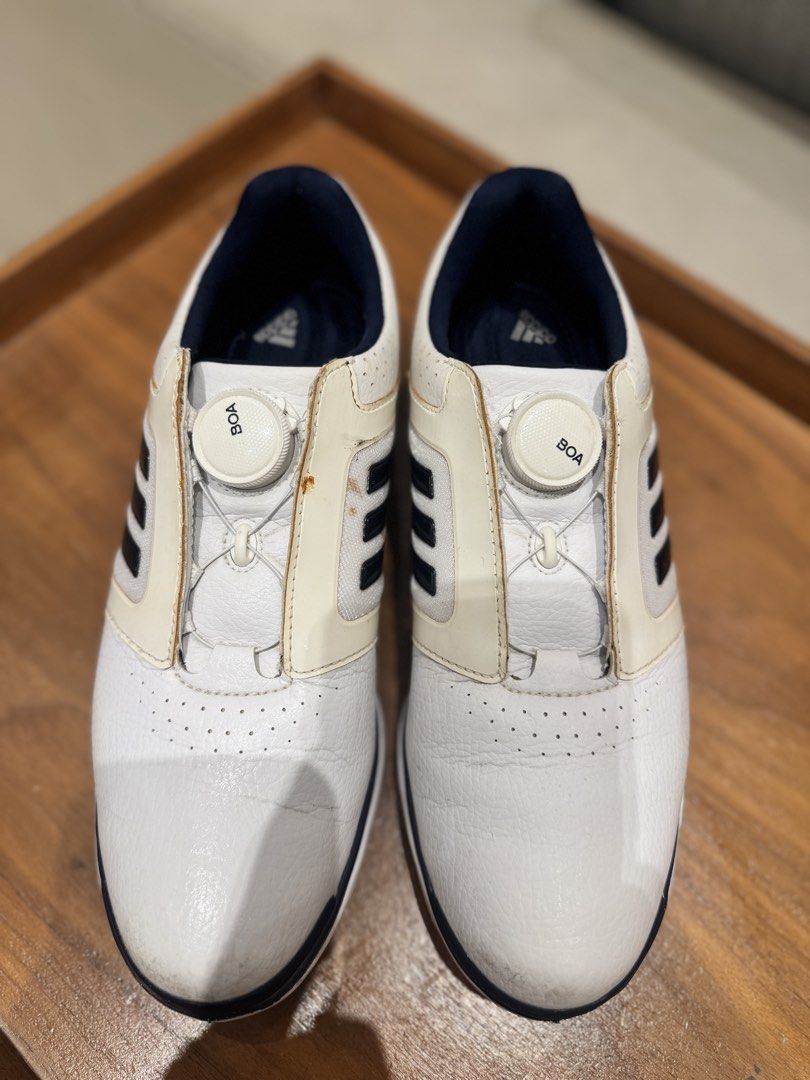
A BOA closure spreads pressure across the upper of the shoe. It replaces normal laces with a dial, cable, and lace guides. When you loosen the dial, the cable relaxes and the upper opens around your foot.
A shoe that is too tight can affect more than comfort. It may change how you walk from the tee box to the fairway, how you brace during the downswing, and how stable you feel during impact. This matters for beginners, improving amateurs, seniors, and juniors who are still learning how golf shoes should feel.

Comfort affects your golf movement
Golf involves repeated walking, standing, bending, and rotation. A typical round can include several miles of movement, especially on a walking course. Tight footwear can make your feet feel numb or sore before you reach the back nine.
Your feet help you sense the ground. That sense supports balance during the backswing and downswing. If the shoe presses on the toes or top of the foot, you may change your stance width or avoid turning fully.
A beginner may respond by standing too upright or shifting weight away from the sore foot. An experienced player may lose trust in the ground during a full swing. Loosening the BOA dial can help restore a natural stance, but it cannot correct a shoe that does not fit your foot shape.
Tight shoes can change pressure during the swing
During a golf swing, pressure moves between the feet. Right-handed players often build pressure into the trail foot during the backswing, then move pressure toward the lead foot in the downswing. Left-handed players make the opposite movement.
A tight shoe may make this pressure shift feel blocked. That can lead to a shorter backswing, a rushed transition, or poor balance after the follow-through. The same issue may appear during chipping, pitching, bunker shots, and putting.
| Sign | What it may mean | First action |
|---|---|---|
| Numb toes | Too much pressure in the toe box | Loosen the dial and check sock thickness |
| Pressure on the top of the foot | Cable tension may be too high | Turn the dial counterclockwise |
| Heel lifting | The shoe may be too loose or poorly fitted | Tighten in small clicks |
| Hot spot or rubbing | Fit, moisture, or movement may be the cause | Stop and inspect before continuing |
These signs do not prove that the shoe is the problem. They are clues. Persistent pain needs attention from a medical professional.

Walking and riding create different needs
Golfers who walk often need a secure but flexible fit. The shoe should hold the heel without squeezing the forefoot. A rider may notice less foot fatigue, but a tight shoe can still cause pressure during the swing.
On a hilly course, the foot may slide forward during a downhill walk. Some golfers tighten the BOA dial too much to prevent this. A better approach is to use even tension and check that the heel is seated before tightening.
Links courses, wet courses, and courses with deep rough can create extra movement. Dry, firm ground may also increase foot slide. Your fit should feel secure in all normal parts of the round, not just on a flat practice mat.
Learn the BOA dial before you play
The dial is the main control for your shoe closure. Most BOA systems allow fine adjustment by turning the dial. Many also allow quick release by pulling the dial outward.
Because Adidas golf shoes may use different BOA models, check the label, owner guide, or shoe instructions for your exact pair. Look for the BOA name on the dial or closure area. If the dial has no clear release symbol, use a gentle test while seated.

What the main parts do
A BOA golf shoe usually has four key parts:
- Dial: The round control that changes tension.
- Cable: The thin lace that runs through the closure guides.
- Lace guides: Small loops or channels that direct the cable.
- Upper: The shoe material that wraps around your foot.
The dial controls the cable. The cable pulls the upper closer to your foot. The guides spread the pull across several points instead of placing all pressure in one spot.
| Part | Function | What to avoid |
|---|---|---|
| Dial | Tightens or releases cable tension | Do not force it past its normal movement |
| Cable | Holds the closure system in place | Do not yank, cut, or twist it |
| Lace guides | Direct cable across the shoe | Do not pull the cable from a guide |
| Upper | Wraps and supports the foot | Do not fold it sharply while adjusting |
Understanding the parts helps you spot a simple adjustment issue. It also helps you know when a damaged system needs service.

Tightening and loosening are not the same action
Turning the dial one way increases tension. Turning it the other way reduces tension. The direction is usually marked or shown in the BOA instructions, but do not rely on memory if the dial feels unclear.
Many BOA dials tighten with a clockwise turn and loosen with a counterclockwise turn. That pattern is common, but the safe rule is simple: turn slowly and watch whether the cable becomes tighter or more relaxed.
If the cable does not relax, stop. Pulling harder can damage the dial or cable. A working closure should respond to normal hand movement.
Step-by-step: loosen Adidas BOA golf shoes
The best method is to loosen the shoe while seated. This gives you control and reduces the chance of twisting your ankle or stepping on the cable. The steps below suit most Adidas golf shoes with a standard BOA dial.

1. Sit down and clear the shoe
Sit on a bench, golf cart seat, or stable chair. Place the shoe flat on the ground or rest your foot across your other knee.
Remove grass, mud, sand, or small stones from around the dial and cable guides. Debris can make the dial feel stiff. Do not use a sharp tool to dig around the system.

2. Find the BOA dial
Locate the dial on the side, tongue, or top of the shoe. Adidas golf shoe designs differ, so the dial may not sit in the same place on both shoes.
Hold the shoe with one hand. Use the other hand to turn the dial. Keep your fingers on the dial rather than pulling the cable.

3. Turn the dial to reduce tension
Turn the dial slowly in the loosening direction. On many BOA systems, this means turning counterclockwise. Make one or two small turns, then check the cable and your foot.
You do not need to spin the dial quickly. Small changes are easier to feel. This is useful for golfers with wide feet, high insteps, swelling, or different sock thicknesses.

4. Use the quick-release function when needed
If you need to remove the shoe quickly, pull the dial outward if your model is designed for that action. This can release most or all cable tension.
Some systems may use a different release method. If pulling the dial does not work with light pressure, do not force it. Return to the normal adjustment method and check the model instructions.

5. Open the upper by hand
After reducing tension, spread the shoe opening with your fingers. Do not pull on the cable. Pull the tongue or upper material instead.
This step helps free the foot without stressing the closure. If you have a high instep, open the shoe wide before lifting your heel.

6. Remove the shoe without twisting
Lift your heel first, then slide your foot out. Avoid twisting the shoe sideways while the cable is still tight.
If the shoe feels stuck, loosen it more. A snug heel is useful during a swing, but it should not trap your foot when you remove the shoe.

7. Check the dial after use
Once the shoe is off, look at the cable path. Check for frays, cuts, loose guides, or trapped grass. Make sure the dial sits in its normal position.
If the cable looks damaged, do not use the shoe for a full round. A closure failure during a swing or walk can affect stability.
8. Refit the shoe before your next shot
If you loosened the shoe during a round, reseat your heel before tightening it again. Tap the heel gently on the ground, then adjust the dial in small clicks.
Walk a few steps. Make a slow practice swing. Your foot should feel held without pressure, numbness, or movement inside the shoe.

How much should you loosen the dial?
Loosen the dial until pressure drops but the foot remains supported. A golf shoe should feel secure around the heel and midfoot while leaving room for the toes to spread naturally.
The right amount depends on foot shape, socks, weather, and activity. A senior golfer with swelling may need more room late in the round. A junior golfer may need to check fit during every growth period. A player with a wide forefoot may need less cable tension than a player with a narrow foot.
A simple fit check
Use this check before a round:
- Stand in your normal golf posture.
- Keep your toes relaxed.
- Bend your knees slightly.
- Make two slow practice swings.
- Walk several steps.
- Check for pressure, rubbing, and heel movement.
Your toes should not press hard against the front. Your heel should not lift with every step. The upper should hold your foot without creating a sharp pressure point.
| Fit check | Comfortable result | Warning sign |
|---|---|---|
| Toe room | Toes can move slightly | Toes are pressed together |
| Heel hold | Heel stays in place | Heel slips with each step |
| Midfoot | Secure, even pressure | One sharp pressure spot |
| Swing test | Balanced finish | Foot shifts inside the shoe |
| Walking test | No hot spots | Rubbing starts at once |
A good fit is not the same as the tightest fit. Tightness does not automatically create better stability.
Consider socks and foot swelling
Thick socks can make a normal setting feel too tight. Wet socks can increase rubbing. Thin socks may leave more space and require a small dial adjustment.
Feet can swell during long walks, hot weather, or repeated activity. Heat, dehydration, and standing can all affect comfort. Loosen the shoe if pressure builds, and take a break in a safe place.
⚠️ Safety Warning: Stop playing if you develop strong pain, numbness, color change, or loss of feeling. Remove the shoe and check your foot. Seek medical care for pain that continues or returns.
Common problems and practical fixes
Most BOA loosening problems come from confusion about the release direction, dirt around the dial, or too much tension. A calm check is safer than forcing the mechanism.
The table below can help beginners and experienced players separate a fit issue from a closure issue.
| Problem | Likely cause | Practical fix |
|---|---|---|
| Dial turns but shoe stays tight | Cable may be caught in a guide | Stop and inspect the cable path |
| Dial feels stuck | Dirt, ice, or damage | Clean gently and check instructions |
| Shoe loosens too much | Too many release turns | Retighten one click at a time |
| Cable looks frayed | Wear or damage | Stop using it and seek service |
| Foot still hurts when loose | Poor fit or foot problem | Stop and consult a professional |
| One shoe feels different | Uneven adjustment or foot shape | Fit each shoe separately |
Do not treat every foot problem as a BOA problem. A shoe can be working correctly while the shape, size, or support does not suit your foot.
Why the dial may not release
The cable may be under uneven tension. This can happen if the shoe was tightened while the tongue was folded or if the foot was not fully seated.
The cable may also be caught under a guide. Dirt from a bunker, wet rough, or cart path can collect near the dial. Small amounts of grit can affect movement.
Do not pour oil or household lubricant into the dial. These products may attract dirt or affect materials. Follow the instructions for the exact BOA system.
Why the shoe may loosen unevenly
Some Adidas golf shoes have zones that spread tension across different parts of the foot. One area may loosen before another. This is normal for many closure designs.
If one side of the upper pulls sharply, check that the tongue is centered. Also check that your sock is not bunched under the cable path. A folded tongue can create a false pressure point.
Why the foot still feels tight
The dial may not be the only source of pressure. The shoe shape may be narrow, the toe box may be short, or the insole may not suit your arch. Swelling may also change the fit during a round.
If you loosen the dial and still feel pain, do not keep playing through it. A golf lesson cannot solve footwear pain, and a shoe adjustment cannot treat an injury.
What not to do when loosening BOA golf shoes
A BOA system is simple, but it still needs careful handling. Avoid actions that place stress on the cable or dial.
This advice applies to all golfers. It is especially useful for juniors and new golfers who may try to pull the cable when they are in a hurry.
- Do not yank the cable by hand.
- Do not use pliers on the dial.
- Do not force the dial past its natural stop.
- Do not cut the cable to remove the shoe.
- Do not twist the shoe hard while the closure is tight.
- Do not play through numbness or sharp pain.
- Do not leave mud packed around the dial.
- Do not let a child adjust the shoe while standing in a swing area.
💡 Pro Tip: Make the first fit adjustment at home. Sit down, test the dial, and learn the release action before arriving at the first tee. This reduces stress when you need to adjust the shoe during a round.
BOA adjustment for different golfers
The same closure system may feel different for different players. Foot shape, age, handicap, walking habits, and swing style all matter.
A beginner may need more time to learn the dial. An advanced player may make smaller changes based on pressure and course conditions. Neither approach is wrong if the shoe remains comfortable and secure.
Beginners and new golfers
Beginners often tighten golf shoes too much because they believe a firm shoe creates a more stable swing. Stability comes from a balanced fit, not maximum pressure.
Use a slow warm-up routine before the round. Walk, make a few easy practice swings, and check your feet. If the shoe feels tight before the first tee, loosen it before you start playing.
This tip suits golfers with little equipment experience and players still learning basic golf etiquette. Adjust footwear beside the cart or near the locker area, not in front of another golfer preparing to hit.
Improving amateurs
Improving players may notice shoe pressure during the transition from backswing to downswing. A tight shoe can make the lead foot feel fixed or the trail foot feel trapped.
Fit the shoe before working on swing faults. Do not change your grip, stance, ball position, or swing path to compensate for foot pain. Solve the comfort issue first, then assess the swing.
Golfers with a handicap index in the mid or high range may benefit from this simple check. So may low-handicap players who practice for long sessions or play several rounds each week.
Seniors
Older golfers may experience changes in foot width, arch support, balance, or swelling. A shoe that felt fine on the front nine may feel tight later in the day.
Loosen the dial in small steps during a walking break. Keep water with you, protect your skin from the sun, and avoid playing through foot numbness. Good golf fitness includes foot, ankle, hip, and back mobility.
A senior golfer with balance concerns should sit before making a large adjustment. Do not bend sharply while standing beside a moving cart.
Women golfers
Women golfers may have different heel, forefoot, or arch shapes from the standard shoe form. The BOA system can allow fine adjustments, but it cannot change the basic shape of the shoe.
Check that the heel is secure without squeezing the forefoot. If you wear thicker socks in cold weather, allow more room. If you switch to thin socks in warm weather, retest the fit.
Junior golfers and parents
Children’s feet can change quickly. A junior may outgrow a shoe before the closure shows any damage. Parents should check toe room, heel hold, and comfort often.
A junior should know how to loosen the dial before playing. Teach the child to sit, turn the dial slowly, and ask for help if it does not move. Junior-sized equipment and safe footwear should support movement without restricting it.
👪 Parent or Beginner Note: Teach children to adjust shoes away from the tee box and away from a golfer’s swing area. A loose cable, dropped item, or sudden movement can create a safety risk.
Left-handed and right-handed golfers
The shoe adjustment does not change based on swing direction. However, left-handed and right-handed golfers may notice different pressure patterns because the lead and trail feet perform different roles.
A right-handed golfer may feel more pressure on the left foot during the downswing. A left-handed golfer may feel it on the right foot. Check both shoes rather than assuming one side is the problem.
Golf course and weather effects on shoe comfort
Course conditions can change how your foot moves inside the shoe. They can also change how much pressure you need for support.
Wet grass may increase slipping. Deep rough can catch the shoe. Firm ground may make each step feel harder. None of these conditions justify forcing the BOA dial tighter than your foot can tolerate.
| Condition | What you may notice | Smart adjustment |
|---|---|---|
| Hot weather | Swelling and sweaty socks | Loosen slightly and hydrate |
| Cold weather | Stiffer materials and thick socks | Check fit after warming up |
| Wet grass | More foot movement | Use even tension and shorter steps |
| Deep rough | More ankle and foot resistance | Keep the heel seated |
| Firm links ground | More impact through the feet | Watch for hot spots |
| Hilly course | Heel or toe slide | Adjust in small steps |
Weather advice suits all golfers, but it matters most for walkers and players who spend many hours outdoors. Take shelter at the first warning of lightning. No footwear adjustment makes a thunderstorm safe.
Walking on hills
When walking downhill, your foot may slide toward the front of the shoe. Some golfers tighten the dial across the whole foot. That can create pressure on the toes.
Instead, stop in a safe spot and check your heel position. Reseat your foot, loosen the dial if needed, and retighten with small clicks. If the shoe still allows too much movement, the fit may not suit the terrain.
Riding in a golf cart
A cart reduces walking but creates its own risks. Keep your feet inside the cart, hold the handrail on slopes, and avoid standing while the cart moves.
If your shoes feel tight after sitting, adjust them before walking to the ball. Do not loosen the shoe so much that your foot slides during a swing.
Care and cleaning after a round
Basic care can help the BOA dial and cable stay clear. Let wet shoes dry at room temperature. Keep them away from strong direct heat, such as a heater or hot car dashboard.
Remove loose grass and mud with a soft brush. Follow the shoe and BOA care instructions for deeper cleaning. Do not scrape the cable with a knife or soak the dial unless the instructions allow it.
A simple post-round check
Use this short checklist after walking off the course:
- Check both dials.
- Look for cable fraying.
- Clear grass from the guides.
- Wipe away mud and sand.
- Let damp shoes dry naturally.
- Check the upper for tears.
- Note any pain or pressure from the round.
🌿 Course Care Note: Clean your shoes away from greens, tees, and shared walkways. Do not wash mud into a bunker or onto a putting surface. Repair ball marks, rake bunkers, replace divots when required, and keep broken tees and litter off the course.
When a replacement part may be needed
A damaged cable, dial, or guide should not be ignored. The closure may fail during a round even if it still works at home.
Check the current BOA support guidance and the shoe maker’s instructions for service options. Use the correct replacement process for the exact system. Do not improvise with string, wire, or a homemade cable.
A short practice drill for learning the dial
You can learn the adjustment without being on the course. This drill suits beginners, juniors, parents, and anyone who has trouble making small changes under pressure.
Sit in a safe place with both shoes on. Practice releasing and tightening the dial while keeping your foot still. Then stand, walk, and make a slow practice swing.
| Drill stage | Time | Goal |
|---|---|---|
| Seated release | 1 minute | Find the loosening action |
| Seated refit | 1 minute | Use small tension changes |
| Walking check | 2 minutes | Notice heel and toe movement |
| Slow swing | 2 minutes | Check balance and foot pressure |
| Final fit | 1 minute | Set a comfortable playing tension |
The goal is not speed. The goal is control. A junior or new golfer should repeat the drill until the dial feels simple and familiar.
Add the drill to your warm-up
A good golf warm-up can include ankle circles, easy walking, hip turns, and slow practice swings. Check your footwear after the body begins to warm up.
Do not start with hard swings. Begin with short chips, pitches, or half swings. Then move to full swings if your feet feel comfortable.
This routine also helps you notice whether a foot problem is from the shoe or from a wider movement issue. Persistent pain needs medical advice, not more practice.
Rules, etiquette, and BOA golf shoes
The Rules of Golf do not normally restrict a standard shoe closure. You may adjust your shoes during a round, but do so without delaying play or distracting another golfer.
In stroke play, each player records a score for the hole, so pace matters for the whole group. In match play, you still need to avoid unreasonable delay. In a scramble or Stableford event, follow the event’s local instructions.
Adjust footwear without slowing play
Move to a safe spot before stopping. Avoid standing in a tee box while another player addresses the ball. If your shoe causes pain, tell your playing partners and make a proper adjustment.
A short pause is better than continuing with numb feet. However, plan the adjustment between shots when possible. Keep your group moving at a reasonable pace.
📜 Check the Rules: Rules and local procedures can change. Check the latest Rules of Golf and your local committee for updates, especially in a competition.
Footwear and temporary conditions
Rain, mud, or unusual ground conditions may lead a committee to issue local instructions. These instructions may concern carts, preferred lies, or course access. They usually do not change how you loosen a shoe, but they can change where you may walk or ride.
Follow signs and staff instructions. Protect the course by avoiding restricted areas and keeping carts away from sensitive ground.
Troubleshooting table for common BOA questions
Use this table as a quick reference before asking for help. It covers fit, function, and safe next steps.
| Question | Short answer | Best next step |
|---|---|---|
| Should I turn the dial left to loosen? | Often, yes | Confirm by watching cable tension |
| Can I pull the dial out? | Many models allow it | Use only light pressure |
| Why is the shoe still tight? | The cable may be caught | Inspect the guides and tongue |
| Can I cut the cable? | No | Follow official service guidance |
| Can I play with a frayed cable? | It is not wise | Stop and arrange proper service |
| Should both shoes use the same setting? | Not always | Fit each foot separately |
The main lesson is to observe the mechanism. If an action does not produce the expected result, stop rather than add force.
When to stop adjusting and seek help
A simple fit issue can often be fixed in a minute. A damaged closure, recurring pain, or major foot movement needs more attention.
Stop using the shoe if the cable is frayed, the dial is cracked, or the lace guides are loose. Contact the correct manufacturer or service channel for the exact repair method.
See a medical professional for ongoing pain
Foot pain can come from footwear, training load, a joint issue, nerve irritation, or an old injury. Pain that lasts after removing the shoe deserves care.
Seek prompt medical advice for severe pain, swelling after an injury, loss of feeling, unusual color, or trouble walking. Golf fitness should support your game, not hide a health problem.
Ask a PGA professional about swing effects
A PGA professional can help if your shoe discomfort changes your stance, balance, or weight shift. A teaching pro can also check whether your grip, posture, backswing, downswing, or follow-through changed because you are protecting your foot.
A lesson is most useful after the shoe fit is under control. Do not use a swing lesson to solve a closure that is clearly damaged.
FAQs
Q: How do you loosen Adidas BOA golf shoes for beginners?
A: Sit down, find the BOA dial, and turn it slowly in the loosening direction. On many models, this is counterclockwise. Pull the dial outward only if your system supports quick release. Never force the dial or cable.
Q: Why will my Adidas BOA golf shoe not loosen?
A: The cable may be caught, the dial may contain dirt, or the system may use a different release method. Check the tongue and cable guides. If the dial feels stuck or damaged, stop using force and check the exact instructions.
Q: Can I loosen BOA golf shoes while standing?
A: You can make a small adjustment while standing, but sitting is safer for a large adjustment. Sitting helps you control the shoe and reduces the risk of twisting your ankle or losing balance.
Q: Should BOA golf shoes feel tight?
A: They should feel secure, not painful. The heel and midfoot should stay in place, while the toes should have room to move. Tightness, numbness, or sharp pressure means you should loosen the shoe and reassess the fit.
Q: How much should I loosen BOA golf shoes during a round?
A: Use the smallest change that removes pressure. Start with one or two clicks, walk a few steps, and check your swing balance. Feet may swell during a long walk or in hot weather, so a small late-round adjustment may help.
Q: Do left-handed golfers loosen BOA golf shoes differently?
A: No. The dial works the same way. However, left-handed golfers may feel different pressure on the lead and trail feet during the swing. Check each shoe on its own.
Q: Are BOA golf shoes good for seniors?
A: The dial can be useful for seniors because it allows small adjustments without tying laces. Seniors should still check foot swelling, balance, and comfort. Sit down for major changes and seek medical advice for ongoing pain.
Q: Are BOA closures suitable for junior golfers?
A: They can be simple for juniors to use, but children need instruction. Parents should check foot growth, toe room, heel hold, and cable condition. Teach the child to adjust the shoe away from an active swing area.
Q: Can I use oil to free a stuck BOA dial?
A: Do not use household oil unless the official instructions say it is safe. Oil can attract dirt or affect materials. Clean gently and follow the guidance for the exact dial system.
Q: What should I do if the BOA cable breaks on the course?
A: Move to a safe place and inspect the shoe. Do not tie the cable into a knot or make a temporary wire repair. If the shoe no longer supports your foot, stop using it and follow the official service process.
Q: Can a tight BOA shoe affect my golf swing?
A: It can affect comfort, balance, and pressure movement. You may shorten your backswing or avoid a full follow-through. Loosen the shoe first, then assess your swing before changing technique.
Q: How long does it take to learn how to loosen BOA golf shoes?
A: Most golfers can understand the basic action in a few minutes. A short seated practice drill can build confidence. The goal is safe control, not fast adjustment.
Q: Can I adjust BOA golf shoes during a tournament?
A: Normal shoe adjustment is generally not a problem, but you must avoid unreasonable delay or distracting another player. Follow the current Rules of Golf and the event’s local procedures.
Q: Why does one BOA shoe feel tighter than the other?
A: Your feet may differ in width, arch shape, or swelling. The cable may also be unevenly seated. Fit each shoe separately and inspect the tongue and cable guides.
Q: What is the best way to care for BOA golf shoes after a wet round?
A: Remove loose mud, clear the dial and guides, and let the shoes dry at room temperature. Avoid strong heat. Check the cable for fraying before the next round.
Final thoughts
Learning how to loosen Adidas BOA golf shoes is simple when you use small, controlled adjustments. Turn the dial to reduce tension, use the quick-release action only when the model supports it, and never force the cable or mechanism.
A comfortable golf shoe should support your walk, stance, pressure shift, and finish without squeezing your foot. Check the fit before the round, during long walks, and after changes in heat, socks, or course conditions. If pain or damage continues, stop playing in the shoe and seek the right professional help.